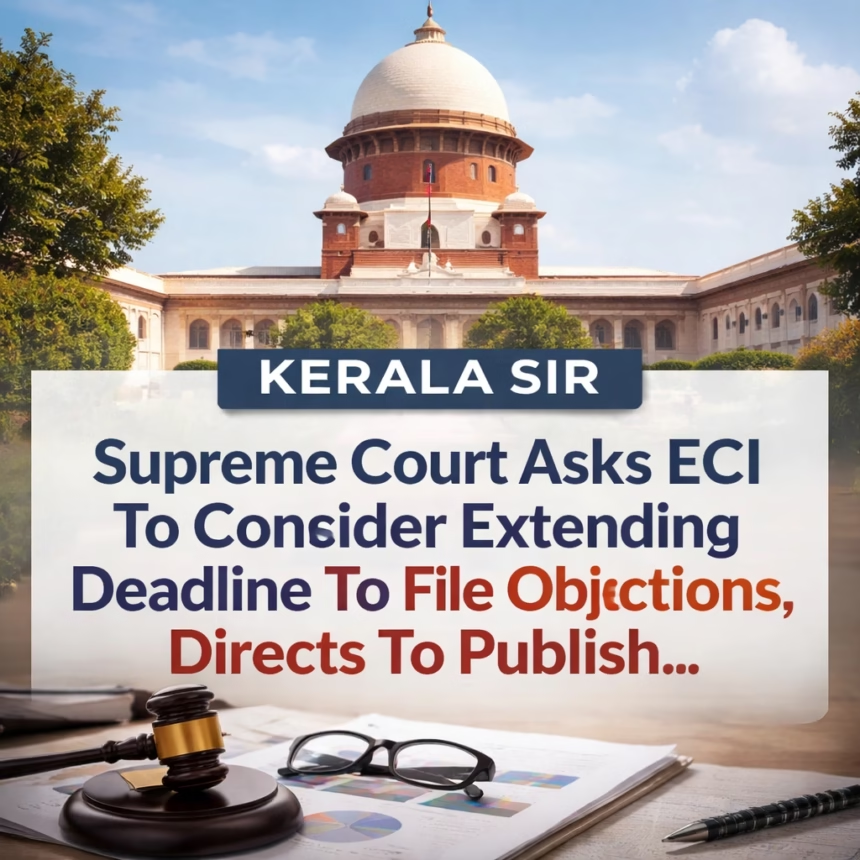
New Delhi, India – The Supreme Court of India has directed the Election Commission of India (ECI) to consider extending the deadline for filing objections regarding the draft electoral rolls in Kerala. This significant intervention, made on [Insert Specific Date of SC Order, e.g., November 27, 2023], comes amidst widespread concerns over the accuracy and integrity of the voter lists in the state, particularly in the run-up to crucial elections. The apex court also mandated the ECI to ensure the wide publication of the draft rolls, making them easily accessible to the public.
Background: The Special Summary Revision and Mounting Allegations
The controversy stems from the ongoing Special Summary Revision (SSR) of electoral rolls, a routine exercise undertaken by the Election Commission to update voter lists by adding new eligible voters, removing deceased or shifted voters, and correcting errors. In Kerala, this revision process for the year [Insert Year, e.g., 2024] commenced with its usual schedule, aiming to finalize the rolls by a specified date.
However, the process drew scrutiny following allegations from various political parties and public interest groups regarding significant discrepancies. Concerns were primarily raised by opposition parties in Kerala, who claimed the presence of a substantial number of duplicate entries, deceased voters, and non-resident voters still listed on the electoral rolls. These alleged inaccuracies, they argued, could potentially skew election outcomes and undermine the democratic process.
Petitioners approached the Supreme Court, highlighting that the initial window provided for filing objections was insufficient, especially given the scale of alleged anomalies. They contended that a limited timeframe, coupled with inadequate public awareness about the draft rolls, hampered citizens' ability to scrutinize the lists effectively and report discrepancies. The primary objective of these petitions was to ensure a fair and transparent electoral process by rectifying all errors before the finalization of the rolls. The legal challenge underscored the fundamental right of every citizen to a clean and accurate voter list, essential for free and fair elections.
Key Developments: Supreme Court’s Directive and ECI’s Mandate
On [Insert Specific Date of SC Order, e.g., November 27, 2023], a Supreme Court bench comprising [Insert Justices' Names, if known and relevant, e.g., Justice Sanjiv Khanna and Justice S.V.N. Bhatti] heard the petitions challenging the ECI's schedule for the Special Summary Revision in Kerala. The petitioners' counsel emphasized the critical need for an extended period for objections and greater accessibility to the draft electoral rolls, citing the sheer volume of alleged irregularities that required public participation for verification.

After hearing arguments from both sides, the Supreme Court issued a crucial directive. It instructed the Election Commission of India to "consider extending the deadline" for filing objections to the draft electoral rolls in Kerala. This wasn't a direct order for extension but a strong recommendation, urging the ECI to re-evaluate its schedule based on the concerns raised. The Court acknowledged the importance of public participation in ensuring the accuracy of the voter lists.
Furthermore, the apex court explicitly directed the ECI to "publish the draft electoral rolls widely." This instruction implies not just making the rolls available at designated government offices but also exploring broader avenues for dissemination, such as online platforms, local community centers, and possibly even through local self-government institutions. The goal is to maximize public access and enable greater scrutiny by citizens and political parties alike. The ECI is expected to take a decision on the extension and the mode of publication promptly, reflecting the urgency conveyed by the Supreme Court.
Impact: Enhancing Electoral Integrity and Transparency
The Supreme Court's intervention carries significant implications for electoral integrity and transparency in Kerala, and potentially sets a precedent for other states.

Empowering Voters and Political Parties
An extended deadline directly benefits ordinary citizens and political parties. Voters will have more time to verify their own details, those of their family members, and even raise objections against suspected erroneous entries. For political parties, who often undertake extensive door-to-door verification drives, the extended period allows for a more thorough cross-referencing of data, enabling them to identify and report a greater number of discrepancies. This collaborative effort between the ECI and the public is crucial for refining the voter list.
Strengthening Electoral Purity
The core objective of this exercise is to cleanse the electoral rolls of inaccuracies. Removing duplicate entries, deceased voters, and non-existent individuals ensures that only eligible citizens can cast their votes. This directly contributes to the purity of the electoral process, making it harder for fraudulent practices like 'bogus voting' to occur. A clean voter list is a fundamental pillar of a fair and democratic election.
Setting a Precedent for Future Revisions
While specific to Kerala, the Supreme Court's directive underscores the judiciary's commitment to robust electoral processes. It sends a clear message to the ECI about the importance of flexibility and responsiveness to public concerns during summary revisions. This could lead to the ECI reviewing its standard operating procedures for future revisions across the country, potentially adopting more liberal deadlines and wider publication methods proactively.
Logistical Challenges for ECI
While beneficial, an extension also presents logistical challenges for the Election Commission. It may require adjusting internal timelines, reallocating resources, and managing a potentially increased volume of objections. The ECI will need to ensure that its machinery is adequately prepared to handle the extended period efficiently, verifying each objection meticulously within the revised schedule.
What Next: ECI’s Decision and Finalization of Rolls
Following the Supreme Court's directive, the immediate focus shifts to the Election Commission of India. The ECI is now tasked with "considering" the extension, which implies a review of the existing schedule in light of the judicial recommendation and the concerns raised.
More Read

ECI’s Decision on Extension
The ECI is expected to issue a formal communication regarding its decision on the deadline extension for filing objections. While the Supreme Court did not mandate an extension, the strong recommendation from the apex court makes it highly probable that the ECI will grant some form of extension to demonstrate its commitment to transparent electoral processes. This decision will include the new, revised deadline.
Wide Publication of Draft Rolls
Concurrently, the ECI must act on the directive to publish the draft electoral rolls widely. This could involve making the rolls available on the Chief Electoral Officer's website in a user-friendly format, ensuring copies are readily accessible at polling stations, Block Development Offices, and other designated government offices. Public awareness campaigns may also be initiated to inform citizens about how and where to access these rolls and the process for filing objections.
Objection and Verification Process
Once the new deadline is announced and the rolls are widely published, citizens and political parties will have the opportunity to file objections or seek corrections. Each objection received by the ECI must undergo a meticulous verification process. This typically involves Booth Level Officers (BLOs) conducting field visits to ascertain the validity of claims, followed by hearings where both the objector and the person whose entry is being objected to might be present.
Finalization of Electoral Rolls
After the objection and verification process is complete, and all valid corrections are incorporated, the ECI will proceed with the final publication of the electoral rolls. These finalized rolls will then serve as the definitive voter list for the upcoming [Insert Specific Election, e.g., Lok Sabha elections] in Kerala. The entire process, from the Supreme Court's directive to the finalization, underscores the dynamic and crucial nature of maintaining accurate voter lists in a vibrant democracy.