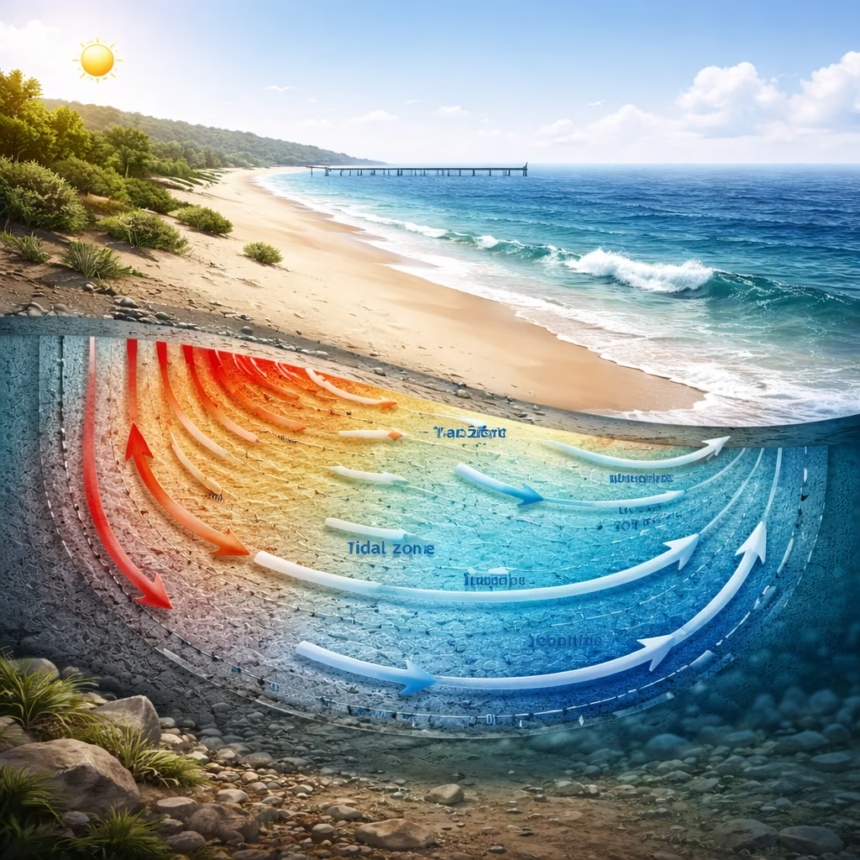
A groundbreaking study has uncovered how daily and seasonal temperature fluctuations significantly alter the flow of groundwater and the movement of pollutants beneath tidally influenced beaches. Conducted at Silverstrand Beach, California, this research, completed in late 2023, provides critical insights into the invisible dynamics shaping our coastal ecosystems and water quality.
Background: The Unseen World Beneath Our Beaches
Coastal aquifers, the underground layers of water-bearing permeable rock or unconsolidated materials, are vital interfaces between land and sea. For decades, scientists have understood that these aquifers are profoundly influenced by tidal cycles, which drive the ebb and flow of groundwater, mixing freshwater with saltwater. This interaction is crucial for maintaining the ecological balance of estuaries and nearshore environments. However, a less understood factor has been the role of temperature. While temperature is known to affect water density and viscosity, its direct influence on large-scale groundwater flow and solute transport in the dynamic nearshore zone of mild-slope beaches remained largely unexplored until recently. Previous research primarily focused on hydraulic gradients and salinity differences, often overlooking the subtle yet powerful thermal forces at play.
Historically, models of coastal groundwater systems have simplified or entirely omitted the effects of thermal gradients, assuming that temperature variations were negligible compared to tidal pressures. This oversight meant that predictions for nutrient dispersal, contaminant migration, and even the extent of saltwater intrusion might have been inaccurate. The implications of these inaccuracies range from mismanaging coastal pollution to underestimating risks to marine habitats. The need for a more comprehensive understanding became evident as coastal communities faced increasing environmental challenges, from harmful algal blooms to compromised shellfish beds.
Key Developments: Unveiling Thermal Modulation
The recent study, spearheaded by Dr. Elena Petrova and Dr. Kenji Tanaka from the Oceanographic Research Center at Pacific University, employed a sophisticated network of high-resolution temperature and pressure sensors embedded across the intertidal zone of Silverstrand Beach. These sensors, deployed over an 18-month period, captured granular data on both daily and seasonal thermal shifts, alongside tidal fluctuations. The team also utilized advanced numerical models to simulate groundwater flow and solute transport under varying thermal conditions.
Innovative Sensing and Modeling
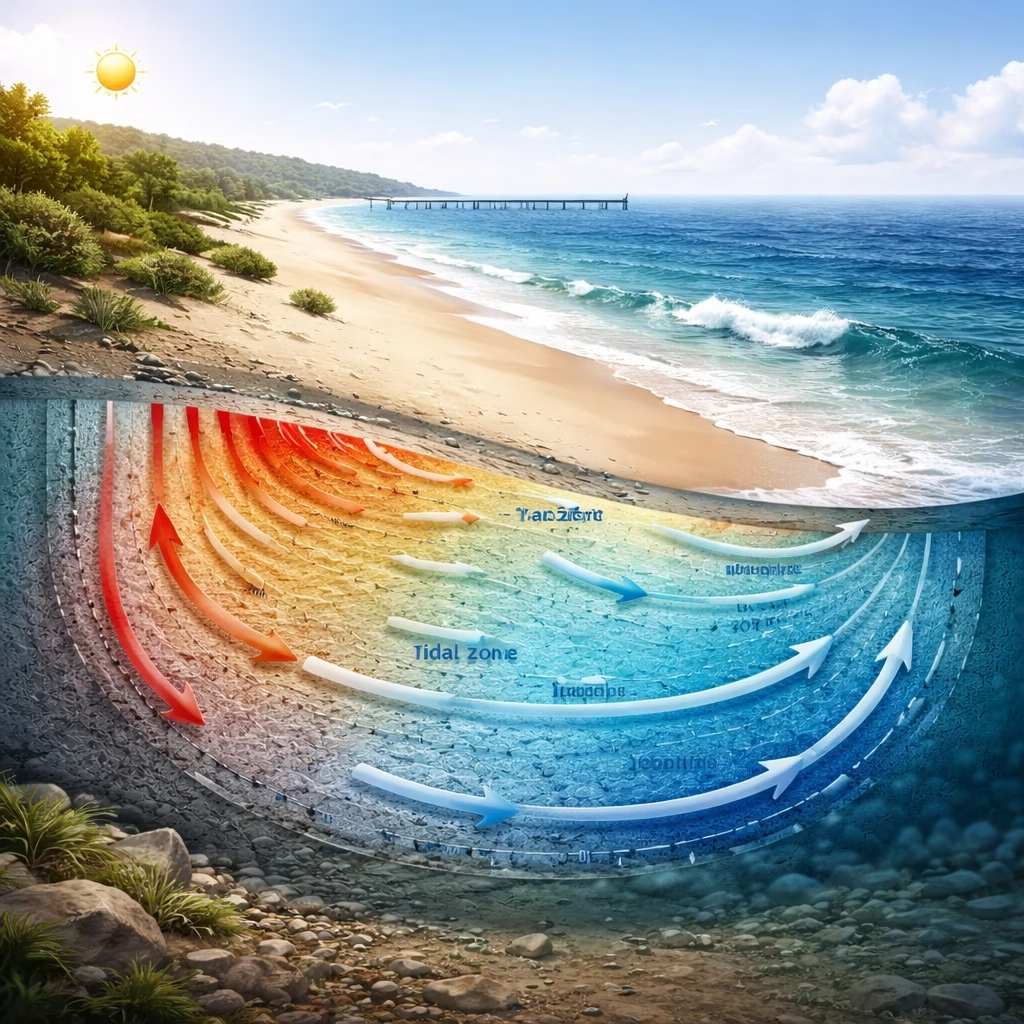
Researchers observed that even slight temperature differences between the ocean water, the beach surface, and the deeper aquifer created significant thermal gradients. During the day, solar radiation heats the exposed beach sand and shallow groundwater, while the incoming tide brings cooler ocean water. At night, the beach cools, reversing some of these gradients. These daily cycles, superimposed on larger seasonal temperature variations, were found to induce distinct patterns of groundwater flow that diverge from purely tidally driven models. The study demonstrated that warmer water, being less dense, tends to rise, while cooler water sinks, creating thermally driven convection cells within the nearshore aquifer.
More Read

Impact on Solute Transport
A critical finding was how these thermal modulations directly influence the transport of dissolved substances, or solutes. The research showed that thermal gradients could enhance the exchange of pore water between the beach and the ocean, effectively "pumping" solutes in and out of the aquifer at rates not predicted by traditional models. This includes the transport of essential nutrients like nitrogen and phosphorus, as well as potential contaminants such as pathogens from septic systems or agricultural runoff. For instance, during periods of strong solar heating, the study found an increased efflux of groundwater-borne nutrients into the nearshore ocean, potentially contributing to localized algal blooms. Conversely, cooler periods could alter the pathways of saltwater intrusion, affecting freshwater lenses closer to the shore.
Impact: Who Is Affected and Why It Matters
The implications of this research are far-reaching, affecting environmental managers, coastal communities, and marine ecosystems alike. Understanding the thermal modulation of groundwater flow provides a crucial missing piece in the puzzle of coastal water quality.
Environmental Health and Ecosystems
For environmental agencies, the study highlights the need to incorporate thermal dynamics into water quality monitoring and management strategies. Elevated temperatures, especially during summer months, could accelerate the transport of land-based pollutants into sensitive nearshore environments. This includes nutrients that fuel harmful algal blooms, which can deplete oxygen, kill marine life, and pose health risks to humans. Pathogens, such as fecal bacteria, could also be transported more efficiently, impacting shellfish harvesting areas and recreational beach safety. Coastal ecosystems, including seagrass beds and coral reefs, are highly sensitive to changes in water chemistry and nutrient loading, making this research vital for their protection.

Coastal Management and Human Well-being
Coastal communities, particularly those reliant on tourism and aquaculture, face direct impacts. Beaches with poor water quality due to increased pathogen or nutrient loads can lead to beach closures, economic losses for local businesses, and public health concerns. Aquaculture operations, such as oyster farms, are particularly vulnerable to changes in water quality and nutrient availability driven by these newly understood thermal processes. Furthermore, understanding these dynamics can help in predicting and mitigating saltwater intrusion into freshwater aquifers, a growing concern for drinking water supplies in many coastal regions. The study underscores that coastal resilience planning must now consider temperature as a primary driver of hydrological processes.
What Next: Future Research and Mitigation Strategies
The Oceanographic Research Center at Pacific University plans to expand its research to other coastal locations with varying geological characteristics and climatic conditions, including colder regions and tropical beaches. This will help determine the universality of these thermal modulation effects.
Advanced Modeling and Monitoring
Future efforts will focus on developing more sophisticated predictive models that integrate thermal, tidal, and hydraulic forces to offer a holistic view of coastal aquifer dynamics. These models could provide early warning systems for potential water quality degradation events. The development of advanced, real-time monitoring networks, possibly incorporating satellite imagery for sea surface temperatures and distributed fiber optic sensing for subsurface temperatures, is also a priority. Such systems would provide decision-makers with actionable data to respond to changing environmental conditions promptly.
Policy and Adaptation
The findings also have significant implications for coastal zone management policies. Urban planners and environmental regulators may need to reassess existing guidelines for wastewater discharge, stormwater management, and land use planning in coastal areas, considering the amplified effects of temperature. As global climate change leads to rising ocean temperatures and more frequent heatwaves, the thermal modulation of groundwater flow is expected to intensify. Therefore, understanding and adapting to these processes will be crucial for the long-term health and sustainability of our coastal environments. The research team emphasizes the urgency of integrating these thermal considerations into global climate change adaptation strategies to protect our invaluable coastal resources.