Global Diplomacy: Who's In & Out of Trump's New Initiative?
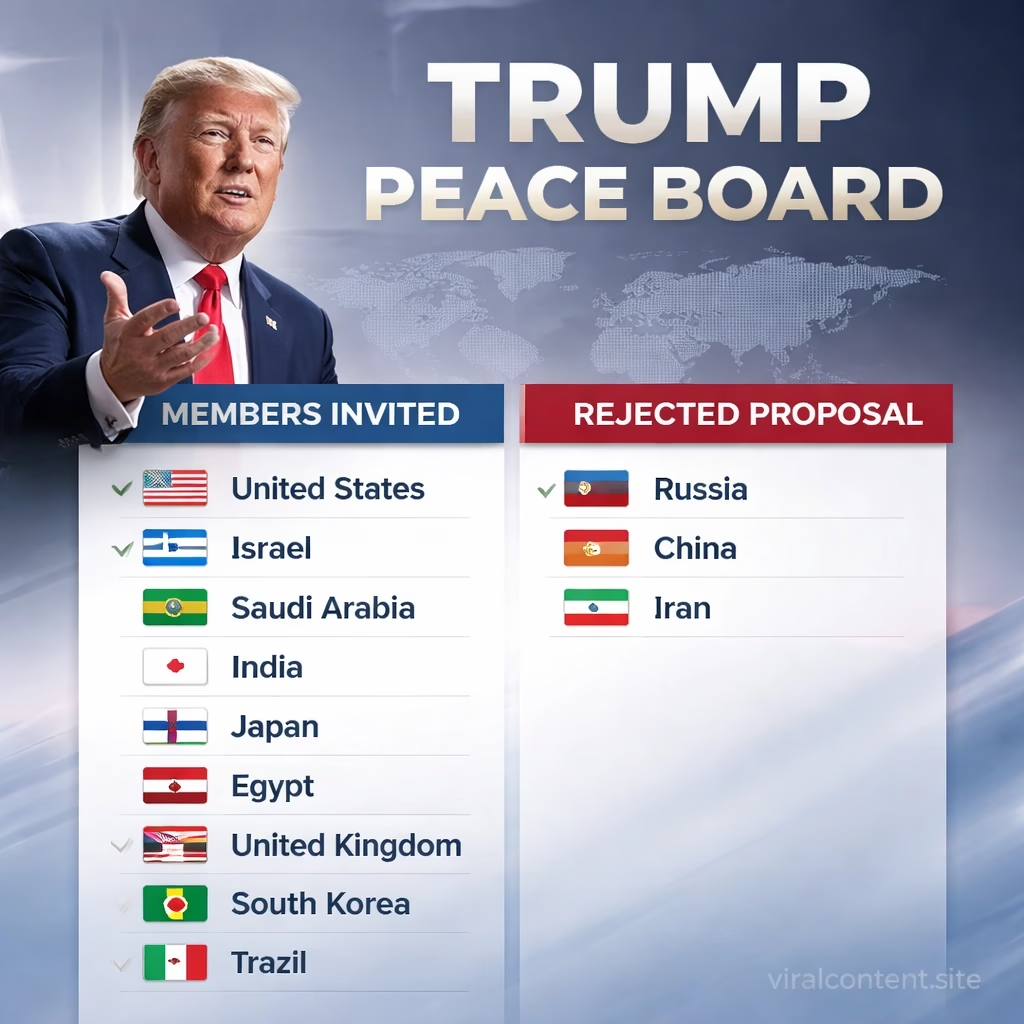
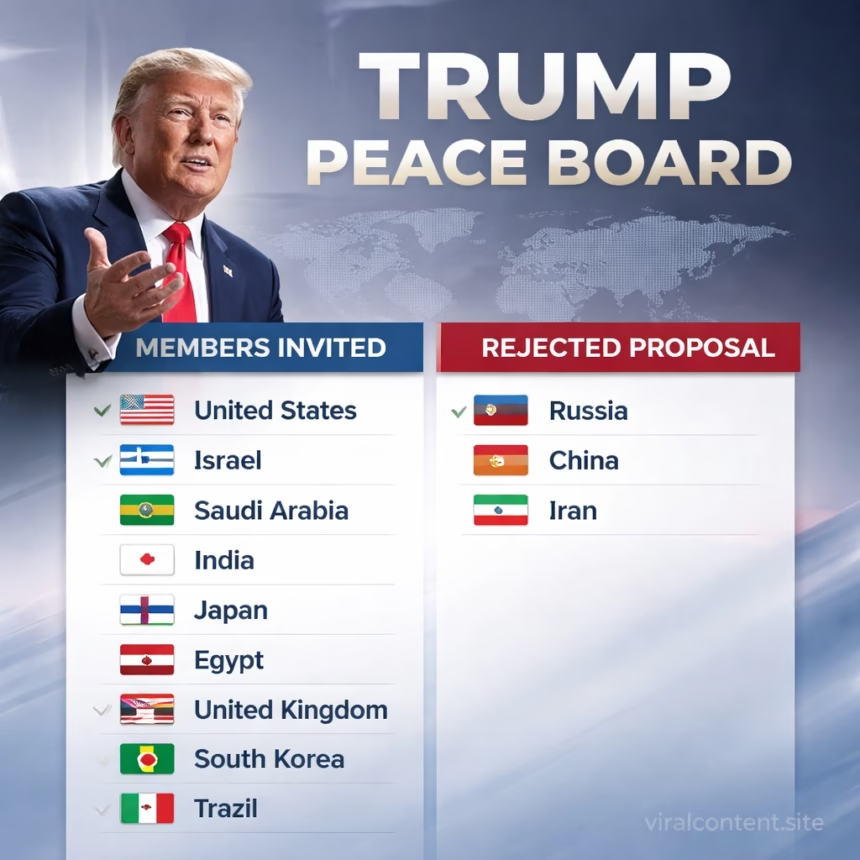
Former U.S. President Donald Trump has announced a new initiative dubbed the "Trump Peace Board," aiming to mediate international conflicts. The board, announced in early November 2023, includes a diverse group of individuals, but its reception from several nations has been notably lukewarm, with some outright rejecting participation.
Background: A New Approach to Global Conflict Resolution
The Trump Peace Board was unveiled at his Mar-a-Lago estate in Palm Beach, Florida, on November 6, 2023. Trump stated the board would focus on facilitating dialogue and brokering agreements in regions experiencing active conflict. The initiative comes amidst ongoing geopolitical tensions, including the war in Ukraine, the Israeli-Palestinian conflict, and rising instability in the Middle East.
The composition of the board is noteworthy. It features former government officials, business leaders, and individuals with ties to various international organizations. Trump has emphasized the board’s focus on practical, results-oriented solutions, contrasting it with what he describes as the “failed policies” of previous administrations.
Key Developments: Invitations and Rejections
The initial list of invited members was announced on November 6th and included figures like former Ambassador to the United Nations Kelly Crafts and former State Department official John Bolton. The board’s stated goal is to begin preliminary consultations in the coming weeks.
More Read

However, the initiative has faced significant resistance. Several countries, including Russia, Iran, and Syria, have formally declined invitations to participate. Russian Foreign Ministry spokesperson Maria Zakharova called the board a "symbol of the United States' continued interference in the internal affairs of other countries." Iranian Foreign Ministry spokesperson Nasser Kanaani dismissed the board as a "futile endeavor" and a distraction from the core issues fueling conflict.
Israel has also not formally accepted an invitation, though officials have remained tight-lipped about their stance. Palestinian officials have expressed skepticism about the board's potential effectiveness, citing past disappointments with U.S.-led peace efforts. Jordan, a key player in regional diplomacy, has indicated a cautious approach, stating it would assess the board's agenda before determining its level of engagement.
Impact: Shifting Alliances and Diplomatic Hurdles
The Trump Peace Board has already impacted diplomatic dynamics. The rejection of invitations by key players highlights the deep divisions and mistrust that exist on the international stage. It underscores the challenges of fostering cooperation in regions marked by long-standing conflicts and competing interests.
More Read

The initiative has also generated skepticism among international observers. Many analysts question the board's credibility, given Trump's controversial past foreign policy decisions and his often-unconventional approach to diplomacy. Some worry that the board could inadvertently undermine existing diplomatic efforts or exacerbate tensions.
Beyond the immediate diplomatic fallout, the board's potential impact on specific conflicts remains uncertain. While Trump has expressed optimism about resolving the Israeli-Palestinian conflict and de-escalating tensions in Ukraine, it is unclear whether the board has the capacity to achieve meaningful progress.
Concerns in Ukraine
Ukraine’s Foreign Minister Dmytro Kuleba stated that his country would “carefully consider” any engagement with the board, emphasizing the need for any peace initiative to be based on respect for Ukraine’s sovereignty and territorial integrity. He voiced skepticism about the board’s ability to influence Russia’s actions in the ongoing war.
The Israeli-Palestinian Conflict
Palestinian Authority President Mahmoud Abbas has yet to issue a formal statement regarding the board, but sources within the PA suggest a cautious approach. Abbas has repeatedly expressed frustration with previous U.S.-led peace initiatives that failed to achieve a lasting resolution.
What Next: The Path Forward
The Trump Peace Board is expected to hold its first series of consultations in the coming weeks, focusing initially on identifying areas of potential common ground and exploring avenues for dialogue. The board's agenda is reportedly centered on addressing humanitarian crises, promoting economic development, and fostering regional security.
The effectiveness of the board will ultimately depend on its ability to overcome the numerous challenges it faces, including skepticism from key players, deep-seated mistrust, and the complexity of the conflicts it seeks to address. Whether the initiative can generate meaningful progress remains to be seen.
More Read

The next few months will be crucial in determining the board's trajectory and its potential impact on global peace and security. Observers will be watching closely to see if the Trump Peace Board can navigate the treacherous waters of international diplomacy and achieve its stated goals.