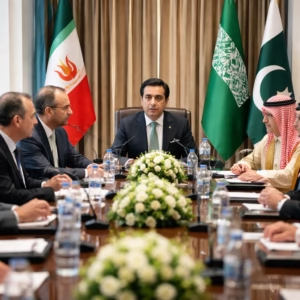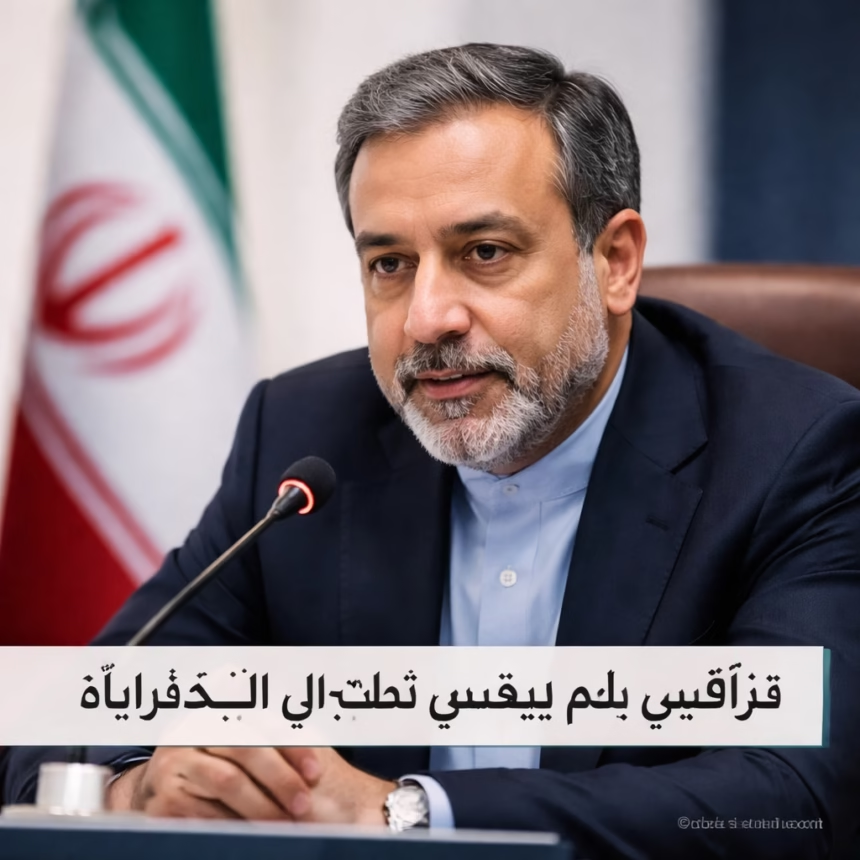
Abbas Araghchi, Iran's former Deputy Foreign Minister and a prominent figure in the nation's diplomatic corps, recently made a significant clarification, asserting that Tehran has never refused to engage in discussions or meetings hosted in Islamabad. This statement, delivered amidst ongoing regional complexities, challenges existing narratives and potentially signals a renewed impetus for diplomatic engagement between Iran and Pakistan, and possibly broader regional stakeholders.
Background: A History of Complex Relations
Abbas Araghchi has been a central figure in Iranian diplomacy for decades, most notably as a senior negotiator for the Joint Comprehensive Plan of Action (JCPOA), the 2015 nuclear deal. His pronouncements often carry significant weight, reflecting Tehran's strategic thinking. Iran and Pakistan, two significant Muslim-majority nations sharing a long, porous border, have a relationship characterized by both cooperation and occasional friction. Historically, their ties have been shaped by shared cultural heritage, economic aspirations, and geopolitical realties, including the volatile situation in Afghanistan.
For years, there has been an underlying perception, sometimes fueled by media reports or diplomatic whispers, that Iran might be hesitant to fully embrace certain regional diplomatic initiatives, particularly those perceived to be influenced by rival powers or hosted in specific capitals. Islamabad, as Pakistan's capital, often serves as a hub for regional diplomacy, sometimes hosting multilateral talks on issues ranging from Afghanistan's future to broader economic connectivity. Speculation regarding Iran's potential reluctance to participate in Islamabad-hosted dialogues could have stemmed from various factors, including the intricate web of regional alliances, the impact of international sanctions on Iran, or differing approaches to regional security challenges.
The Iran-Pakistan relationship, while generally cordial, faces unique challenges. Border security remains a persistent concern, with both nations grappling with cross-border militant activities. Economically, the ambitious Iran-Pakistan (IP) gas pipeline project, often dubbed the "Peace Pipeline," has languished for years due to international sanctions on Iran, despite Pakistan's pressing energy needs. Furthermore, the two countries navigate their respective relationships with global powers, with Pakistan maintaining strong ties with China and the United States, while Iran increasingly pivots towards an "Eastward Look" policy. The future of Afghanistan post-US withdrawal also presents a shared but complex security and humanitarian concern, making bilateral and multilateral coordination crucial.
Key Developments: Setting the Record Straight
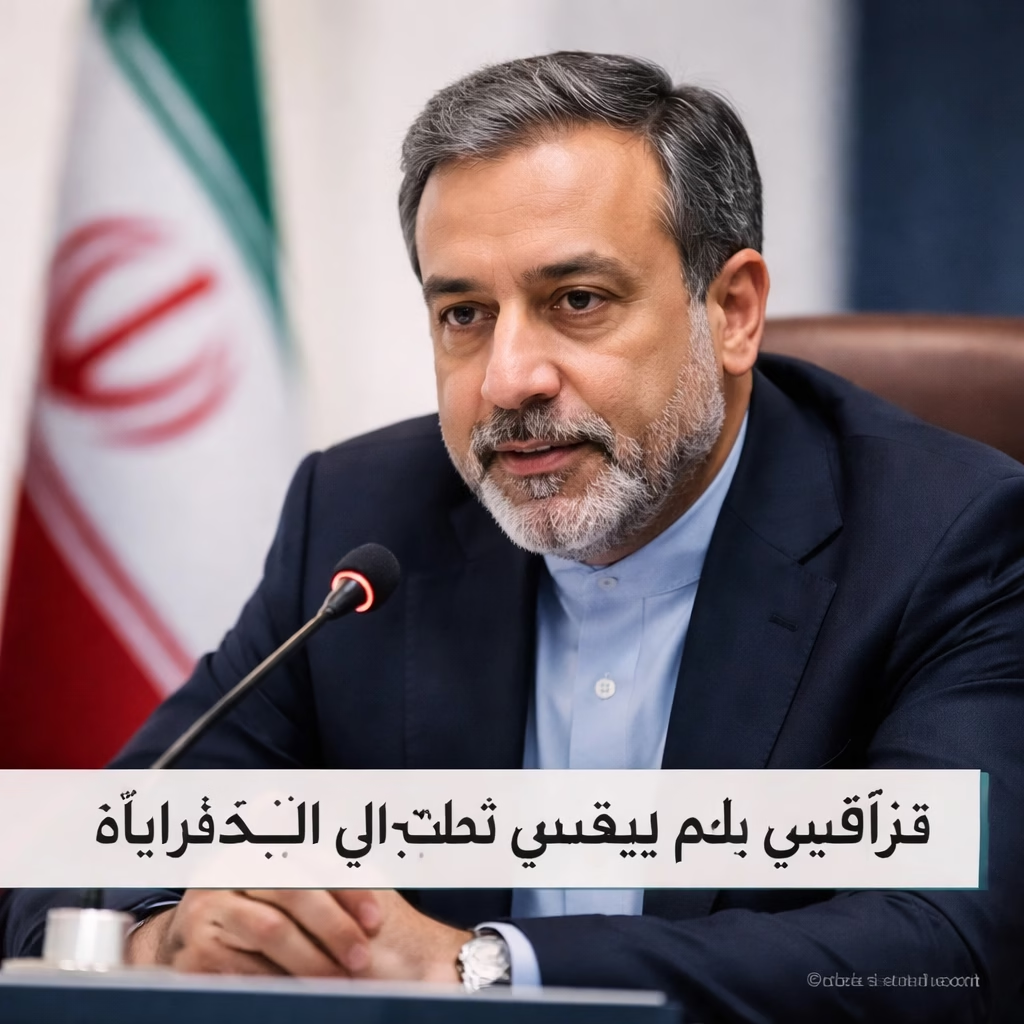
Araghchi's recent declaration, "We never refused to go to Islamabad," directly addresses and refutes any notion of Iranian intransigence regarding diplomatic venues. This statement is particularly noteworthy because it comes at a time when regional dynamics are in flux, with renewed efforts by various actors to foster dialogue and de-escalation. By explicitly clarifying Iran's position, Araghchi is essentially dismantling a potential barrier to future engagements, indicating a proactive stance rather than a reactive one.
More Read

The timing of this statement could be linked to several factors. There has been a discernible uptick in diplomatic activity across the Middle East and South Asia, with various states seeking to mend fences or forge new partnerships. For instance, Saudi Arabia and Iran have engaged in direct talks, signaling a broader regional trend towards de-escalation. Pakistan, for its part, has often sought to play a mediating role in regional disputes, including those involving Iran. Araghchi's clarification could be seen as an endorsement of Pakistan's potential as a neutral ground for dialogue, or as an invitation to intensify bilateral and multilateral discussions.
Recent interactions between Iranian and Pakistani officials, though not always high-profile, have consistently underscored a mutual desire for enhanced cooperation. Economic delegations, security consultations, and cultural exchanges continue, albeit often overshadowed by larger geopolitical narratives. Araghchi's statement serves to underscore that, despite any perceived hurdles, the fundamental willingness for engagement on Iran's part has always been present, positioning Tehran as a constructive player in regional diplomacy.
More Read

Impact: Reshaping Perceptions and Prospects
The implications of Araghchi's statement are far-reaching, potentially reshaping perceptions and opening new avenues for cooperation.
Enhanced Diplomatic Standing for Iran
For Iran, the statement reinforces its image as a nation open to dialogue and engagement, countering narratives that might portray it as isolated or unwilling to participate in regional forums. This proactive stance can bolster its diplomatic leverage and foster greater understanding among regional and international partners. It signals a readiness to engage on critical issues, from regional security to economic integration, without preconditions regarding the host nation.
Pakistan’s Role as a Regional Mediator
Pakistan's long-standing aspiration to be a regional bridge-builder is affirmed by Araghchi's clarification. If Islamabad is indeed seen as a welcome venue for Iranian diplomats, it strengthens Pakistan's hand as a potential host for significant multilateral discussions, particularly concerning Afghanistan or broader South Asian security. This could elevate Pakistan's diplomatic profile and influence in regional affairs.
Regional Stability and Cooperation
The statement could pave the way for more substantive discussions on shared challenges. Issues such as border security, counter-terrorism efforts, and the stabilization of Afghanistan are paramount for both Iran and Pakistan. A clear willingness from Iran to engage in Islamabad removes a potential psychological or political barrier, facilitating closer coordination on these critical fronts. Furthermore, it could encourage other regional players to consider Islamabad as a viable platform for broader dialogue, potentially involving Gulf states or Central Asian republics.
Economic Opportunities
Beyond security, the economic dimension holds significant potential. Enhanced diplomatic engagement could breathe new life into stalled projects like the IP gas pipeline. Greater trust and political will could also unlock opportunities for increased bilateral trade, investment, and infrastructure development, benefiting border communities and national economies alike. The China-Pakistan Economic Corridor (CPEC) could also find new avenues for collaboration with Iranian economic initiatives, creating a more integrated regional economic landscape.
What Next: Charting the Course for Future Engagement
Araghchi's clarification, while significant, is merely a starting point. The real measure of its impact will be seen in the tangible diplomatic activities that follow.
More Read

Potential for High-Level Meetings
The most immediate expectation is the potential for increased high-level exchanges between Iran and Pakistan, possibly culminating in ministerial or even head-of-state visits to Islamabad. These meetings would likely focus on a comprehensive agenda, including border management, economic cooperation, and strategic alignment on regional issues.
Key Agenda Items for Future Talks
Future discussions in Islamabad could encompass a wide array of critical topics: * Afghanistan Stability: Coordinated efforts to support peace, prevent humanitarian crises, and manage refugee flows from Afghanistan.
* Border Security: Enhanced intelligence sharing and joint operations to combat cross-border smuggling, drug trafficking, and militant activities.
* Energy Cooperation: Re-evaluating the feasibility of the IP gas pipeline, exploring alternative energy trade mechanisms, and developing renewable energy projects.
* Trade and Connectivity: Reducing trade barriers, exploring new transit routes, and strengthening economic linkages, potentially leveraging CPEC.
* Regional Security Architecture: Discussions on a broader framework for regional security and cooperation, potentially involving other neighboring states.
Challenges and Opportunities
Despite the positive signal, significant challenges remain. The shadow of international sanctions on Iran continues to complicate economic relations and limit the scope of certain collaborations. Internal political dynamics in both Iran and Pakistan, as well as the broader geopolitical rivalries in the Middle East, could also influence the pace and nature of engagement. However, the shared interests in regional stability, economic development, and counter-terrorism provide a strong foundation for overcoming these obstacles. The cultural and historical ties between the two nations also offer a unique opportunity to build trust and foster deeper understanding.
Araghchi's statement acts as a clear invitation for deeper engagement, underscoring Iran's readiness to participate constructively in regional dialogues. The ball is now firmly in the court of regional diplomacy to translate this clarification into concrete steps towards enhanced cooperation and a more stable, prosperous South Asia.