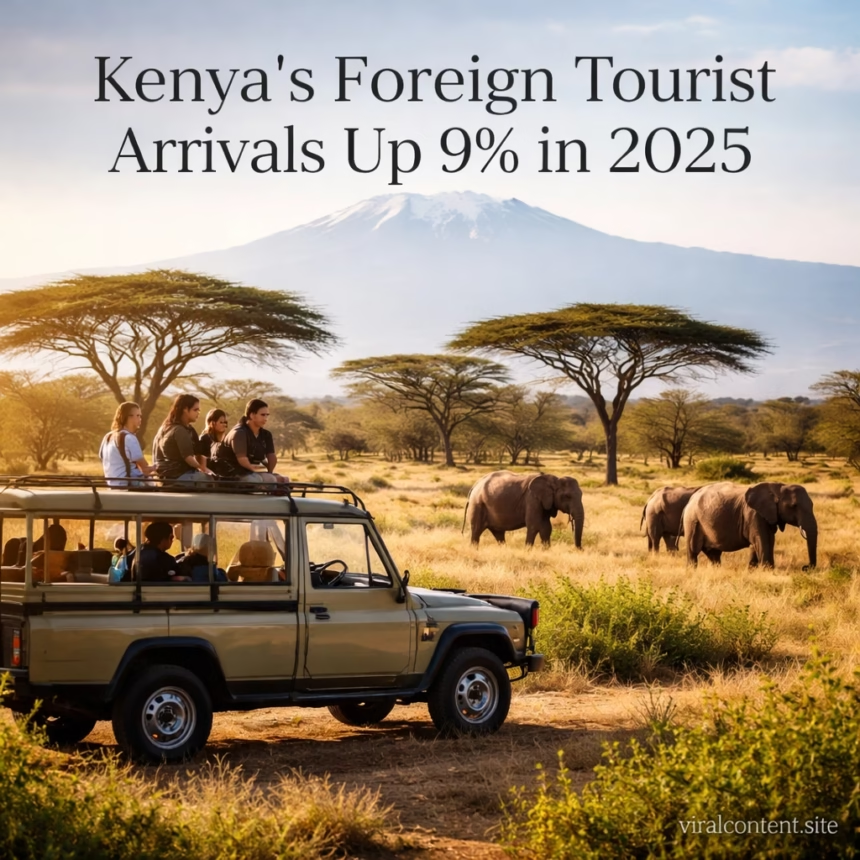
Kenya's vibrant tourism sector is anticipating a significant boost, with foreign tourist arrivals projected to increase by 9 percent in 2025. This optimistic forecast, recently highlighted by industry insights, signals a robust recovery and expansion for one of the East African nation's key economic pillars, driven by strategic initiatives and global interest in its diverse attractions. The projected surge underscores a concerted effort by both public and private stakeholders to reclaim and surpass pre-pandemic visitation levels, positioning Kenya as a premier global travel destination.
Background and Economic Significance
Tourism has long been a cornerstone of the Kenyan economy, consistently ranking among the top foreign exchange earners. Before the global pandemic, the sector directly contributed over 8% to the Gross Domestic Product (GDP) and supported millions of livelihoods, both directly and indirectly. The country’s allure lies in its unparalleled natural beauty, encompassing vast savannahs teeming with wildlife, pristine Indian Ocean beaches, majestic mountain ranges, and rich cultural heritage.
In 2019, Kenya welcomed approximately 2.05 million international visitors, generating significant revenue for the national coffers. However, the onset of the COVID-19 pandemic in early 2020 dealt a severe blow to global travel, causing a precipitous decline in tourist numbers. Kenya experienced a sharp contraction, with arrivals plummeting to just over 560,000 in 2020, representing a staggering 72% drop. This period necessitated urgent government interventions and industry adaptations to mitigate losses and prepare for future recovery.
The recovery journey began gradually in 2021 and gained momentum through 2022 and 2023. Strategic government policies, including targeted marketing campaigns and enhanced health protocols, played a crucial role in rebuilding traveler confidence. The Ministry of Tourism, Wildlife and Heritage, alongside the Kenya Tourism Board (KTB), spearheaded initiatives to showcase Kenya's commitment to visitor safety and its readiness to welcome tourists back. This foundational work has laid the groundwork for the ambitious 2025 growth projection, reflecting a sustained trajectory towards full revitalization and expansion beyond previous benchmarks.
More Read

Key Policy Shifts and Recent Developments
The projected 9 percent increase in foreign tourist arrivals by 2025 is largely attributed to several pivotal policy shifts and strategic developments implemented by the Kenyan government and tourism stakeholders. These initiatives are designed to enhance accessibility, improve visitor experience, and broaden the country’s appeal across diverse source markets.
Revolutionary Visa Policy: The Electronic Travel Authorization (ETA)
Perhaps the most impactful development is Kenya’s bold move towards a visa-free regime for all international visitors, effective January 2024. This policy replaces the traditional visa requirement with an Electronic Travel Authorization (ETA) system. The ETA, obtained online prior to travel, simplifies the entry process, reduces bureaucratic hurdles, and aims to position Kenya as one of the most accessible tourist destinations globally. While not entirely “free” due to a processing fee, it signifies a major shift from a restrictive visa system to a more welcoming and efficient digital clearance process. This move is expected to significantly boost spontaneous travel and attract a wider demographic of tourists who might have previously been deterred by complex visa applications.
Enhanced Marketing and Promotion
The “Magical Kenya” brand continues to be at the forefront of the country’s international marketing efforts. Recent campaigns have focused on digital platforms, leveraging social media, influencer partnerships, and virtual reality experiences to showcase Kenya’s diverse offerings. Participation in major international travel fairs, such as ITB Berlin, World Travel Market in London, and Arabian Travel Market, has been intensified, allowing Kenyan tour operators and hoteliers to forge new partnerships and reach potential visitors directly. These campaigns strategically highlight not only the iconic safari experiences but also lesser-known attractions like cultural festivals, adventure sports, and eco-tourism initiatives.
More Read

Infrastructure Upgrades and Connectivity
Investment in critical infrastructure has been a continuous priority. The expansion and modernization of key airports, including Jomo Kenyatta International Airport (JKIA) in Nairobi and Moi International Airport in Mombasa, have increased handling capacity and improved passenger flow. Regional airports like Kisumu and Malindi have also seen upgrades, enhancing domestic connectivity to various tourist circuits. Furthermore, ongoing improvements to road networks connecting national parks, reserves, and coastal towns ensure smoother and more comfortable travel for tourists. These infrastructure enhancements are crucial for accommodating the anticipated increase in arrivals and maintaining high service standards.
Product Diversification and Niche Markets
While traditional safari and beach holidays remain popular, Kenya is actively diversifying its tourism product offerings to cater to evolving traveler preferences. There’s a growing emphasis on community-based tourism, allowing visitors to engage with local cultures and contribute directly to community development. Eco-tourism initiatives, wellness retreats, MICE (Meetings, Incentives, Conferences, and Exhibitions) tourism, and adventure tourism (e.g., trekking Mount Kenya, white-water rafting) are being actively promoted. This diversification strategy aims to attract a broader range of visitors and encourage longer stays, thereby increasing overall tourism expenditure.
Impact on the Kenyan Economy and Society
The projected 9 percent increase in foreign tourist arrivals by 2025 is poised to have a profound and multifaceted impact across Kenya’s economic and social landscape. This growth signifies more than just numbers; it represents a significant injection of capital, job creation, and sustainable development opportunities.
Economic Stimulation and Foreign Exchange
An influx of nearly double-digit percentage growth in tourists directly translates to increased foreign exchange earnings for Kenya. Tourists spend on accommodation, transportation, food, safaris, souvenirs, and local services, injecting vital currency into the economy. This bolsters Kenya’s balance of payments, strengthens the shilling, and provides crucial funds for national development projects. The direct contribution of tourism to GDP is expected to rise, potentially surpassing pre-pandemic levels and reinforcing its position as a primary economic driver.
Job Creation and Livelihoods
The tourism sector is a significant employer in Kenya, supporting millions of direct and indirect jobs. A surge in arrivals will necessitate increased staffing across the hospitality industry, including hotels, lodges, resorts, tour operators, guides, and transportation services. Beyond direct employment, the ripple effect extends to related sectors such as agriculture (supplying food to hotels), retail (souvenirs, local crafts), construction (new hotels, infrastructure), and entertainment. This job creation is particularly vital for youth employment and poverty reduction, especially in rural areas where many tourist attractions are located.
Support for Local Communities and Conservation
Many of Kenya’s premier tourist attractions are situated within or adjacent to rural communities. Increased tourism revenue often translates into enhanced community development projects, funded through direct engagement or through government allocations from tourism earnings. This includes improved infrastructure like schools, health clinics, and water projects. Furthermore, a thriving tourism sector provides crucial funding for wildlife conservation efforts. Park entry fees and conservation levies contribute directly to protecting Kenya’s iconic wildlife and their habitats, mitigating human-wildlife conflict, and supporting anti-poaching initiatives. This creates a symbiotic relationship where tourism sustains conservation, and conservation, in turn, sustains tourism.
Growth in Hospitality and Ancillary Industries
The anticipated growth will spur further investment in the hospitality sector. Existing hotels and lodges will experience higher occupancy rates, prompting renovations and expansions. New establishments are likely to emerge, particularly in underserved regions or to cater to specific market segments. This growth also benefits ancillary industries, including local food producers, artisans, transport providers, and service industries like laundry and security. The entire supply chain connected to tourism stands to gain from this positive outlook.
What Lies Ahead: Future Milestones and Challenges
Looking beyond 2025, Kenya’s tourism sector is poised for continued growth, with stakeholders setting ambitious long-term targets and strategies. However, this trajectory is not without potential challenges that require proactive management and adaptive policies.
Long-Term Vision and Targets
The 9 percent growth projection for 2025 is viewed as a stepping stone towards Kenya’s broader vision of becoming a top-tier global tourism destination, aiming for sustained annual growth. The long-term goal is to consistently attract over 3 million international visitors annually, potentially reaching 5 million in the next decade, while simultaneously increasing average tourist spend and length of stay. This vision emphasizes high-value, experiential tourism that maximizes economic benefits while minimizing environmental impact. Future milestones will likely include further expansion of air routes, development of new tourism circuits, and continued promotion of Kenya as a year-round destination.
Sustainable Tourism and Environmental Stewardship
As tourist numbers rise, the imperative for sustainable tourism practices becomes even more critical. Kenya is increasingly focusing on eco-tourism and responsible travel, ensuring that the growth benefits local communities and preserves the country’s natural heritage. Future initiatives will likely include stricter environmental regulations for tourism operators, promotion of carbon-neutral tourism, investment in renewable energy for lodges, and enhanced community involvement in conservation efforts. The goal is to balance economic gain with ecological preservation, ensuring that Kenya’s unique attractions remain pristine for future generations.
Addressing Potential Challenges
Despite the optimistic outlook, several challenges could influence the sector’s trajectory. Global economic downturns, geopolitical instability, and health crises remain external threats that could impact travel patterns. Domestically, issues such as infrastructure maintenance, skilled labor shortages, and ensuring equitable distribution of tourism benefits across all regions will require ongoing attention. Climate change, with its potential impact on wildlife migration patterns and coastal ecosystems, also presents a long-term concern that demands adaptive strategies.
To mitigate these challenges, Kenya is committed to diversifying its source markets, reducing over-reliance on traditional Western markets by actively targeting emerging economies in Asia, the Middle East, and other African nations. Continuous investment in security infrastructure and intelligence is also paramount to ensure visitor safety. Furthermore, educational and vocational training programs are being enhanced to develop a highly skilled workforce capable of delivering world-class tourism services. The government also plans to refine the ETA system based on user feedback and technological advancements, ensuring its efficiency and user-friendliness.
Continued Policy Evolution and Innovation
The success of the 2025 projection will likely spur further policy evolution. This could include additional incentives for local and international investors in tourism infrastructure, particularly in less-developed regions. Digital transformation within the tourism sector, from booking platforms to in-destination experiences, will continue to be a focus. Kenya is also exploring ways to integrate technology for enhanced visitor management, personalized travel itineraries, and real-time information dissemination. The nation’s commitment to innovation and adaptability will be key to sustaining its growth momentum and securing its position as a leading global tourism destination for years to come.