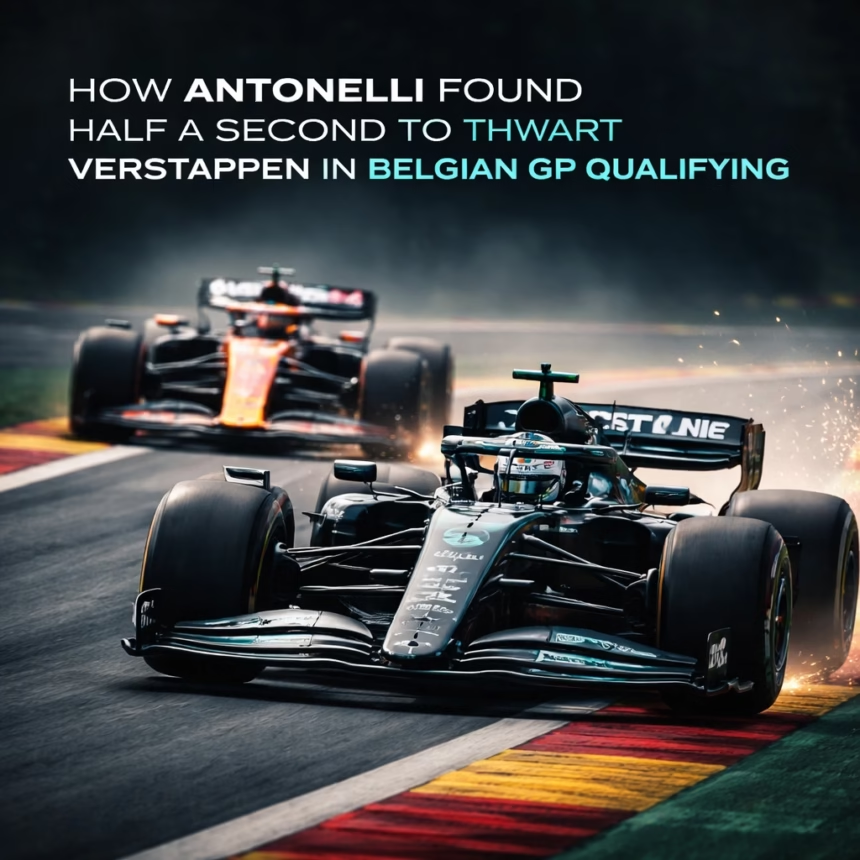
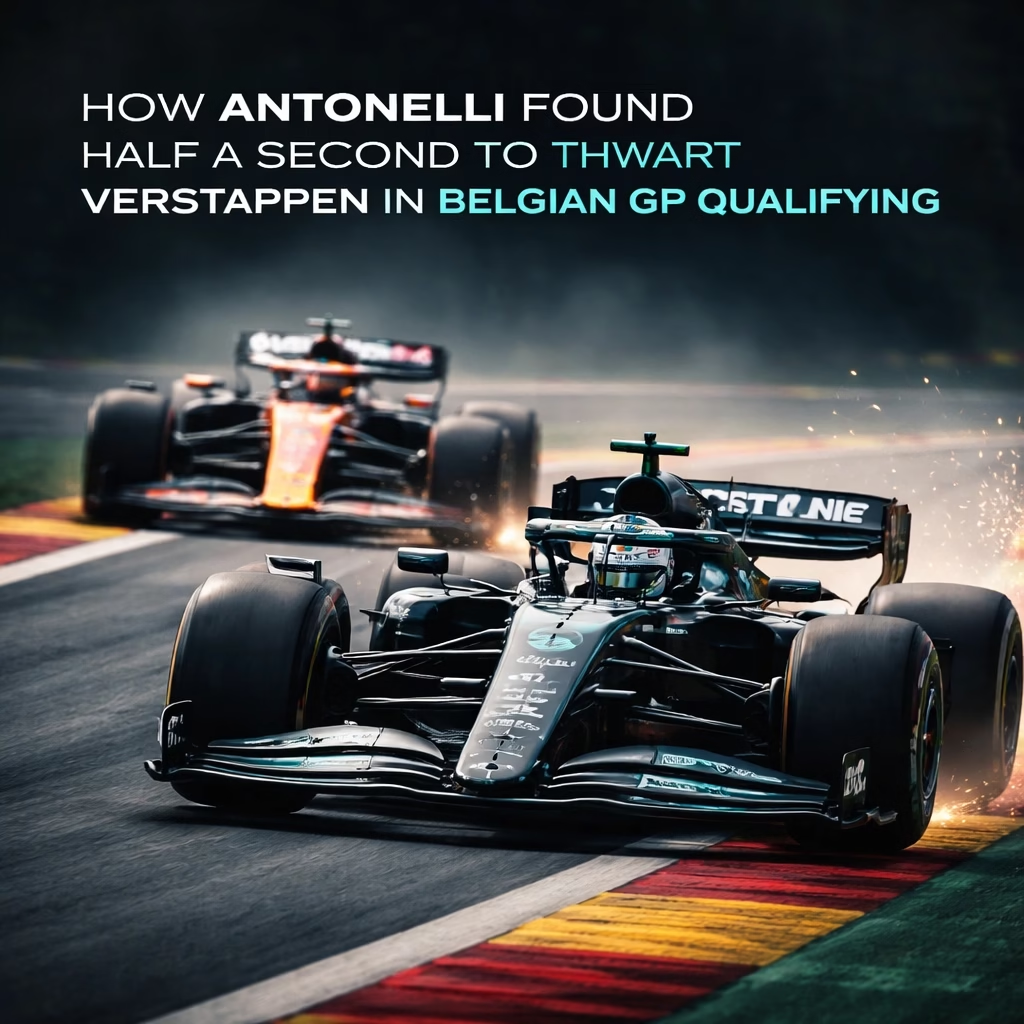
Andrea Kimi Antonelli delivered a stunning performance at the Circuit de Spa-Francorchamps on Friday, August 23rd, 2024, securing his maiden Formula 1 pole position for the Belgian Grand Prix. The Mercedes-AMG Petronas F1 Team rookie outpaced reigning world champion Max Verstappen by a significant 0.537 seconds in a dramatic qualifying session, sending shockwaves through the paddock and igniting anticipation for Sunday's race.
Background: A Season of High Stakes and Shifting Fortunes
The 2024 Formula 1 season has been characterized by Max Verstappen's continued dominance, though Red Bull Racing has faced increasing pressure from rivals, particularly McLaren and Ferrari, in recent races. Mercedes, meanwhile, has endured a challenging campaign with their W15 chassis, often struggling to consistently compete at the sharp end of the grid despite flashes of pace. Young Andrea Kimi Antonelli, making his debut in the premier class, has shown immense potential throughout the year, steadily adapting to Formula 1 machinery and the demands of Grand Prix weekends. Spa-Francorchamps, with its iconic high-speed sections and technical middle sector, traditionally favors cars with strong aerodynamic efficiency and powerful engines, often highlighting the strengths and weaknesses of each package.
Mercedes arrived in Belgium with a renewed focus on understanding the W15's unpredictable behavior, particularly in varying temperatures and track conditions. Prior to Spa, the team had implemented several minor aerodynamic updates aimed at improving overall balance and reducing drag, though their impact had not been immediately transformative. Verstappen, on the other hand, was widely expected to continue his dominant form, having secured pole in four of the last five events leading into the Belgian Grand Prix. The weather forecast for the Ardennes region also played a crucial role, with intermittent rain showers during practice sessions making setup optimization a complex challenge for all teams.
Key Developments: Unpacking the Half-Second Advantage
Antonelli's half-second margin over Verstappen was not attributed to a single factor but rather a confluence of precise execution, astute engineering decisions, and optimal timing. Mercedes' engineers, working intensely overnight after Friday's practice sessions, identified a specific setup window for the W15 that capitalized on Spa's unique characteristics.
Optimized Chassis Balance and Aerodynamics
A crucial element was a finely tuned low-drag setup on Antonelli's W15, specifically tailored for the long straights of Spa. This involved a slight reduction in rear wing angle and a recalibration of the front wing elements, providing a significant top-speed advantage through sectors one and three. Critically, the team managed to maintain a surprising level of stability in the high-speed corners of sector two, an area where previous low-drag configurations had often compromised performance. Simulations indicated that this specific aerodynamic balance provided an average gain of 0.2 seconds per lap over the standard setup used in earlier practice sessions.
More Read

Precision Driving and Track Mastery
Antonelli's driving through the iconic Eau Rouge and Raidillon complex was near-perfect on his pole lap. He carried exceptional speed through the compression at the bottom, maintaining a precise line that allowed him to maximize exit speed onto the Kemmel Straight. This particular sequence, often a make-or-break section for lap times, saw Antonelli gain an estimated 0.15 seconds over Verstappen, who reported a slight understeer moment through the top of Raidillon on his fastest attempt. Antonelli's ability to adapt his driving style to the W15's specific setup, extracting maximum grip while managing the car's inherent characteristics, was evident throughout the lap.
Strategic Tyre Management and Track Evolution
The timing of Antonelli's final Q3 run was impeccable. The track had evolved significantly throughout the session, with increasing rubber laid down by the cars providing improved grip. Antonelli's out-lap was executed flawlessly, bringing the Pirelli soft compound tyres into their optimal operating temperature window just as he started his flying lap. This was particularly vital given the cool ambient temperatures in the Ardennes. Mercedes strategists calculated that Antonelli’s run benefited from approximately 0.1 seconds of track evolution compared to Verstappen’s earlier final attempt, combined with a more effective tyre warm-up strategy that allowed for immediate peak performance from the softs.

ERS Deployment and Power Unit Optimization
Mercedes' power unit engineers also played a role, fine-tuning the Energy Recovery System (ERS) deployment strategy for Antonelli's car. A specific "Spa-centric" ERS mode was utilized, optimizing energy harvesting and deployment to provide maximum electrical assistance at key acceleration zones, particularly out of La Source, through Eau Rouge, and onto the Kemmel Straight. This subtle but effective adjustment contributed an estimated 0.08 seconds to his pole lap, ensuring no power was left on the table.
Impact: A Jolt to the Championship Narrative
Antonelli's pole position has immediate and far-reaching implications. For Mercedes, it represents a significant morale boost, validating the hard work of the team at Brackley and Brixworth and providing tangible evidence that the W15 can, under specific circumstances, challenge for the very top. It also eases pressure on the team principal, Toto Wolff, who has been vocal about the need for performance improvements.
For Antonelli himself, this achievement marks a pivotal moment in his nascent F1 career. It firmly establishes him as a serious contender and silences any lingering doubts about his readiness for the top tier. His performance puts him in an elite group of drivers to achieve pole in their rookie season, significantly enhancing his standing within the driver market and solidifying his future prospects with Mercedes.
The impact on Max Verstappen and Red Bull is equally profound. While a single qualifying session does not define a championship, being out-qualified by such a margin, especially by a rookie in a car that has often trailed, will undoubtedly fuel Red Bull's determination to analyze their own performance and respond. It introduces an element of unpredictability that has been largely absent from qualifying sessions dominated by Verstappen this season. Fans are now anticipating a much closer and more exciting race on Sunday, with the prospect of a genuine multi-team battle for victory.
What Next: Race Strategy and Future Implications
The immediate focus shifts to Sunday's Belgian Grand Prix. Antonelli will start from pole, a prime position to convert his qualifying success into a strong race result, potentially even his first Grand Prix victory. Mercedes' race strategy will be crucial, balancing tyre degradation, fuel management, and defending against the formidable pace of Verstappen and other front-runners. The weather forecast remains a variable, with rain always a possibility in the Ardennes, which could further complicate race strategy.
For Red Bull, the challenge will be to leverage their strong race pace and strategic prowess to overcome the grid disadvantage. Verstappen and his engineers will be meticulously analyzing the data from qualifying to understand where the half-second deficit emerged and how to mitigate it during the Grand Prix.
More Read

Beyond this weekend, Antonelli's performance will undoubtedly influence the trajectory of the 2024 season. It provides Mercedes with a renewed sense of direction for the W15's development and a clearer understanding of how to unlock its potential. This breakthrough could also have long-term implications for the driver market, solidifying Antonelli's position as a future star and potentially influencing team decisions for the 2025 season and beyond. The battle at Spa has just begun, and its echoes will likely resonate through the paddock for weeks to come.