Trump's Blockade Gambit: US Threatens Renewed Maritime Pressure on Iran Amid West Asia Volatility
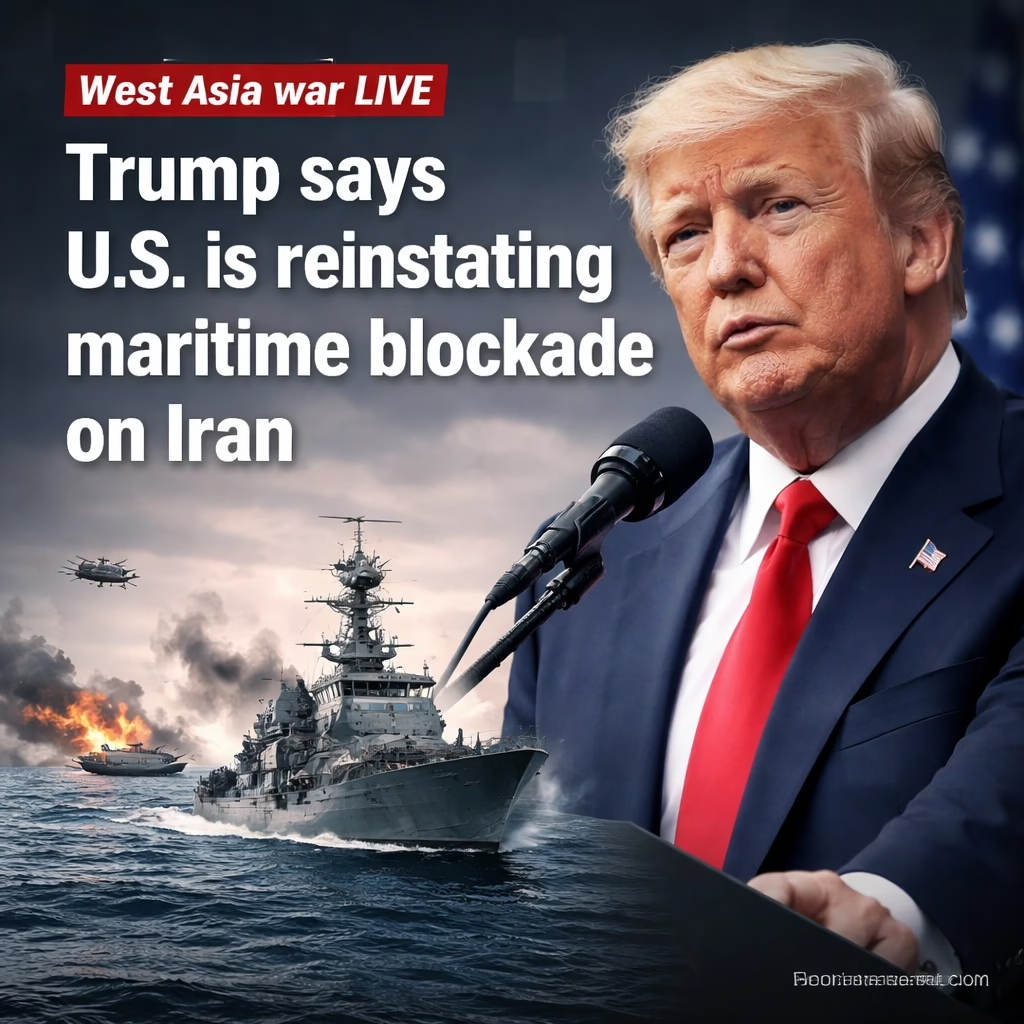
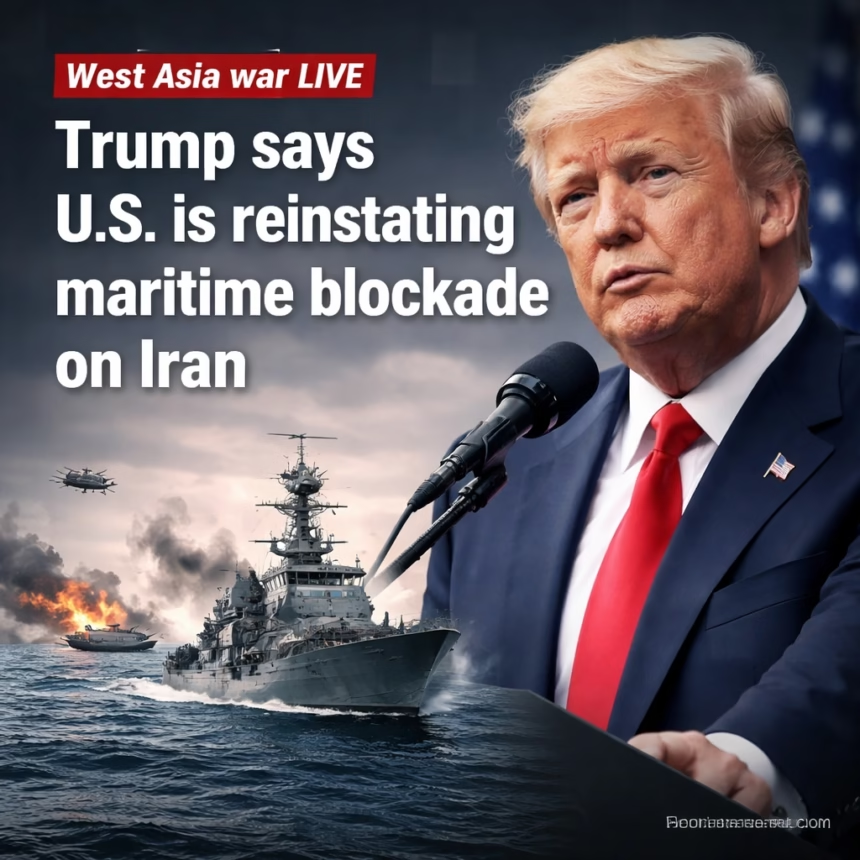
Former U.S. President Donald Trump has announced his intention to reinstate a maritime blockade on Iran if he returns to office, a declaration that has sent immediate ripples through global diplomatic and financial circles.
This pronouncement comes amidst escalating conflicts and heightened geopolitical tensions across West Asia, particularly impacting vital shipping lanes in the Persian Gulf and Red Sea.
The prospect of such a move re-energizes concerns over potential military confrontations and significant disruptions to international trade and energy markets.
Background: A Decades-Long Standoff
The relationship between the United States and Iran has been deeply strained since the 1979 Islamic Revolution, characterized by diplomatic isolation and economic pressure.
A brief period of détente emerged with the 2015 Joint Comprehensive Plan of Action (JCPOA), or Iran nuclear deal, which saw Iran limit its nuclear program in exchange for sanctions relief.
However, in May 2018, then-President Donald Trump withdrew the U.S. from the JCPOA, reimposing a "maximum pressure" campaign of sanctions.
These measures severely targeted Iran's economy, particularly its crucial oil exports and access to international banking.
While not a full military blockade, previous U.S. sanctions effectively targeted maritime trade, blacklisting Iranian tankers and threatening secondary sanctions against entities facilitating oil sales.
The Strait of Hormuz, a narrow waterway connecting the Persian Gulf to the Gulf of Oman, remains a critical global chokepoint through which a significant portion of the world's oil passes. Iran has historically threatened its closure in response to severe pressure.
Regionally, Iran supports various proxy groups, including Hezbollah in Lebanon, militias in Iraq and Syria, and the Houthi movement in Yemen.
Recent Houthi attacks on international shipping in the Red Sea, starting in late 2023, have further militarized key maritime routes, drawing a multinational naval response and highlighting the fragility of global trade lanes in West Asia.
Key Developments: Trump’s Stance and Reactions
Donald Trump's recent declaration outlined his intent to implement a "maritime blockade" on Iran if he secures the presidency again.
This concept generally implies the use of naval forces to prevent ships from entering or leaving Iranian ports or carrying specific goods, representing a potential military interdiction beyond economic sanctions.
The former president made this statement during a campaign event, signaling a return to a highly aggressive posture towards Tehran and emphasizing a need for "strength" against perceived destabilizing activities.
This contrasts sharply with the current Biden administration's approach, which, while maintaining robust sanctions, has primarily focused on deterrence, diplomatic pressure, and targeted military actions against proxy groups, such as responses to Houthi attacks, rather than a full blockade.
Iranian officials have condemned Trump's remarks as warmongering and a violation of international law. Tehran has historically vowed severe responses to any attempts to disrupt its trade or sovereignty, including threats to close the Strait of Hormuz.
Internationally, European allies, who favor diplomatic solutions and sought to preserve the JCPOA, would likely view a blockade with alarm, fearing severe regional destabilization.
Global powers like China and Russia, both with economic ties to Iran and opposition to unilateral U.S. actions, would almost certainly denounce such a measure as a provocative escalation, potentially increasing global geopolitical friction.
Impact: Far-Reaching Consequences
The implementation of a maritime blockade on Iran would trigger severe and far-reaching consequences across multiple global sectors.
As Iran holds significant crude oil and natural gas reserves, a blockade would severely restrict its exports, removing substantial supply from global markets.
This reduction, especially if compounded by disruptions in the Strait of Hormuz, would almost certainly lead to a sharp spike in global oil prices, impacting economies worldwide and potentially fueling inflation.
Beyond energy, a blockade would affect all commercial shipping to and from Iranian ports. Insurance premiums for vessels in the Persian Gulf would skyrocket, making trade prohibitively expensive and disrupting vital supply chains.
Regionally, a blockade would represent a dramatic escalation in the US-Iran standoff, significantly increasing the risk of direct military confrontation. Iran would likely view such an action as an act of war, potentially prompting retaliatory measures against U.S. assets, regional allies like Saudi Arabia and the UAE, or international shipping.
The conflict could easily spill over, drawing in other regional and international actors, potentially leading to a broader West Asia war. Israel, a staunch opponent of Iran, could also become entangled.
For the Iranian populace, the already struggling economy would face unprecedented pressure, leading to severe shortages of essential goods, medical supplies, and food, potentially exacerbating internal dissent.
Globally, a U.S.-led blockade would test international law and alliances, likely deepening divides with European partners while strengthening Iran's strategic alignment with Russia and China, contributing to a more fractured global order.

What Next: Navigating the Uncertain Future
The prospect of a renewed U.S. maritime blockade on Iran is intrinsically linked to the upcoming U.S. presidential election.
Should Donald Trump win the 2024 election, his administration would likely prioritize a confrontational approach to Iran, potentially moving to implement such a blockade.
Conversely, a different election outcome might lead to a continuation of the current strategy, though sanctions would likely remain in place.
Despite aggressive rhetoric, international diplomatic efforts to de-escalate tensions and find common ground on Iran's nuclear program and regional behavior are expected to continue.
European nations and the UN may intensify mediation attempts to prevent military escalation, though any renewed talks face significant hurdles.
Military forces in the Persian Gulf, including the U.S. Fifth Fleet and allied navies, will remain on high alert, with intensified monitoring of Iranian naval activities in key waterways like the Strait of Hormuz.
Iran's leadership will assess its options, which could include accelerating nuclear enrichment, increasing support for proxies, or directly challenging any blockade efforts.
Globally, businesses and governments will continue to make contingency plans for potential disruptions to oil supplies and trade routes, as the situation remains highly volatile.
The coming months will be crucial in determining whether this threat remains rhetoric or transforms into a new, dangerous reality for West Asia and the world.