Brazil's Geopolitical Shift: Lula's Stance on China and US Ignites Political Firestorm
Brazil's Geopolitical Shift: Lula's Stance on China and US Ignites Political Firestorm
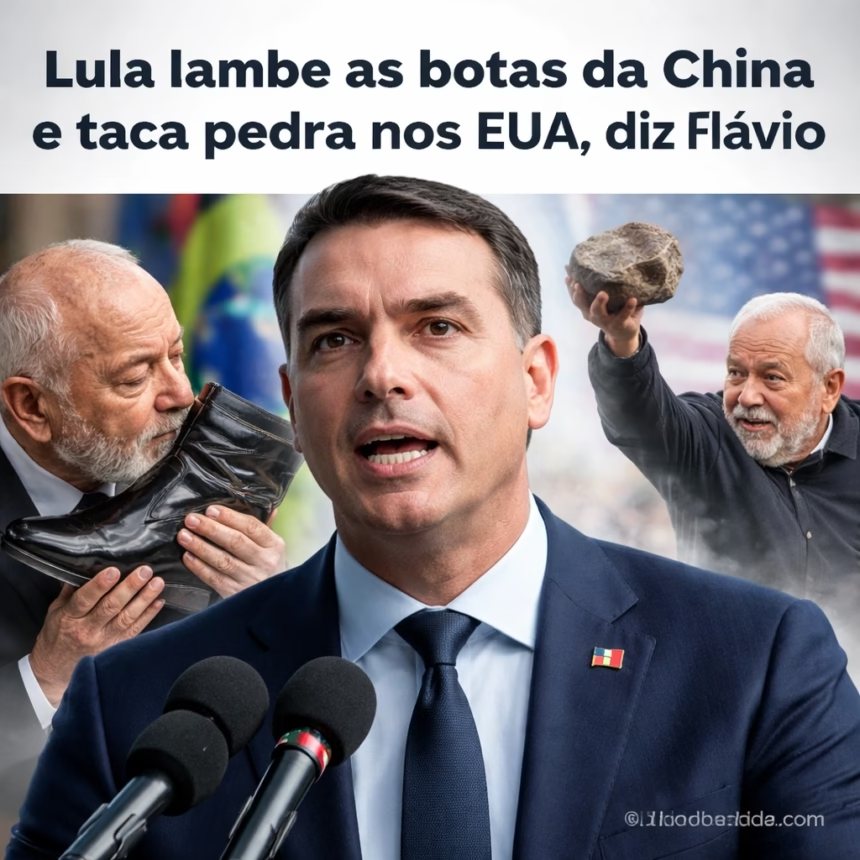
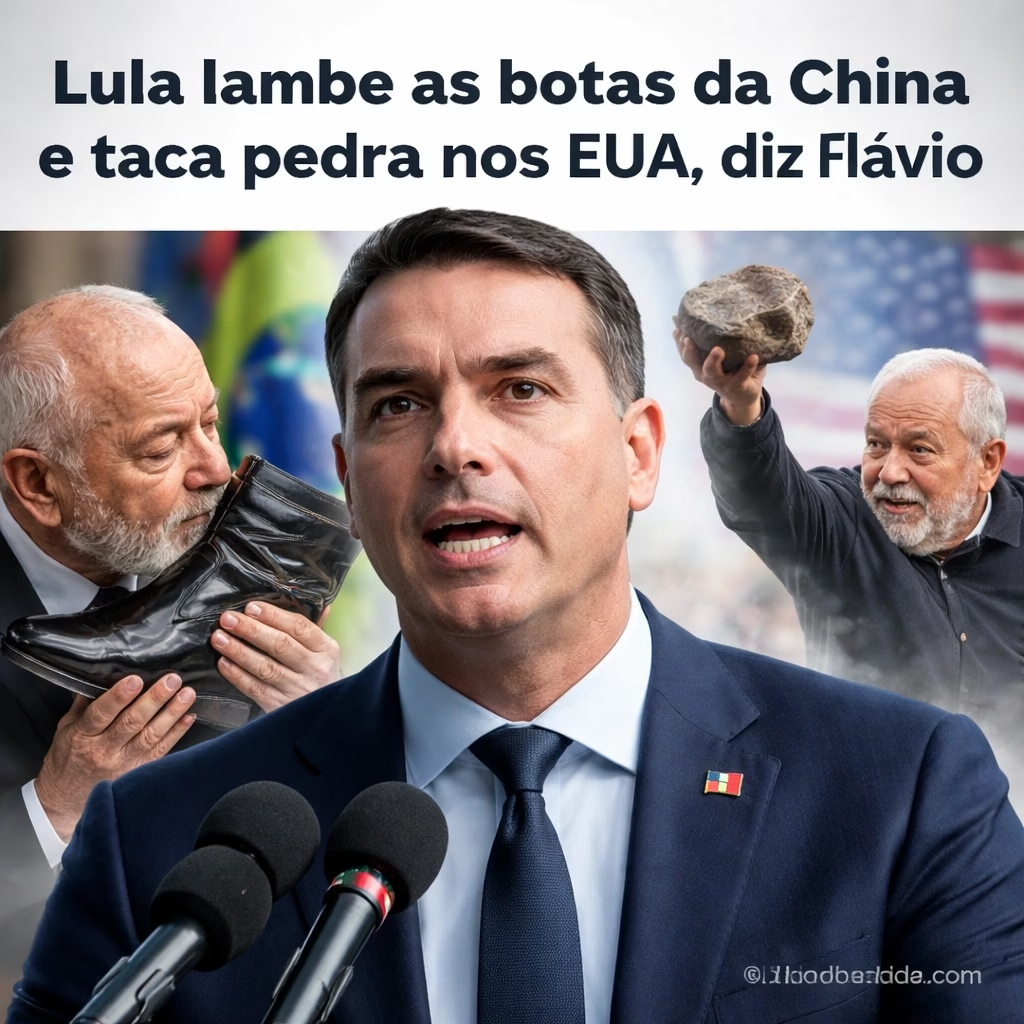
A recent statement by Senator Flávio Bolsonaro has ignited a fierce debate in Brazil regarding President Luiz Inácio Lula da Silva's foreign policy orientation. Bolsonaro critically asserted that Lula's administration has shown an undue deference to China while adopting a confrontational stance towards the United States.
This critique has fueled a broader discussion across Brazilian media and political circles, scrutinizing the nation's diplomatic trajectory and its complex relationships with the world's two largest economies, setting the stage for an intense examination of Brazil's strategic allegiances in the 21st century.
Background: Brazil’s Evolving Diplomatic Landscape
Brazil’s foreign policy has historically navigated a path of non-alignment and multilateralism, often seeking to amplify the voice of the Global South. From its active role in the G77 to its foundational involvement in BRICS, the nation has consistently aimed for strategic autonomy on the international stage.
Lula’s First Mandates and the Rise of BRICS
During his initial presidential terms (2003-2010), Luiz Inácio Lula da Silva significantly championed South-South cooperation and the strengthening of multilateral institutions. This era saw Brazil’s influence grow within the BRICS bloc (Brazil, Russia, India, China, South Africa), an initiative that challenged traditional Western-centric global governance.

Lula’s foreign policy was characterized by a pragmatic approach, fostering strong economic ties with China while maintaining cordial relations with the United States and European powers. This period cemented China’s position as Brazil’s largest trading partner, driven by a burgeoning demand for Brazilian commodities like soybeans, iron ore, and crude oil. Bilateral trade volumes soared, intertwining the economic destinies of the two nations.
The Bolsonaro Era: A Shift Towards Washington
The presidency of Jair Bolsonaro (2019-2022) marked a distinct departure from this traditional stance. Bolsonaro pursued a foreign policy of strong ideological alignment with the United States, particularly under the Trump administration. This involved a more skeptical approach towards China, often echoing Washington’s concerns regarding trade practices and geopolitical influence.
While economic ties with China remained robust due to market forces, the political rhetoric from Brasília often strained diplomatic relations with Beijing. Concurrently, Bolsonaro’s administration sought to deepen military and strategic cooperation with the US, signaling a clear preference for a Western-aligned foreign policy.
Lula’s Return and the Renewal of Multilateralism
Upon his return to the presidency in January 2023, Lula signaled a clear intention to revert to a more independent and multilateral foreign policy. His administration emphasized the importance of restoring Brazil’s diplomatic standing on the global stage, re-engaging with regional blocs, and strengthening ties with developing nations, including a renewed focus on the BRICS agenda.
This shift has been interpreted by some as a re-embrace of the “Lula Doctrine” of balancing relations with major powers, while others view it as a deliberate pivot away from the US and towards China and other non-Western partners.
Key Developments: Navigating Global Power Dynamics
Since assuming office, President Lula has undertaken several high-profile diplomatic initiatives that have shaped the current debate, particularly concerning Brazil’s relationships with China and the United States.
The China Visit and Economic Diplomacy
In April 2023, President Lula led a significant delegation to China, meeting with President Xi Jinping and other high-ranking officials. The visit was marked by a series of agreements spanning trade, investment, technology, and sustainable development. Lula’s rhetoric during the visit was notably enthusiastic, praising China’s economic model and its role in global development.
During a speech in Shanghai, Lula criticized the dominance of the US dollar in international trade and called for the BRICS nations to develop alternative currencies for commercial transactions. He also made comments perceived as critical of the International Monetary Fund (IMF) and its traditional lending practices, advocating for a new global economic order.
These statements, alongside the substantial economic deals, were seen by many as a clear signal of Brazil’s intent to deepen its strategic partnership with Beijing, potentially at the expense of its traditional Western alliances.

Statements on Global Conflicts and Western Criticism
Lula’s administration has also adopted a distinct stance on the conflict in Ukraine. While condemning the invasion, Lula has consistently called for a negotiated peace and has refrained from directly criticizing Russia, instead often suggesting that both sides, including the West, share responsibility for the prolonged conflict.
His comments, particularly those suggesting that the US and European nations were prolonging the war by supplying arms to Ukraine, drew criticism from Western capitals. These remarks were interpreted by some as aligning Brazil more closely with the positions of China and Russia, further fueling the narrative of a shift away from traditional Western partners.
Domestic Political Repercussions: Flávio Bolsonaro’s Critique
It is against this backdrop that Senator Flávio Bolsonaro, son of former President Jair Bolsonaro, issued his pointed criticism. His assertion that Lula “licks China’s boots and throws stones at the US” encapsulates the opposition’s view that the current government is compromising Brazil’s sovereignty and aligning with authoritarian regimes, while alienating key democratic allies.
This criticism resonates within conservative political circles in Brazil, which advocate for closer ties with the US and view China’s rising influence with suspicion. The debate highlights a deep ideological divide within Brazilian politics regarding the nation’s place in the world and its strategic allegiances.
Impact: Repercussions Across Spheres
The evolving foreign policy under President Lula has significant ramifications across Brazil’s economy, diplomatic standing, and domestic political landscape.
Economic Implications
Brazil’s economy is heavily reliant on trade with China, which remains its largest export market. Deeper ties with Beijing could potentially unlock new investment opportunities and market access for Brazilian products. However, an overly strong alignment with China might also risk alienating the United States and European Union, important markets for value-added goods and sources of foreign direct investment.
The agribusiness sector, a cornerstone of the Brazilian economy, particularly benefits from Chinese demand. Any perceived instability in Brazil’s relations with either superpower could have ripple effects on this vital industry, impacting farmers and exporters across the nation.
Diplomatic Standing and International Relations
Brazil’s renewed emphasis on multilateralism and the Global South aims to restore its influence as a bridge-builder between developed and developing nations. However, the perceived critical stance towards the US and Europe, particularly on issues like the Ukraine conflict, could strain relations with traditional Western allies.
The US-Brazil relationship, historically strong despite periodic fluctuations, faces new challenges. While Washington has expressed a desire to work with Lula’s administration on shared democratic values and climate change, the divergence on geopolitical issues could create friction. Conversely, the relationship with China appears set for further expansion, potentially solidifying a strategic partnership that extends beyond mere economic exchange.
Domestic Political Polarization
The foreign policy debate has become a significant point of contention in Brazil’s highly polarized domestic political scene. The opposition, led by figures like Flávio Bolsonaro, uses Lula’s perceived pivot as evidence of an ideological alignment that they believe undermines Brazil’s democratic values and economic interests.
For Lula’s supporters, the approach represents a return to a proud, independent foreign policy that prioritizes national interests and seeks to balance global power dynamics, rather than succumbing to the influence of a single superpower. This debate will likely continue to fuel political discourse and influence future electoral cycles.
What Next: Brazil’s Path Forward
As Brazil navigates its complex international relations, several key events and trends are expected to shape its foreign policy trajectory in the coming months and years.
Upcoming Diplomatic Engagements
Brazil’s active participation in upcoming international forums, such as the G20 Summit, the BRICS Summit, and the United Nations General Assembly, will provide further opportunities for President Lula to articulate his vision for global governance. These platforms will be crucial for observing how Brazil balances its relationships with diverse global powers and whether its rhetoric softens or intensifies towards any particular bloc.
Discussions around BRICS expansion and the potential for a common currency for trade among member states will be closely watched, as these initiatives directly challenge the existing global financial architecture dominated by Western institutions.
Evolving Trade and Investment Landscapes
The long-term impact on trade and investment flows will be a critical indicator of the success or failure of Lula’s foreign policy. While China remains an indispensable market, Brazil will need to ensure continued access to and investment from other major economies to maintain a diversified economic strategy.
Potential agreements in areas like renewable energy, digital infrastructure, and advanced manufacturing could signal a diversification of Brazil’s economic partnerships beyond traditional commodity exports, reflecting a more sophisticated approach to global trade.
Response from Washington and Beijing
Both the United States and China will continue to closely monitor Brazil’s diplomatic moves. Washington will likely seek to reinforce areas of convergence, such as climate change cooperation and democratic principles, while subtly pushing back against what it perceives as anti-Western rhetoric. Beijing, conversely, will likely capitalize on Brazil’s openness to deeper ties, seeking to expand its influence in Latin America.
Brazil’s ability to maintain a balanced and pragmatic approach, leveraging its economic weight and diplomatic skill, will be essential in navigating these complex geopolitical currents without alienating crucial partners.
The debate ignited by Senator Flávio Bolsonaro underscores the high stakes involved in Brazil’s foreign policy decisions. As the nation seeks to reclaim its role as a significant global player, its choices regarding its relationships with the world’s superpowers will define its trajectory for decades to come.