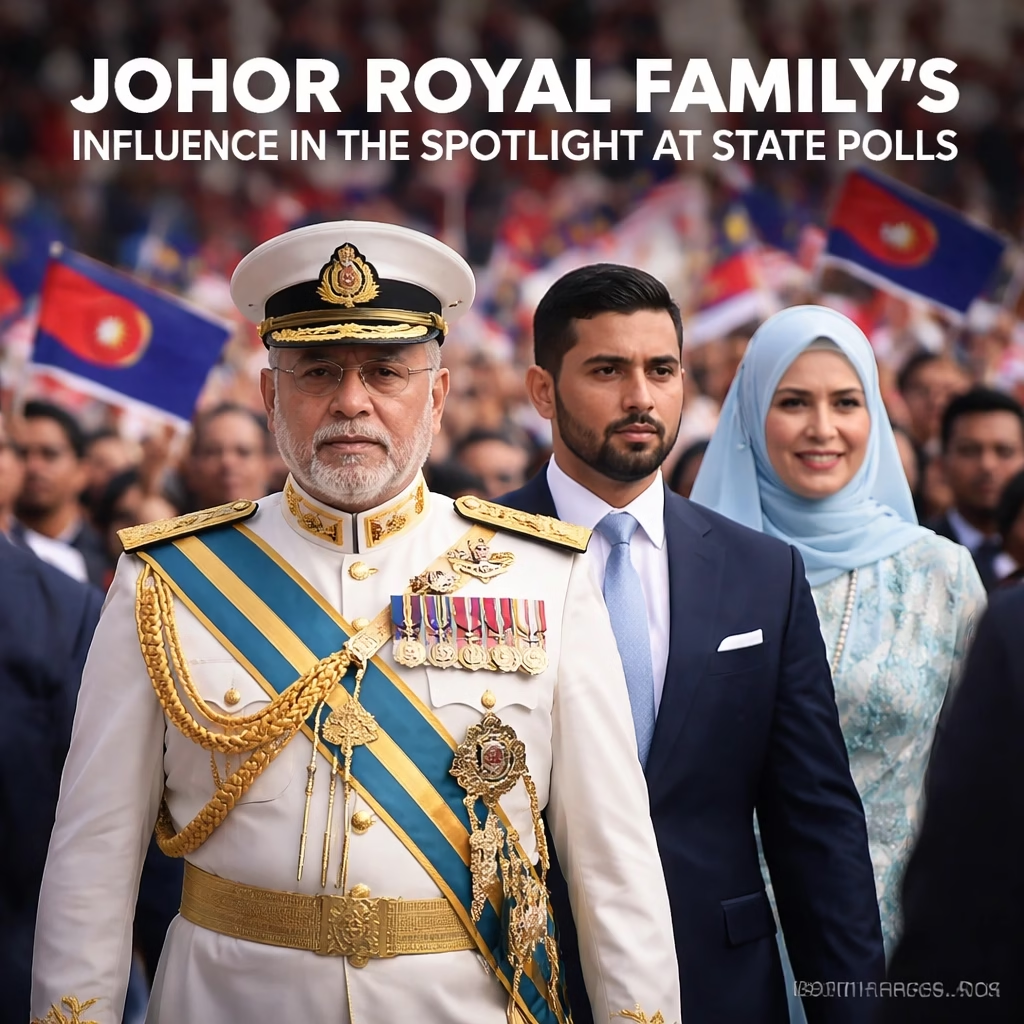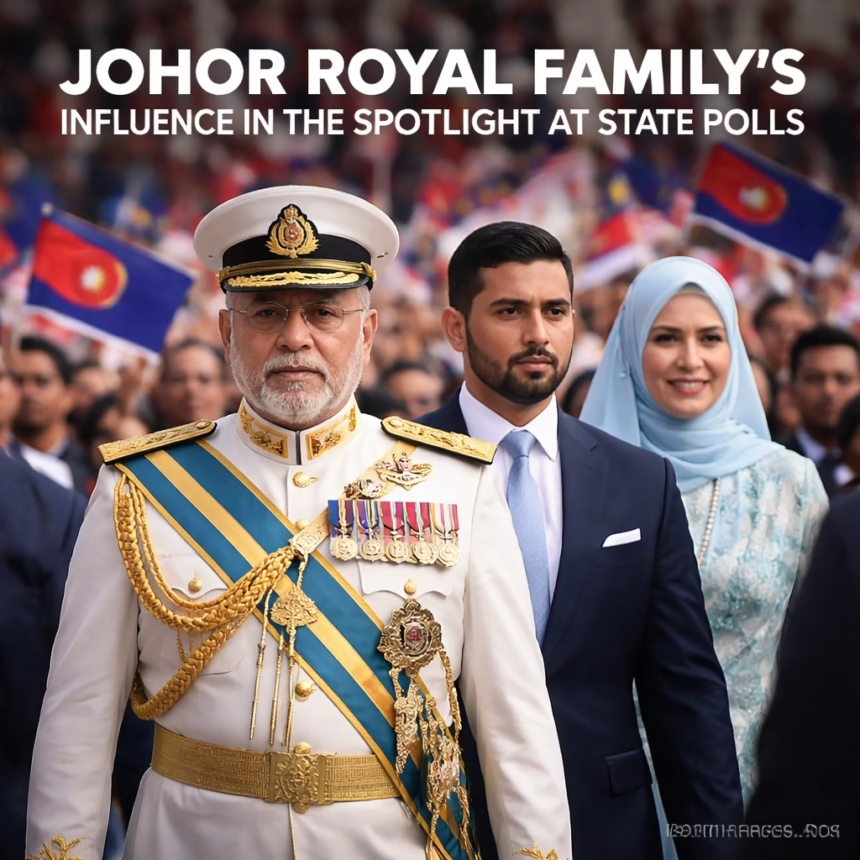
As Johor prepares for its upcoming state elections, the long-standing influence of its royal family has once again become a central talking point, sparking debate among voters and political parties across the southern Malaysian state. The unique constitutional position and societal role of the Johor Sultanate are under renewed scrutiny as the political landscape shifts.
Background: A Unique Constitutional Monarchy
The Johor Sultanate holds a distinctive position within Malaysia's constitutional monarchy system, rooted in a rich history of sovereignty and a specific state constitution. Unlike other states, Johor maintains its own private army, the Royal Johor Military Force (Askar Timbalan Setia Negeri Johor), and operates under the Undang-undang Tubuh Negeri Johor (Johor State Constitution of 1895), which predates the Malaysian Federation. This constitution outlines the succession, powers, and duties of the Sultan, granting the ruler significant traditional authority within the state's governance structure.
Historically, Johor's rulers have played an active role in the state's development and administration. Sultan Abu Bakar, known as the "Father of Modern Johor," established many of the state's institutions and maintained strong diplomatic ties, particularly with Britain, in the late 19th century. His successors have continued to be seen as guardians of Johor's unique identity and interests. Over the decades, the palace has often served as a critical check and balance on the state government, offering counsel and, at times, public commentary on policies affecting the people of Johor. This deep-rooted involvement has fostered a strong sense of loyalty among many Johoreans, who view the royal family as above partisan politics and dedicated to the state's welfare. The perception of the palace as a unifying force, especially in a multi-ethnic society, often contrasts with the often-divisive nature of political campaigns.
Key Developments: Recent Royal Statements and Electoral Dynamics
Recent political events, particularly the 2022 Johor state election and the lead-up to current polls, have brought the royal family's influence into sharper focus. Statements and actions by members of the royal family, most notably Sultan Ibrahim Sultan Iskandar and Crown Prince Tunku Ismail Idris, have been closely watched and widely discussed. These pronouncements, often delivered through official channels or social media, touch upon various aspects of state governance, economic development, and social cohesion.
During the 2022 state election, for instance, the Crown Prince actively used his social media platforms to express views on state affairs, emphasize the importance of good governance, and occasionally offer critiques or endorsements perceived to be directed at certain political figures or policies. While these statements are generally framed as non-partisan advice for the betterment of Johor, their timing and content are often interpreted by the public and political observers as signals of royal approval or disapproval. This has led to a dynamic where political parties and candidates often gauge public sentiment regarding their perceived standing with the palace. Some parties have explicitly highlighted their good working relationship with the royal institution in their campaigns, while others have sought to demonstrate their commitment to the state's interests in ways that align with the palace's stated priorities. The dialogue between the palace and the state government is an ongoing process, with the Sultan regularly holding audiences with the Menteri Besar (Chief Minister) and state executive council. These interactions, while private, often shape the direction of state policy and are a testament to the palace's enduring role in state administration.
More Read

Impact: Shaping Voter Sentiment and Political Strategies
The perceived influence of the Johor royal family significantly impacts various stakeholders within the state's political and social fabric. Voters, particularly those with a strong sense of traditional loyalty, often consider the palace's implicit or explicit views when casting their ballots. The royal family is widely seen as a symbol of stability and continuity, and perceived alignment with their vision can bolster a candidate's credibility. Conversely, any perceived friction with the palace can be a significant hurdle for political aspirants.
For political parties, understanding and navigating this influence is a crucial aspect of their electoral strategy. Campaign messaging often incorporates themes of loyalty to the Sultan and commitment to Johor's unique identity, implicitly or explicitly aligning with royal priorities. Candidates are generally careful to avoid any public statements that could be interpreted as disrespectful or critical of the royal institution. This careful approach shapes candidate selection, policy formulation, and public relations efforts. The state government, once formed, must maintain a harmonious working relationship with the palace. Policies and major development projects often require royal assent or at least the Sultan's blessing, underscoring the palace's role in the implementation of state affairs. This dynamic also has implications for the federal government, as the relationship between the Johor state government and its palace can influence federal-state relations and resource allocation. Beyond politics, the business community often views a stable relationship between the state government and the palace as a positive indicator for investment and economic growth, contributing to overall confidence in Johor's future.
What Next: Evolving Dynamics and Future Milestones
As Johor moves forward, the role and influence of its royal family are expected to continue evolving within Malaysia's democratic framework. Upcoming state elections and, eventually, the next general election will provide further insights into how this influence manifests in a changing political landscape. Observers anticipate that the palace will continue to leverage its platforms, including social media, to articulate its vision for Johor, focusing on good governance, economic development, and social harmony.
More Read

The ongoing public discourse surrounding the royal family's involvement in state affairs also raises questions about the future interpretation of constitutional monarchy in Malaysia. While the federal constitution outlines the powers of the Malay Rulers, Johor's unique state constitution provides a distinct context. This could lead to further discussions on the delineation of powers between the palace and the elected government, balancing traditional authority with modern democratic principles. With a significant youth demographic and increasing political awareness, public expectations of both elected representatives and traditional institutions are constantly shifting. The palace's ability to adapt its engagement strategies while maintaining its revered status will be crucial. Political parties, in turn, will need to refine their approaches to respectfully engage with the royal institution while articulating their distinct policy platforms. The interplay between Johor's unique royal heritage and its democratic processes will remain a key feature of its political narrative for the foreseeable future, shaping the state's trajectory through various expected milestones, from policy implementations to future electoral contests.