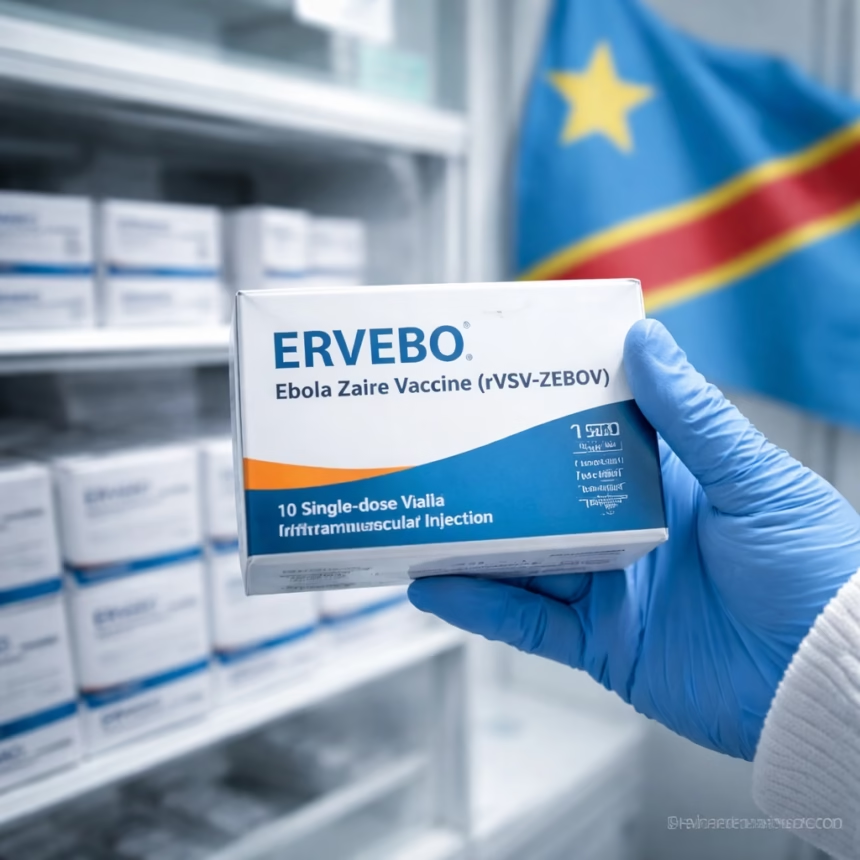
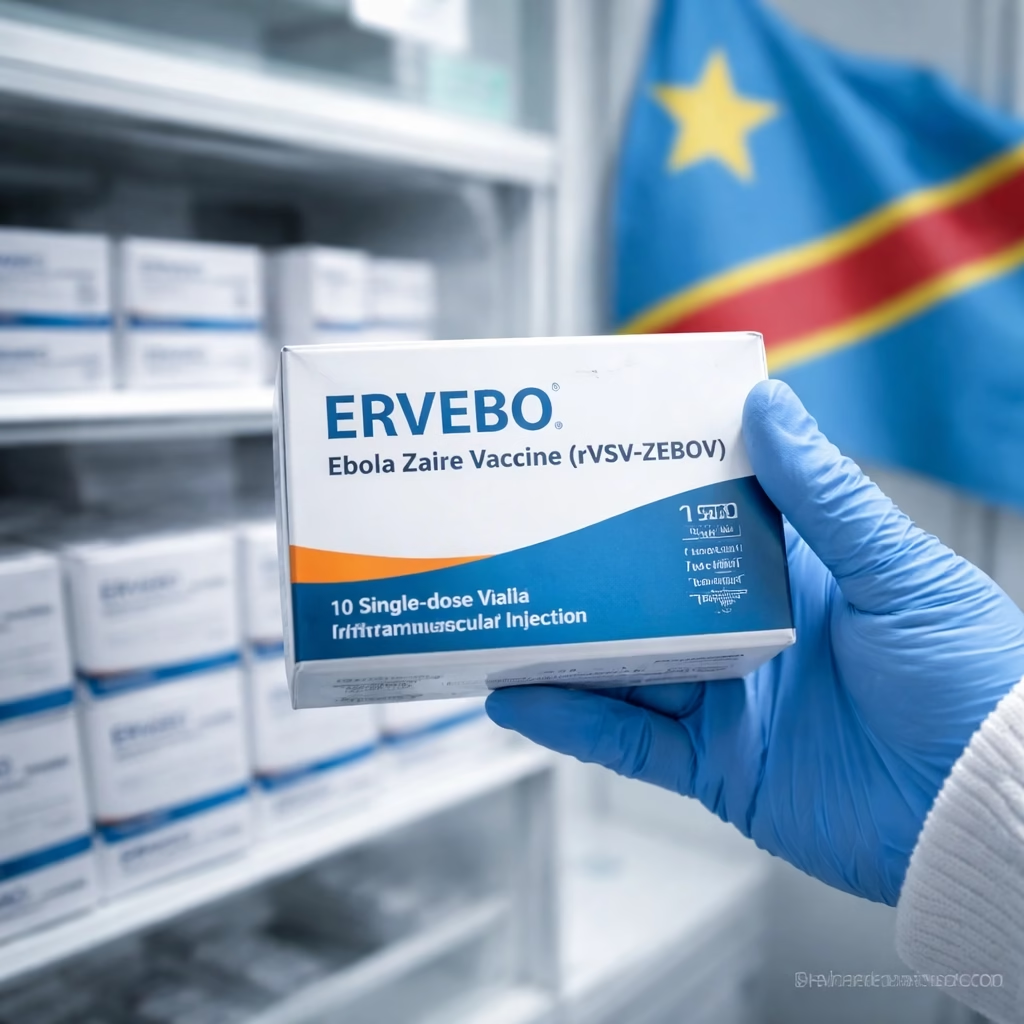
The Democratic Republic of Congo (DRC) has recently taken a significant step in its ongoing battle against Ebola, receiving a substantial shipment of 70,000 doses of the Ervebo vaccine. This vital consignment, delivered to the capital Kinshasa, aims to bolster the nation's preparedness and rapid response capabilities against potential outbreaks, leveraging a vaccine proven highly effective in mitigating previous devastating epidemics. The arrival underscores a proactive strategy to safeguard public health and prevent the resurgence of a disease that has repeatedly challenged the central African nation.
Background: A Decade of Ebola’s Shadow
The Democratic Republic of Congo has endured more Ebola outbreaks than any other nation, with the virus consistently posing a severe public health challenge. Since its discovery in 1976 near the Ebola River, the country has faced more than a dozen distinct epidemics. Among the most devastating was the 2018-2020 outbreak in North Kivu and Ituri provinces, which became the second-largest Ebola epidemic in history, claiming over 2,200 lives amidst a backdrop of conflict and insecurity. This protracted crisis highlighted the immense difficulties in controlling the virus in complex humanitarian settings.
The development of the Ervebo vaccine, scientifically known as rVSV-ZEBOV, marked a pivotal turning point in the fight against Ebola. Developed by Merck, this single-dose, live-attenuated vaccine targets the Zaire ebolavirus species, responsible for most outbreaks in the DRC. Its accelerated development and deployment during the 2018-2020 outbreak proved its remarkable efficacy, significantly reducing transmission and mortality rates among vaccinated individuals and communities. The World Health Organization (WHO) granted prequalification status in late 2019, followed by regulatory approvals in several countries, including the United States and the European Union.
Prior to the Ervebo vaccine, response efforts relied primarily on contact tracing, isolation, and supportive care, often proving insufficient against the rapid spread of the highly contagious virus. The introduction of vaccination, particularly through the "ring vaccination" strategy where contacts of confirmed cases and their contacts are immunized, transformed the containment landscape. This method was instrumental in bringing the large North Kivu outbreak under control and has since been a cornerstone of subsequent, smaller responses in provinces like Equateur and North Kivu, demonstrating the DRC's growing expertise in managing the disease.
Key Developments: A Strategic Reinforcement
The recent arrival of 70,000 Ervebo vaccine doses represents a critical strategic reinforcement for the DRC's national health system. This shipment, facilitated through international partnerships involving organizations like Gavi, the Vaccine Alliance, and the WHO, is intended to replenish national stockpiles and ensure immediate availability should a new cluster of cases emerge. The vaccine's stringent ultra-cold chain requirements, necessitating storage at temperatures between -60°C and -80°C, pose significant logistical challenges, especially in the DRC's vast and often remote regions. However, the country has, with international support, progressively built capacity for managing these complex storage and distribution networks.

These doses are specifically designated for proactive deployment, focusing on areas identified as high-risk due to their proximity to past outbreaks, population density, or cross-border movements. While there is no current large-scale Ebola outbreak in the DRC, sporadic cases and localized clusters remain a persistent threat, often linked to zoonotic spillover events from animal reservoirs. The availability of a ready vaccine supply allows health authorities to respond with unprecedented speed, initiating vaccination campaigns within days of case confirmation, thereby dramatically shrinking the window for viral spread.
The Ervebo vaccine has consistently demonstrated an efficacy rate exceeding 90% against the Zaire ebolavirus, offering robust protection to individuals. Its single-dose regimen simplifies administration and improves compliance rates, particularly crucial in emergency settings where multiple follow-up visits can be challenging. This shipment not only provides a tangible tool for disease control but also symbolizes a renewed commitment from the international community and the DRC government to maintain a vigilant stance against future Ebola threats, building on lessons learned from past epidemics.
Impact: Protecting Frontlines and Communities
The impact of this vaccine shipment extends far beyond mere numbers; it directly enhances the protection of frontline healthcare workers, who are consistently at the highest risk during Ebola outbreaks. Doctors, nurses, community health workers, and burial teams are often the first to encounter infected individuals, making their vaccination a critical priority to prevent nosocomial transmission and maintain essential health services. Protecting these heroes ensures the continuity of care for all patients, not just those affected by Ebola.

For communities, particularly those in high-risk areas like North Kivu, Ituri, and Equateur provinces, the presence of readily available vaccines offers a renewed sense of security. The fear and social disruption caused by Ebola outbreaks are immense, often leading to school closures, economic stagnation, and widespread panic. By enabling rapid vaccination, the potential for such societal upheaval is significantly reduced, allowing communities to maintain their daily lives and livelihoods with greater confidence. This proactive measure fosters trust between health authorities and the population, crucial for effective public health interventions.
Beyond direct health benefits, the availability of these doses strengthens the DRC's overall public health infrastructure. It reinforces the nation's capacity for emergency preparedness, epidemiological surveillance, and rapid response coordination. The logistical networks established for vaccine distribution can be leveraged for other public health initiatives, contributing to a more resilient and responsive health system. While challenges such as vaccine hesitancy, misinformation, and security concerns in conflict-affected zones persist, the strategic deployment of these doses provides a powerful tool to overcome these obstacles through targeted community engagement and education.
What Next: Deployment and Sustained Vigilance
The immediate next steps involve the meticulous distribution and storage of the 70,000 Ervebo doses across designated regional depots equipped with the necessary ultra-cold chain facilities. Health authorities, in collaboration with the WHO and other partners, will conduct refresher training for healthcare personnel on vaccine administration, cold chain management, surveillance protocols, and community engagement strategies. This ensures that the vaccine can be deployed swiftly and effectively upon any notification of new suspected or confirmed Ebola cases.
The primary deployment strategy will continue to be ring vaccination, targeting contacts of confirmed cases, contacts of contacts, and frontline workers within the affected areas. This focused approach maximizes the impact of the vaccine by creating a protective barrier around the infection source. Additionally, pre-emptive vaccination campaigns may be considered for high-risk populations in specific geographic hotspots, based on ongoing risk assessments and epidemiological data.
Long-term, the DRC aims to strengthen its national immunization program to integrate Ebola vaccination into broader public health initiatives, ensuring sustained preparedness. This includes bolstering laboratory capacities for rapid diagnosis, enhancing contact tracing mechanisms, and investing in community-led surveillance systems. International support will remain crucial for these efforts, encompassing technical assistance, financial aid, and continued vaccine supply. The goal is to evolve from reactive emergency responses to a proactive, integrated strategy that can quickly contain any potential Ebola resurgence, protecting the health and stability of the Congolese people for years to come.