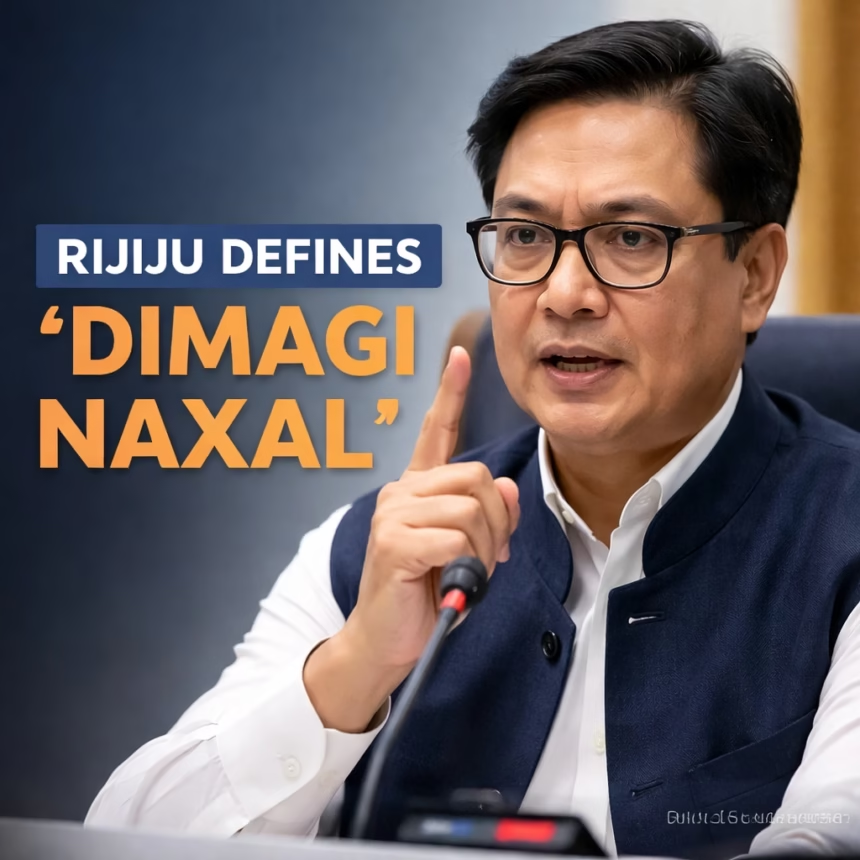
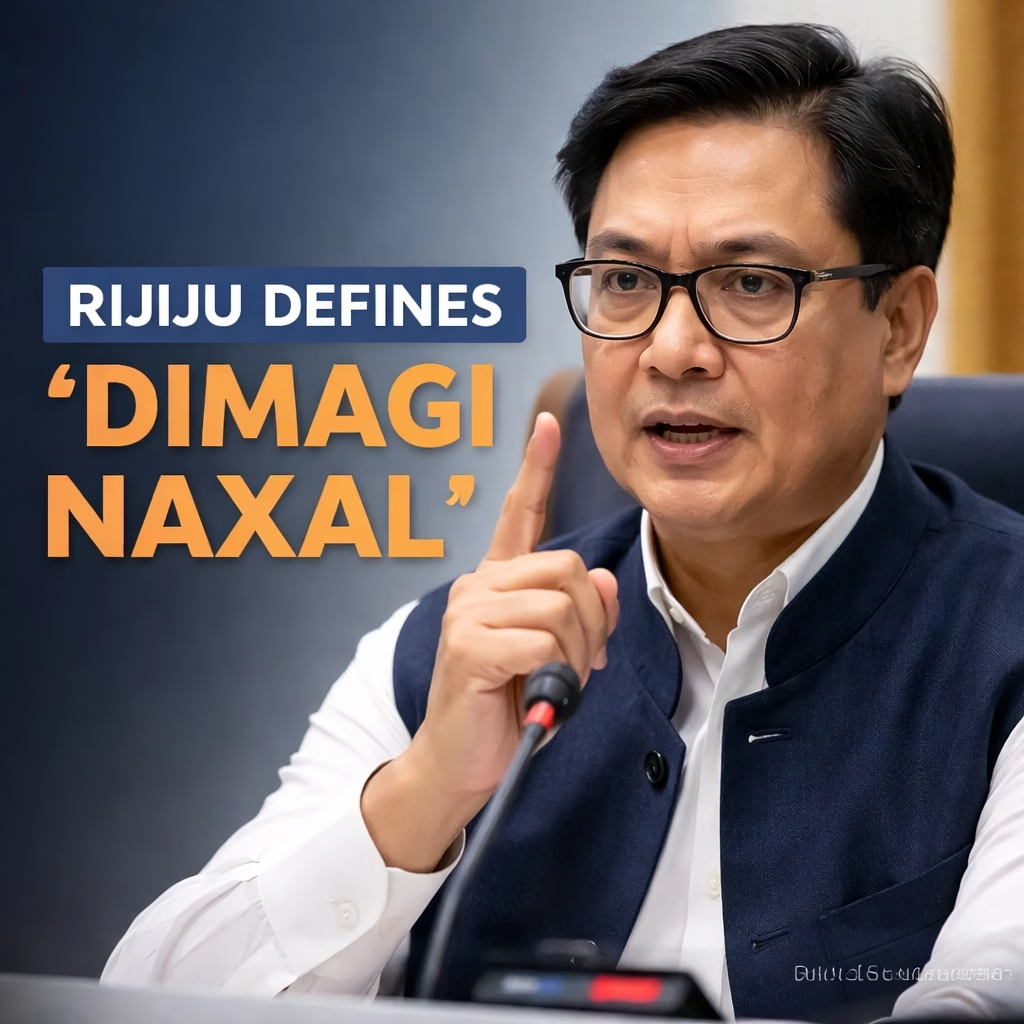
Union Minister Kiren Rijiju recently offered a four-point definition of "dimagi naxal" – an ideological term often translated as "intellectual naxal" or "urban naxal" – just a day after Prime Minister Narendra Modi cautioned the nation about a "new enemy" emerging from within. This significant clarification, made on October 26, 2023, in New Delhi, marks a notable moment in the government's ongoing narrative concerning internal threats and dissent.
Background: The Evolution of an Internal Threat Narrative
The concept of "urban naxalism" or "dimagi naxalism" has been a recurring theme in India's political discourse for several years, particularly gaining prominence in the mid-2010s. Prime Minister Modi's warning on October 25, 2023, delivered during a public address in a northern state, alluded to internal forces attempting to destabilize the nation, describing them as a "new enemy" distinct from traditional external adversaries. This statement set the stage for Minister Rijiju's subsequent elaboration.
Historically, the term "Naxal" refers to the Maoist insurgency that originated in Naxalbari, West Bengal, in 1967. This movement, primarily rural and tribal-based, advocates for radical land reforms and socio-economic justice through armed struggle, often clashing with state forces in what are termed Left-Wing Extremism (LWE) affected areas. The government has long viewed Naxalism as a significant internal security challenge.
The shift to "urban naxal" emerged to describe individuals or groups operating in urban centers who are alleged to provide ideological, logistical, or financial support to the rural Maoist insurgency. This narrative suggests that while not directly involved in armed conflict, these urban elements act as enablers, propagandists, and recruiters, legitimizing the Maoist cause and creating a support base among intellectuals, activists, and students. The term gained wider public attention around the time of the Bhima Koregaon case in 2018, where several prominent activists, lawyers, and academics were arrested under the Unlawful Activities (Prevention) Act (UAPA) for alleged links to Maoist groups. Government officials, including the Prime Minister and various ministers, have since frequently used the term to describe those perceived as working against national interests from within.
More Read

Key Developments: Rijiju’s Four-Point Definition
Union Minister Kiren Rijiju's recent articulation provides the most specific government-backed definition of "dimagi naxal" to date. His four points aim to delineate who falls under this controversial categorization:
Firstly, Rijiju stated that "dimagi naxals" are those who actively promote anti-national narratives and try to create disaffection against the state by misrepresenting facts and spreading propaganda. This point targets individuals or groups perceived to be engaged in ideological warfare against the government's policies and actions.
Secondly, he identified those who provide intellectual justification and support for secessionist movements or groups aiming to break India's unity and integrity. This includes individuals who might offer academic or philosophical backing to separatist ideologies, even if they do not directly participate in violent acts.
More Read

Thirdly, Rijiju highlighted elements that exploit democratic freedoms, such as freedom of speech and expression, to incite violence, social unrest, or communal disharmony. This point suggests a concern with the misuse of constitutional rights to achieve disruptive ends, drawing a line between legitimate dissent and perceived incitement.
Finally, the Minister included those who conspire to weaken India's internal security architecture by undermining institutions, spreading misinformation about security forces, or attempting to sabotage developmental projects under the guise of activism. This encompasses a broader range of activities, from criticism of security operations to opposition against large-scale infrastructure projects.
Rijiju's definition builds upon previous, more generalized statements by government figures. While earlier references often implied a broad group of dissenters or critics, this four-point framework attempts to offer a more structured understanding of the alleged threat. It aims to distinguish between genuine criticism and what the government considers as subversive intellectual activity, aligning with the broader strategy of identifying and countering what it perceives as hybrid warfare from within.
Impact: Who Is Affected by This Definition?
The formalization of the "dimagi naxal" definition by a Union Minister carries significant implications for various segments of Indian society.
Activists and Intellectuals: This definition is likely to intensify scrutiny on activists, academics, journalists, and public intellectuals who are critical of government policies or advocate for human rights and civil liberties. There is concern that the broad nature of the points could be interpreted to label legitimate dissent or advocacy as "anti-national" or supportive of "dimagi naxalism," potentially leading to self-censorship or legal repercussions under stringent laws like the UAPA.
Human Rights Organizations: Groups working on issues related to human rights, tribal rights, environmental protection, and social justice may find themselves under increased pressure. Their efforts to highlight state excesses or raise concerns about marginalized communities could be framed within this definition, potentially hindering their operations and access to funding.

Political Discourse: The definition is expected to further polarize India's political landscape. Opposition parties and civil society groups may view it as an attempt to stifle democratic debate and criminalize dissent, while the ruling establishment could use it to discredit critics and rally support against perceived internal threats.
Legal Implications: The most tangible impact could be on the legal front. While "dimagi naxal" is not a legal term, its official articulation by a minister could influence how law enforcement agencies and courts perceive and act upon cases involving individuals accused of sedition, incitement, or links to banned organizations. It could contribute to a climate where expressing certain views is seen as providing "ideological justification" for unlawful activities.
General Public: The repeated emphasis on "new enemies" and "dimagi naxals" shapes public perception, potentially fostering suspicion towards individuals or groups who challenge the dominant narrative. This could create a less tolerant environment for diverse viewpoints and robust public debate, impacting the overall health of India's democratic fabric.
What Next: Expected Milestones and Debates
The introduction of this specific definition is likely to trigger a series of reactions and developments in the coming months.
Further Elaboration and Clarification: It is probable that other government officials, including security advisors and ministers, will further elaborate on Rijiju's definition, providing more examples or context. This could lead to a more detailed government white paper or policy document outlining the perceived threat.
Legislative and Policy Review: While "dimagi naxal" is not a legal term, its underlying principles could influence future legislative actions. There might be discussions around amending existing laws, such as the UAPA or sedition laws, to address the perceived ideological threats more explicitly, or to formulate new guidelines for law enforcement.
Judicial Scrutiny and Challenges: The application of this conceptual framework in legal cases, particularly those involving activists and intellectuals, will likely face intense judicial scrutiny. Courts may be asked to interpret the boundaries of "anti-national narratives," "inciting violence," and "undermining institutions" in light of constitutional protections for free speech and assembly. This could lead to landmark judgments shaping the future of dissent in India.
Political Debate and Contestation: The definition will undoubtedly become a significant point of contention in parliamentary debates, state elections, and the upcoming general elections. Opposition parties are expected to challenge the government's narrative, arguing that it is an attempt to suppress democratic rights and silence criticism. Civil society organizations will continue to advocate for a clear distinction between dissent and sedition.
International Observation: International human rights bodies, democratic watchdogs, and foreign governments are likely to monitor how this definition is applied in practice. Concerns about shrinking space for civil society and freedom of expression in India could be amplified if the definition is seen to be used to target legitimate dissent.
The dialogue around "dimagi naxal" is set to remain a crucial aspect of India's internal security and political landscape, shaping the balance between national security concerns and democratic freedoms.