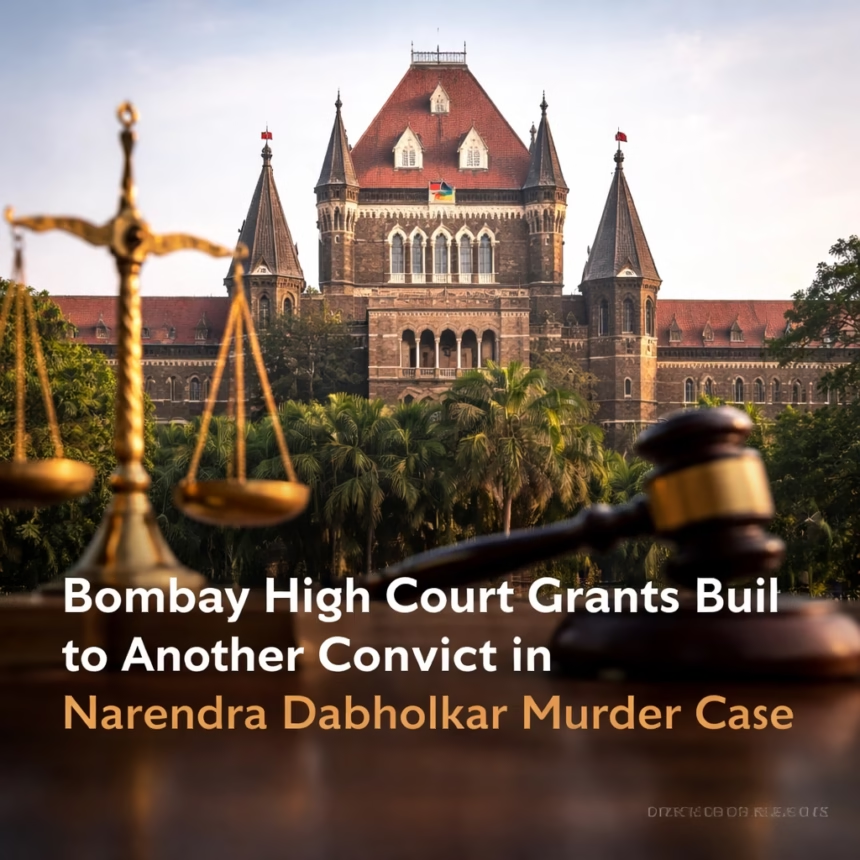
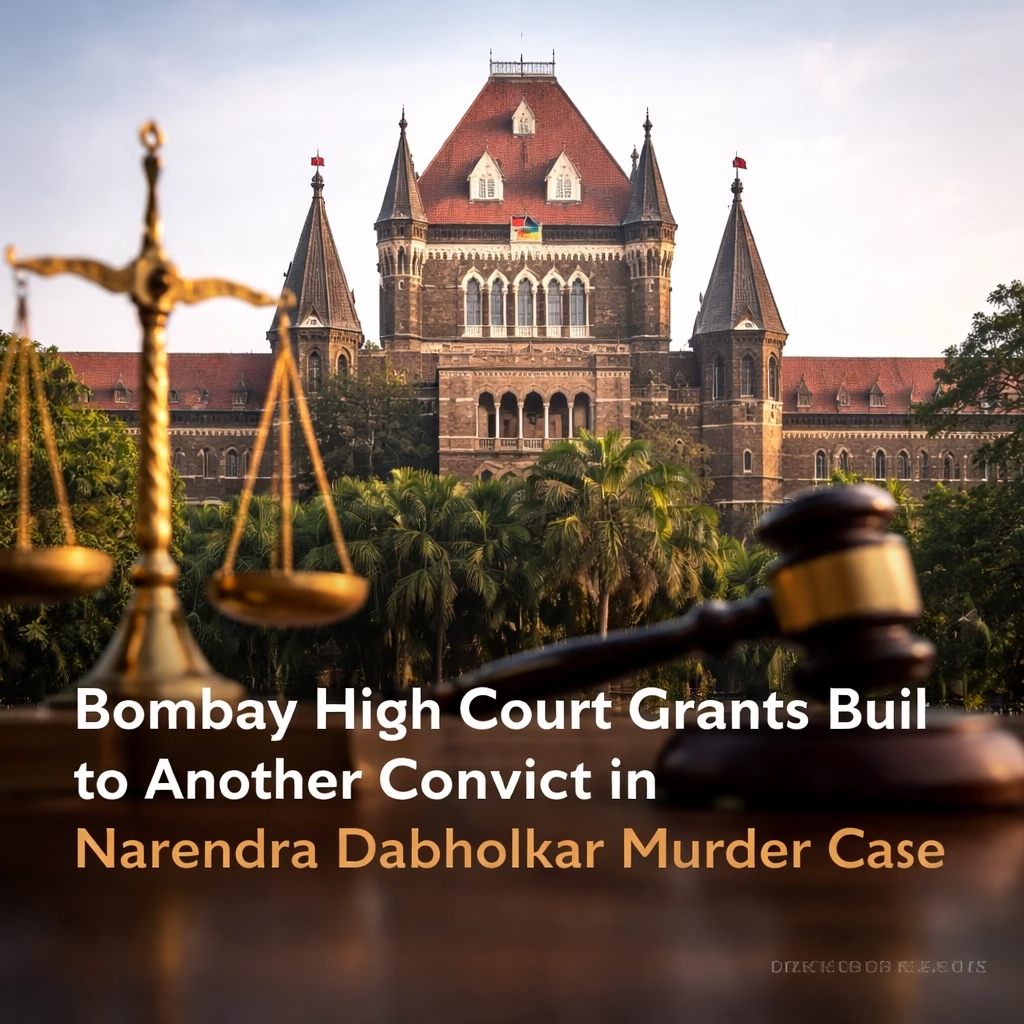
Mumbai, Maharashtra – In a significant development that has sent ripples through the legal and activist communities, the Bombay High Court on Tuesday granted bail to another accused individual in the high-profile murder case of rationalist Dr. Narendra Dabholkar. This decision marks a pivotal moment in a trial that has dragged on for over a decade, reigniting debates about the pace of justice and the challenges faced by the prosecution in complex conspiracy cases.
Background: A Decade-Long Quest for Justice
The murder of Dr. Narendra Dabholkar on August 20, 2013, in Pune, sent shockwaves across India. A renowned rationalist, author, and anti-superstition activist, Dabholkar was the founder of the Maharashtra Andhashraddha Nirmoolan Samiti (MANS), an organization dedicated to eradicating superstition and promoting scientific temper. He was shot dead while on his morning walk, an act widely perceived as an attack on free speech and rational thought.
The Man Behind the Movement
Dr. Dabholkar dedicated his life to challenging obscurantism and promoting critical thinking. His work often brought him into conflict with right-wing extremist groups and proponents of superstitious practices. He was instrumental in drafting and advocating for the Maharashtra Prevention and Eradication of Human Sacrifice and other Inhuman, Evil and Aghori Practices and Black Magic Act, 2013, which was passed just days after his assassination. His relentless pursuit of social reform made him a symbol of rationalism in India, and his murder became a rallying cry for activists demanding justice and protection for those who challenge entrenched beliefs.
A Protracted Investigation and Trial
Initially investigated by the Pune Police, the case was later transferred to the Central Bureau of Investigation (CBI) in May 2014, following a Bombay High Court directive. The CBI’s investigation uncovered alleged links to radical Hindu organizations, particularly the Sanatan Sanstha, and its affiliate, the Hindu Janajagruti Samiti. Over the years, several individuals were arrested, including alleged shooters Sachin Andure and Sharad Kalaskar, alleged masterminds Dr. Virendrasinh Tawade, and legal aid providers Sanjeev Punalekar and Vikram Bhave. Charges were framed under various sections of the Indian Penal Code, including murder and criminal conspiracy, as well as under the Unlawful Activities (Prevention) Act (UAPA), due to the alleged terror angle. The trial commenced in 2021, but has been characterized by numerous delays, multiple accused, and complex legal arguments.
Key Developments: The Latest Bail Grant
The Bombay High Court's latest decision to grant bail to one of the accused, whose identity has been withheld for legal reasons at this stage, comes after a detailed review of the arguments presented by both the defence and the prosecution. This individual had been incarcerated for several years, facing charges related to conspiracy and aiding the alleged perpetrators.

Court’s Rationale and Conditions
The High Court, presided over by a division bench, reportedly based its decision on grounds such as the prolonged incarceration of the accused without the trial reaching a conclusive stage, the perceived lack of direct and overwhelming evidence linking the accused specifically to the murder, and the principle that bail, not jail, is the rule. The defence counsel argued that their client had no active role in the actual assassination and that the evidence against them was circumstantial and insufficient to warrant continued pre-trial detention, especially given the significant time already spent in custody.
The bail has been granted subject to stringent conditions. These typically include furnishing a personal bond and surety of a substantial amount, reporting to a local police station periodically, surrendering their passport, and refraining from tampering with evidence or influencing witnesses. The accused is also prohibited from leaving the jurisdiction of the court without prior permission. This is not the first instance of bail being granted in this case; previously, advocate Sanjeev Punalekar, accused of destroying evidence, was also granted bail by the High Court in 2022.
Impact: Repercussions Across Stakeholders
The High Court's decision carries significant implications for various parties involved in the Dabholkar murder case and for the broader discourse on justice in India.
More Read
Victim’s Family and Activist Community
For the Dabholkar family, who have tirelessly pursued justice for over a decade, this development is likely to be disheartening. They have consistently voiced concerns about the slow pace of the investigation and trial, and any release of an accused on bail often feels like a setback in their long struggle. The wider activist community, particularly those advocating for rationalism and free speech, views such bail grants with apprehension, fearing it might dilute the prosecution's case and potentially embolden elements hostile to dissenting voices. They emphasize the need for swift justice to send a strong message against violence targeting intellectuals and reformers.
Challenges for the Prosecution
The CBI, as the prosecuting agency, faces renewed challenges. Each bail grant can potentially weaken the prosecution's overall narrative, especially in complex conspiracy cases where the chain of evidence is intricate. It places additional pressure on the CBI to expedite the trial for the remaining accused and to present an even more robust case to secure convictions. The agency will need to carefully assess the High Court's reasoning for granting bail and determine if there are grounds for an appeal to the Supreme Court.
Boost for the Defence
Conversely, the bail grant provides a significant boost to the defence strategy for other accused individuals still incarcerated. It could set a precedent or at least offer a strong argument for similar bail applications, particularly if their circumstances mirror those of the recently bailed accused. The defence will likely leverage this decision to highlight perceived weaknesses in the prosecution's evidence and the prolonged nature of the trial.
Legal Precedent and Public Trust
From a legal standpoint, the decision underscores the judiciary's emphasis on individual liberty, especially when prolonged incarceration occurs without a final verdict. However, it also highlights the delicate balance courts must strike between protecting individual rights and ensuring justice in cases of grave public importance. Public trust in the justice system can be affected, with some perceiving such decisions as a failure to protect victims, while others view them as a necessary safeguard against arbitrary detention.
What Next: The Road Ahead
The granting of bail to another accused does not signal the end of the Narendra Dabholkar murder trial. Instead, it ushers in a new phase with several expected milestones and potential legal maneuvers.
More Read

Trial Continuation and Expedited Proceedings
The primary trial against the remaining accused, including alleged shooters Sachin Andure and Sharad Kalaskar, and alleged mastermind Dr. Virendrasinh Tawade, will continue in the special court in Pune. The High Court's decision might implicitly or explicitly encourage the trial court to expedite proceedings, given the concerns about prolonged incarceration. The focus will now intensify on the evidence presented against those still in custody.
Potential Supreme Court Challenge
The CBI is expected to meticulously review the Bombay High Court's order. Depending on their assessment of the grounds for bail and the potential impact on their case, the agency may decide to challenge the decision in the Supreme Court of India. Such an appeal would aim to have the High Court's bail order set aside, arguing that the accused poses a flight risk, could tamper with evidence, or that there is sufficient prima facie evidence to warrant continued detention.
Compliance and Monitoring
For the released accused, strict compliance with the bail conditions will be paramount. Any violation could lead to the cancellation of bail and re-arrest. Law enforcement agencies will likely monitor their activities to ensure adherence to the court's directives and to prevent any interference with the ongoing investigation or trial.
Broader Implications for Similar Cases
The Dabholkar murder case is often linked to the assassinations of other prominent rationalists and journalists, including Govind Pansare (Kolhapur, 2015), M.M. Kalburgi (Dharwad, 2015), and Gauri Lankesh (Bengaluru, 2017). These cases share similarities in their modus operandi and alleged links to extremist groups. The developments in the Dabholkar case, including bail grants, could potentially influence the legal strategies and outcomes in these related investigations and trials, further underscoring the interconnected nature of these quests for justice. The pursuit of truth and accountability in these cases remains a critical test for India's commitment to protecting freedom of expression and rational discourse.