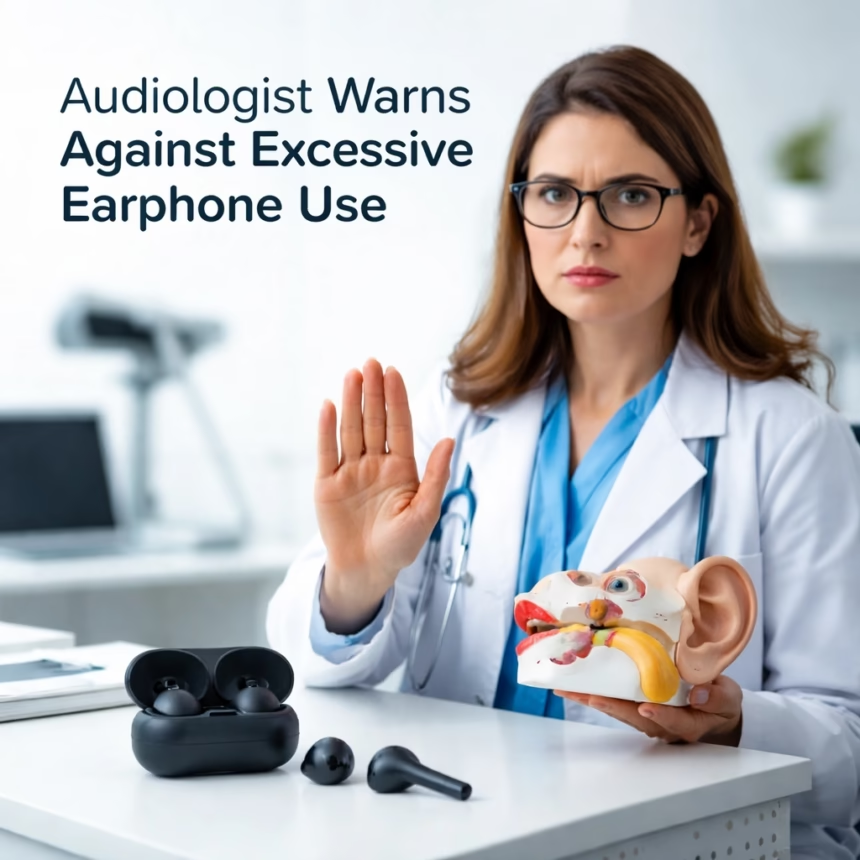
Sydney, Australia – On May 15, 2024, a prominent audiologist issued a stark warning regarding the escalating risks of irreversible hearing damage linked to the excessive use of earphones and headphones. Dr. Evelyn Reed, head of audiology at the Royal Sydney Hospital, highlighted a concerning rise in noise-induced hearing loss cases, particularly among younger demographics, urging immediate public awareness and behavioral changes. Her findings underscore a growing public health concern largely overlooked amidst the pervasive integration of personal audio devices into daily life.
Background: The Soundtrack of Modern Life
The journey of personal audio began decades ago, fundamentally reshaping how individuals consume media. In 1979, Sony introduced the Walkman, a portable cassette player that allowed users to carry their music wherever they went. This innovation marked a paradigm shift, separating listening experiences from communal spaces and ushering in an era of personal soundscapes. The subsequent decades saw rapid technological advancements, from portable CD players to the revolutionary Apple iPod in 2001, which digitized music collections and made thousands of songs accessible in a pocket-sized device.
The Evolution of Personal Audio
The true inflection point for widespread earphone use arrived with the smartphone era and the advent of wireless earbuds. Apple's AirPods, launched in 2016, popularized truly wireless audio, leading to an explosion of similar products across the consumer electronics market. Today, earphones are ubiquitous, used for music, podcasts, video calls, gaming, and even noise cancellation in various environments. This constant immersion in sound, often at elevated volumes, has quietly laid the groundwork for a burgeoning public health crisis.
Early warnings about potential hearing damage from personal audio devices emerged in the late 2000s, coinciding with the rise of MP3 players. Organizations like the World Health Organization (WHO) have long established guidelines for safe listening, recommending exposure to sounds below 85 decibels (dB) for no more than eight hours a day. However, these guidelines often go unheeded by users unaware of the risks or simply accustomed to higher volumes. Dr. Reed noted that while the medical community has been aware of these risks, the sheer scale and intensity of current earphone usage present an unprecedented challenge. Her clinic’s data, spanning the last decade, reveals a clear and accelerating trend towards earlier onset hearing issues.
More Read

Key Developments: A New Wave of Cases
Dr. Evelyn Reed's recent observations at the Royal Sydney Hospital's audiology department paint a worrying picture. Over the past five years, her team has documented a significant increase in patients under the age of 30 presenting with symptoms typically associated with age-related hearing loss or occupational noise exposure. This demographic shift represents a critical key development in the understanding of noise-induced hearing loss. Previously, such conditions were predominantly observed in older adults or individuals working in loud industrial environments.
The Silent Symptoms
The symptoms reported by these younger patients include persistent tinnitus – a constant ringing or buzzing in the ears – and difficulty understanding speech in noisy environments, indicative of high-frequency hearing loss. Dr. Reed highlighted that many patients initially dismiss these symptoms, attributing them to fatigue or temporary issues, only seeking professional help when the problems become undeniable. Her internal study, conducted between January 2023 and April 2024, revealed a 35% increase in noise-induced hearing loss diagnoses among individuals aged 18-35 compared to the preceding five-year period.
Technological advancements, paradoxically, contribute to the problem. Modern earphones boast superior sound quality and powerful drivers, capable of delivering rich audio experiences at volumes far exceeding safe limits. Features like active noise cancellation, while beneficial for reducing external distractions, can sometimes encourage users to increase volume in already quiet settings, further exacerbating the risk. Despite some devices incorporating volume limiters or warning prompts, these features are often optional or easily bypassed by users seeking a more immersive experience. The lack of standardized, mandatory volume controls across all personal audio devices remains a significant concern for health professionals.

Furthermore, there has been a noticeable absence of widespread, impactful public health campaigns specifically targeting the risks of excessive earphone use. While general health advice exists, it often fails to penetrate the consciousness of the most vulnerable demographics. This gap in public education means that millions continue to engage in risky listening habits, largely unaware of the long-term consequences they face. Dr. Reed emphasized that the industry, alongside public health bodies, has a crucial role to play in reversing this trend.
Impact: Beyond the Ears
The ramifications of this burgeoning hearing loss epidemic extend far beyond the auditory system, affecting individuals across multiple facets of their lives and imposing broader societal costs. The primary demographic affected includes teenagers, young adults, and increasingly, remote workers who rely on earphones for extended periods throughout their workday. Students using earphones for online learning, gamers immersed in virtual worlds, and commuters soundtracking their daily journeys are all at heightened risk.
Broader Consequences
For individuals, the impact can be profound. Permanent sensorineural hearing loss not only impairs the ability to hear but can also lead to communication difficulties, social isolation, and a diminished quality of life. Tinnitus, a common accompaniment to noise-induced hearing loss, can be incredibly disruptive, causing sleep disturbances, concentration problems, anxiety, and even depression. Hyperacusis, an increased sensitivity to everyday sounds, can make normal environments unbearable, forcing individuals to withdraw from social activities.
Academically, students with hearing difficulties may struggle to follow lectures or participate in classroom discussions, potentially impacting their educational attainment and future career prospects. In the professional sphere, clear communication is paramount. Hearing impairment can hinder job performance, limit career advancement, and even lead to job loss in professions requiring acute auditory perception. The mental health implications are equally severe, with chronic hearing loss often correlated with higher rates of anxiety, depression, and cognitive decline in later life.
Economically, the societal burden is substantial. An increase in noise-induced hearing loss cases places greater demand on audiology services, requiring more diagnostic tests, rehabilitation programs, and the provision of expensive hearing aids. These healthcare costs, whether borne by individuals or public health systems, represent a significant financial strain. Beyond direct medical expenses, there are indirect costs associated with lost productivity, potential disability benefits, and the need for workplace accommodations. If current trends persist, Dr. Reed warns of a future generation facing widespread, preventable hearing impairment, creating an unprecedented public health challenge that could strain resources for decades to come.
What Next: A Call to Action
Addressing the escalating crisis of noise-induced hearing loss requires a multi-pronged approach involving individuals, public health bodies, and industry stakeholders. Dr. Evelyn Reed outlined several immediate recommendations and future milestones crucial for mitigating the impact of excessive earphone use. At the individual level, she strongly advocated for the "60/60 rule": listening to audio at no more than 60% of the maximum volume for no longer than 60 minutes at a time, followed by a break. Regular hearing checks, especially for young adults, were also emphasized as a vital preventative measure.
More Read

Recommendations and Future Milestones
From a public health perspective, Dr. Reed called for robust national awareness campaigns. She urged the Australian Department of Health, alongside educational institutions, to launch comprehensive programs that educate the public, particularly adolescents and young adults, about the dangers of prolonged loud listening. These campaigns should clearly articulate the risks, promote safe listening habits, and dispel misconceptions about hearing loss. Collaborations with schools and universities are already in Dr. Reed's future plans, aiming to integrate hearing health education into curricula.
Industry innovation also plays a critical role. Dr. Reed suggested that device manufacturers should implement stricter, non-bypassable volume limits on personal audio devices and integrate "smart" features that adapt volume levels based on ambient noise and track listening duration. Clearer, more prominent warnings on packaging and within device software could also serve as constant reminders to users. Some manufacturers are already exploring adaptive sound technologies that optimize audio delivery while prioritizing hearing health, a trend that needs to become industry standard.
Looking ahead, Dr. Reed stressed the need for longitudinal research to better understand the long-term effects of current listening habits and to identify specific risk factors. Such studies would provide invaluable data to inform future policy and public health interventions. Potential policy changes could include government regulations mandating maximum decibel output for personal audio devices sold in Australia, similar to standards seen in some European countries. Ultimately, the goal is to foster a culture of conscious listening, ensuring that the convenience and pleasure of personal audio do not come at the irreversible cost of hearing health for future generations.