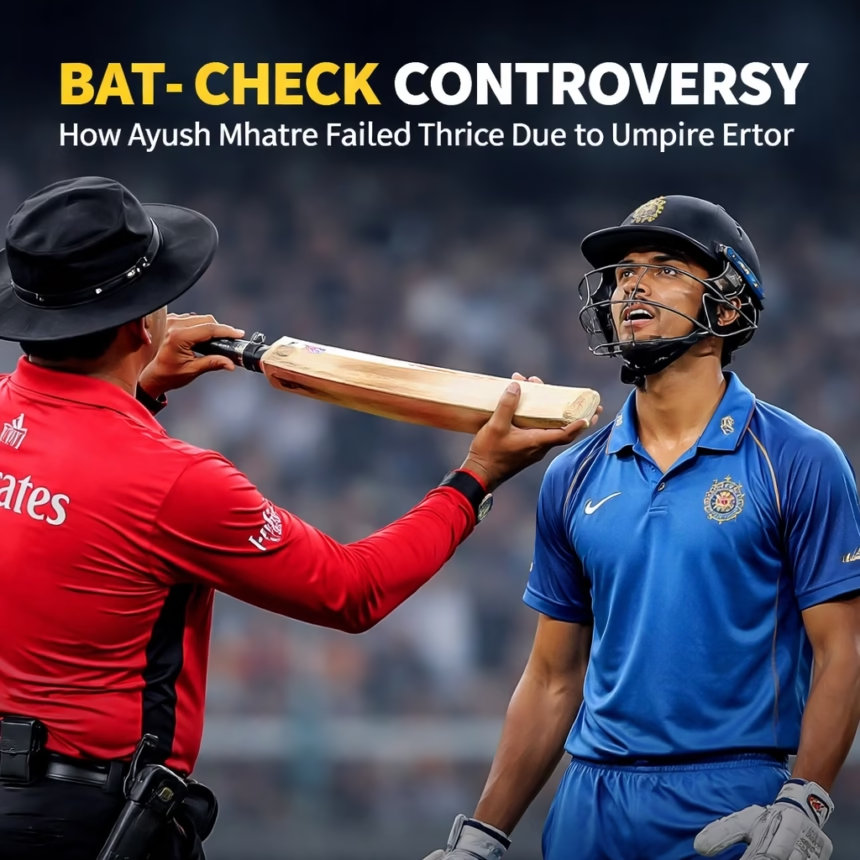
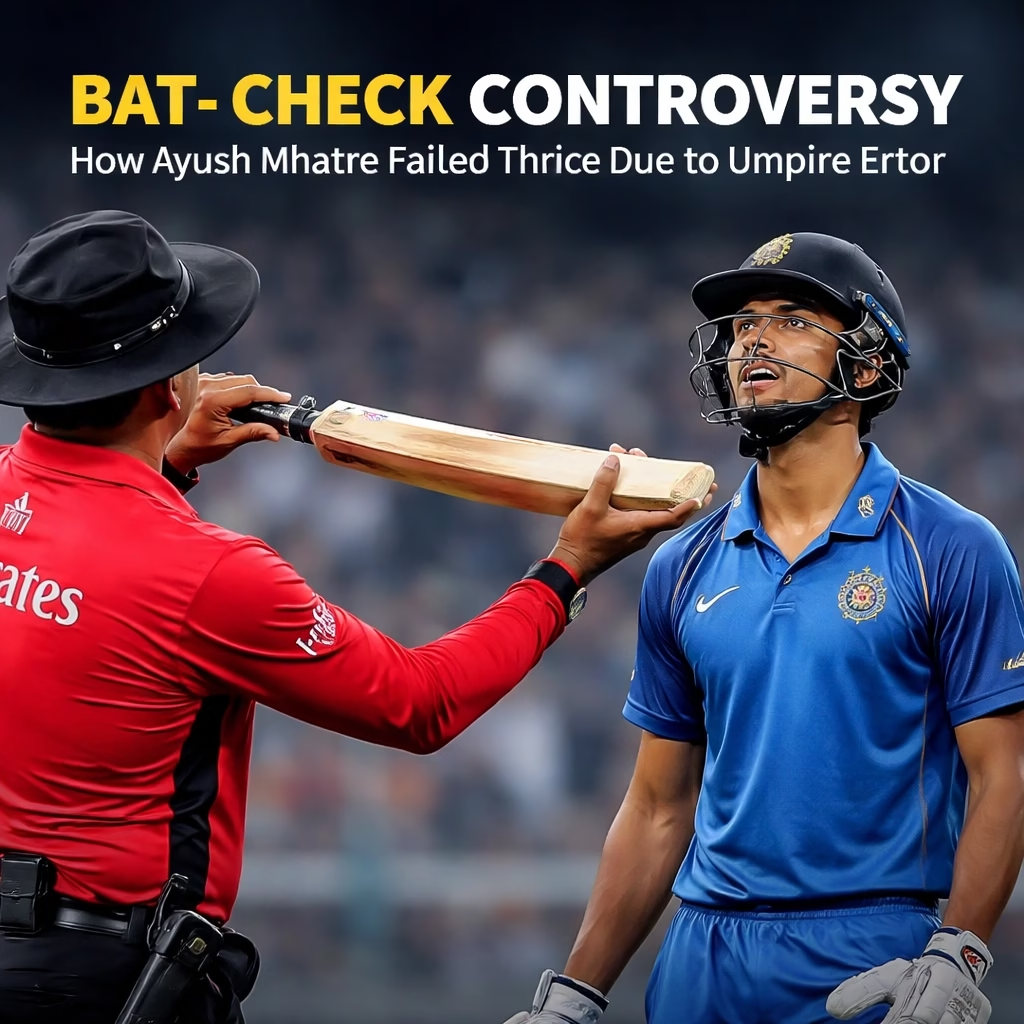
A significant controversy has erupted in the heart of Indian domestic cricket following serious allegations that promising young batting talent Ayush Mhatre was unfairly dismissed on three separate occasions due to critical umpire errors during bat-check protocols. The incidents, which reportedly occurred across recent matches in the prestigious Syed Mushtaq Ali Trophy, have ignited a fierce debate about officiating standards, the application of technology, and the very integrity of decision-making in the sport.
Background: The Unfolding Saga of Officiating Standards
The modern game of cricket relies heavily on technology to assist umpires, particularly in close calls involving bat-on-ball contact. Tools like Snickometer and Hot Spot are integral to the Decision Review System (DRS), designed to minimize human error. However, recent events involving Ayush Mhatre have cast a shadow over the efficacy and interpretation of these technologies by match officials.
The Mechanics of Bat-Check in DRS
When an on-field umpire’s decision is challenged, or a referral is made to the third umpire, the “bat-check” process involves a meticulous review of replays, often incorporating audio (Snickometer) and thermal imaging (Hot Spot) to determine if the ball made contact with the bat before hitting the pad or being caught. The third umpire’s role is to interpret this data, alongside visual evidence, to uphold or overturn the on-field decision. This process, while seemingly objective, still relies on the umpire’s judgment, particularly in nuanced situations.
Ayush Mhatre’s Promising Career
Ayush Mhatre, a 22-year-old top-order batsman from Mumbai, has been touted as one of the most exciting talents in the domestic circuit. Known for his elegant stroke play and composure under pressure, Mhatre had been enjoying a stellar run in the Syed Mushtaq Ali Trophy, attracting attention from national selectors. His recent performances had positioned him as a strong contender for higher honors, making the alleged unfair dismissals even more impactful on his burgeoning career.
Timeline of Alleged Errors
The controversy centers around three specific matches in the ongoing Syed Mushtaq Ali Trophy:
More Read

January 10, 2024 – Mumbai vs. Karnataka, Wankhede Stadium, Mumbai: Mhatre, batting on 47, was given out caught behind by on-field umpire Rajesh Kumar. The decision was reviewed, and despite what many observers and later analysis suggested was no clear spike on Snickometer or mark on Hot Spot, third umpire Sanjay Singh upheld the decision, citing faint evidence of an edge.
* January 15, 2024 – Mumbai vs. Tamil Nadu, M. Chinnaswamy Stadium, Bengaluru: In a crucial league encounter, Mhatre, having scored a fluent 62, was adjudged LBW by umpire Alok Sharma. A DRS review showed the ball hitting Mhatre's pad, but replays and Snickometer data were ambiguous regarding an inside edge. The third umpire, again Sanjay Singh, ruled in favor of the on-field decision, stating "no conclusive evidence to overturn," a decision that drew immediate criticism from commentators.
* January 20, 2024 – Mumbai vs. Delhi, Eden Gardens, Kolkata: The most contentious incident occurred during a high-stakes match. Mhatre, on 31, was given out caught at slip, a sharp chance that was referred to the third umpire. Despite multiple replays showing the ball seemingly missing the bat and hitting the pad, and minimal Snickometer activity, third umpire Rajesh Kumar (who was on-field in the first incident) confirmed the on-field decision, leading to visible frustration from Mhatre and his teammates.
Key Developments: Appeals, Reviews, and Expert Opinions
Following the third dismissal, the Mumbai Cricket Association (MCA) officially lodged a formal complaint with the Board of Control for Cricket in India (BCCI), demanding an immediate review of the umpiring decisions and the underlying protocols.
The Appeals Process and BCCI’s Response
The MCA’s complaint highlighted inconsistencies in the application of DRS and the interpretation of bat-check data by the umpires involved. Mr. Ravi Shastri, President of the MCA, stated, “While we respect the umpires, three such critical errors against a single player in high-stakes matches warrant a thorough investigation. It impacts not just the player, but the integrity of the tournament.” The BCCI acknowledged the complaint, with Mr. Anant Sharma, Head of Officiating Standards, confirming that a special committee had been formed to review the incidents, including access to raw DRS footage and umpire communications.

Expert Commentary on Rule 4.2 (Bat-Check Interpretation)
Cricket experts and former players have weighed in heavily. Prakash Reddy, a former national selector and renowned commentator, expressed his concern. “The spirit of DRS is to eliminate clear errors. If the technology is there, and it’s being misinterpreted, then we have a bigger problem. In Mhatre’s case, especially the third dismissal, the evidence seemed overwhelmingly in his favor. This isn’t about human error on the field; it’s about the interpretation of sophisticated data in a calm review setting.” Many analysts pointed to the subjective nature of what constitutes “conclusive evidence” when reviewing marginal bat-on-ball contacts.
Impact: A Ripple Effect Across Cricket Ecosystems
The controversy has far-reaching implications, affecting players, teams, umpires, and the broader perception of fairness in the game.
Player Morale and Mental Health
For Ayush Mhatre, the impact has been profound. Sources close to the player indicate that the repeated unjust dismissals have taken a significant toll on his morale and confidence. “He feels robbed,” a teammate anonymously shared. “To be playing so well, only to be cut short by decisions that seem clearly wrong, it’s soul-crushing for a young player.” The mental health aspect of dealing with such perceived injustices is a growing concern in professional sports.
Team Performance and Tournament Dynamics
Mumbai, a strong contender in the Syed Mushtaq Ali Trophy, saw their momentum disrupted. While they managed to qualify for the knockout stages, these dismissals, particularly Mhatre’s crucial contributions, undeniably affected match outcomes and team strategy. Close matches could have swung in their favor, altering their net run rate and potentially their seeding.
Erosion of Trust in Officiating
The most damaging long-term effect could be the erosion of trust in the officiating system. Fans, commentators, and players alike rely on the impartiality and accuracy of umpires. When high-profile errors occur repeatedly, especially involving technology designed to prevent them, it raises fundamental questions about the fairness of the competition. This can lead to increased skepticism and more frequent on-field disputes.
Umpire Accountability and Training
The umpires involved, Rajesh Kumar, Sanjay Singh, and Alok Sharma, now face intense scrutiny. While umpiring is an incredibly challenging profession, repeated high-profile errors necessitate a review of their training, performance metrics, and accountability mechanisms. The BCCI’s officiating standards department is likely to intensify its focus on interpretation consistency and technological proficiency among its elite panel.
More Read

What Next: Seeking Resolution and Future Safeguards
The cricket community eagerly awaits the findings and recommendations of the BCCI’s special committee. The outcome of this investigation will set a precedent for how similar controversies are handled in the future.
Outcome of the Investigation
The BCCI committee is expected to submit its report by the end of February 2024. This report will likely detail the findings regarding each of the three alleged errors, assess the umpires’ interpretations, and recommend specific actions. Potential outcomes range from a public acknowledgment of error and apology to Mhatre, to disciplinary action or further training for the umpires involved. There is also a slim possibility of reviewing match results, though this is highly uncommon in cricket.
Technological Overhaul and Rule Clarifications
Beyond individual accountability, the controversy might catalyze a broader review of DRS protocols. This could include:
Enhanced Training: More rigorous and standardized training for umpires on interpreting Snickometer and Hot Spot data, focusing on consistency across different officials.
* Thresholds for "Conclusive Evidence": A clearer definition or higher threshold for what constitutes "conclusive evidence" required to uphold or overturn an on-field decision, especially when technology offers ambiguous readings.
* Advanced Review Systems: Exploration of more advanced AI or machine learning tools to assist third umpires in real-time interpretation, reducing human subjectivity.
* Transparency: Greater transparency in the review process, perhaps by making umpire communications or raw data more accessible post-match for analysis.
Umpire Accountability and Support Systems
The BCCI may also explore mechanisms for greater umpire accountability, balanced with providing them the necessary support and resources to perform their demanding roles. This could involve regular performance reviews, mentorship programs, and psychological support to help them cope with the immense pressure.
The Ayush Mhatre bat-check controversy serves as a stark reminder that even with sophisticated technology, the human element in umpiring remains critical. The cricket world watches closely, hoping for a resolution that upholds fairness, restores confidence in officiating, and ensures that promising talents like Mhatre are judged solely on their performance, not on the interpretation of a faint spike or a fleeting thermal image.