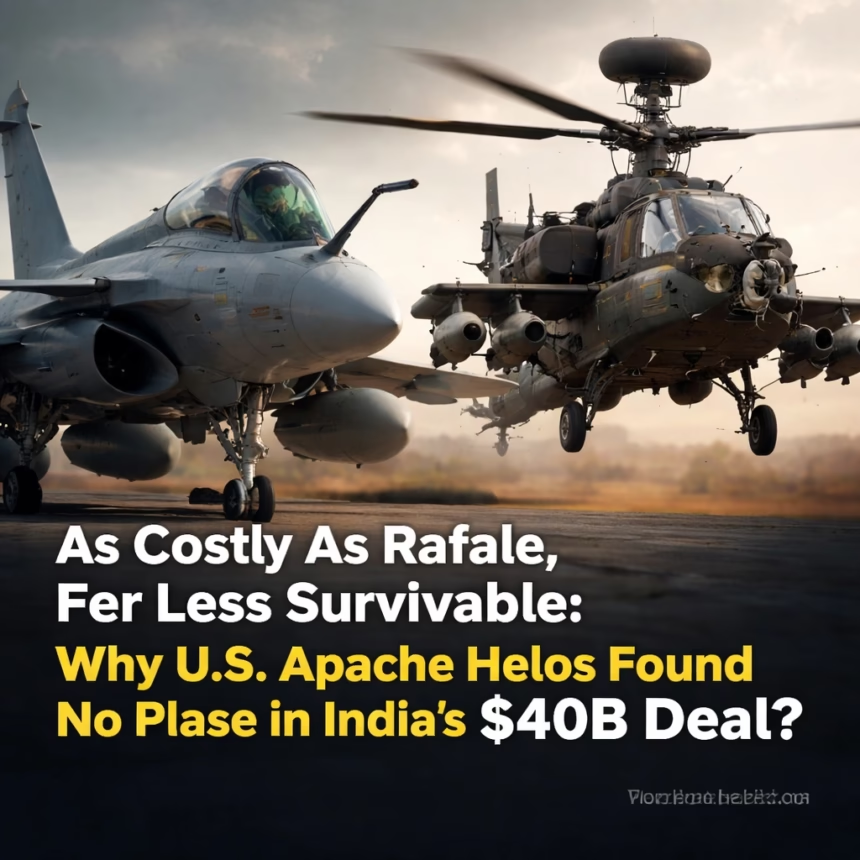
"Apache Dreams Crushed: How India's $40 Billion Helicopter Deal Became a Rafale's Best Friend"
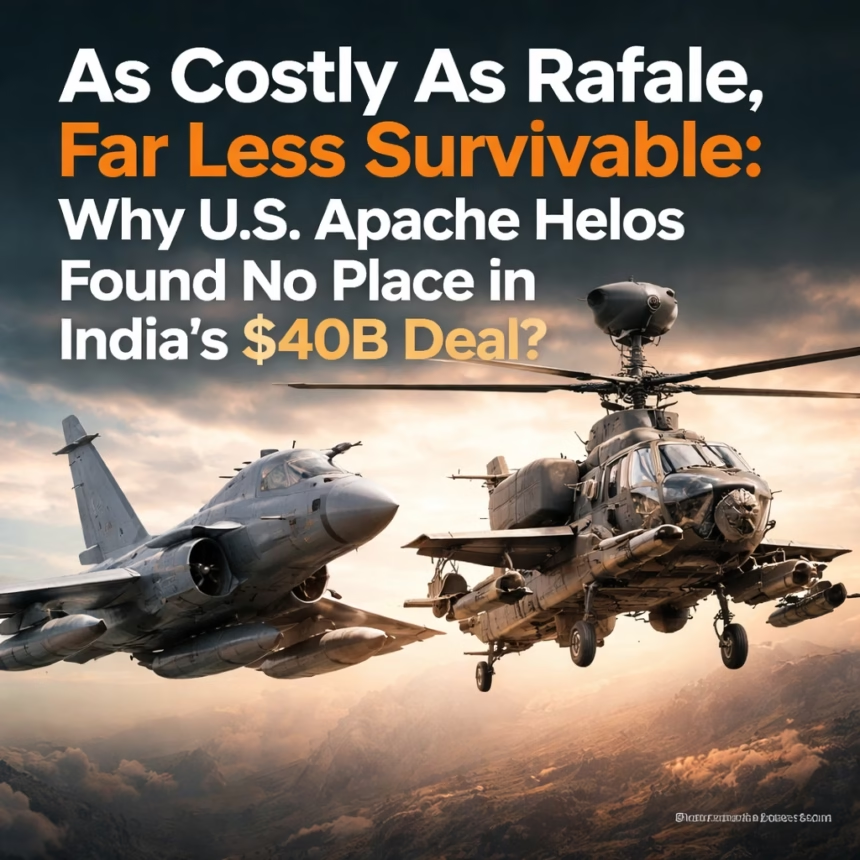
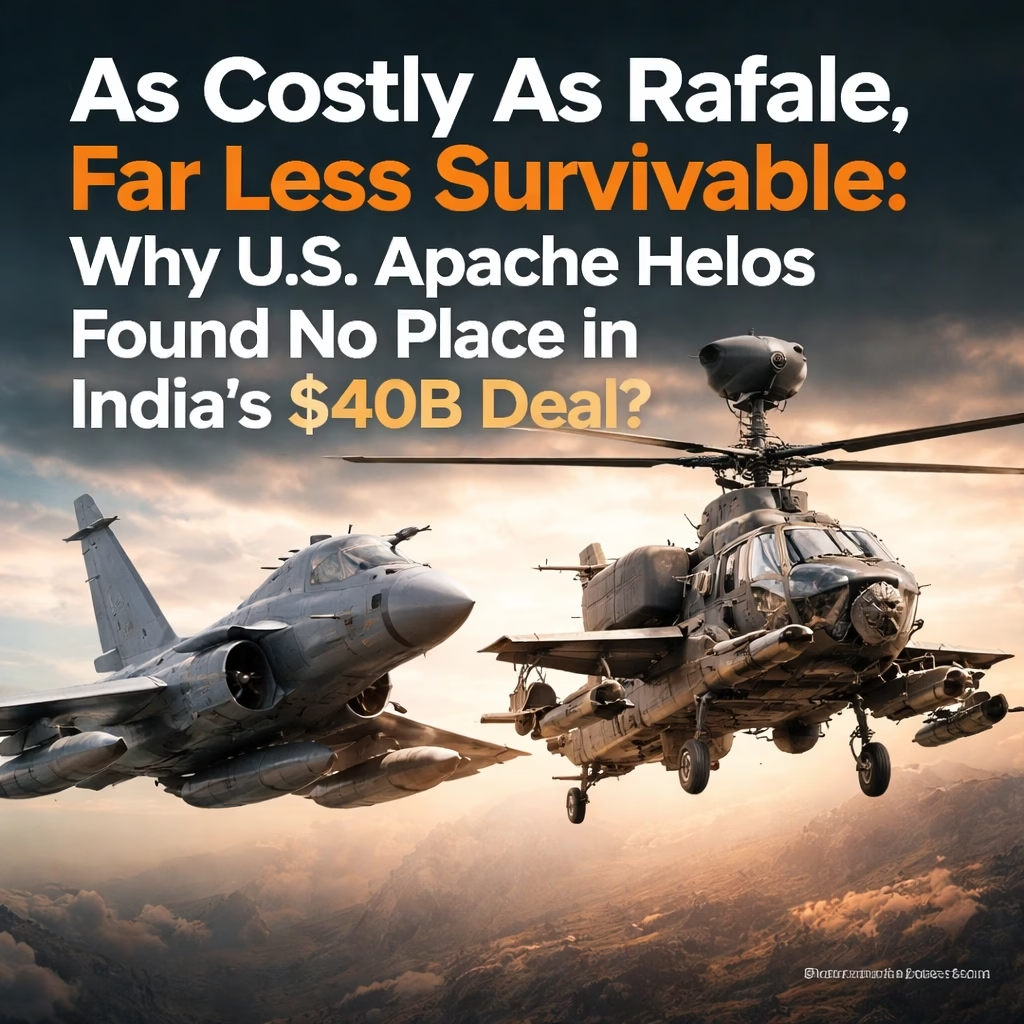
In a surprise move, India's Ministry of Defence has scrapped plans to acquire the American-made Apache helicopter, opting instead for the French-made Rafale fighter jet. The decision, which has sent shockwaves through the Indian defence industry, raises questions about the future of the Apache in the country's military arsenal.
The process of selecting a new helicopter began in 2012, with the Indian Air Force (IAF) issuing a Request for Proposal (RFP) for 22 Advanced Light Helicopters (ALH). The US-made Apache, along with the Russian-made Ka-52 and the Eurocopter EC635, were among the contenders. However, after years of deliberation, the IAF finally settled on the Rafale, which was selected in 2016.
Background: A Long and Winding Road
The process of acquiring a new helicopter began in 2012, when the IAF issued an RFP for 22 ALHs. The RFP was initially expected to be completed by 2014, but was delayed multiple times due to technical issues and disagreements over the procurement process. In 2015, the IAF issued a new RFP, which was again delayed due to disagreements over the price and technical specifications of the Apache.

In 2016, the IAF finally settled on the Rafale, which was selected over the Apache and the Ka-52. The deal, worth over $8 billion, was hailed as a major coup for France and a significant blow to the US defence industry.
Key Developments: A Shift in Priorities
More Read

In recent months, however, there have been significant developments that have led to a re-evaluation of the Apache's prospects. In 2020, the US government announced a major overhaul of the Apache's combat system, which included the addition of advanced sensors and communication systems. However, this upgrade came with a hefty price tag, estimated to be over $20 billion.
Meanwhile, the Rafale deal has been going from strength to strength, with the first batch of aircraft expected to be delivered by 2023. The IAF has also announced plans to purchase additional Rafale jets, worth over $10 billion.
Impact: Who is Affected?
The decision to scrap the Apache deal has sent shockwaves through the Indian defence industry, with many contractors and suppliers facing significant losses. The US defence industry, which had been expecting a major contract, is also feeling the pinch.
However, the impact of the decision will not be limited to the defence industry alone. The scrapping of the Apache deal will also have significant implications for the Indian economy, with thousands of jobs lost and billions of dollars in economic activity disrupted.
What Next: Expected Milestones
More Read

In the coming months, the Indian Ministry of Defence is expected to finalize the Rafale deal, with the first batch of aircraft expected to be delivered by 2023. The IAF is also expected to begin training pilots on the new aircraft, with the aim of having a fully operational fleet by 2025.
As the Rafale deal moves forward, the Indian defence industry will be watching with bated breath to see how the deal unfolds. Will the IAF be satisfied with the Rafale, or will it prove to be a costly and regrettable decision? Only time will tell.
The Rafale's Rise to Prominence
The Rafale, which was once considered a long shot, has emerged as a major player in the Indian defence industry. With its advanced combat systems and sleek design, the Rafale is set to play a major role in the IAF's future.
The Apache's Decline
The Apache, which was once considered a top contender for the Indian helicopter deal, has seen its prospects decline significantly in recent months. With the addition of advanced sensors and communication systems, the Apache's combat capabilities have improved, but its price tag has increased significantly.
The Future of the Apache in India
The decision to scrap the Apache deal has raised questions about the future of the aircraft in the Indian military arsenal. Will the Apache be phased out, or will it continue to play a role in the IAF's operations?
Only time will tell, but one thing is certain: the decision to scrap the Apache deal has sent shockwaves through the Indian defence industry, and the implications will be felt for years to come.