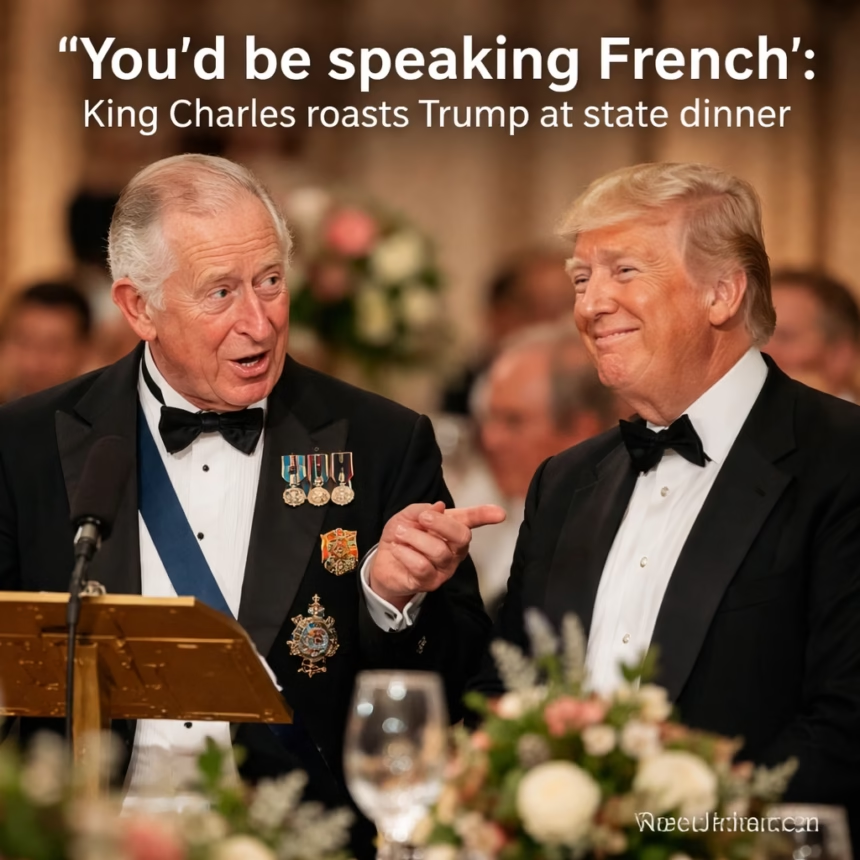
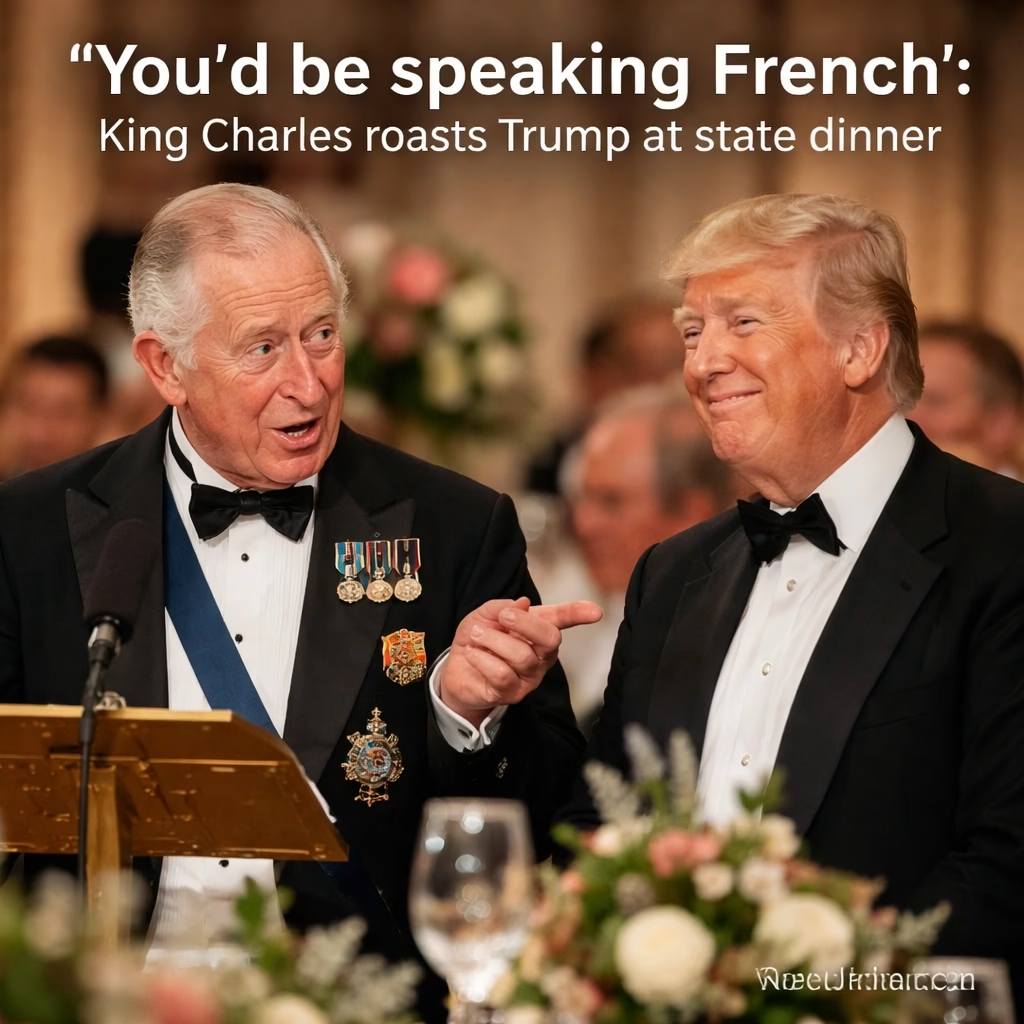
King Charles III reportedly engaged in a moment of light-hearted yet pointed banter with former US President Donald Trump during a state dinner, suggesting Trump would be 'speaking French' under certain circumstances. This unexpected exchange, which quickly garnered global attention upon its recent resurfacing, occurred at Buckingham Palace in June 2019, amidst Trump's official state visit to the United Kingdom.
Background: A Diplomatic Dance in London
The 2019 state visit by then-President Donald Trump to the United Kingdom was a highly anticipated diplomatic event, aiming to reinforce the ‘Special Relationship’ between the two nations. Trump’s presidency, characterized by an ‘America First’ approach, often challenged traditional alliances, making his interactions with established monarchies and European leaders a subject of intense scrutiny.
The 2019 State Visit: Pomp and Protocol
The three-day visit, from June 3-5, 2019, was steeped in royal pageantry. It commenced with a ceremonial welcome at Buckingham Palace, where Trump and First Lady Melania Trump were greeted by Queen Elizabeth II. Highlights included a private lunch with the Queen, a tour of Westminster Abbey, and a lavish state banquet at Buckingham Palace, hosted by Her Majesty. It was during this opulent dinner, attended by senior members of the Royal Family and dignitaries, that the now-famous interaction between King Charles (then Prince of Wales) and President Trump reportedly occurred.
Context of the Remark: Brexit and European Unity
The conversation that led to King Charles’s remark reportedly centered on Brexit and the broader landscape of European unity. At the time, the UK was deeply embroiled in its departure from the European Union, a process Trump had publicly supported. Prince Charles, known for his long-standing interest in environmental issues and European affairs, was engaging Trump in a discussion about the continent’s future. The specific context of “speaking French” was a subtle historical allusion, implying that if European nations did not maintain a unified front, one dominant power (historically France) might assert greater influence, potentially leading to a linguistic or cultural shift. This was a lighthearted yet pointed reference to past European power dynamics and the potential consequences of disunity.

Key Developments: The Anecdote’s Resurgence
While the initial exchange occurred in 2019, the specific details and precise wording of King Charles’s quip did not immediately become public. Such private conversations at state dinners are typically off-the-record, reflecting the delicate nature of high-level diplomacy. However, the anecdote has recently gained significant traction, resurfacing in various media outlets and social discussions, reigniting interest in the unique dynamic between the two figures.
The Unveiling of a Royal Moment
The story’s renewed prominence can be attributed to its inclusion in recent memoirs, journalistic accounts, or interviews that have delved into the behind-the-scenes moments of Trump’s presidency and the early years of King Charles’s reign. This unveiling offers a rare glimpse into the personal interactions that shape global relations, moving beyond the formal speeches and photo opportunities. The consistency of the account across various sources lends it credibility.
A Study in Diplomatic Humor
The remark itself is a masterclass in diplomatic humor – subtle, historically informed, and layered with potential interpretations. King Charles, known for his intellectual curiosity and dry wit, reportedly delivered the line with a smile, ensuring it was perceived as banter rather than an insult. This contrasts sharply with Trump’s often more direct and confrontational communication style. The incident highlights how humor can be employed in high-stakes environments to convey points, test boundaries, or simply inject a moment of levity into otherwise rigid protocols.
More Read

Reframing Perceptions in a New Era
The resurfacing of this story comes at a time when both King Charles and Donald Trump are at pivotal points in their public lives. Charles has ascended to the throne, navigating the complexities of modern monarchy, while Trump is a leading contender for the US presidency in 2024. The anecdote thus serves as a timely reminder of their past interactions, offering insights into their respective personalities and approaches to leadership. For King Charles, it reinforces his image as an astute, witty, and subtly influential figure. For Trump, it adds another layer to his extensive narrative of encounters with world leaders, often positioning him as an unconventional diplomat.
Impact: From Palace Banter to Global Discourse
The revelation of King Charles’s “speaking French” quip, though delivered in a private setting, has had a discernible impact on various fronts, shaping public perception, influencing media narratives, and contributing to the broader understanding of international diplomacy.
Shaping Public Perception of King Charles
For King Charles III, the anecdote has largely enhanced his public image. It portrays him as a monarch with a sharp intellect, a keen understanding of history and geopolitics, and a refined sense of humor. In an era where the Royal Family often faces scrutiny, this incident showcases his ability to engage with powerful figures on an intellectual level, using wit to navigate potentially sensitive topics. It reinforces the idea of a thoughtful, well-informed head of state, capable of subtle commentary even in the most formal of settings.
Adding Nuance to Trump’s Diplomatic Record
For Donald Trump, the anecdote adds another unique entry to his extensive record of interactions with world leaders. While it wasn’t a direct confrontation, it illustrates the kind of nuanced, often historically-rooted, humor he encountered from established foreign dignitaries. Trump’s public response to such moments is rarely documented, but the fact that the exchange remained light-hearted suggests a mutual understanding of the banter’s intent. It provides a counterpoint to narratives that sometimes depict Trump as being solely focused on transactional diplomacy, showing that even he was subjected to and presumably engaged in more subtle forms of interaction.
Fueling Media and Social Media Narratives
The story has proven to be highly shareable, quickly becoming a talking point across traditional media and social platforms. Journalists and commentators have dissected the remark, analyzing its historical implications, its diplomatic finesse, and what it reveals about the personalities involved. On social media, the quip has inspired memes, discussions, and debates about royal wit, political humor, and the ‘Special Relationship.’ Its viral nature underscores the public’s enduring fascination with behind-the-scenes royal and political anecdotes.
A Microcosm of UK-US Relations
Beyond the personal dynamics, the incident can be seen as a microcosm of the broader UK-US relationship. It reflects the deep historical ties, the shared language, and the often-complex interplay of power, culture, and personality. The ability of both figures to engage in such banter, even if one party’s intent was more subtly expressed than the other’s, speaks to a fundamental resilience in the diplomatic relationship. It demonstrates that even amidst significant political differences and ongoing geopolitical shifts, there remains a space for personal rapport and a degree of mutual respect.
More Read

What Next: Enduring Legacy and Future Implications
While the “speaking French” quip is an event from the past, its recent resurgence and continued discussion suggest an enduring legacy that could influence future perceptions and diplomatic engagements. The anecdote is unlikely to fade into obscurity, instead becoming a notable entry in the annals of modern royal and political history.
Shaping Future Interactions with a Potential Trump Presidency
Should Donald Trump return to the US presidency, this anecdote, along with others from his previous term, will undoubtedly be re-examined. It offers a precedent for the kind of subtle, intellectual engagement King Charles is capable of, and perhaps a hint at the diplomatic dance that might ensue. Future interactions between the British monarch and a potential Trump administration could be viewed through the lens of these past exchanges, informing expectations about the tone and substance of their relationship. It highlights the importance of personal chemistry and communication styles in high-level international relations.
A Case Study in Royal Diplomacy
For royal watchers and students of diplomacy, the incident will likely serve as a recurring case study. It exemplifies the unique role of a constitutional monarch in international affairs – a figure who can engage with political leaders on a personal level, offering perspective and subtle commentary without direct political interference. It underscores the power of soft diplomacy and the art of communication in maintaining international relationships, especially when dealing with figures known for their unconventional approaches.
Reinforcing the Power of Anecdote
The fact that this story resurfaced years after the event suggests a broader trend: the gradual unveiling of behind-the-scenes diplomatic histories. As memoirs are written, archives opened, and participants share their recollections, more such nuanced interactions between world leaders are likely to come to light. These insights enrich our understanding of historical events, revealing the human element often obscured by official communiqués and public statements. The “speaking French” quip is a testament to the idea that some of the most telling moments in history occur away from the public eye, only to emerge years later with renewed significance, embedding itself in the collective consciousness and shaping how we remember key figures and events.