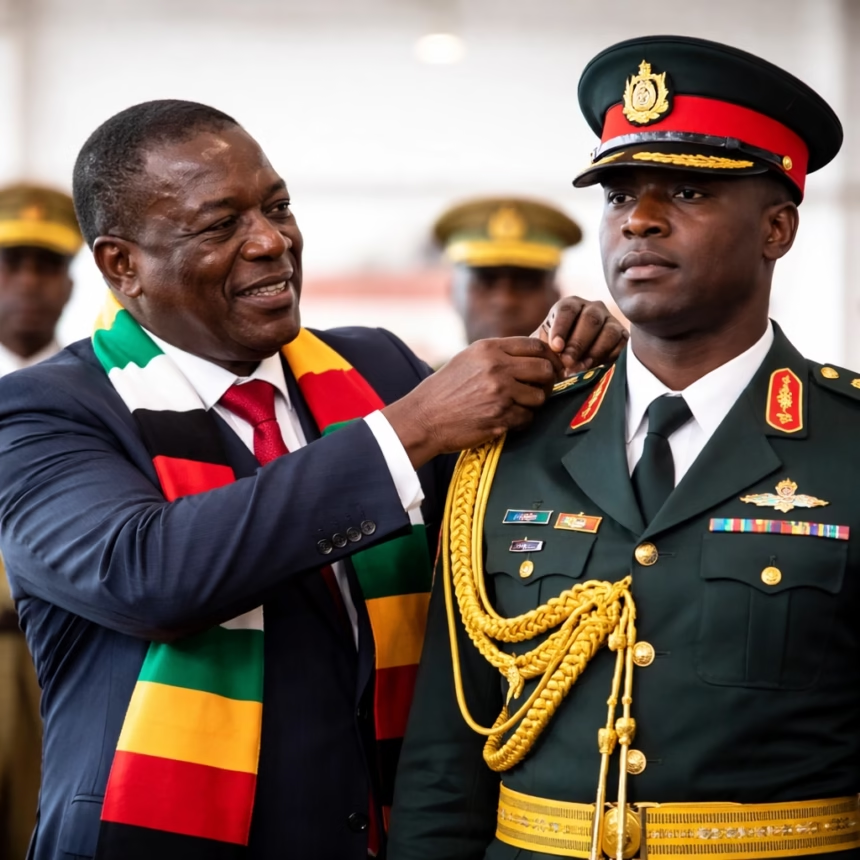
Zimbabwe's First Family Fortifies Military Ties: Another Mnangagwa Son Ascends Key Army Rank
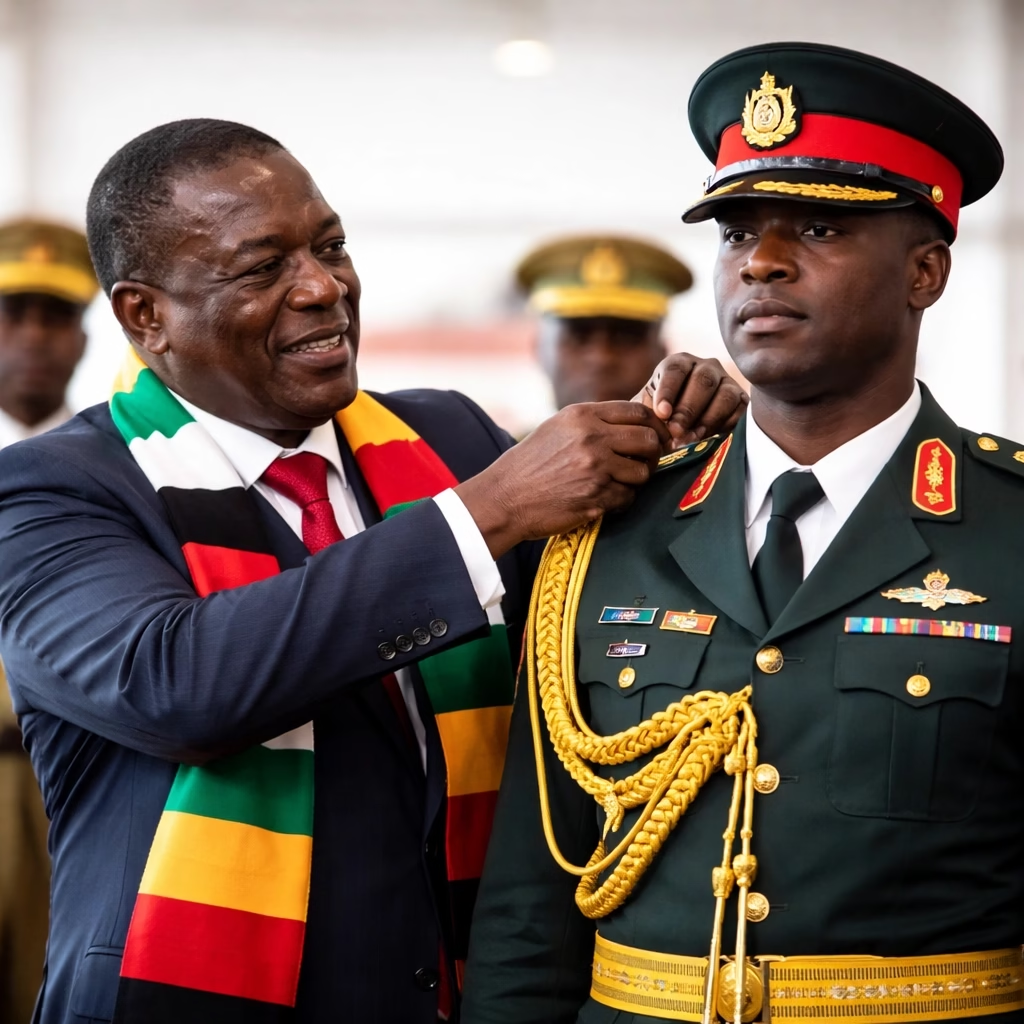
In a significant development within Zimbabwe's security apparatus, another son of President Emmerson Mnangagwa has reportedly been elevated to a senior rank within the national army. This latest promotion, which became public in early 2024, has ignited fresh debate regarding nepotism, military professionalism, and the dynamics of power consolidation within the Southern African nation.
The move sees a member of the First Family assuming a more prominent role in the country's armed forces, drawing attention to the intricate relationship between political leadership and military command in Harare.
Background: A Legacy of Power and Military Influence
Zimbabwe's political landscape has long been shaped by the intricate interplay between its civilian leadership and the powerful military establishment. President Emmerson Mnangagwa himself rose to power in November 2017, following a military-backed intervention that led to the resignation of long-time leader Robert Mugabe. This event underscored the military's decisive influence in national politics, a factor that has remained a constant under Mnangagwa's presidency.
Mnangagwa, a former liberation war fighter and close confidant of Mugabe for decades, has consistently maintained strong ties with the security sector. His ascent was widely seen as facilitated by key figures within the Zimbabwe Defence Forces (ZDF), solidifying the military's role as a critical pillar of state power.
Since assuming office, President Mnangagwa has appointed several individuals with military backgrounds to key governmental and parastatal positions. This strategy has been interpreted by observers as an effort to ensure loyalty and stability, particularly in a country with a history of political volatility and contested elections.

The Mnangagwa family itself has increasingly occupied influential roles across various sectors. While some family members are prominent in business and public service, direct appointments to the military's upper echelons have historically drawn particular scrutiny, given the institution's critical role in national security and political stability.
Previous instances of family connections influencing public appointments have periodically surfaced, fueling public discourse on governance, meritocracy, and the separation of powers. This latest military promotion builds upon a pattern that many critics argue points towards an emerging dynastic element within Zimbabwean governance.
Key Developments: The Latest Promotion and Its Context
Reports emerging from official and unofficial channels in early 2024 confirm the promotion of another of President Mnangagwa's sons to a senior rank within the Zimbabwe National Army (ZNA). While specific details regarding the son's name and precise rank have been subject to varying reports, credible sources indicate an elevation to a significant command position, such as Brigadier General or a similar high-ranking officer role.
More Read
This promotion marks a notable step in the individual's military career, placing them within the upper echelons of the country's defence forces. The announcement, though not accompanied by extensive public fanfare, quickly circulated within political and military circles, prompting immediate analysis.
The timing of this development is significant, occurring amidst ongoing discussions about political succession and the internal dynamics of the ruling ZANU-PF party. It follows a period where the military has been instrumental in maintaining order and, at times, intervening in civilian matters, reinforcing its powerful standing.
This appointment is not an isolated incident. Over recent years, other family members of high-ranking officials, including the President, have been observed rising through various state institutions. These movements contribute to a broader perception of concentrated power within a select group, extending beyond traditional political appointments to critical state organs like the military.
The official justification for such promotions typically cites merit, experience, and dedication to national service. However, critics often counter that the rapid ascent of individuals with direct familial ties to the head of state raises legitimate questions about transparency, fairness in promotion processes, and the potential for undue influence within state institutions.
Impact: Repercussions Across Society and State
The promotion of President Mnangagwa's son to a senior military rank carries multi-faceted implications for Zimbabwe's political, social, and military landscape. Internally, within the Zimbabwe Defence Forces, such an appointment can affect morale and professional perceptions.
Military Professionalism and Morale
For career military officers who have ascended through years of rigorous training and service, promotions based on perceived familial connections can be a source of discontent. It potentially undermines the principle of meritocracy, a cornerstone of professional military institutions, leading to questions about fairness and the integrity of the command structure. A perception that political connections outweigh professional competence could erode trust and discipline within the ranks.
More Read

Public Perception and Governance
Among the general populace, the promotion is likely to fuel existing concerns about nepotism and the consolidation of power within the First Family. Zimbabwe faces significant socio-economic challenges, and public trust in government institutions is often fragile. Appointments perceived as favouritism can exacerbate public cynicism, particularly among those who advocate for transparent governance and equal opportunities.
Civil society organizations and opposition parties have swiftly reacted, often condemning such moves as symptomatic of entrenched patronage networks. They argue that such appointments undermine democratic principles and contribute to a system where loyalty to the ruling elite takes precedence over national interest and competence.
Political Landscape and Succession
From a political standpoint, the elevation of a presidential son within the military could be interpreted as a strategic move to further secure the Mnangagwa family’s influence and potentially position a successor or a key ally for future political transitions. The military’s historical role in Zimbabwean politics means that having a direct family member in a senior command position could strengthen the President’s hold on power and influence future political alignments.
It also sends a clear signal about the President’s priorities in safeguarding his legacy and ensuring the continuity of his political agenda, potentially beyond his current term in office. This move adds another layer to the complex calculations surrounding Zimbabwe’s political future.
What Next: Anticipated Reactions and Future Trajectories
The recent promotion is expected to elicit further commentary and scrutiny from various stakeholders, both domestically and internationally. Domestically, opposition parties and civil society groups are likely to intensify their calls for greater transparency and accountability in public appointments, particularly within critical state institutions like the military.
The ruling ZANU-PF party and government officials are anticipated to defend the promotion, emphasizing the individual's qualifications and adherence to established military protocols. Such defenses often focus on merit and a commitment to national service, aiming to counter accusations of nepotism and political favouritism.
Internally, within the Zimbabwe Defence Forces, the long-term impact on morale and institutional cohesion will be closely monitored. While immediate dissent may not be visible, a sustained perception of political interference in military promotions could have subtle but significant effects on professionalism and loyalty within the ranks.
Looking ahead, this development could influence the broader political succession debate within ZANU-PF. The military's role in future political transitions remains a critical factor, and the presence of a presidential family member in a senior command position could shape the dynamics of any such processes.
Internationally, observers and human rights organizations will likely continue to monitor governance practices in Zimbabwe, including issues related to transparency, rule of law, and democratic principles. While direct intervention is unlikely, such developments contribute to the overall assessment of Zimbabwe's commitment to democratic reforms and good governance.
The coming months will likely reveal the full extent of the ripple effects of this promotion, as Zimbabwe navigates its complex political landscape and prepares for future electoral cycles, where the military's influence often looms large.