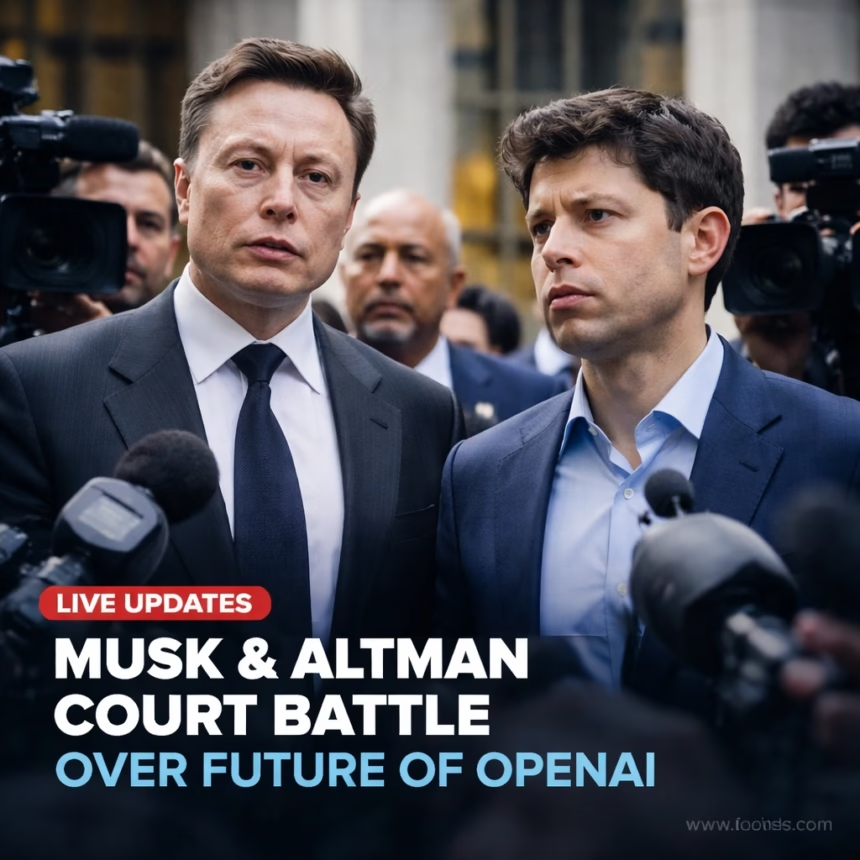
AI Titans Clash: Musk Sues Altman Over OpenAI's Soul
A high-stakes legal battle has erupted in San Francisco, pitting tech titan Elon Musk against OpenAI CEO Sam Altman and the company itself. Filed on February 29, 2024, the lawsuit alleges a profound breach of contract and a betrayal of OpenAI's foundational non-profit mission to develop artificial general intelligence (AGI) for the benefit of all humanity.
The dispute, unfolding in San Francisco Superior Court, centers on whether OpenAI has strayed from its altruistic roots, transforming into a profit-driven entity influenced heavily by its primary investor, Microsoft, at the expense of its original charter.
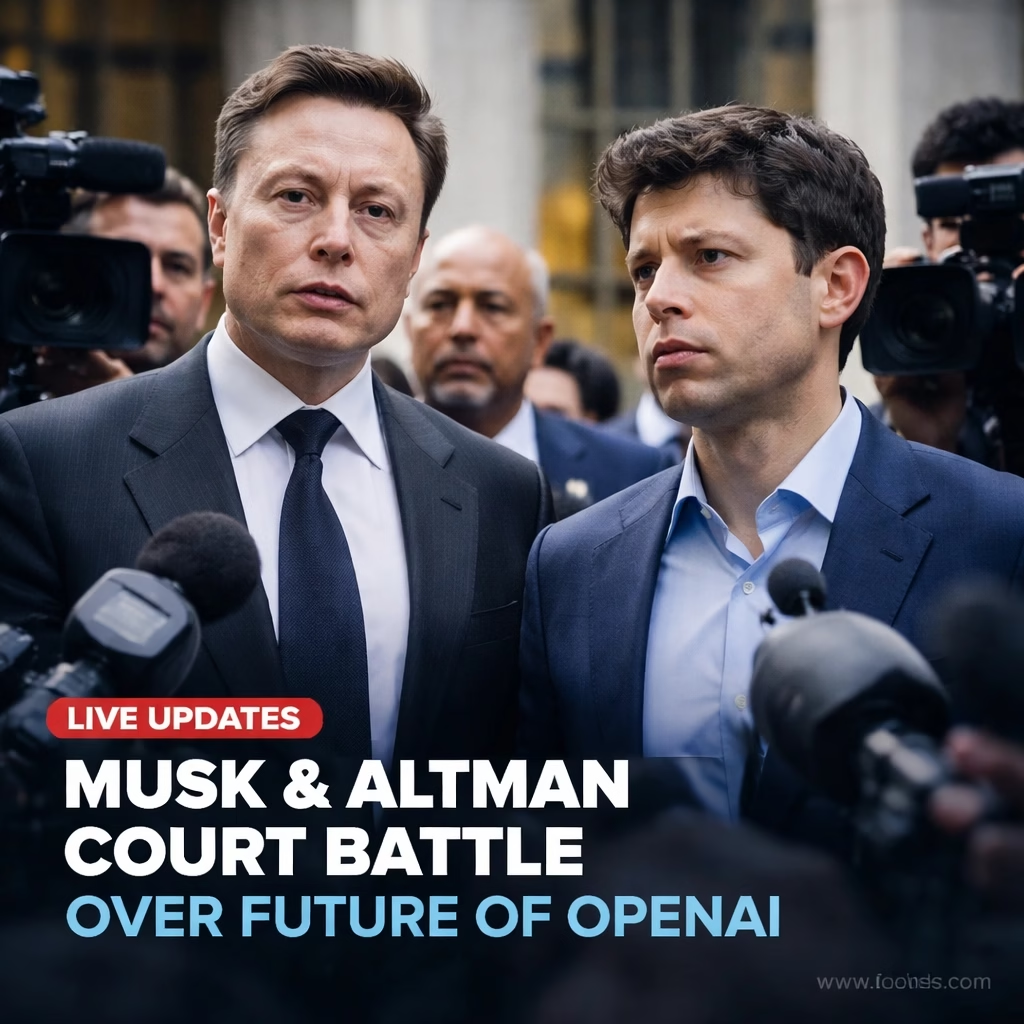
Background: The Genesis and Evolution of OpenAI
OpenAI was founded in December 2015 as a non-profit research laboratory with an ambitious, idealistic goal: to ensure that AGI benefits all of humanity, not just a select few or a single corporation. Its founding members included Elon Musk, Sam Altman, Ilya Sutskever, Greg Brockman, and others, all united by a shared concern about the potential existential risks of advanced AI.
The Founding Charter and Early Vision
The original mission explicitly stated that OpenAI would develop AGI in a way that was safe and beneficial, making its research and technology publicly available. Musk was a significant early donor, contributing tens of millions of dollars and serving on the initial board of directors. The emphasis was on open-source development and collaboration, fostering a transparent approach to AI advancement.

The Pivot to a “Capped-Profit” Model
In 2018, Elon Musk resigned from OpenAI’s board, citing potential conflicts of interest with Tesla’s own AI endeavors. The following year, in 2019, OpenAI announced a significant structural change, creating a “capped-profit” subsidiary, OpenAI LP. This move was designed to attract substantial capital necessary for advanced AI research, which had become incredibly expensive, while theoretically maintaining the non-profit’s control over the mission.
This restructuring paved the way for a multi-billion dollar investment from Microsoft, solidifying a strategic partnership that granted Microsoft extensive licensing rights to OpenAI’s technology. Critics, including Musk, argue this marked the definitive shift away from the original open-source, non-profit ethos.
Milestones and Internal Turmoil
OpenAI rapidly rose to prominence with groundbreaking releases like GPT-3, DALL-E, and most notably, ChatGPT in late 2022. The launch of ChatGPT ignited public imagination and accelerated the global AI race. However, the company faced internal turmoil in November 2023 when Sam Altman was abruptly fired by the non-profit board, only to be reinstated days later following an unprecedented employee revolt and pressure from investors, including Microsoft.
More Read

Key Developments: The Lawsuit Unpacked
Musk's lawsuit, filed in late February, represents the culmination of years of public criticism and private concerns. The 47-page complaint meticulously details his allegations, painting a picture of a company that has fundamentally betrayed its founding principles.
The Core Allegations
The central claim is that OpenAI, under Altman’s leadership, has violated the founding agreement by transitioning from an open-source, non-profit entity dedicated to AGI for humanity into a closed-source, profit-driven enterprise. Musk argues that the development of GPT-4, which he claims is a form of AGI, was done in secret and withheld from the public, directly contradicting the initial charter.
The lawsuit states that OpenAI has become a “de facto subsidiary of Microsoft,” effectively serving the commercial interests of its largest investor rather than the broader public good. It highlights the exclusive licensing deals and the proprietary nature of OpenAI’s latest models as evidence of this deviation.
OpenAI’s Defense and Counter-Arguments
OpenAI has vehemently denied Musk’s allegations. In a public response, the company released a series of emails and communications with Musk from 2015-2018, suggesting that Musk himself acknowledged the necessity of a for-profit structure to compete with Google for top talent and resources. They contend that Musk understood and even encouraged the eventual need for significant capital that a non-profit structure couldn’t provide.
The company maintains that its mission remains unchanged and that its “capped-profit” model is a deliberate mechanism to balance financial sustainability with its altruistic goals. They assert that their work continues to be guided by the principle of safe and beneficial AGI development for humanity.
Both sides have assembled formidable legal teams, signaling a protracted and complex legal battle ahead. The specifics of the founding agreement and the definition of “AGI” will likely be central to the court’s deliberations.
More Read

Impact: Who Stands to Lose or Gain?
The outcome of this lawsuit carries monumental implications, not just for OpenAI and its leadership, but for the entire artificial intelligence industry and the future governance of advanced technologies.
The Future of OpenAI’s Mission and Structure
A ruling in Musk’s favor could force a fundamental restructuring of OpenAI, potentially mandating a return to a more open-source model or even challenging its current “capped-profit” status. Conversely, if OpenAI prevails, it would validate its current operational model and its ability to pursue its mission within a commercial framework.
The Microsoft Angle
Microsoft’s multi-billion dollar investment and strategic partnership with OpenAI are directly in the crosshairs. Any significant change to OpenAI’s structure or mission could jeopardize Microsoft’s exclusive licensing agreements and its strategic position in the burgeoning AI market. The lawsuit effectively questions the legality and ethical standing of their collaboration.
Precedent for AI Governance and Ethics
This case could set a crucial legal precedent for how AI companies, particularly those founded with altruistic missions, are held accountable to their initial promises. It highlights the tension between the immense capital requirements for advanced AI development and the ethical imperative to keep such powerful technology aligned with public benefit. Regulators globally are watching closely, as the case touches upon issues of corporate governance, transparency, and the control of potentially world-altering technology.
Implications for Investors and Employees
For OpenAI’s existing and prospective investors, the lawsuit introduces a layer of uncertainty regarding the company’s long-term viability and legal standing. Employees, who rallied behind Altman during the November 2023 crisis, may once again face questions about the company’s stability and direction.
What Next: Expected Milestones in the Legal Saga
The legal proceedings are still in their early stages, but several key phases are anticipated as the case moves forward.
Initial Hearings and Discovery
The court will first address initial motions, including potentially a motion to dismiss from OpenAI’s legal team. If the case proceeds, a lengthy discovery phase will commence, where both parties will exchange vast amounts of internal documents, emails, financial records, and communications. This phase is crucial for uncovering the full historical context and intent behind OpenAI’s evolution.
Expert Testimonies and Definitions
Given the highly technical nature of AI, expert witnesses will likely play a significant role. Defining terms like “AGI,” “open-source,” and “non-profit mission” within the context of the founding agreement will be critical and contentious points.
Potential for Settlement or Prolonged Trial
While a public trial would undoubtedly be a spectacle, many high-profile corporate disputes eventually lead to settlement negotiations. However, given the strong convictions of both Musk and Altman regarding the future of AI, a prolonged legal battle is a distinct possibility. A trial could stretch for months or even years, with potential appeals extending the process further.
Regulatory Scrutiny and Industry Repercussions
Regardless of the legal outcome, the lawsuit is expected to intensify regulatory scrutiny on the AI industry. Governments worldwide are grappling with how to govern AI, and this case underscores the challenges of balancing innovation, profit, and public welfare. The resolution could influence future legislative efforts concerning AI development and corporate responsibility.