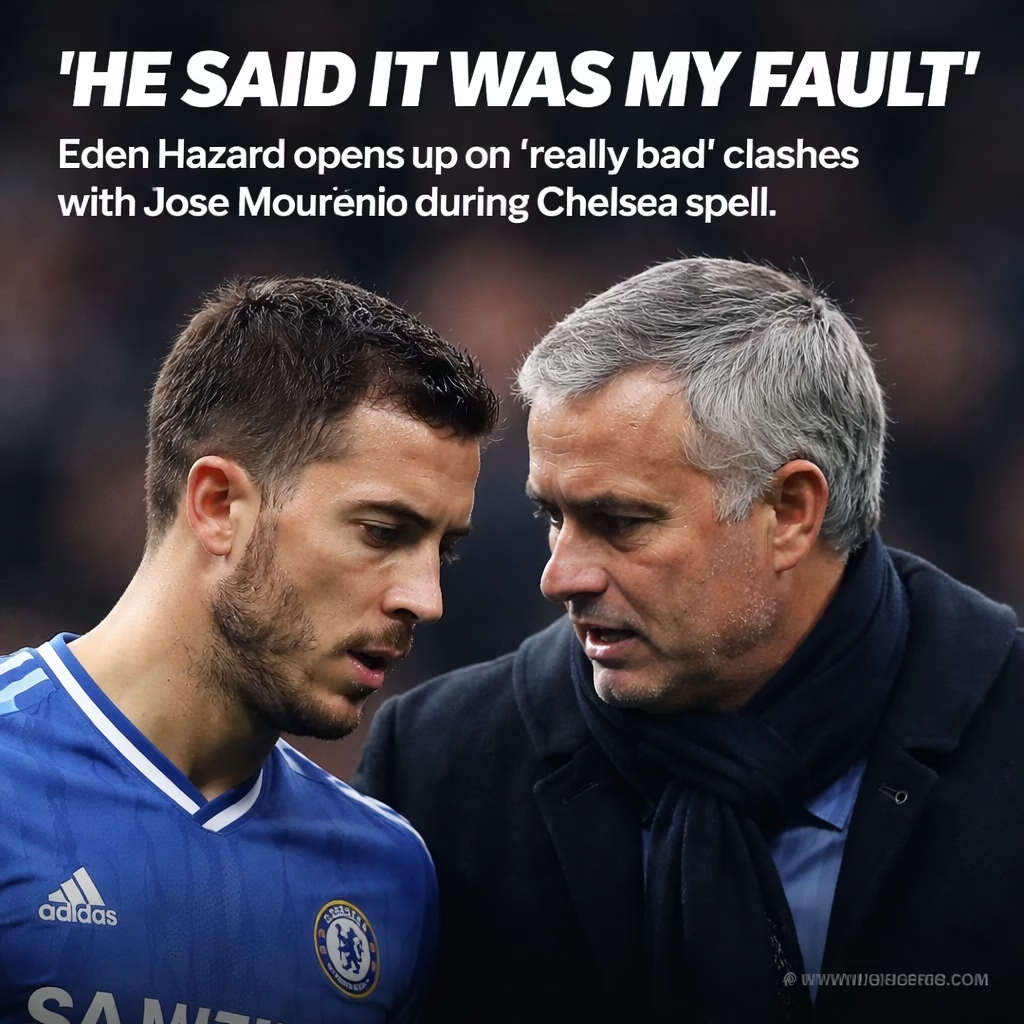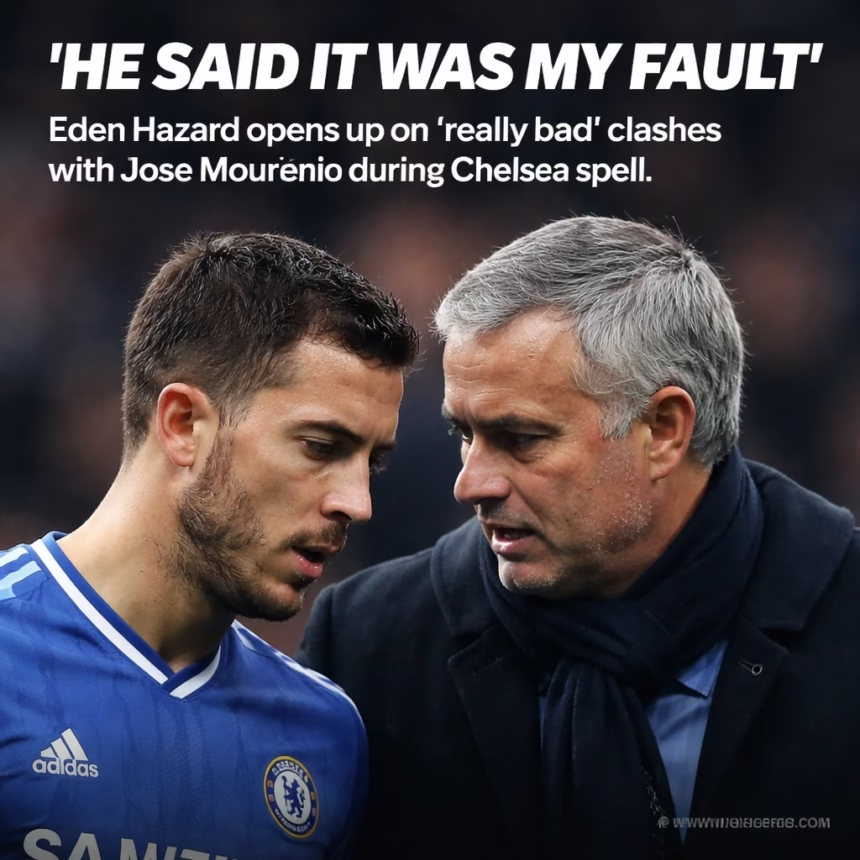
Eden Hazard, the revered former Chelsea forward, has recently offered a candid glimpse into his often tumultuous relationship with manager Jose Mourinho during their shared tenure at Stamford Bridge. Speaking openly, Hazard recounted "really bad" clashes with the Portuguese tactician, highlighting a particular instance where Mourinho directly attributed team failures to the Belgian star. These revelations provide fresh insight into the dynamics behind the scenes during a period of both immense success and dramatic decline for the London club.
Background: A Rollercoaster Ride at Stamford Bridge
Eden Hazard joined Chelsea in 2012, quickly establishing himself as one of Europe's most electrifying talents. His arrival coincided with a period of significant transition for the club. Jose Mourinho, having previously led Chelsea to two Premier League titles, returned for his second spell as manager in June 2013, igniting hopes of further glory.
The initial phase of their collaboration was marked by considerable success. Hazard flourished under Mourinho, winning the PFA Player of the Year award in the 2014-15 season as Chelsea secured both the Premier League title and the League Cup. This period saw Hazard at the peak of his powers, a creative force capable of single-handedly changing games. Mourinho, known for his ability to forge strong bonds with key players, appeared to have a harmonious working relationship with his star attacker. Publicly, both men often spoke highly of each other, projecting an image of mutual respect and shared ambition.
However, the 2015-16 season dramatically altered this narrative. Chelsea's title defense imploded spectacularly. The team struggled from the outset, losing nine of their first 16 Premier League games. Mourinho's public demeanor became increasingly combative, and internal tensions reportedly escalated. The manager's relationship with various players, including Hazard, began to fray. This period culminated in Mourinho's dismissal in December 2015, just seven months after lifting the Premier League trophy. The rapid descent from champions to crisis club left many questions unanswered, particularly regarding the internal dynamics and player-manager relationships that had soured so quickly.
Key Developments: Hazard’s Candid Confessions
Hazard's recent comments, made during an appearance on the 'Obi One Podcast' hosted by former Chelsea teammate John Obi Mikel, shed new light on the underlying tensions of that tumultuous period. The Belgian international described the breakdown of his relationship with Mourinho as having occurred towards the end of the Portuguese manager's second stint.

"The last season with Mourinho was not good," Hazard stated. "We won the title, and then we went down. We had a good team, but we all got lazy. We went on holiday, came back, and then sometimes you know, when you have a good manager, you don't want to play for him. You just want to play for yourself."
The most striking revelation concerned Mourinho's direct criticism. Hazard recounted a specific instance where Mourinho confronted him, assigning blame for the team's poor performances. "He said, 'It was my fault,'" Hazard revealed. "He said it in front of the team, and it was a really bad moment. I was like, 'Wow, okay, I will take it.'" This public accusation, according to Hazard, created significant friction and contributed to the "really bad clashes" he experienced with Mourinho.
Hazard acknowledged that he might not have been performing at his absolute best during that difficult season, but the direct, public nature of Mourinho's blame clearly impacted him. Mourinho's management style often involves challenging players publicly to elicit a response, a tactic that sometimes backfires with sensitive or less confrontational individuals. Hazard, known for his calm demeanor and preference for positive reinforcement, likely found this approach particularly jarring and demotivating. The comments from Hazard underscore the profound psychological impact a manager's words can have on a player, especially during a period of collective struggle.
More Read

Impact: Reshaping Narratives and Legacies
Hazard's revelations carry significant weight, offering a player's perspective on a chapter that remains a source of debate among Chelsea fans and football historians. The immediate impact of the deteriorating relationship between Hazard and Mourinho was evident on the pitch. Hazard's form dipped significantly in the early months of the 2015-16 season, mirroring the team's overall struggles. This decline was a stark contrast to his PFA Player of the Year campaign just months prior. While Hazard eventually regained his form after Mourinho's departure, leading Chelsea to another title under Antonio Conte, the period of conflict undeniably affected his immediate performance and enjoyment of the game.
For Jose Mourinho, these comments add another layer to his complex legacy at Chelsea. His second spell ended controversially, with many questioning his man-management skills and his ability to maintain player support. Hazard's account provides a firsthand testimonial, suggesting that Mourinho's confrontational methods, while successful in some instances, alienated key players during times of adversity. It reinforces the narrative that Mourinho's intense demands and public criticism can be a double-edged sword, capable of inspiring greatness but also fostering resentment and division.
The revelations also serve to humanize the often-mythologized figures of professional football. They remind fans that even at the highest level, personal dynamics and emotional interactions play a crucial role in team performance and individual well-being. For Chelsea supporters, these insights might reframe their understanding of that difficult 2015-16 season, shifting some of the blame away from the players and towards the fractured relationships within the club's hierarchy.
What Next: Further Reflections and Historical Context
While Jose Mourinho is unlikely to offer a direct response to Hazard's comments, these types of revelations often spark broader discussions within the football community. They encourage other former players to share their experiences, contributing to a more nuanced understanding of the player-manager dynamic. As Hazard continues his post-retirement reflections, more anecdotes and insights into his illustrious career are expected to emerge. These personal accounts are invaluable for future generations, offering a glimpse into the pressures, triumphs, and conflicts that define a career at the pinnacle of professional football.
The ongoing interest in Hazard's relationship with Mourinho also highlights the enduring fascination with the "special one's" unique management style. His career has been marked by both incredible success and high-profile fallouts with star players. Hazard's comments provide another piece of the puzzle, illustrating how even a seemingly perfect partnership can crumble under pressure, leaving behind a legacy of both glory and regret. As football continues to evolve, these historical accounts serve as crucial reminders of the delicate balance required to manage elite athletes and maintain a cohesive, winning environment.