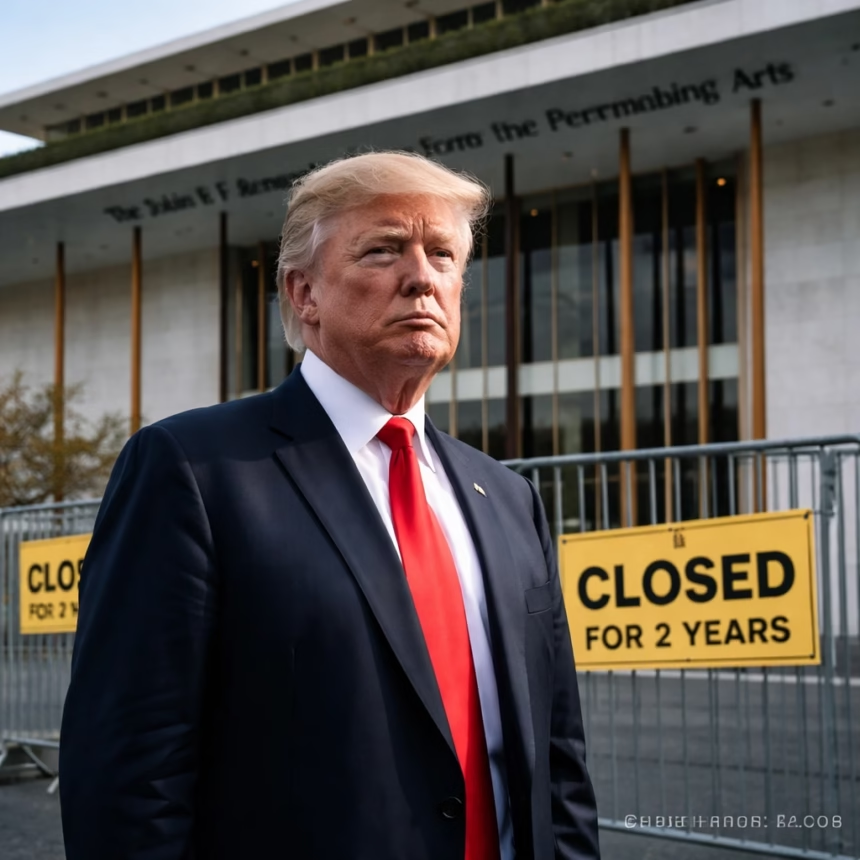
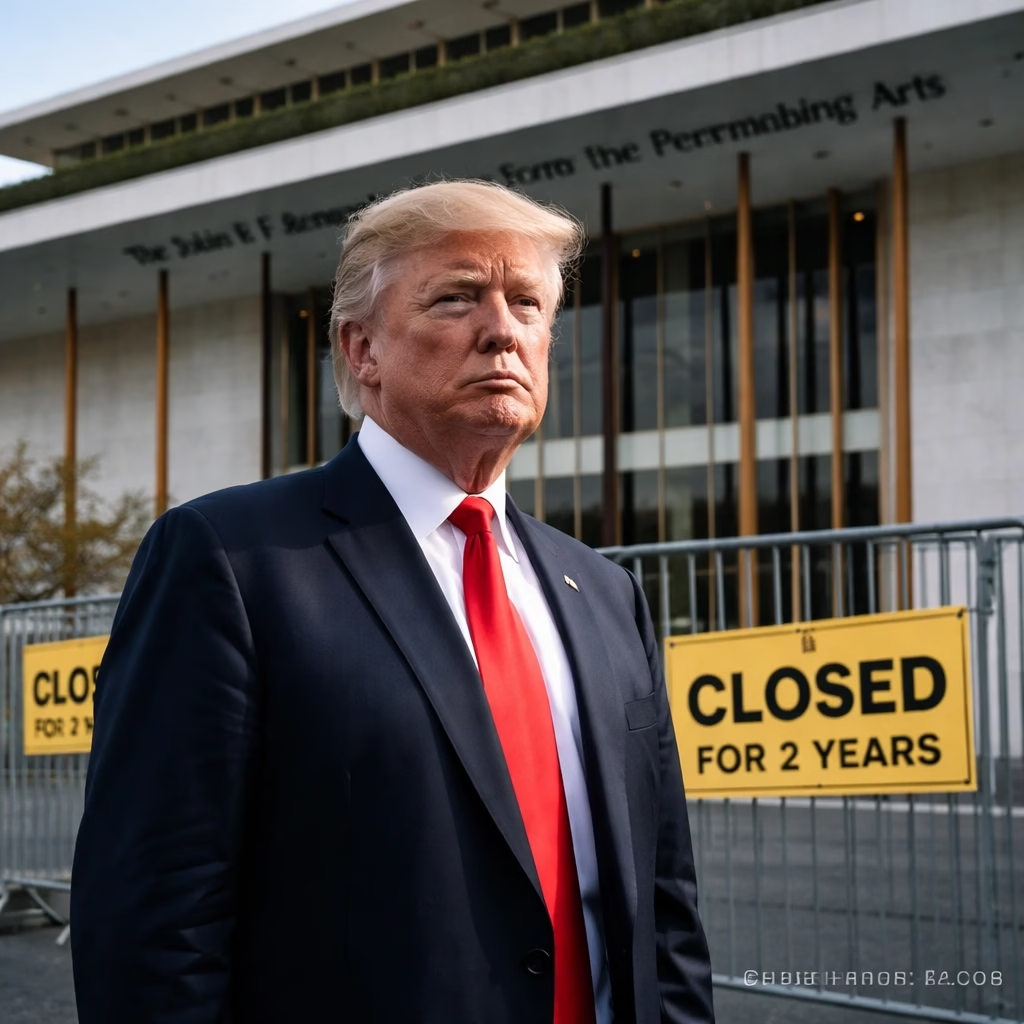
The John F. Kennedy Center for the Performing Arts, a cornerstone of American culture in Washington D.C., is slated for an unprecedented two-year closure. A directive from the Trump administration, effective July 1, 2025, will halt all public operations, performances, and educational programs at the iconic complex. The decision marks a significant shift in federal engagement with national cultural institutions.
Background: A National Memorial’s Unprecedented Challenge
Opened in 1971 as a living memorial to President John F. Kennedy, the Kennedy Center serves as the nation's performing arts center. It houses world-renowned resident companies, including the National Symphony Orchestra, the Washington National Opera, and the Suzanne Farrell Ballet. Its dual mission encompasses showcasing the performing arts and providing extensive arts education across the country.
The center operates on a hybrid funding model, receiving annual federal appropriations — for example, approximately $40 million for operations and maintenance in Fiscal Year 2024 — alongside substantial private donations and earned revenue from ticket sales and events. This blend of public and private support has sustained its operations for over five decades.
Historically, the Kennedy Center has never faced a full, government-mandated operational shutdown since its inception. Previous temporary closures were limited to emergencies, such as severe weather events or the COVID-19 pandemic, or for planned maintenance. The current directive represents an entirely new precedent for federal interaction with such a prominent cultural institution.
The hypothetical Trump administration, now in a second term, has previously signaled a focus on "fiscal prudence" and a reevaluation of federal spending on cultural programs. Discussions within certain policy circles have reportedly explored consolidating federal cultural assets or reducing the federal footprint in institutions deemed capable of greater private sector funding. This aligns with past rhetoric concerning federal arts funding and the broader emphasis on reallocating taxpayer resources.

Key Developments: White House Mandates Halt to Operations
The official announcement came on June 10, 2025, via a directive from the Office of Management and Budget (OMB). This was swiftly followed by a press conference led by White House spokesperson Sarah Jenkins, who detailed the administration's rationale. President Trump later reinforced the decision through social media, citing "necessary structural assessments" and the need to "reallocate taxpayer dollars to more pressing national priorities."
The administration articulated two primary reasons for the two-year closure:
Comprehensive Infrastructure Review
The first stated reason is a comprehensive, two-year structural and operational audit of the entire 17-acre complex. This review will encompass its three main theaters — the Opera House, Concert Hall, and Eisenhower Theater — along with numerous smaller venues, rehearsal spaces, and administrative offices. White House officials asserted that this extensive assessment is “critical for the long-term viability, safety, and modernization of the facility.”
More Read

Fiscal Reallocation and Strategic Investments
The second justification involves a redirection of funds previously earmarked for the Kennedy Center’s federal appropriation. While specific new allocations were not immediately detailed, spokesperson Jenkins indicated that these funds would be channeled towards “national security infrastructure and critical border protection initiatives.” This move underscores a broader administrative strategy to prioritize specific federal spending areas.
Effective July 1, 2025, all public access to the Kennedy Center will be restricted. This includes the immediate cessation of all scheduled performances, educational workshops, public tours, and all retail and dining operations. Administrative staff will be significantly reduced, with only a skeleton crew retained for facility security and the initial phases of the assessment. All ongoing contracts with resident companies and visiting artists are subject to termination or renegotiation for the two-year hiatus.
Profound Impact: Arts, Economy, and National Image Affected
The mandated closure is anticipated to send shockwaves through the national arts community, the local economy, and America's international cultural standing.
Arts Community Devastated
Hundreds of artists, including the full complement of the National Symphony Orchestra, dancers from the Washington National Opera Ballet, and actors, face immediate unemployment or displacement. Major performance seasons for 2025-2026 and 2026-2027, encompassing grand opera productions, classical concert series, Broadway tours, and jazz festivals, are canceled. This disruption jeopardizes the careers of many and halts the development of new works and collaborations.
Resident arts organizations, heavily reliant on the Kennedy Center for their primary performance venue and a significant portion of their operating budgets derived from its support and ticket sales, face an existential crisis. Their ability to maintain ensembles, staff, and artistic momentum is severely challenged.
Staff and Employment Losses
Approximately 600 full-time and part-time employees are expected to be furloughed or laid off. This includes technical crews, box office personnel, ushers, educators, and administrative staff. The ripple effect extends to contractors and gig workers, representing a substantial blow to the local arts employment sector in the greater Washington D.C. area.
Loss for Audiences and Education
Millions of annual visitors, comprising D.C. residents, national tourists, and international guests, will be deprived of access to world-class performances, free daily concerts on the Millennium Stage, and a wide array of educational programming. The Kennedy Center is a major cultural draw, contributing significantly to Washington D.C.’s identity and appeal as a global capital.
The center’s extensive educational programs, which annually reach over 100,000 students and teachers through initiatives like the National Committee for the Performing Arts and the VSA arts program for individuals with disabilities, will cease. This creates a significant void in arts education accessibility and enrichment nationwide.
Economic Downturn for Local Businesses
Businesses in the surrounding Foggy Bottom and Georgetown neighborhoods, including restaurants, hotels, and transportation services, are bracing for a substantial downturn. With over 3 million annual visitors, the Kennedy Center generates significant ancillary economic activity, which will now be severely curtailed for two years.
Diminished National and International Image
The closure of America’s national performing arts center sends a stark message regarding the nation’s commitment to cultural diplomacy and artistic expression. International partners and cultural exchange programs are likely to be impacted, potentially diminishing America’s soft power influence and cultural standing on the global stage.
What Next: Protests, Challenges, and an Uncertain Future
The announcement has ignited immediate public outcry and is expected to trigger a series of protests, legal challenges, and intense congressional scrutiny.
Public and Artistic Condemnation
Arts advocacy groups, including Americans for the Arts and the League of American Orchestras, have issued strong condemnations, labeling the decision “an assault on American culture.” Online petitions have garnered hundreds of thousands of signatures, and organized protests are anticipated outside the Kennedy Center and the White House. Prominent artists, conductors, and actors have begun to voice their dismay, urging the administration to reconsider its directive.
Congressional Scrutiny and Potential Legislation
Members of Congress, particularly those from districts with strong arts constituencies and representatives from Maryland and Virginia, are expected to demand immediate hearings. They plan to explore legislative avenues to challenge or reverse the executive directive, citing concerns about administrative overreach and the precedent this sets for federally supported cultural institutions. While partisan divisions exist, a degree of bipartisan concern is emerging regarding the long-term implications.
Potential Legal Challenges
Unions representing stagehands, musicians, and administrative staff, alongside civil liberties and arts advocacy organizations, are reportedly exploring legal options. These challenges could cite breaches of contract, administrative overreach, or potential violations of the original Kennedy Center Act, which established the center as a permanent national memorial.
Uncertainty Beyond Two Years
During the two-year closure, the administration has indicated that federal teams will conduct the “comprehensive assessment.” Speculation is rife regarding the center’s long-term future. While the stated intent is for it to reopen, significant concerns persist that the closure could lead to a permanent alteration of its mission, a drastic reduction in future federal funding, or even a push towards full privatization.
The Kennedy Center’s Board of Trustees, currently chaired by David M. Rubenstein, faces the daunting task of navigating this unprecedented period. The board has released a statement expressing “profound disappointment” and reaffirming its commitment to “upholding the Kennedy Center’s mission and safeguarding its legacy during this challenging and uncertain period.”