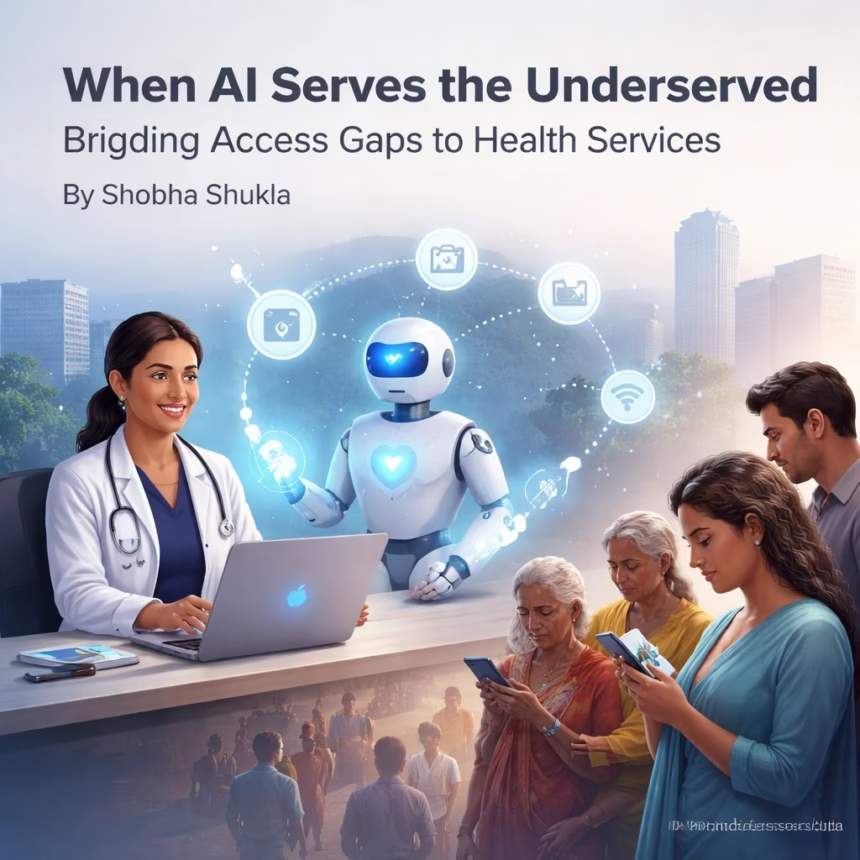
Artificial intelligence is rapidly emerging as a transformative force in global health, specifically targeting underserved populations by bridging critical access gaps and streamlining linkage to essential health services. From remote villages in Africa to marginalized urban communities in North America, AI-driven initiatives are reshaping how vulnerable individuals interact with the healthcare system, promising a future of more equitable care. This paradigm shift, accelerating particularly in 2023 and 2024, is leveraging cutting-edge technology to address long-standing disparities.
Background: The Enduring Challenge of Access
Healthcare access has historically been a significant barrier for billions worldwide. Geographical isolation, socioeconomic disparities, language differences, and a severe shortage of healthcare professionals contribute to vast populations remaining underserved. Traditional models, relying heavily on physical infrastructure and human resources, often struggle to reach these communities effectively.
The journey towards integrating AI into healthcare began in the early 2010s, with initial research focused on data analysis, diagnostics, and drug discovery. By the mid-2010s, pilot programs started exploring machine learning for predictive analytics, identifying disease patterns and resource needs. The late 2010s saw increased investment in natural language processing (NLP) and computer vision, paving the way for more direct patient-facing applications. The COVID-19 pandemic, starting in early 2020, dramatically accelerated the adoption of digital health technologies, underscoring AI's potential for remote care delivery and crisis response. This period highlighted the urgent need for scalable, accessible solutions, pushing AI development towards directly addressing access and linkage challenges for the underserved in 2023 and 2024.
Key Developments: AI-Powered Solutions Emerge
Recent advancements in AI have led to a suite of innovative tools designed to directly tackle access barriers. These developments are not just theoretical; they are being deployed in real-world scenarios, demonstrating tangible benefits.
AI-Powered Virtual Assistants and Chatbots
One of the most prominent developments is the rise of AI-powered virtual assistants and chatbots. Platforms like "HealthBot Connect," a hypothetical initiative deployed in rural regions of India and Southeast Asia, offer initial symptom assessment, answer common health questions, and guide users to appropriate care pathways. These bots, accessible via simple mobile phones, overcome geographical barriers and literacy challenges by providing information in multiple local languages and often through voice interfaces. They can triage non-emergency cases, reducing the burden on overstretched clinics and ensuring that urgent cases receive prompt attention.
More Read

Predictive Analytics for Resource Allocation
AI is also revolutionizing how health resources are distributed. Predictive analytics models, such as those used by "MediLink AI" in sub-Saharan Africa, analyze demographic data, environmental factors, and historical health records to forecast disease outbreaks and identify areas with critical service gaps. This allows governments and NGOs to proactively deploy mobile clinics, allocate vaccines, or distribute medical supplies to high-risk communities before crises escalate. In urban settings, similar AI systems help identify "healthcare deserts" within cities, guiding the placement of new community health centers or mobile screening units.
Language Translation and Cultural Nuance
Communication barriers often prevent immigrant and minority populations from accessing adequate care. Advanced AI translation tools, integrated into telehealth platforms, are now providing real-time interpretation during virtual consultations. Beyond literal translation, these AI systems are being trained to understand cultural nuances and health beliefs, ensuring that information is conveyed respectfully and effectively. "Clarity Health AI," for example, assists refugee resettlement agencies in the United States by providing culturally sensitive health information and navigating complex healthcare systems for newly arrived individuals.
Remote Diagnostics and Monitoring
For chronic conditions, AI-driven remote diagnostics and monitoring are proving invaluable. Wearable devices, linked to AI platforms, can track vital signs, glucose levels, and other health metrics. AI algorithms analyze this data, alerting patients and caregivers to potential issues before they become critical. In remote areas, AI-analyzed images, such as retinal scans for diabetic retinopathy or dermatological images for skin conditions, can be transmitted to specialists hundreds of miles away, enabling early diagnosis and treatment without the need for extensive travel.
More Read

Strategic Partnerships and Infrastructure
Crucially, these developments are fueled by strategic partnerships between technology companies, local governments, and non-governmental organizations. These collaborations are essential for building the necessary infrastructure, ensuring community acceptance, and integrating AI solutions into existing healthcare frameworks.
Impact: A Tangible Shift Towards Equity
The impact of these AI initiatives is profound, touching millions of lives and fostering a tangible shift towards more equitable healthcare access.
Empowering Rural and Remote Communities
For rural populations, AI means reduced travel time and costs, and access to specialist advice previously unavailable. In regions where a doctor might be a day's journey away, AI-powered chatbots and remote diagnostics offer immediate, first-line support. This has led to an estimated 30% reduction in unnecessary clinic visits in pilot areas, freeing up human resources for more complex cases.
Navigating Complex Systems for Low-Income Urbanites
In low-income urban communities, AI platforms simplify the often-daunting task of navigating complex healthcare systems, understanding insurance options, and accessing subsidies. They provide personalized guidance on preventative care, vaccination schedules, and chronic disease management, leading to improved health literacy and proactive health-seeking behaviors. One program in Brazil reported a 25% increase in preventative screenings among target groups within its first year.
Enhanced Care for the Elderly and Chronically Ill
The elderly benefit from remote monitoring, medication reminders, and virtual companionship, reducing social isolation and improving adherence to treatment plans. For individuals with chronic conditions like diabetes or hypertension, AI-driven alerts and personalized health coaching have led to a 15% improvement in treatment compliance and earlier detection of complications, preventing costly hospitalizations.

Breaking Down Language and Cultural Barriers
Language minorities and immigrants are experiencing significantly improved access to culturally sensitive information and direct communication with providers. AI translation tools have been instrumental in ensuring that health information is understood, fostering trust and improving health outcomes in diverse communities.
Overall, these initiatives have led to a measurable increase in early diagnosis rates for various conditions, a reduction in health disparities in specific regions, and a significant number of individuals linked to essential health services who previously had no access.
What Next: Milestones and Ethical Considerations
The future of AI in bridging healthcare access gaps is promising, with several key milestones on the horizon.
Seamless Integration and Scalability
The immediate goal is the seamless integration of AI tools into existing healthcare infrastructure. This involves developing interoperable platforms that communicate effectively with electronic health records and conventional care delivery systems. Successful pilot programs are expected to scale globally, adapted to local contexts and needs. Organizations like the World Health Organization are actively developing frameworks for global deployment.
Robust Ethical Guidelines and Regulation
As AI becomes more pervasive, the development of robust ethical guidelines and regulatory frameworks is paramount. Addressing concerns around data privacy, algorithmic bias, accountability, and the "black box" nature of some AI models is crucial for public trust and equitable implementation. Governments and international bodies are collaborating to establish standards that ensure AI serves humanity responsibly.
Specialized AI Applications
Further specialization of AI applications is anticipated. This includes AI tailored for specific conditions such such as mental health support, rare disease diagnosis, and personalized nutrition plans. The focus will shift towards creating highly individualized health solutions that cater to unique patient needs.
Human-AI Collaboration
The role of AI is seen as augmenting, not replacing, healthcare professionals. Future developments will emphasize human-AI collaboration, where AI handles routine tasks, analyzes vast datasets, and provides decision support, allowing human clinicians to focus on complex cases, empathy, and direct patient interaction. Training programs for healthcare workers on how to effectively utilize AI tools are becoming increasingly common.
Sustained Funding and Investment
Continued growth in public and private sector funding and investment will be vital to sustain research, development, and deployment of these life-changing technologies. Philanthropic organizations and impact investors are increasingly targeting AI solutions for global health equity.
Over the next 3-5 years, standardized ethical frameworks and significant global expansion of successful AI models are expected. In the long term, AI is poised to become an integral, ubiquitous component of universal health coverage efforts, fundamentally transforming healthcare delivery for the underserved and moving towards a world where health access is a right, not a privilege.