Unified Front, Divergent Paths: US & Israel on Iran Strategy
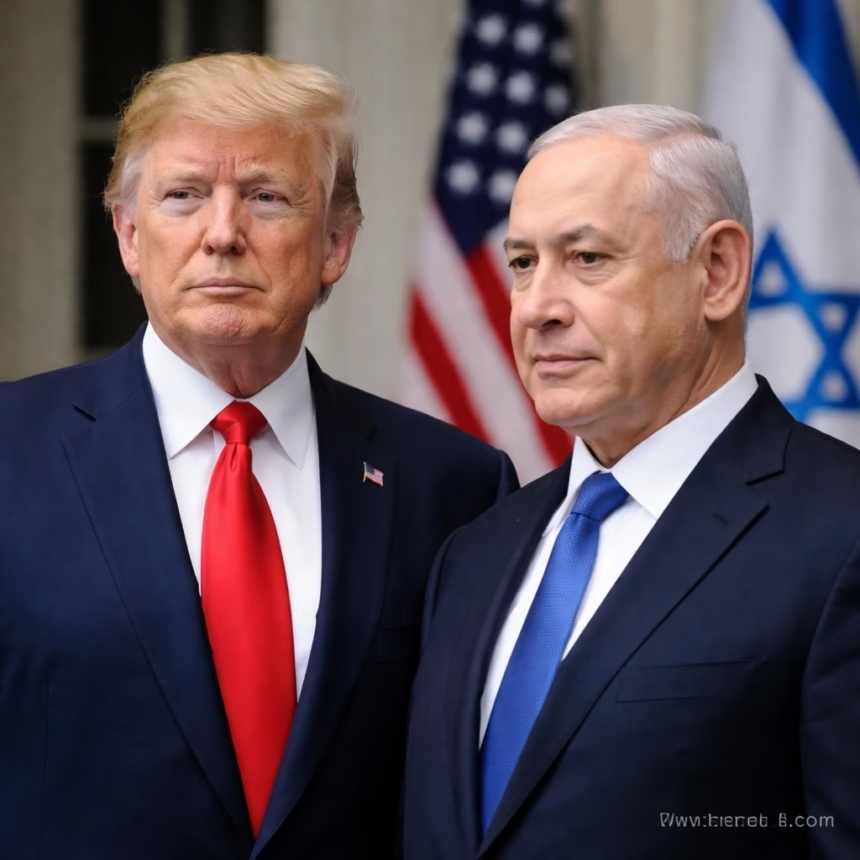
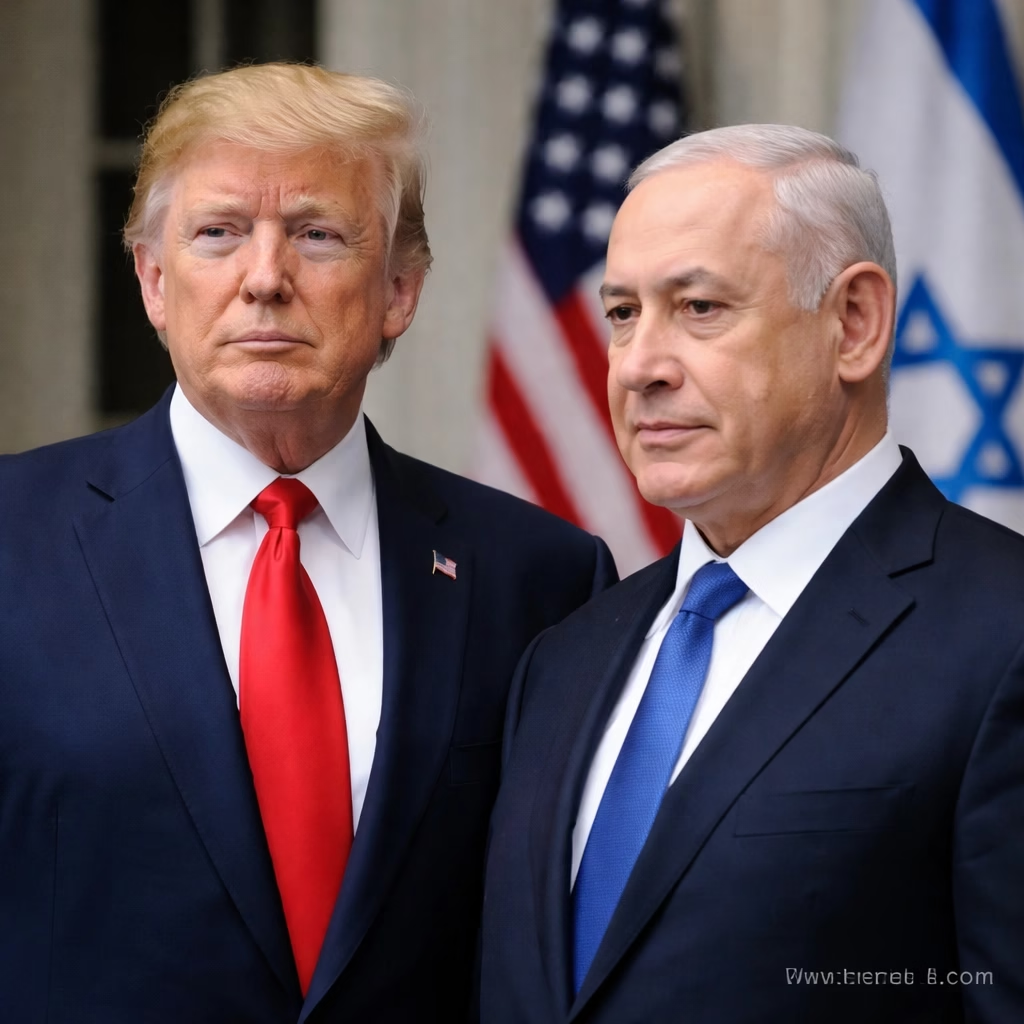
Washington D.C. and Jerusalem are increasingly coordinating efforts to curb Iran's nuclear program, but significant disagreements remain on the ultimate goals and methods to achieve them. The recent meetings between U.S. President Donald Trump and Israeli Prime Minister Benjamin Netanyahu underscore a shared concern over Iran's activities, though their visions for the future differ considerably.
Background
The relationship between the United States and Israel has long been characterized by strategic alignment, particularly regarding regional security challenges. Israel views Iran's pursuit of nuclear weapons as an existential threat, a position consistently voiced since Iran began its nuclear program in the early 2000s. The Obama administration negotiated the Joint Comprehensive Plan of Action (JCPOA) with Iran in 2015, a deal that limited Iran's enrichment capabilities in exchange for sanctions relief. However, President Trump withdrew the U.S. from the JCPOA in May 2018, citing the deal's perceived shortcomings and lack of comprehensive safeguards. Since then, the Trump administration has pursued a policy of maximum pressure, reimposing sanctions and increasing diplomatic isolation of Iran.
Key Developments
Recent weeks have seen a flurry of high-level discussions between Washington and Jerusalem. Netanyahu visited Washington D.C. in early May 2019, where he and Trump publicly coordinated a strategy to counter Iran's influence in the Middle East. The focus of these discussions centered on strengthening sanctions, increasing military preparedness, and bolstering support for regional allies facing Iranian-backed militias. While both leaders emphasized their commitment to preventing Iran from acquiring nuclear weapons, their approaches diverge significantly concerning the potential for renewed diplomatic efforts.
Netanyahu has repeatedly expressed skepticism about the JCPOA’s long-term viability and has advocated for a more assertive approach, including the possibility of military action. Trump, while initially open to diplomacy, has also threatened strong responses to Iranian aggression. However, recent reports suggest a shift towards a more calibrated approach, emphasizing pressure through economic means and strategic alliances. The U.S. has recently deployed the USS Abraham (a nuclear-powered aircraft carrier) to the Persian Gulf, a move widely interpreted as a signal of resolve.
Impact
The evolving dynamic between the U.S. and Israel has significant implications for regional stability. Increased pressure on Iran could exacerbate tensions in the Middle East, potentially leading to escalation and conflict. Iranian officials have warned that any military action against Iran would trigger a devastating response. Furthermore, the renewed focus on sanctions could negatively impact the Iranian economy, impacting ordinary citizens. The uncertainty surrounding the future of the Iran nuclear deal also impacts other regional actors, including European nations who remain committed to the JCPOA.
What Next
Diplomatic Pathways
Despite the current tensions, diplomatic channels remain open. Indirect talks between the U.S. and Iran have been held in Vienna, Austria, with the aim of addressing concerns over Iran’s nuclear program and regional activities. However, progress has been slow, and significant obstacles remain, including disagreements over sanctions relief and guarantees of future cooperation.
More Read

Sanctions and Enforcement
The U.S. is expected to continue tightening sanctions on Iran, targeting key sectors of the economy, including oil, banking, and energy. Enforcement of these sanctions is a key priority, with the U.S. working closely with international partners to prevent circumvention. The effectiveness of these sanctions in altering Iran’s behavior remains a subject of debate.
Military Preparedness
Both the U.S. and Israel are bolstering their military capabilities in the region. Israel has been conducting military exercises simulating potential responses to Iranian attacks. The U.S. continues to strengthen its military presence in the Middle East, providing support to allies and enhancing its ability to respond to any crisis.
The coming months are likely to be crucial in determining the future trajectory of the U.S.-Iran relationship and the broader regional security landscape. The path forward remains uncertain, with both diplomacy and pressure continuing to play a role.