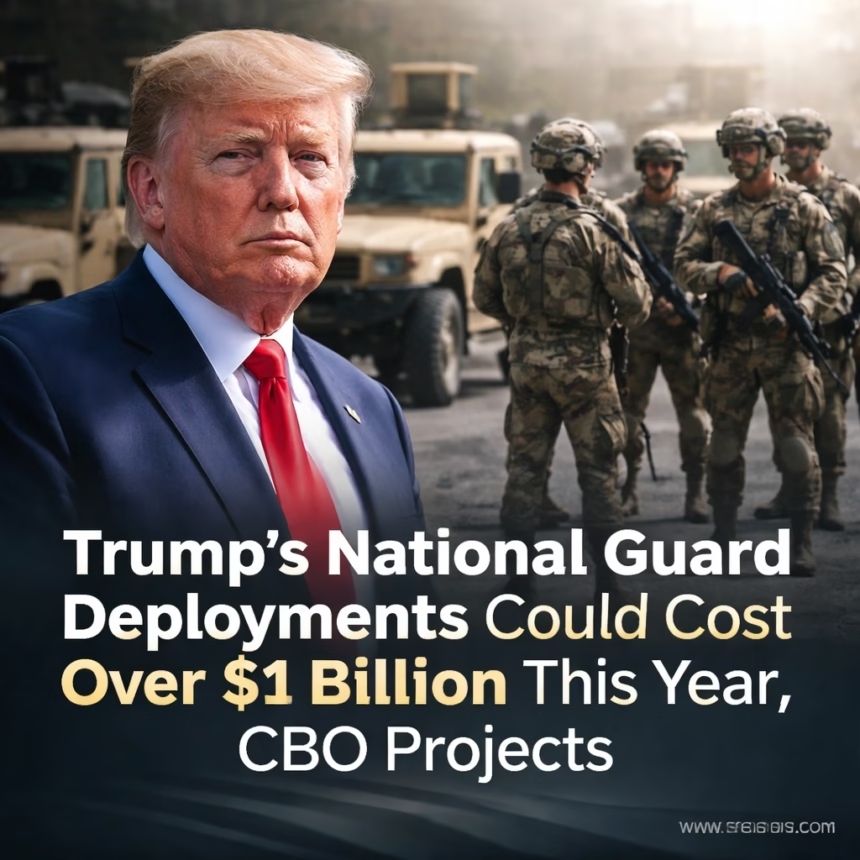
Capitol Security's Billion-Dollar Bill: CBO Projects Massive National Guard Costs
The Congressional Budget Office (CBO) has released a projection indicating that the extended deployments of the National Guard, largely in response to security concerns following the January 6th Capitol breach, could cost federal taxpayers over $1 billion this year. This significant financial outlay primarily covers personnel, operational, and logistical expenses associated with the sustained presence of Guard members in Washington D.C. and other critical areas throughout 2021.
Background: The Unprecedented Post-Inauguration Presence
The decision to deploy thousands of National Guard troops to Washington D.C. was precipitated by the violent assault on the U.S. Capitol on January 6, 2021. This unprecedented event, which saw rioters breach the legislative chambers, prompted immediate calls for enhanced security as the nation prepared for the peaceful transfer of power.
Initial Mobilization for Inauguration Security
In the days following the insurrection, the Pentagon authorized the deployment of up to 26,000 National Guard members from various states and territories to secure the capital for President Joe Biden’s inauguration on January 20th. These troops provided perimeter security, assisted the U.S. Capitol Police, and helped maintain order amidst heightened threats of further domestic unrest. The sheer scale of this mobilization was extraordinary, transforming parts of downtown Washington D.C. into a fortified zone.
Extended Mission and Shifting Justifications
While a significant drawdown was expected shortly after the inauguration, thousands of Guard members remained in D.C. The justification for their continued presence evolved, initially citing ongoing threats from extremist groups and later focusing on the need to augment the U.S. Capitol Police, which was still reeling from the January 6th attack and facing severe staffing shortages. This extended mission marked a departure from typical post-inauguration security protocols, where Guard presence usually concludes within days.
More Read

The deployments fall under Title 32 authority, meaning Guard members remain under state command but are funded by the federal government. This framework allows for federal reimbursement of expenses while maintaining the state-level chain of command for day-to-day operations.
Key Developments: CBO’s Financial Assessment and Ongoing Debates
The CBO's projection offers the most comprehensive public estimate to date of the financial implications of these extended deployments. The report, requested by members of Congress, provides a stark look at the fiscal burden placed on federal coffers.
More Read

CBO’s Financial Breakdown
The projected $1 billion-plus cost encompasses a wide array of expenditures. A significant portion covers personnel costs, including pay, allowances, and benefits for thousands of Guard members. Additionally, substantial funds are allocated for operational necessities such as housing (often in hotels or temporary barracks), food, transportation, medical support, and the maintenance and operation of military equipment. For instance, early estimates indicated daily costs could run into the tens of millions of dollars at the peak of the deployment.
Fluctuating Troop Numbers and Mission Scope
Following the inauguration, the number of deployed troops gradually decreased. From a peak of around 26,000, numbers were reduced to approximately 5,000 by mid-February, then further down to around 2,300 by March. However, these drawdowns were not without debate. Requests from the U.S. Capitol Police Board and congressional leaders often influenced the duration and size of the remaining force, highlighting ongoing concerns about the Capitol’s vulnerability.
Discussions among the Department of Defense, Capitol Police, and congressional committees have been central to determining the necessity and length of the Guard's presence. These deliberations frequently weigh the perceived threat landscape against the financial costs and the strain on Guard personnel and resources.
Impact: A Multi-faceted Strain on Resources and Personnel
The sustained National Guard presence has far-reaching implications, extending beyond the immediate security objectives to affect taxpayers, Guard members, their home states, and military readiness.
Burden on Taxpayers
The most direct impact is on the federal budget. The CBO’s $1 billion projection translates into a significant expenditure of taxpayer dollars, diverting funds that could potentially be used for other federal programs or initiatives. This cost is borne by the general public, underscoring the financial consequences of the January 6th events and subsequent security decisions.
Strain on National Guard Members and Their Families
For thousands of Guard members, these extended deployments mean prolonged separation from their families, civilian jobs, and communities. Many Guard members balance military service with full-time civilian employment, and extended activations can lead to financial hardship, career interruptions, and personal stress. While federal pay helps offset some losses, the disruption to civilian lives can be substantial, impacting mental health and overall well-being. Some deployments have lasted for months, far exceeding typical training exercises or short-term emergency responses.
More Read

Impact on State Resources and Military Readiness
The prolonged federal activation of Guard units also strains state resources. When Guard members are deployed under federal orders, they are unavailable for state-level emergencies, such as natural disaster response (hurricanes, wildfires, floods), public health crises (like the ongoing COVID-19 pandemic response), or civil support operations within their home states. This can leave states with diminished capacity to respond to local needs. Furthermore, extended deployments can disrupt regular training cycles and equipment maintenance schedules, potentially affecting the long-term readiness of units.
The presence of armed troops and security barriers in the nation's capital has also altered the daily lives of Washington D.C. residents and the operations of Congress, creating a visible reminder of the security challenges faced by the country.
What Next: Debates Over Future Security and Funding
As current deployment authorizations approach their limits, discussions are intensifying about the long-term security posture of the Capitol complex and the role of the National Guard.
Future of Capitol Security
Several options are under consideration to address the Capitol’s security needs without relying indefinitely on the National Guard. These include proposals to significantly increase the funding and staffing of the U.S. Capitol Police, potentially adding hundreds of new officers. Other ideas involve enhancing physical security measures around the Capitol building and grounds, such as more robust fencing or advanced surveillance systems. The goal is to establish a sustainable, permanent security solution that balances accessibility with protection.
Congressional Oversight and Funding Decisions
Congress will continue to play a crucial role in determining both the security strategy and the funding mechanisms. Hearings are expected to delve deeper into the events of January 6th, the response of various security agencies, and the long-term requirements for Capitol defense. Any future deployments or significant security enhancements will necessitate specific appropriations from Congress, making the CBO’s cost projections highly relevant for upcoming budget debates.
The ongoing dialogue aims to strike a balance between maintaining robust security for the legislative branch and minimizing the financial and personal costs associated with extended military deployments, ensuring the Capitol remains both secure and a symbol of open democracy.