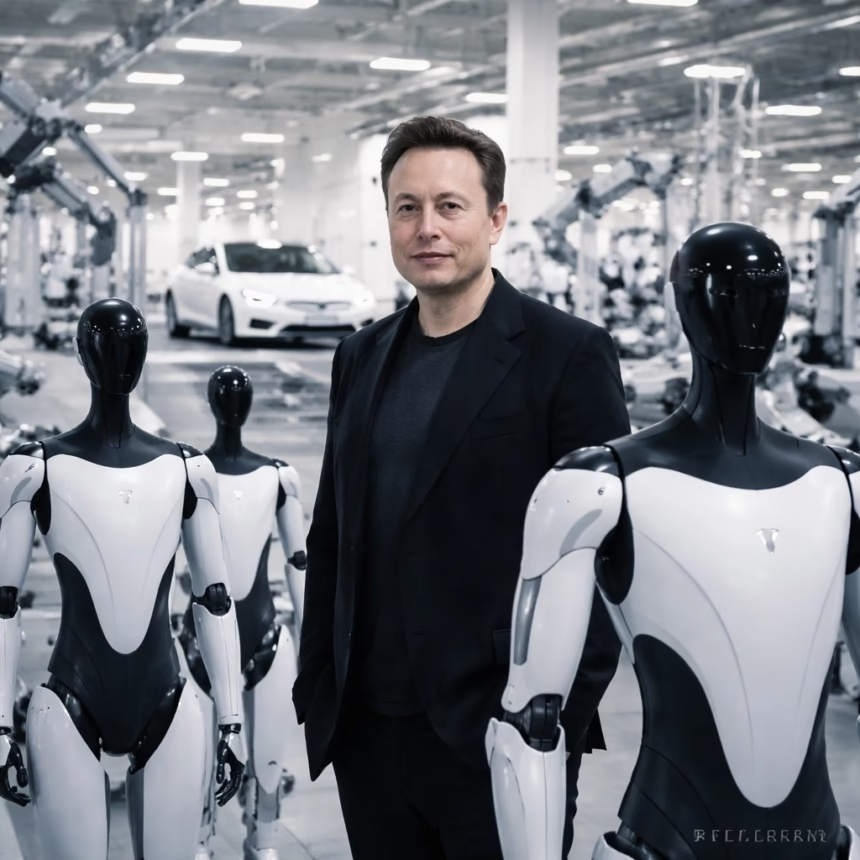
Tesla is embarking on a monumental transformation at its historic Fremont, California factory, with CEO Elon Musk confirming the cessation of Model S and Model X production. The venerable assembly lines, once home to Tesla's flagship luxury electric vehicles, are slated for conversion to manufacture the company's ambitious Optimus humanoid robots. This strategic shift underscores a profound reorientation for the electric vehicle pioneer, signaling a deeper foray into artificial intelligence and robotics.
Background: A Legacy of Innovation and Evolution
The Fremont factory holds a storied place in automotive history. Originally a General Motors plant, then the NUMMI joint venture with Toyota, it became Tesla's primary production facility in 2010. It was here that the Model S, introduced in 2012, revolutionized the automotive industry, proving the viability and desirability of long-range electric vehicles. The Model X, a distinctive SUV with falcon-wing doors, followed in 2015, further solidifying Tesla's luxury EV market presence. These two models, while instrumental in establishing Tesla's brand and technology, have seen their sales volume consistently dwarfed by the more affordable Model 3 and Model Y in recent years.
Meanwhile, Tesla's ambitions in artificial intelligence and robotics have been growing. The concept of a "Tesla Bot," later named Optimus, was first unveiled at the company's AI Day in August 2021. Musk presented a vision for a general-purpose humanoid robot capable of performing repetitive, dangerous, or mundane tasks. A functional prototype was showcased at AI Day in September 2022, demonstrating basic mobility and manipulation. Musk has frequently stated his belief that Optimus could eventually become a more significant part of Tesla's valuation than its automotive business, highlighting the company's long-term commitment to this venture.
Key Developments: Shifting Gears at Fremont
The decision to repurpose the Model S and X production lines marks a decisive step in bringing Optimus to mass production. While a precise timeline for the complete shutdown and conversion has not been publicly detailed, the announcement implies a rapid transition. Tesla's existing vehicle production capacity has increasingly shifted towards its newer Gigafactories in Austin, Texas, and Berlin, Germany, which primarily focus on the high-volume Model Y and, in Texas, the Cybertruck. This move effectively consolidates the future of Tesla's legacy luxury models to a different production strategy, or signals their eventual phase-out.
Strategic Rationale Behind the Pivot
The rationale behind this dramatic pivot is multi-faceted. Firstly, it allows Tesla to dedicate valuable factory space and engineering resources at its oldest plant to a new product line with potentially immense future growth. The Model S and X, despite their prestige, represent a smaller segment of the EV market compared to the mass-market Model 3 and Y. Secondly, it aligns with Musk's vision of Tesla as more than just an automotive company, emphasizing its capabilities in AI, robotics, and energy storage. The development and mass production of Optimus could unlock entirely new revenue streams and market opportunities, potentially transforming industries beyond automotive manufacturing. The conversion process will involve extensive retooling, the installation of specialized robotic manufacturing equipment, and the retraining of a significant portion of the Fremont workforce, reflecting a substantial investment in the humanoid robot program.
More Read

Impact: A Ripple Effect Across Stakeholders
The implications of this announcement resonate across various groups, from loyal customers to global markets.
For Customers and the EV Market
Current and prospective Model S and X customers will face a changing landscape. While existing inventory may be available for a period, the long-term supply of new vehicles will cease from Fremont. This could drive up demand for used models or make these vehicles collector's items. The broader luxury EV market will also see a shift, as two prominent contenders exit new production, potentially opening doors for competitors like Mercedes-Benz, BMW, Lucid, and Porsche to capture a larger share of the high-end electric vehicle segment.
For Tesla Employees
The workforce at the Fremont factory will undergo significant changes. While some employees may transition to other Tesla facilities or roles within the company, a substantial portion will require retraining for the specialized manufacturing processes involved in producing humanoid robots. This could involve new skill sets related to advanced robotics assembly, sensor integration, and AI system testing. Tesla's ability to manage this internal transition smoothly will be crucial for maintaining employee morale and production efficiency.

For Investors and the Robotics Industry
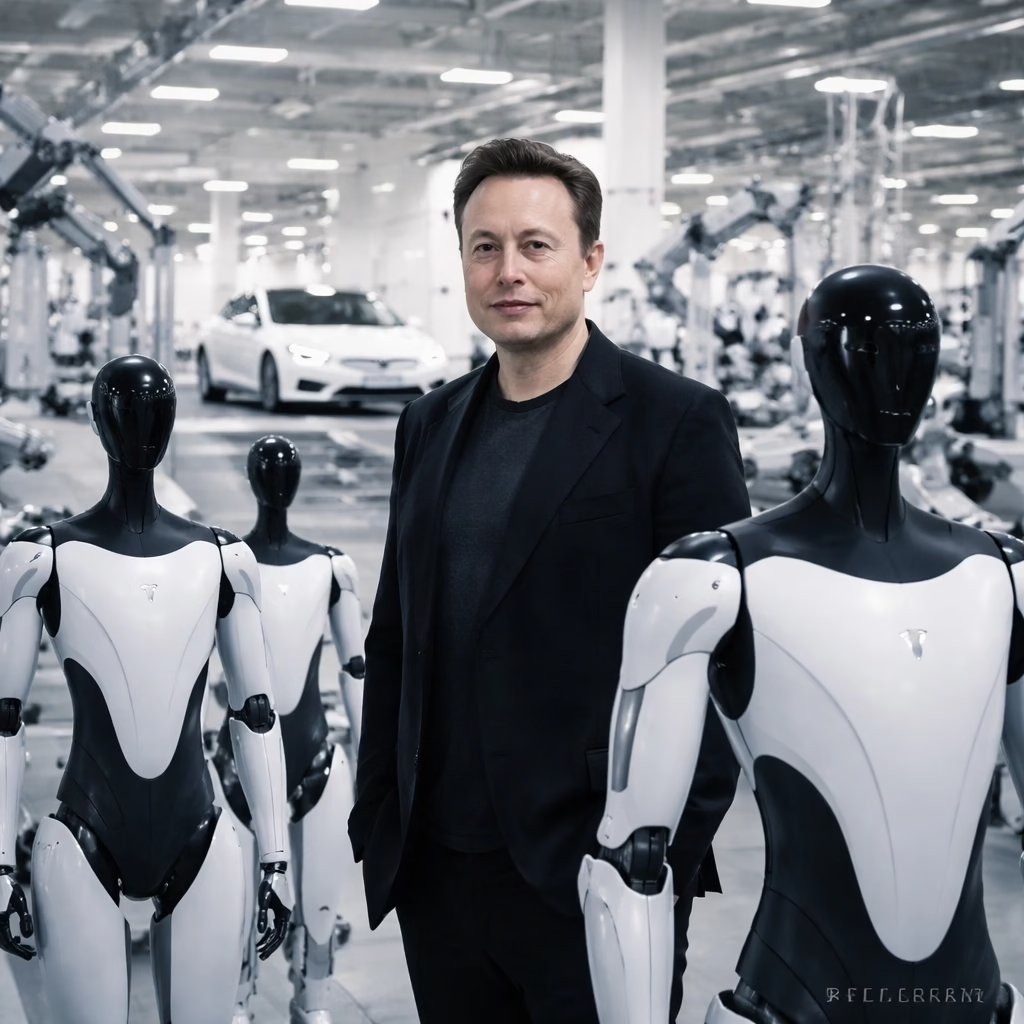
For investors, the move represents both a bold leap and a significant risk. While the potential market for humanoid robots is vast, the technology is still nascent, and commercialization at scale presents considerable challenges. Tesla's stock performance could be influenced by investor confidence in the Optimus program's feasibility and profitability. Within the nascent robotics industry, Tesla's full-scale entry into humanoid robot manufacturing could accelerate development and competition, pushing other companies to innovate faster and potentially validate the broader market for such technologies.
What Next: The Road Ahead for Optimus and Tesla
The immediate focus for Tesla will be the efficient conversion of the Fremont production lines and the successful ramp-up of Optimus manufacturing. Musk has previously outlined ambitious targets for Optimus, including its potential deployment in Tesla's own factories to automate tasks, followed by external sales to businesses and eventually consumers.
Optimus’s Expected Milestones
Key milestones in the coming years will include the mass production of the first generation of Optimus robots, their initial deployment in controlled industrial environments, and the continuous improvement of their AI capabilities and physical dexterity. Musk envisions Optimus performing a wide array of tasks, from mundane household chores and elder care to complex manufacturing processes and hazardous jobs currently deemed unsafe for humans. The development of a robust software ecosystem and a user-friendly interface will be critical for Optimus's widespread adoption.
Future of Tesla’s Vehicle Lineup
While Fremont pivots to robots, Tesla's vehicle strategy will continue with its other factories. The Model 3 and Model Y will remain the company's high-volume sellers, produced at Gigafactory Shanghai, Berlin, and Texas. The Cybertruck, currently produced at Gigafactory Texas, will expand Tesla's presence in the truck market. Further down the line, the next-generation compact vehicle and the updated Roadster 2.0 are anticipated to join the lineup, ensuring Tesla's continued innovation in the automotive sector, even as its oldest factory embraces a robotic future. The success of Optimus could profoundly reshape Tesla's identity, transforming it from an automotive disruptor into a leading force in general-purpose AI and robotics.