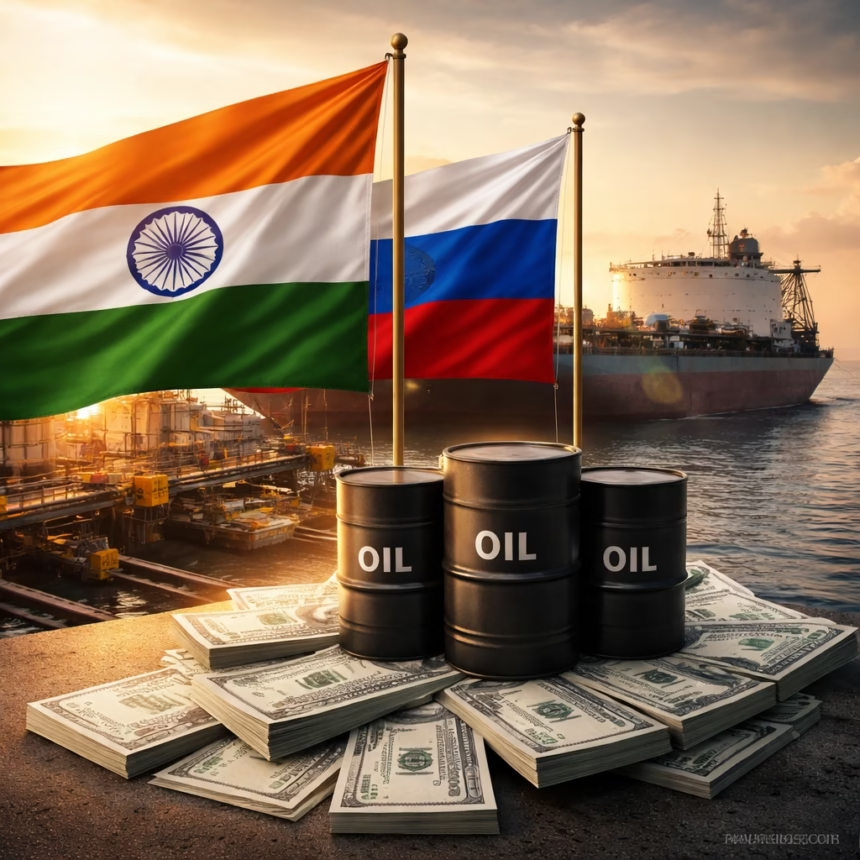
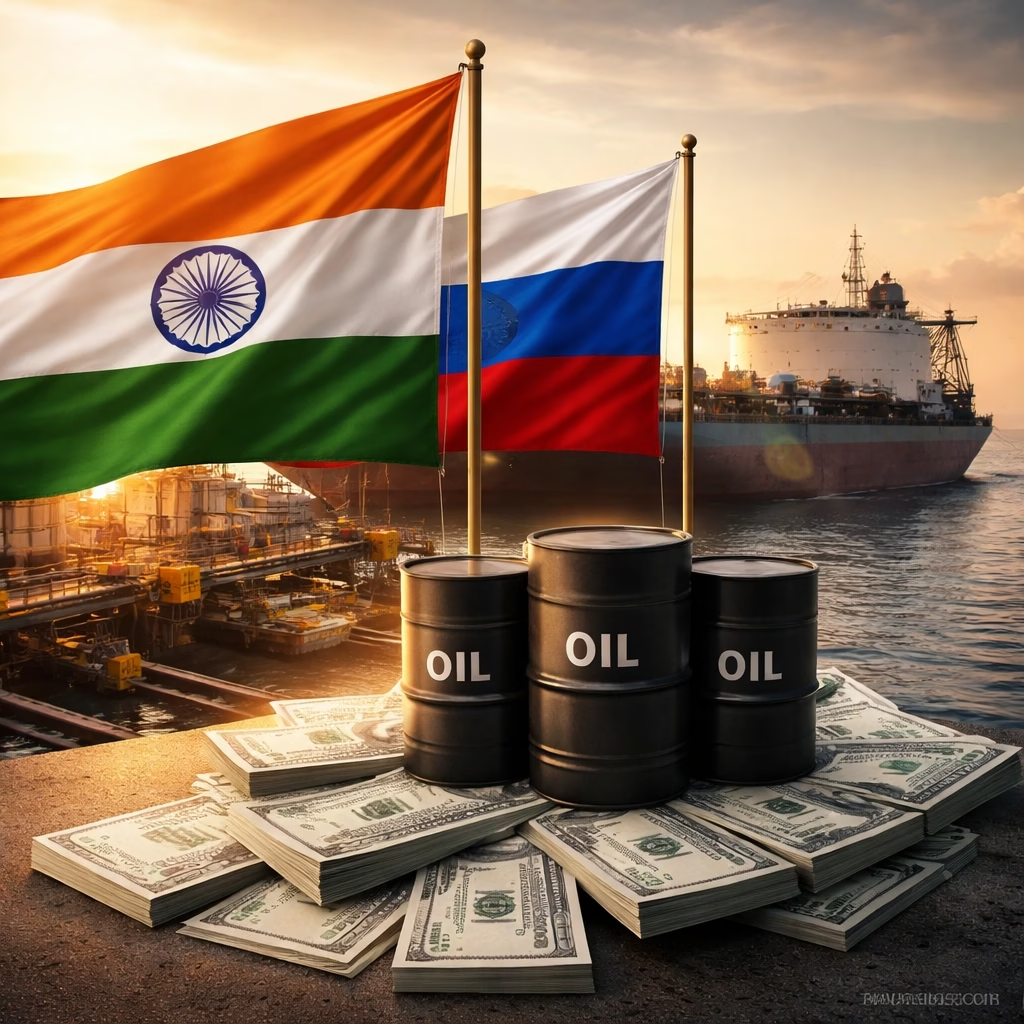
An Indian official recently affirmed the nation's commitment to purchasing Russian crude oil, regardless of the availability of specific waivers from U.S. sanctions. This declaration underscores India's independent energy security strategy amidst evolving geopolitical dynamics and Western pressure on Moscow. The move solidifies a significant shift in global oil trade patterns, impacting both supply chains and international relations.
Background: A Shifting Global Energy Landscape
Prior to February 2022, Russia constituted a marginal supplier of crude oil to India, accounting for less than 2% of its total imports. India, as the world's third-largest oil importer and consumer, traditionally relied heavily on Middle Eastern nations like Iraq, Saudi Arabia, and the United Arab Emirates for its energy needs. The geopolitical calculus changed dramatically with Russia's full-scale invasion of Ukraine, triggering a cascade of Western sanctions aimed at crippling Moscow's economy, particularly its lucrative energy sector.
Pre-Conflict Dynamics
For decades, India pursued a diversified energy import strategy, but proximity and established trade routes meant a consistent reliance on OPEC producers. Its refining capacity, among the largest globally, necessitated a steady and substantial supply of crude. The Indian government consistently emphasized energy security as a paramount national interest, seeking reliable and affordable sources to fuel its rapidly growing economy and meet the demands of its 1.4 billion population.
The Sanctions Era and India’s Response
Following the imposition of sweeping sanctions by the United States, European Union, and G7 nations on Russian energy exports, Moscow began offering significant discounts on its crude oil to find alternative buyers. India, maintaining a neutral stance on the conflict and prioritizing its economic interests, swiftly capitalized on these opportunities. Beginning in March 2022, Indian refiners dramatically increased their purchases of discounted Russian crude, marking a pivotal moment in global energy trade. This strategic pivot allowed India to mitigate rising global oil prices and secure its energy supply at competitive rates, despite implicit Western disapproval.
Key Developments: India’s Assertive Stance
The recent statement from an unnamed Indian official signals a hardening of New Delhi's position, moving beyond opportunistic buying to a more entrenched, long-term strategy. This stance suggests that India's energy policy will continue to prioritize national economic imperatives over external pressures related to sanctions waivers.
More Read

Surge in Russian Oil Imports
Since the conflict began, Russia has rapidly ascended to become India's top crude oil supplier. Data from various energy tracking firms consistently show Russia displacing traditional suppliers like Iraq and Saudi Arabia. For instance, in some months of 2023, Russian oil accounted for over 40% of India's total crude imports, a stark contrast to pre-2022 levels. This surge has been facilitated by steep discounts, often reported to be $10-15 per barrel below Brent crude prices.
Navigating the G7 Price Cap
In December 2022, the G7 nations, along with Australia and the European Union, implemented a price cap of $60 per barrel on Russian seaborne crude. This mechanism aims to limit Russia's oil revenues while keeping Russian oil flowing to global markets to prevent a supply shock. India has largely stated its adherence to the price cap for cargoes utilizing Western shipping, insurance, and financial services. However, the recent official statement suggests India is prepared to explore all avenues, including those outside the G7 cap framework, if deemed necessary for its energy security. This implies a potential reliance on non-Western shipping fleets, insurance providers, and alternative payment mechanisms.
Payment Innovations and Currency Diversification
To circumvent Western financial systems, India and Russia have actively explored and implemented alternative payment mechanisms. Transactions have increasingly been conducted in non-dollar currencies, including Indian Rupees, UAE Dirhams, and Chinese Yuan. This shift reduces reliance on the dollar-denominated global financial system and mitigates the risk of secondary sanctions, further solidifying India's independent approach to energy trade. Challenges remain in repatriating funds for Russian exporters, but both nations continue to refine these alternative channels.
More Read

Impact: Reshaping Global Energy Dynamics
India's sustained and assertive procurement of Russian oil has multifaceted impacts on various stakeholders, from national economies to global geopolitical alignments.
Impact on India
For India, the primary benefit is enhanced energy security and significant cost savings. Access to discounted crude helps manage inflation, supports economic growth, and diversifies its import basket, reducing over-reliance on any single region. However, this strategy also entails a delicate diplomatic balancing act with Western partners, particularly the United States, which views India as a crucial ally in the Indo-Pacific but also seeks broader adherence to sanctions.
Impact on Russia
India's purchases provide a vital lifeline for Russia's economy, offering an alternative market for its crude after Europe significantly curtailed imports. This helps Moscow sustain its war efforts and mitigate the economic impact of Western sanctions. While Russia sells its oil at a discount, the sheer volume of Indian purchases ensures a substantial revenue stream, allowing it to remain a significant player in global energy markets.
Impact on Western Allies and Global Markets
The sustained flow of Russian oil to India, and subsequently to other markets as refined products, challenges the effectiveness of Western sanctions. It complicates efforts to isolate Russia economically and raises questions about the ultimate origin of refined products, some of which reportedly find their way back to Europe. The re-routing of trade flows has created new, complex supply chains and has added a layer of opacity to global oil markets, making price discovery and compliance monitoring more challenging. Global crude prices, while influenced by OPEC+ decisions, also reflect the availability of discounted Russian barrels, indirectly benefiting consumers worldwide.
What Next: Future Trajectories and Milestones
The trajectory of India's Russian oil imports will continue to be a focal point in international energy and geopolitical discussions. Several key areas will define the path forward.
Continued Import Volumes and Pricing
India's energy demand is projected to grow significantly in the coming decades. Given the current geopolitical landscape, it is highly probable that India will continue to be a major buyer of Russian crude, as long as competitive pricing and logistical solutions are available. The evolution of Russian oil discounts relative to global benchmarks will be a critical factor.

Development of Alternative Payment and Shipping Networks
Expect further maturation and expansion of non-dollar payment mechanisms between India and Russia. This could involve greater use of local currencies, digital payment platforms, and potentially a broader network of financial institutions outside Western control. Concurrently, the reliance on a "shadow fleet" of tankers and non-Western insurance providers is likely to grow, ensuring the seamless flow of oil irrespective of Western sanctions frameworks.
Diplomatic Engagements and Compliance Debates
The United States and European nations will likely continue their diplomatic efforts to encourage India's adherence to the G7 price cap and broader sanctions objectives. However, India's firm stance on energy security suggests that these discussions will remain complex, with New Delhi emphasizing its sovereign right to make independent economic decisions. The balance between strategic partnerships and sanctions compliance will be a persistent theme.
India’s Refining Capacity and Product Exports
India's role as a major refiner and exporter of petroleum products, some of which are derived from Russian crude, will continue to be scrutinized. The "laundering" debate, where Russian crude is refined in India and then exported as non-Russian products, particularly to Europe, will likely intensify. India's refineries are strategically positioned to benefit from this arbitrage, further solidifying its position in the global energy value chain.
The coming months will undoubtedly witness further refinements in India's energy strategy, adapting to geopolitical shifts while steadfastly pursuing its national interests.