The Cost of Silence: Australia's Foreign Policy Crossroads
The Cost of Silence: Australia's Foreign Policy Crossroads
Growing international scrutiny is increasingly focused on Australia's foreign policy decisions concerning global human rights crises. Observers suggest that perceived inaction or muted responses to grave international atrocities could carry emerging diplomatic, economic, and reputational repercussions for the nation on the world stage.
This evolving landscape signals a potential re-evaluation of Australia's role and responsibilities within the international community, particularly as global expectations for state accountability heighten.
Background: Evolving International Norms and State Responsibility
The international community has, over decades, developed a robust framework aimed at preventing and responding to mass atrocities. Key pillars include the 1948 Convention on the Prevention and Punishment of the Crime of Genocide and the principle of the Responsibility to Protect (R2P), unanimously adopted by UN member states in 2005.
R2P posits that states have a responsibility to protect their own populations from genocide, war crimes, ethnic cleansing, and crimes against humanity. If a state fails to do so, the international community has a responsibility to intervene through diplomatic, humanitarian, or other appropriate means.
Australia has historically positioned itself as a responsible middle power, often balancing its economic and strategic interests with its stated commitment to human rights and the rule of law. Its foreign policy has typically focused on regional stability, trade partnerships, and multilateral engagement.
However, the global political environment has become increasingly complex. The rise of new geopolitical challenges and the amplification of human rights concerns through digital media have placed greater pressure on all nations, including Australia, to articulate clear and consistent stances on international crises.
Historically, Australia has participated in various international peacekeeping and humanitarian missions. Its diplomatic efforts have often been directed towards fostering stability in the Indo-Pacific region. The current discussion centers on whether its responses to specific, severe human rights situations globally align with evolving international expectations for proactive engagement and condemnation.
More Read
Key Developments: Shifting Pressures and Public Discourse
Recent years have seen an intensification of calls from various quarters for Australia to adopt a more assertive posture on human rights issues. International human rights organizations, academic institutions, and diaspora communities within Australia have increasingly highlighted specific situations abroad, urging stronger government action.
Parliamentary discussions and public inquiries have occasionally touched upon Australia's response, or perceived lack thereof, to certain international events. These debates reflect a growing domestic interest in the ethical dimensions of Australia's foreign policy.
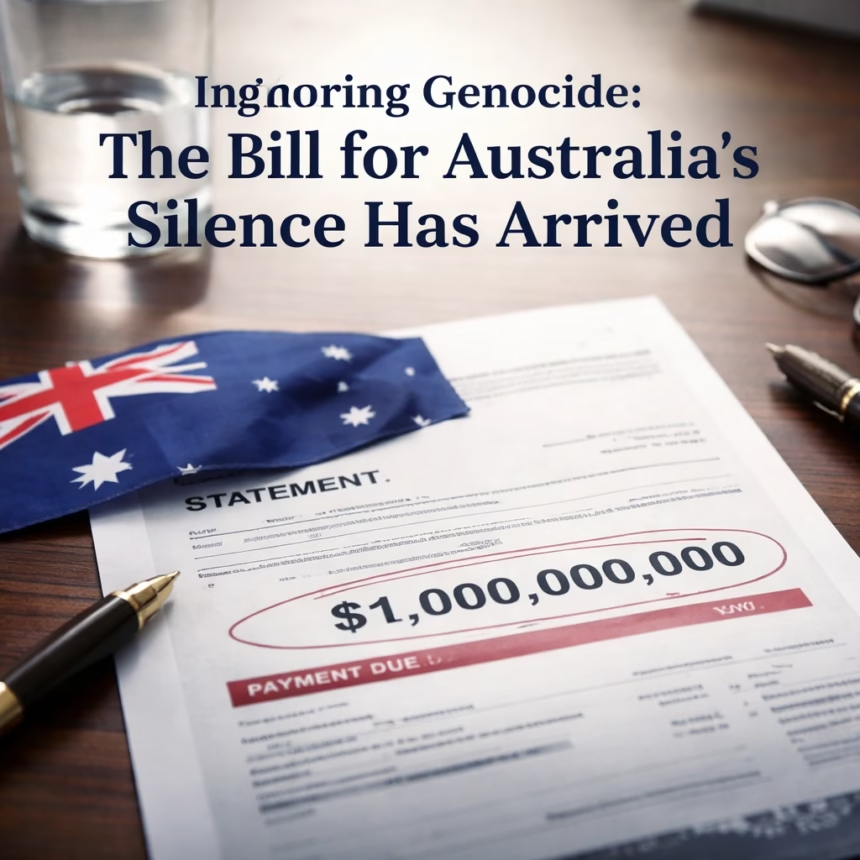
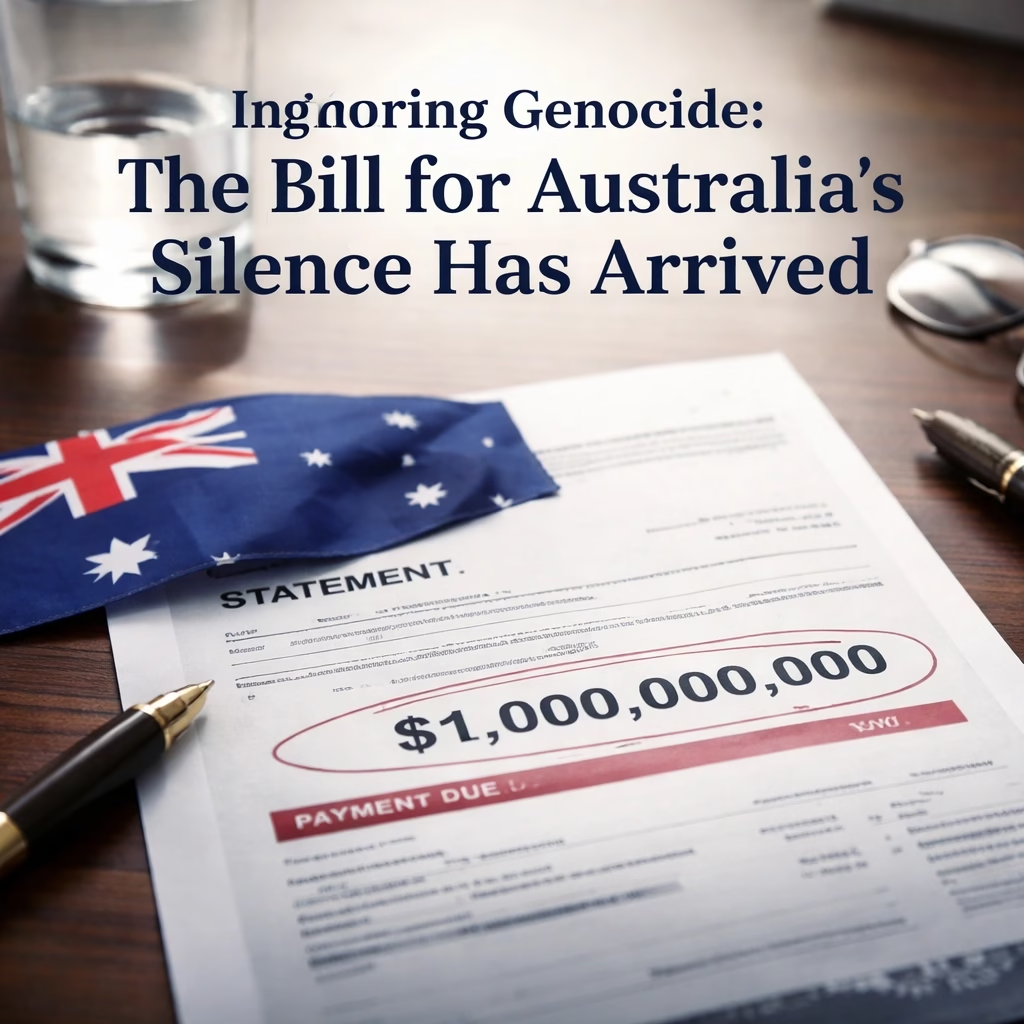
While no specific, publicly declared "bill" in a formal legal sense has been presented to Australia concerning a specific genocide, the metaphor points to a perceived accumulation of diplomatic and reputational costs. This includes increased scrutiny from allied nations and international bodies regarding consistency in foreign policy application.
For instance, some international partners have recently signaled a preference for greater alignment among democratic nations on human rights issues. This shift can create an environment where perceived silence or insufficient action by one nation might be viewed as a divergence from shared values, potentially impacting collaborative initiatives.
The global media landscape also plays a significant role. Widespread reporting on human rights abuses can shape public opinion both domestically and internationally, placing additional pressure on governments to respond. Social media platforms, in particular, have amplified calls for accountability and transparency, making it harder for nations to maintain a low profile on controversial issues.
Impact: Diplomatic, Economic, and Reputational Consequences
The potential "bill" for perceived inaction manifests in several critical areas, influencing Australia's standing and interactions on the global stage.
Diplomatic Strain and Alliance Dynamics
A perceived lack of robust engagement on critical human rights issues can strain diplomatic relations. Allies and partners who prioritize human rights may view a muted response as inconsistent with shared values, potentially impacting collaborative efforts on other strategic fronts. This doesn’t necessarily mean open conflict, but rather a subtle erosion of trust or a questioning of shared commitment.
More Read

Multilateral forums, such as the United Nations Human Rights Council, also provide platforms where a nation’s human rights record, including its responses to international atrocities, can be openly discussed and critiqued. A nation’s voting record or statements in these bodies are closely watched.
Economic Repercussions and Investment Scrutiny
While direct economic sanctions are rare in such contexts, reputational damage can indirectly affect economic ties. International investors and businesses increasingly consider Environmental, Social, and Governance (ESG) factors. A nation perceived as indifferent to grave human rights abuses could face scrutiny from ethical investors or consumer boycotts of its products or services.
Furthermore, trade negotiations or agreements can become more complex if human rights concerns are raised by partner nations or their domestic constituencies. Public pressure in a trading partner’s country can lead to demands for human rights clauses or a re-evaluation of trade relationships.
Erosion of Reputational Standing
Perhaps the most significant consequence is the erosion of Australia’s international reputation. For a nation that often champions democratic values and a rules-based international order, perceived silence on atrocities can undermine its moral authority and credibility. This can diminish its influence in advocating for other global issues or in seeking leadership roles in international bodies.
The perception of inconsistency can also make it harder for Australia to effectively critique human rights abuses elsewhere, as its own record or perceived inaction may be invoked in response.
Domestic Implications
Domestically, the issue can fuel public debate and create divisions. Diaspora communities with ties to affected regions often advocate passionately for stronger government action, placing pressure on elected representatives. This can lead to internal political challenges and questions about the alignment of government policy with community values.
More Read

There can also be an internal ethical cost within government and policy-making circles, as officials grapple with the moral dimensions of foreign policy choices.
What Next: Potential Policy Shifts and Engagement
The increasing pressure suggests that Australia may face an imperative to review and potentially adjust its foreign policy approach to international human rights crises. Several pathways could emerge:
Enhanced Diplomatic Engagement
Australia could pursue more robust and public diplomatic engagement on specific human rights situations, including clearer condemnations, statements at international forums, and active participation in multilateral initiatives aimed at accountability.
This might involve working more closely with like-minded nations to develop coordinated responses and leverage collective influence.
Policy Reviews and Framework Adjustments
There may be calls for formal reviews of Australia’s human rights foreign policy framework to ensure it is responsive to contemporary challenges and aligns with evolving international norms. This could involve strengthening internal mechanisms for assessing and responding to atrocity crimes.
Such reviews might consider dedicated resources or specific policy guidelines for addressing situations that fall under the definition of genocide or other mass atrocities.
Increased Transparency and Public Dialogue
Greater transparency regarding the government’s decision-making processes on human rights issues could help build public trust and inform domestic debate. Facilitating more open dialogue with civil society organizations and diaspora communities might also become a priority.
Public education campaigns could also play a role in fostering a deeper understanding of Australia’s international obligations and the complexities of foreign policy.
The unfolding situation underscores a critical juncture for Australian foreign policy. How the nation responds to the growing scrutiny regarding its stance on global atrocities will likely shape its international standing and its ability to advocate for a rules-based order in the years to come. The "bill" may not be a single invoice, but rather a continuous assessment of its moral and strategic capital on the world stage.