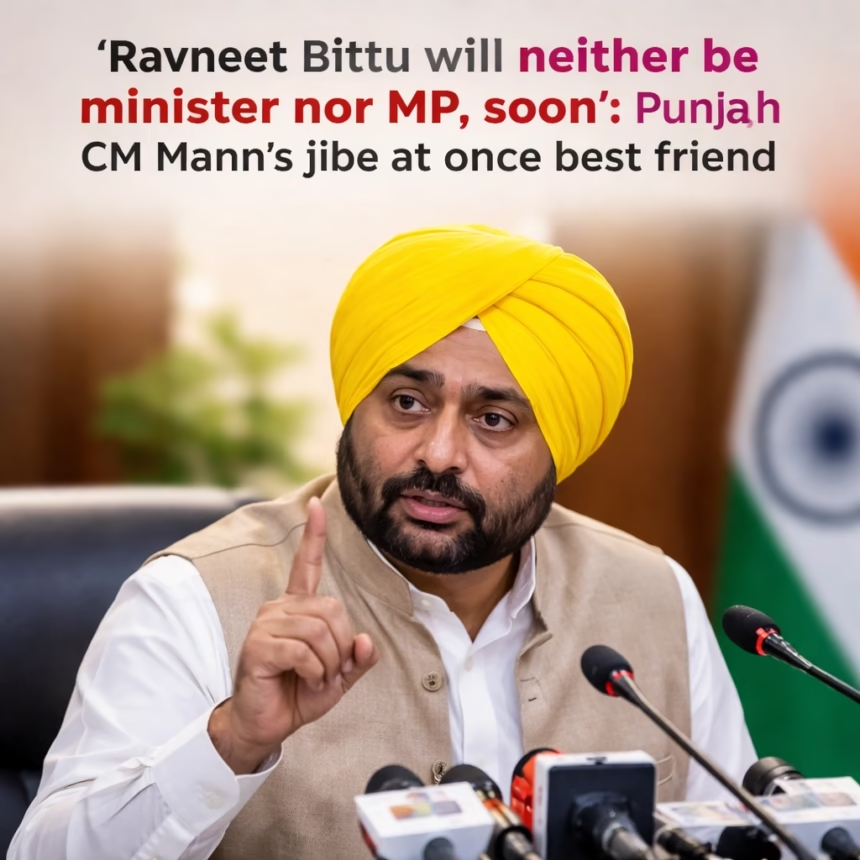
Punjab Chief Minister Bhagwant Mann recently delivered a pointed verbal attack against former Congress MP Ravneet Singh Bittu, predicting a significant decline in his political standing. The statement, made amidst a rapidly shifting political landscape in the state, underscores the growing animosity between the two leaders who once shared a more amicable relationship. This latest development adds another layer to Punjab's dynamic and often volatile political narrative, particularly in the wake of the recent general elections.
A Legacy of Shifting Allegiances and Rising Stars
The political careers of both Bhagwant Mann and Ravneet Singh Bittu are deeply intertwined with Punjab's complex political history, albeit from vastly different starting points. Their current rivalry highlights a broader trend of political realignment and personal animosities within the state's leadership.
Ravneet Singh Bittu: The Grandson of a Legacy
Ravneet Singh Bittu hails from a prominent political family, being the grandson of former Punjab Chief Minister Beant Singh, a figure remembered for his firm stance against militancy in the state. Bittu inherited this political legacy, establishing himself as a significant voice within the Indian National Congress. For years, he was a staunch Congressman, representing the Ludhiana constituency in the Lok Sabha for multiple terms. His political identity was largely shaped by his family's history and his consistent advocacy for Punjab's interests from within the national opposition. He was known for his vocal criticism of the central government on issues pertaining to Punjab, a stance that resonated with a segment of the electorate.
Bhagwant Mann: From Comedy Stage to Chief Minister’s Chair
In stark contrast, Bhagwant Mann's rise to political prominence was unconventional. A popular comedian and satirist, Mann transitioned into politics with the Aam Aadmi Party (AAP). His relatable persona and sharp wit quickly garnered him public support, especially among the youth and those disillusioned with traditional political parties. Mann's political journey with AAP marked a significant disruption in Punjab's long-standing two-party system, which had traditionally been dominated by the Congress and the Shiromani Akali Dal (SAD). His leadership culminated in AAP's landslide victory in the 2022 Punjab Assembly elections, making him the Chief Minister and ushering in a new political era for the state.
The “Best Friends” Narrative
Mann's reference to Bittu as a "once best friend" is particularly telling. While the specifics of their personal camaraderie have not always been in the public eye, this statement suggests a period of close association, perhaps predating their current political roles or during a time when their party affiliations did not place them in direct opposition. Such personal history often adds an extra layer of intensity to political rivalries, transforming ideological differences into more personal confrontations. This perceived betrayal or divergence from a shared past makes Mann's current jibe resonate more deeply within the political circles.
More Read

The Shifting Sands of Punjab Politics
The political landscape of Punjab has undergone a dramatic transformation over the past decade. The rise of AAP fundamentally altered the dynamics, challenging the established order. Bittu's recent defection from the Congress to the Bharatiya Janata Party (BJP) just before the 2024 Lok Sabha elections was a monumental event, signaling a significant realignment of political forces. This move was widely interpreted as a strategic gamble by Bittu, potentially aimed at securing a ministerial position at the center, given the BJP's national dominance. His switch also underscored the growing fluidity of party loyalties in a highly competitive political environment.
Key Developments: Electoral Setback and Mann’s Cutting Remark
The recent Lok Sabha elections served as a critical juncture, directly influencing the current political discourse and providing the backdrop for Chief Minister Mann's pointed remarks. The outcome of these elections, particularly in Ludhiana, has had immediate repercussions for Ravneet Bittu.
More Read

The Electoral Defeat in Ludhiana
Ravneet Bittu's high-profile switch to the BJP and the national party's significant backing did not translate into electoral success in the 2024 general elections. Contesting from the Ludhiana Lok Sabha seat, a constituency he had previously won for the Congress, Bittu faced a challenging battle. Despite his efforts and the BJP's national campaign, he ultimately lost the election. This defeat was a significant personal setback for Bittu, who had staked his political future on the move to the BJP. It also highlighted the BJP's continued struggle to establish a strong electoral presence in Punjab, even with prominent local faces joining its ranks. The margin of his defeat, and the victory of his opponent from the Congress party, further underscored the complexities of Punjab's voting patterns.
Chief Minister Mann’s Public Taunt
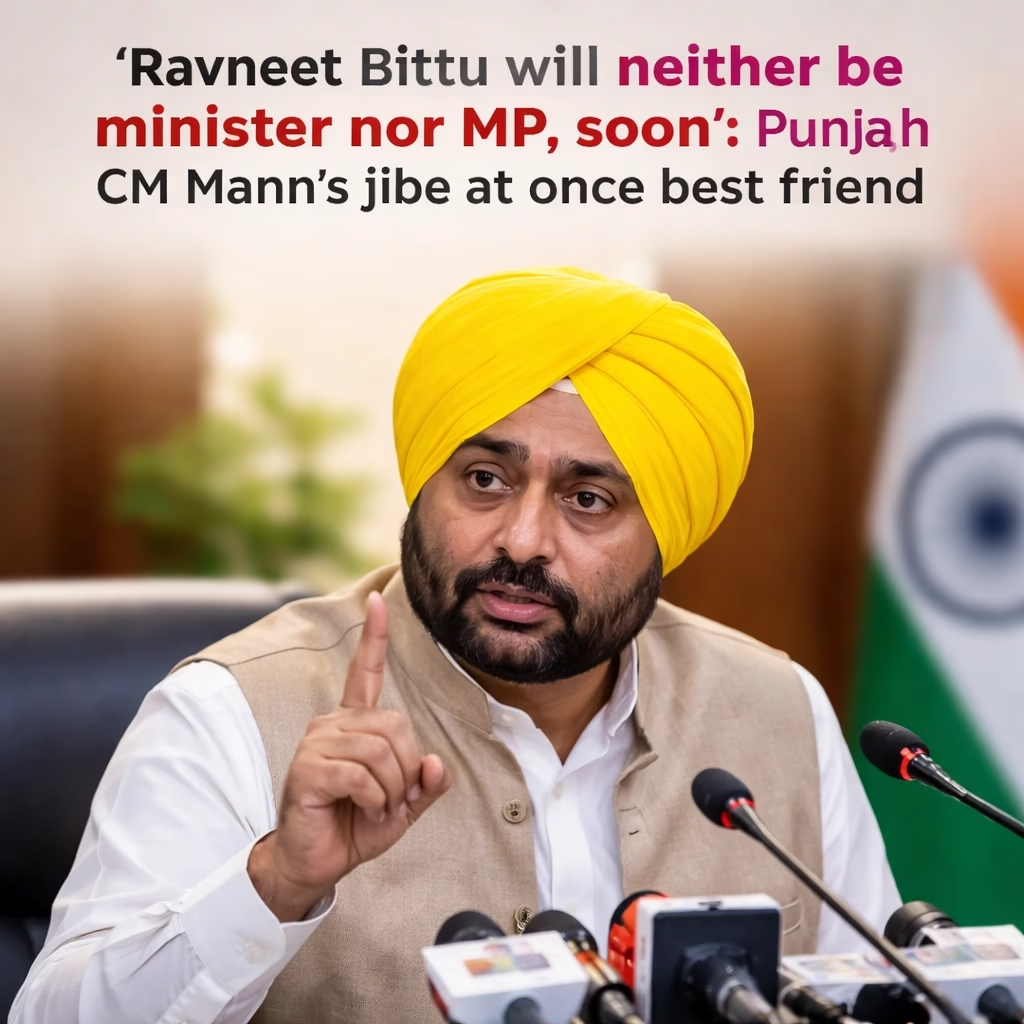
In the wake of Bittu's electoral loss, Chief Minister Bhagwant Mann seized the opportunity to deliver a sharp public jibe. His statement, "Ravneet Bittu will neither be minister nor MP, soon," was a direct and unequivocal prediction of Bittu's complete political marginalization. The timing of this remark was crucial, coming when Bittu was most vulnerable politically, having just lost his parliamentary seat and with his anticipated ministerial berth now uncertain.
Mann's statement was likely made during a public address, a press conference, or within the state assembly, leveraging the platform of his office to amplify his message. This public declaration served multiple purposes: to mock his former friend's political miscalculation, to reinforce the AAP's narrative of being a stable and victorious force in Punjab, and to project an image of a strong, assertive leader who does not shy away from confronting political rivals. The jibe was a calculated move to capitalize on Bittu's predicament and to further cement the political rivalry between the two leaders, pushing it beyond mere party competition into a more personal domain.
Impact: Repercussions Across the Political Spectrum
Chief Minister Mann's pointed jibe and Ravneet Bittu's recent electoral defeat have sent ripples across Punjab's political landscape, affecting not just the individuals involved but also their respective parties and the broader electorate. The implications are multi-faceted, touching upon political careers, party strategies, and public perception.
Ravneet Bittu’s Political Trajectory
The immediate and most direct impact is on Ravneet Bittu's political standing. Having lost his parliamentary seat and now facing public taunts from the sitting Chief Minister, his political future appears uncertain. The primary speculated reason for his switch to the BJP was the prospect of a ministerial berth at the center, a possibility that now seems remote given his electoral defeat. Bittu finds himself at a crossroads, needing to re-strategize his political path. This could involve seeking an organizational role within the BJP, focusing on state-level politics in anticipation of future assembly elections, or adopting a more subdued approach to regroup and rebuild his political capital. His reputation as a formidable leader has undoubtedly taken a hit, and he will need to work hard to regain momentum.
Bharatiya Janata Party (BJP) in Punjab
Bittu's loss, despite being a prominent face for the BJP in Punjab, highlights the party's continued struggles to establish a strong foothold in the state. The BJP's strategy of inducting well-known leaders from other parties did not yield the desired results in Ludhiana, prompting a critical re-evaluation of its approach in Punjab. This outcome suggests that merely importing leaders from other parties might not be sufficient to overcome the local political dynamics and voter sentiments. The BJP will likely need to intensify its grassroots efforts, cultivate local leadership, and develop a more resonant narrative for the state to improve its prospects in future elections.
More Read

Aam Aadmi Party (AAP) and CM Mann
Chief Minister Mann's jibe serves to bolster his image as a strong, assertive leader who is unafraid to confront political adversaries. For the Aam Aadmi Party, this incident allows them to project themselves as the stable and winning force in Punjab, contrasting sharply with the perceived instability and opportunism of leaders who switch allegiances. This narrative strengthens AAP's position among its voter base and reinforces the party's claims of being the true voice of Punjab. It also provides a morale boost to party workers and cadres, celebrating a perceived victory over a prominent opponent.
The Congress Party in Punjab
While Ravneet Bittu's departure was a significant blow to the Congress party in Punjab, his subsequent defeat might offer a degree of vindication. The Congress could argue that voters rejected political opportunism and that its traditional base remains resilient. This outcome might also help the Congress consolidate its remaining leadership and cadres, reinforcing loyalty by demonstrating the risks associated with defecting. However, it also underscores the continuous challenge for the party to retain its leaders when national parties offer potential benefits and power.
Punjab’s Broader Political Landscape
The incident contributes to a more polarized and often personal political environment in Punjab. The public discourse becomes sharper, with leaders frequently engaging in direct attacks rather than purely policy-based debates. This can affect voter perception, potentially leading to increased cynicism about political sincerity or, conversely, strengthening allegiance based on these rivalries. The episode also sends a message to other politicians contemplating party switches, highlighting the potential risks and the public scrutiny that accompanies such decisions.
What Next: Anticipated Milestones and Future Trajectories
The recent political developments in Punjab, marked by CM Mann's jibe and Ravneet Bittu's electoral setback, set the stage for several anticipated milestones and potential shifts in the state's political landscape. The actions and reactions of key players in the coming months will largely determine the future trajectory of Punjab politics.
Ravneet Bittu’s Immediate Future and Strategic Reassessment
Ravneet Bittu faces the immediate challenge of addressing his electoral defeat and the public taunts from the Chief Minister. He will likely need to issue a counter-statement, clarify his future political plans, or adopt a more strategic silence to regroup. His options are varied: he could seek an organizational role within the BJP, leveraging his experience and family legacy to contribute to the party's structure. Alternatively, he might turn his focus towards state-level politics, preparing for future Assembly elections or by-elections if opportunities arise, aiming to re-enter the legislative arena. His ability to maintain relevance and rebuild his political capital will be crucial in the coming period.
BJP’s Reassessment in Punjab
The outcome of the Lok Sabha elections, particularly the performance of its high-profile recruits, will compel the Bharatiya Janata Party to conduct a thorough re-evaluation of its strategy for Punjab. The state has consistently proven to be a difficult terrain for the national party, which has struggled to translate its national dominance into significant electoral gains here. The BJP might focus on strengthening its grassroots presence, identifying and nurturing new local leadership, and developing more effective alliances with regional parties. Bittu's role within this revised strategy will be critical; whether he remains a front-line figure or takes on a different capacity within the party structure remains to be seen.
AAP’s Continued Consolidation of Power
Chief Minister Mann and the Aam Aadmi Party will likely continue to capitalize on their recent electoral performance and the perceived weaknesses of their opponents. Their focus will remain on delivering on their governance promises, further consolidating their hold on the state, and preparing for the next Punjab Assembly elections. The party will aim to present itself as a stable, effective, and people-centric government, contrasting with the perceived opportunism and infighting within other political factions. This period will be crucial for AAP to solidify its position as the dominant political force in Punjab.
Potential for By-elections and Future Assembly Elections
While the immediate focus is on the aftermath of the Lok Sabha elections, the political calendar inevitably looks ahead. Depending on various political developments, by-elections for state assembly seats could arise, offering Bittu or other leaders a chance to re-enter the legislative arena. However, the larger and more significant focus will gradually shift towards the next Punjab Assembly elections, likely due in 2027. These elections will be the ultimate test of the current political realignments, the effectiveness of party strategies, and the enduring appeal of leaders like Mann and Bittu. The rivalries, strategies, and public perception shaped in this period will play out on an even larger scale during that crucial electoral contest.
Continued Verbal Sparring and Political Discourse
The incident between Mann and Bittu is indicative of the intense and often personal nature of political discourse in Punjab. It is highly probable that such verbal exchanges and political sparring will continue, keeping the political pot boiling and maintaining public interest in the ongoing power dynamics within the state. These confrontations, while sometimes seen as divisive, also serve to highlight the ideological differences and personal ambitions that drive Punjab's vibrant and often tumultuous political scene.