Recent groundbreaking discoveries along South Africa's southern coast have unveiled an extraordinary collection of fossilized bird and tortoise tracks, representing some of the earliest and most diverse evidence of these animals from the Pleistocene epoch. These unique findings, stretching across ancient dune fields, offer unprecedented insights into prehistoric ecosystems and animal behavior, marking them as significant world firsts in paleontological research.
Background: A Coastline Etched in Time
The South African coastline, particularly the Cape South Coast and the Garden Route, has long been recognized as a treasure trove for paleontological discoveries. Its unique geological formation, characterized by successive layers of aeolianites – fossilized sand dunes – provides an exceptional archive of ancient life. For decades, researchers have unearthed hominin footprints, Stone Age artifacts, and various animal tracks, painting a vivid picture of the region's past.
The Pleistocene epoch, spanning from approximately 2.6 million to 11,700 years ago, was a period of dramatic climatic shifts, including multiple glacial and interglacial cycles. These environmental changes significantly influenced the flora and fauna of the time. Trace fossils, or ichnofossils, like footprints, offer a direct window into the behavior and presence of animals that lived in these ancient landscapes, often providing information that body fossils cannot. Unlike skeletal remains, footprints capture a moment in time, revealing how an animal moved, interacted with its environment, and even its size and gait.
Early investigations in the region, spearheaded by researchers like Dr. Charles Helm from the African Centre for Coastal Palaeoscience at Nelson Mandela University and Professor Curtis Marean from Arizona State University, initially focused on hominin tracks. These previous discoveries highlighted the potential for the area to yield a broader spectrum of ichnofossils, leading to more extensive and systematic surveys. The geological stability and erosional patterns of the coastline periodically expose these ancient surfaces, allowing for new discoveries to be made with ongoing vigilance and scientific exploration.
Key Developments: Unearthing Prehistoric Narratives
The latest series of findings represents a significant expansion of the known ichnofossil record, particularly concerning birds and tortoises. Researchers, including Dr. Helm and Professor Hayley Cawthra from the University of KwaZulu-Natal, have identified dozens of new track sites along a stretch of coast spanning hundreds of kilometers, primarily within the Garden Route National Park and adjacent areas.

A Tapestry of Avian and Reptilian Life
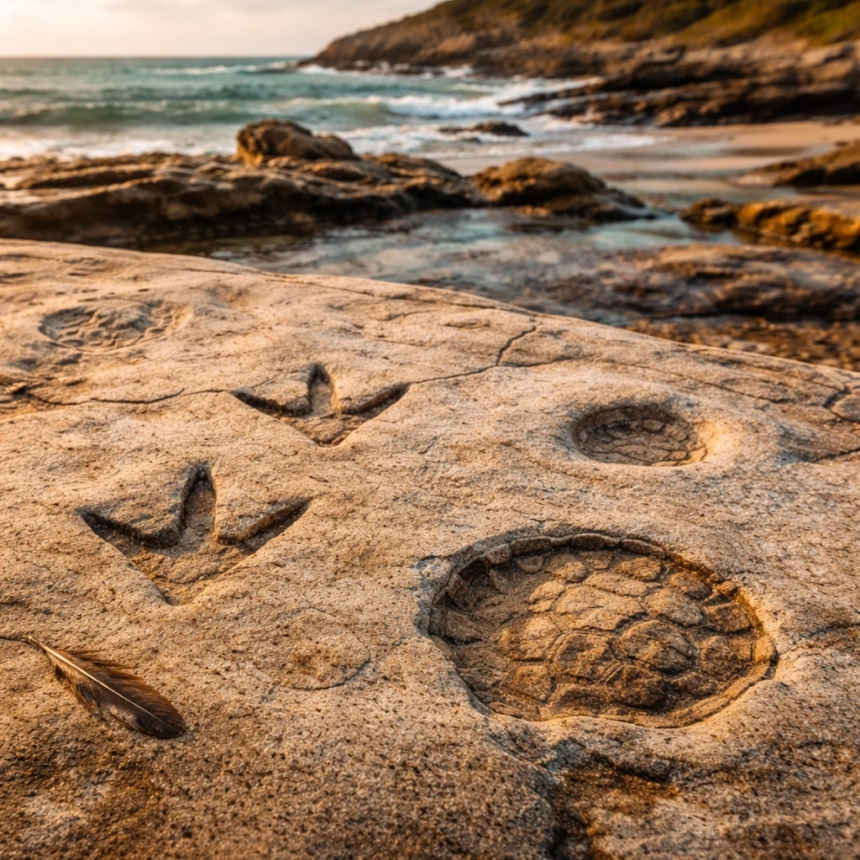
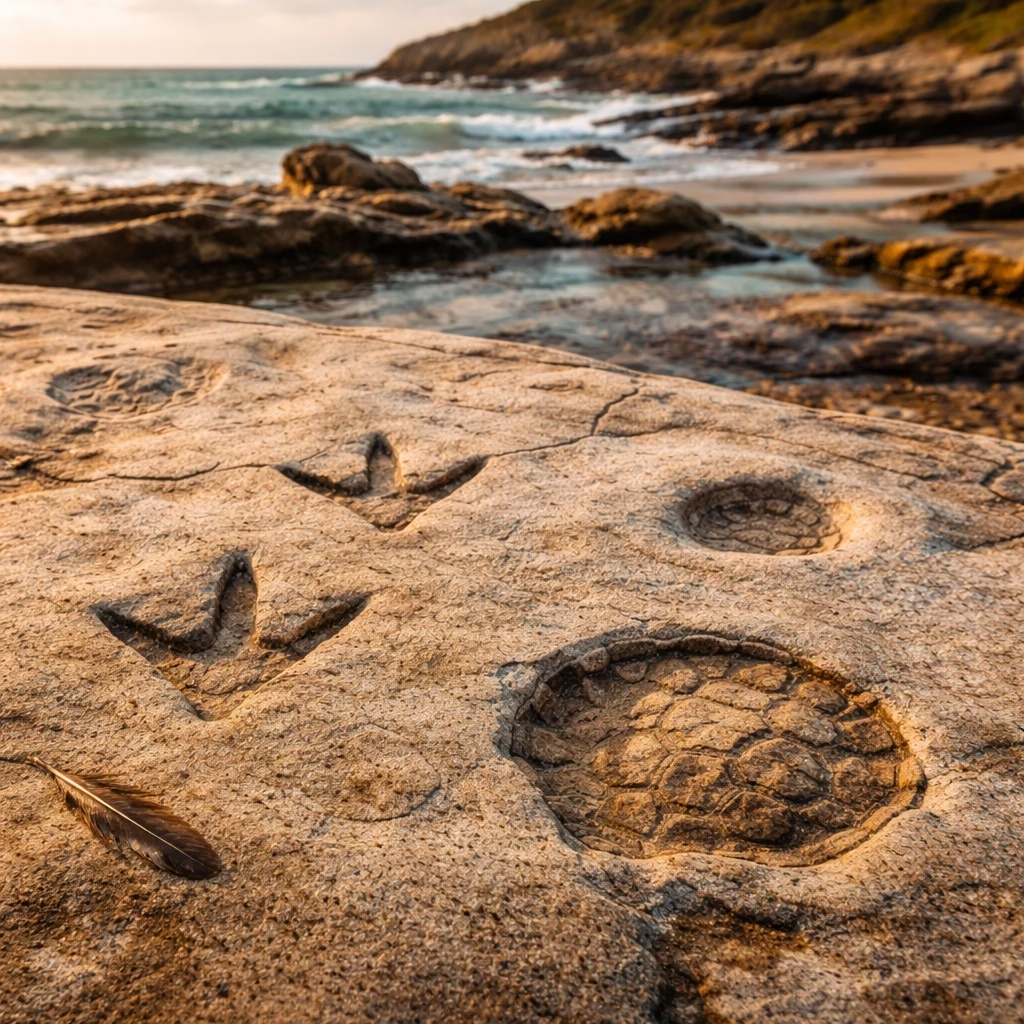
Among the most remarkable discoveries are numerous trackways attributed to a diverse array of ancient birds. These include footprints from large wading birds, possibly ancestors of modern cranes or storks, as well as smaller shorebirds and waterfowl. The size and spacing of the tracks provide crucial data on the birds' locomotion, suggesting behaviors such as foraging along ancient shorelines or traversing wetlands. Some of the tracks exhibit evidence of specific feeding patterns, where birds might have probed the sand for invertebrates, offering a rare glimpse into their dietary habits.
Equally compelling are the extensive tortoise trackways. These tracks, varying in size, indicate the presence of different tortoise species, some remarkably large. The patterns of movement captured in the fossilized dunes reveal slow, deliberate journeys, possibly in search of vegetation or water. In some instances, multiple tortoise tracks intersect, hinting at ancient gatherings or shared pathways. The clarity of these prints allows for detailed analysis of foot morphology and movement mechanics, shedding light on how these reptiles adapted to their coastal dune environments.
Dating the Ancient Footsteps
Precise dating of these tracks has been achieved through optically stimulated luminescence (OSL) dating of the aeolianite sediments. This method measures the last time sand grains were exposed to sunlight, effectively dating the formation of the dune surface on which the animals walked. The analyses place many of these newly discovered tracks within a broad timeframe ranging from approximately 158,000 to 793,000 years ago, firmly within the Early to Middle Pleistocene. This age makes them among the oldest known bird and tortoise trackways globally, particularly for the specific behaviors and species inferred.
More Read

World-First Significance
What elevates these findings to "world firsts" is their combination of age, preservation quality, and the behavioral insights they offer. While older individual tracks exist elsewhere, this collection provides the earliest comprehensive evidence of specific bird foraging behaviors and diverse tortoise movement patterns in a coastal dune setting. The sheer number and variety of tracks in a single geological context are unparalleled, offering a unique paleontological window into a flourishing prehistoric ecosystem. The preservation of such delicate details, like toe impressions and claw marks, is exceptional, allowing for high-resolution analysis of the ancient fauna.
Researchers employed advanced techniques, including drone-based photogrammetry and 3D modeling, to meticulously document and analyze the trackways. This allowed for the creation of precise digital replicas, aiding in the study of gait, speed, and the overall environmental context without damaging the fragile natural formations.
Impact: Rewriting Ancient Narratives
The discovery of these world-first bird and tortoise fossil tracks carries profound implications across multiple scientific disciplines and for public understanding of Earth's history.
Advancing Palaeontological Understanding
For the scientific community, these tracks provide critical data points for understanding the evolution and distribution of avian and reptilian fauna during the Pleistocene. They challenge existing assumptions about the timing and geographical range of certain species and behaviors. The detailed behavioral information gleaned from the tracks—such as foraging strategies, migration patterns, and social interactions—is invaluable, as such insights are rarely preserved in the fossil record. This helps reconstruct ancient food webs and ecological relationships with greater accuracy.
Insights into Past Environments and Climate
The presence and types of birds and tortoises also serve as paleoenvironmental indicators. The specific species inferred from the tracks can suggest the nature of the coastal landscape at the time—whether it was marshy, sandy, or vegetated, and what the prevailing climatic conditions might have been. This contributes to a more nuanced understanding of past climate change and its impact on biodiversity in southern Africa, a region recognized as a cradle of humanity and biodiversity.
Conservation and Heritage
These sites are not merely scientific curiosities; they represent irreplaceable natural heritage. Their discovery underscores the immense value of protecting the South African coastline, not just for its contemporary biodiversity but also for its deep-time record. The findings highlight the need for robust conservation strategies to prevent damage from natural erosion, human activity, and climate change. Public awareness campaigns and educational initiatives can foster a sense of stewardship among local communities and visitors, ensuring these ancient legacies are preserved for future generations.
More Read

Educational and Tourism Potential
The "world first" status of these tracks naturally draws international attention, offering significant potential for educational tourism. Interpreted trails, visitor centers, and digital exhibits could be developed to allow the public to engage directly with these ancient stories. Such initiatives can not only boost local economies but also inspire a new generation of scientists and conservationists. The vivid imagery of ancient birds wading and tortoises lumbering across a prehistoric landscape makes these discoveries highly accessible and captivating to a broad audience.
What Next: Preserving and Unlocking More Secrets
The journey of discovery along South Africa's ancient coast is far from over. The latest findings serve as a catalyst for ongoing and future research.
Continued Exploration and Documentation
Researchers plan to expand their systematic surveys along the South African coastline, utilizing advanced remote sensing technologies like LiDAR and drone mapping to identify new potential track sites. The dynamic nature of the coastal environment means that new exposures are constantly being revealed, and existing ones are subject to erosion. Continuous monitoring and rapid documentation are therefore crucial to capture these ephemeral records before they are lost. The goal is to create a comprehensive digital atlas of all ichnofossil sites in the region.
Detailed Paleobiological Analysis
Future research will delve deeper into the paleobiological aspects of the tracks. This includes comparative studies with modern bird and tortoise species to refine taxonomic identifications and behavioral interpretations. Advanced analytical techniques, such as micro-CT scanning of track molds, could reveal even finer details of foot anatomy and substrate interaction. Scientists aim to reconstruct the ancient ecosystem in greater detail, understanding the interplay between these animals, other fauna (including hominins), and the changing environment.
Site Protection and Management
A critical next step involves developing robust strategies for the long-term preservation and management of these vulnerable sites. This will require collaboration between paleontologists, conservationists, local authorities, and national parks agencies. Measures may include establishing protected zones, developing non-invasive monitoring protocols, and implementing strategies to mitigate the impacts of coastal erosion and human visitation. Education remains a key component, ensuring that visitors understand the fragility and significance of these ancient footprints.
Public Engagement and Outreach
Translating these scientific discoveries into engaging narratives for the public is paramount. Plans include developing interactive museum exhibits, educational programs for schools, and accessible online resources. The aim is to make the wonder of these million-year-old footprints accessible to everyone, fostering a deeper appreciation for South Africa's unique paleontological heritage and inspiring future generations to explore and protect our planet's ancient past.