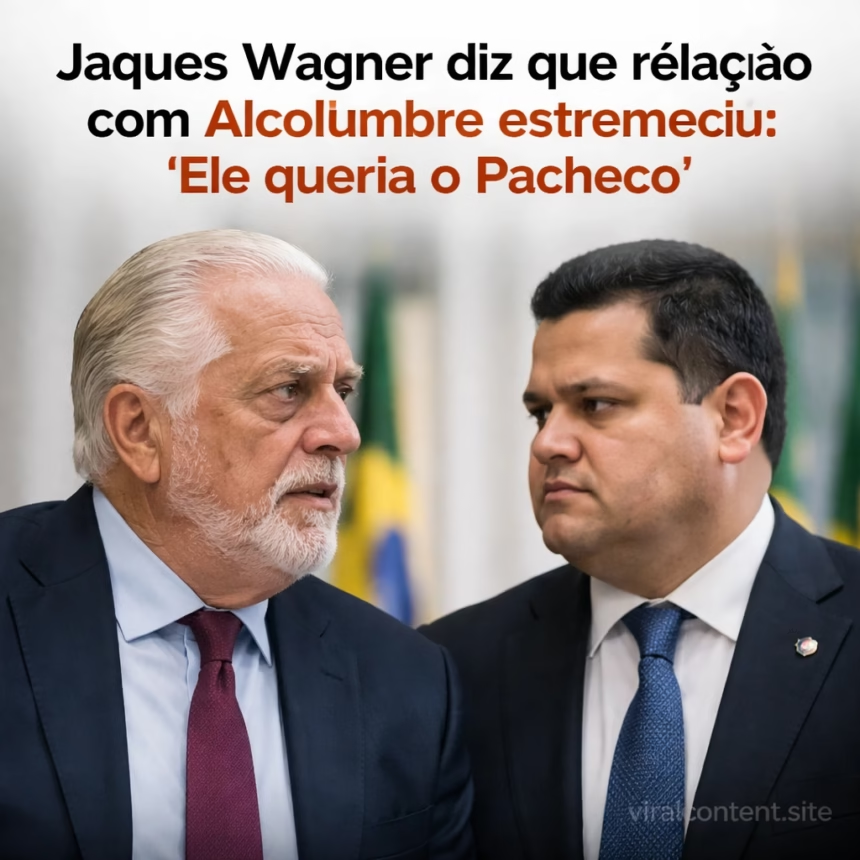
Brasília Shaken: Wagner's Bombshell Reveals Alcolumbre's 'Pacheco' Gambit and Deep Political Rift
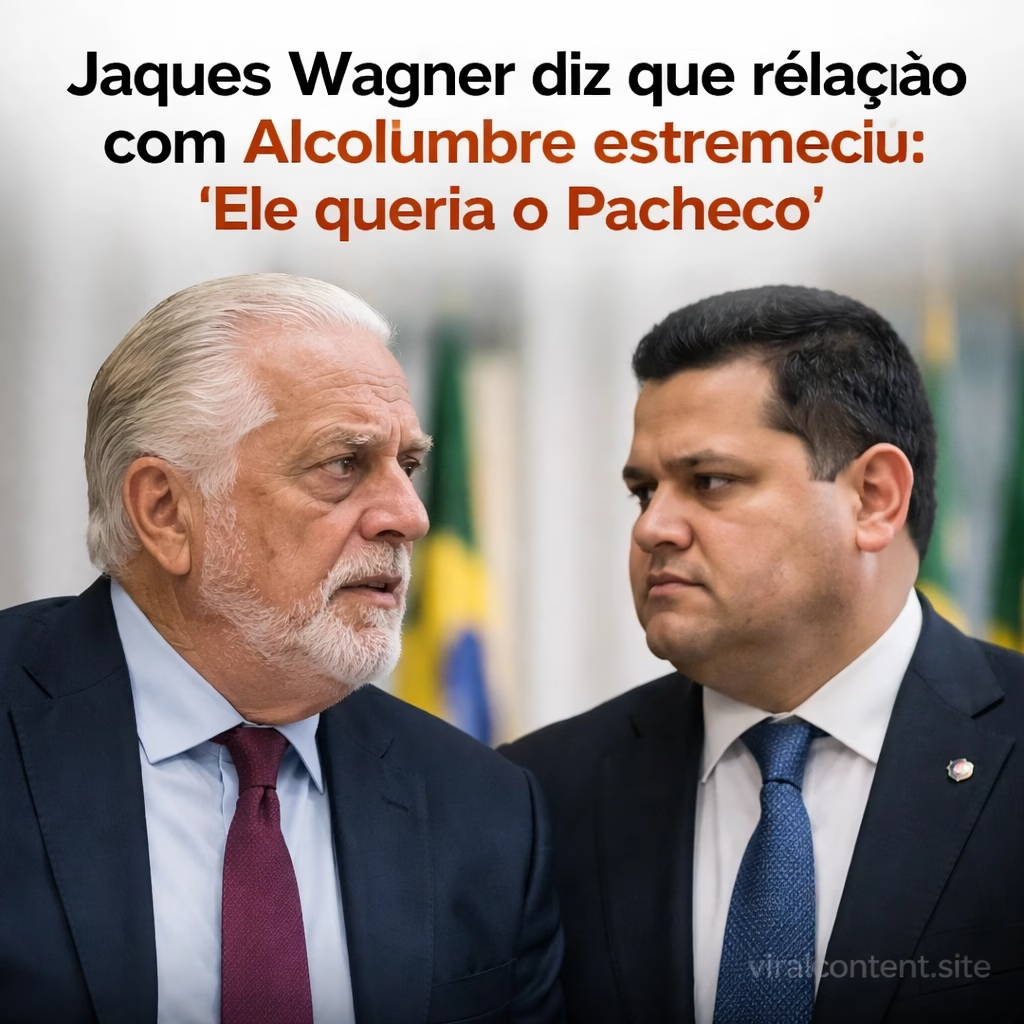
Senator Jaques Wagner (PT-BA) has publicly declared a significant strain in his relationship with fellow Senator Davi Alcolumbre (União Brasil-AP). The veteran politician revealed that the friction stems directly from Alcolumbre's alleged strong backing for Rodrigo Pacheco during the hotly contested Senate presidency election in 2021. This candid admission from Brasília signals a notable shift in the intricate power dynamics of the Brazilian Congress.
The unexpected revelation, made recently in the capital, underscores the deep personal and political stakes involved in congressional leadership disputes. It brings to light a perceived breach of trust that has simmered beneath the surface of Brasília's political landscape for over two years, now coming to a head with potential repercussions for current legislative alignments.
Background: The 2021 Senate Presidency and Shifting Alliances
To understand the current tension, one must revisit the intense political maneuvering surrounding the 2021 election for the Senate presidency. The position is arguably one of the most powerful in Brazilian politics, controlling the legislative agenda, parliamentary procedures, and the allocation of significant resources. Its occupant holds immense sway over the government's ability to pass its reforms and initiatives.
At the center of that election was Davi Alcolumbre, then the incumbent Senate President. Alcolumbre, a senator from Amapá affiliated with União Brasil, had served a tumultuous but influential term from 2019 to 2021. His desire for re-election was strong, but a crucial ruling by the Supreme Federal Court (STF) ultimately barred him from seeking a consecutive second term, citing constitutional interpretations against successive re-elections for legislative leadership posts.

With his own path to re-election blocked, Alcolumbre swiftly pivoted, becoming a pivotal kingmaker in the race to succeed him. His chosen successor, and the eventual victor, was Senator Rodrigo Pacheco (PSD-MG). Pacheco, a relatively less experienced senator at the time, benefited immensely from Alcolumbre's formidable political machine and extensive network within the Senate.
Alcolumbre's support for Pacheco was not merely passive. It involved active lobbying, strategic alliances, and leveraging his past position's influence to consolidate votes. Pacheco's victory, achieved with a significant margin against Senator Simone Tebet (MDB-MS), was widely attributed to Alcolumbre's decisive backing. This alliance effectively cemented a powerful axis within the Senate, with Alcolumbre maintaining significant influence even after stepping down from the presidency.
Senator Jaques Wagner, a prominent figure from the Workers' Party (PT) and a senator for Bahia, holds considerable political weight. A former governor, minister in previous PT governments, and close confidant of President Luiz Inácio Lula da Silva, Wagner is known for his strategic acumen and ability to navigate complex political negotiations. While his party often finds itself in different ideological camps than Alcolumbre's União Brasil, pragmatic cooperation is a hallmark of Brazilian congressional politics.

The relationship between Wagner and Alcolumbre, prior to this admission, had been largely professional, characterized by the usual back-and-forth of legislative interaction. There was no public indication of a deep personal animosity, suggesting that the recent revelation points to a specific and significant incident that fundamentally altered their dynamic.
Key Developments: The “Pacheco” Preference and the Erosion of Trust
The core of Senator Wagner's recent statement lies in the blunt assertion: "Ele queria o Pacheco" (He wanted Pacheco). This phrase, simple yet loaded with political weight, encapsulates the perceived betrayal or disappointment that has festered between the two powerful senators. Wagner's account suggests that Alcolumbre's backing for Pacheco was not just a strategic choice but a determined, perhaps even aggressive, push that overlooked other considerations or potential alliances.
The "estremeceu" (soured or strained) nature of their relationship implies a gradual erosion of trust rather than an instantaneous breakdown. This likely occurred during the intense period leading up to the February 2021 Senate presidency election. As a seasoned politician, Wagner would have been deeply involved in his party's strategies and negotiations, potentially seeking broader consensus or supporting alternative candidates. Alcolumbre's unwavering and possibly uncompromising support for Pacheco could have been perceived as a disregard for these efforts or for an implicit understanding among key political players.
Details emerging from Wagner's statement suggest that Alcolumbre's efforts to secure Pacheco's victory went beyond mere endorsement. It potentially involved active lobbying, leveraging political debts, or even making promises to consolidate support. For Wagner, this might have represented a deviation from expected norms of political conduct or a prioritization of personal influence over broader institutional harmony or inter-party cooperation.
The timing of this revelation is also noteworthy. More than two years after the election, Wagner's decision to speak out now could be strategic. It might reflect a current dissatisfaction with the ongoing power dynamics in the Senate, a desire to realign forces, or simply a moment where past grievances resurface amidst new political challenges. The current political climate, with a new government in power seeking to build a stable legislative base, makes such internal rifts particularly impactful.
This isn't merely an ideological clash. While PT and União Brasil occupy different spaces on the political spectrum, the core of the tension appears to be rooted in political conduct, perceived loyalty, and the distribution of power and influence within the legislative body. It highlights how personal relationships, even among seasoned politicians, can be deeply affected by high-stakes political maneuvers, leaving lasting scars that reshape future interactions.
More Read
Impact: Repercussions Across Brasília
The public acknowledgment of a rift between two such influential senators carries significant weight, reverberating across various layers of Brasília's political ecosystem.
Individual Senators and Party Dynamics
For Senator Wagner, this positions him as a figure willing to speak truth to power, potentially solidifying his image among those who felt sidelined by the Alcolumbre-Pacheco axis. However, it could also lead to further isolation from Alcolumbre’s powerful bloc, affecting his ability to negotiate on certain issues. For Alcolumbre, the revelation challenges his carefully cultivated image as a unifying force and exposes him to scrutiny regarding his influence-peddling tactics. His political capital, while still substantial, might face renewed questioning.
The Workers’ Party (PT) and União Brasil, the respective parties of Wagner and Alcolumbre, could see their inter-party relations further complicated. While União Brasil is part of the broader government coalition, a public feud between key figures from both sides could strain the delicate balance of alliances, making cross-party negotiations more arduous.
Impact on the Lula Government
President Luiz Inácio Lula da Silva’s administration, which relies heavily on building a stable and broad base of support in Congress, could find its legislative agenda indirectly affected. Alcolumbre, despite being from a party that sometimes acts independently, has been a crucial interlocutor and a source of votes on key matters. Any further deterioration of relations between influential senators, particularly those from the government’s extended base, can complicate the passage of critical reforms, such as tax reform, environmental policies, or administrative changes, all of which require broad consensus.
Senate Internal Dynamics and Legislative Flow
Within the Senate itself, this revelation could lead to a realignment of forces. Other senators who might have harbored similar grievances or felt overshadowed by the Alcolumbre-Pacheco alliance might find an opportunity to voice their concerns or seek new partnerships. This could potentially fragment existing voting blocs or create new ones, making the legislative process less predictable.
The smooth functioning of the legislative process depends on a certain degree of collegiality and trust. A public feud between such prominent figures can inject an element of personal animosity into debates, potentially delaying or derailing important legislative initiatives and making consensus harder to achieve.
Public Perception
Beyond the corridors of power, the public perception of political loyalty, backroom deals, and the transparency of congressional leadership elections will be influenced. Such revelations often fuel cynicism about the inner workings of Brasília, highlighting that personal ambitions and power plays can often supersede broader political agreements.
What Next: Navigating the Fallout
The immediate aftermath of Senator Wagner's candid admission will likely see a period of observation and strategic maneuvering in Brasília. The political landscape is rarely static, and the implications of this rift could unfold in several directions.
Alcolumbre’s Response and Potential Reconciliation
A crucial next step will be Alcolumbre’s response, or lack thereof. Will he choose to address Wagner’s claims directly, deny them, or attempt to downplay the significance of the strained relationship? His reaction will undoubtedly shape the narrative and influence how other senators perceive the situation. While a full reconciliation might be challenging given the depth of the perceived betrayal, there could be behind-the-scenes efforts to ensure that professional cooperation, at least, is maintained for the sake of legislative stability, particularly with the Lula government needing broad congressional support.
Shifting Alliances and Legislative Implications
Senator Wagner might seek to strengthen ties with other factions or senators who shared his perspective during the 2021 election or who have felt marginalized by the current Senate leadership. This could lead to a subtle but significant realignment of forces within the PT bloc and its allies. Conversely, Alcolumbre might need to solidify his existing alliances to counter any potential weakening of his influence or to demonstrate his continued sway over a substantial bloc of votes.
The legislative agenda could feel the ripple effects. Major reforms, such as the ongoing discussions around tax reform, require delicate negotiations and broad consensus. A public feud between influential figures like Wagner and Alcolumbre could complicate these processes, potentially leading to delays or increased difficulty in forming the necessary majorities.
Future Political Contests and Scrutiny
While the next Senate presidency election is still some time away, this episode could lay foundational groundwork for future contests. Candidates might align themselves based on these past grievances, and the roles played by key figures in the 2021 election could become talking points once again. The incident also invites renewed public scrutiny into the mechanisms of power within Congress, potentially leading to calls for greater transparency in leadership selections.
Ultimately, political rifts, especially between figures of such prominence, often take time to heal, if they ever do. The coming months will reveal whether this public declaration marks a temporary tremor or a more permanent shift in the intricate and often volatile power dynamics of the Brazilian Senate.