Senegal Speaker Sonko's Inaugural Address Sparks Cabinet Controversy
Senegal Speaker Sonko's Inaugural Address Sparks Cabinet Controversy
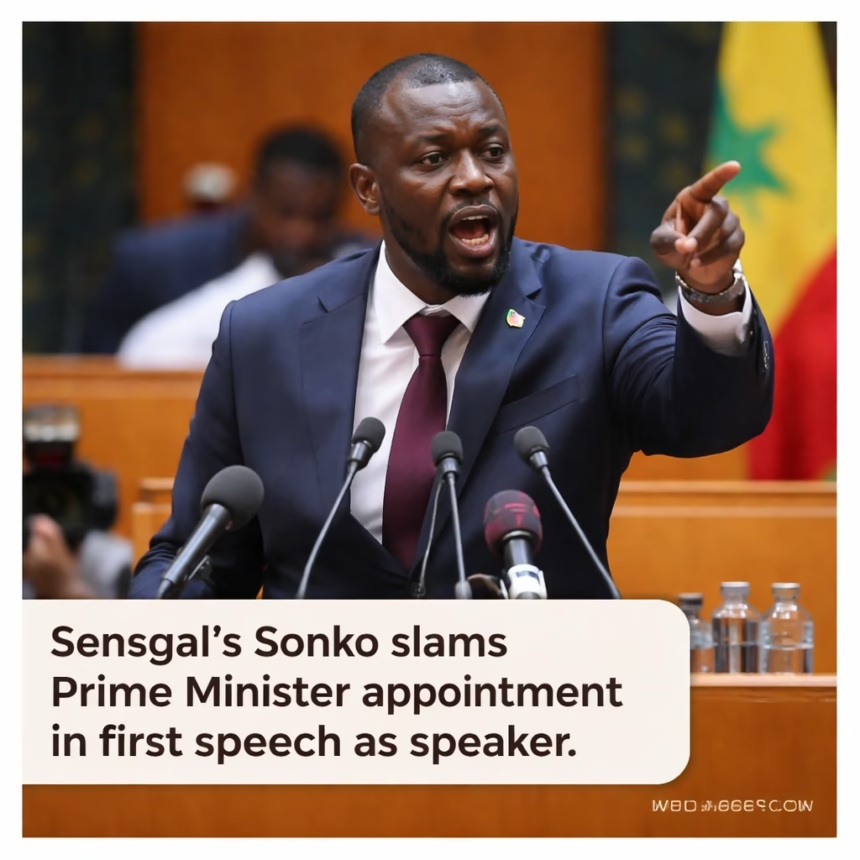
Ousmane Sonko, recently elected Speaker of Senegal's National Assembly, stirred significant political debate during his inaugural address this week in Dakar. His speech included sharp criticism of the appointment of the current Prime Minister, raising questions about the internal dynamics of the nascent government.
Background: A Journey from Opposition to Power
Ousmane Sonko's ascent to a pivotal role in Senegalese politics has been marked by a tumultuous journey. A former tax inspector, Sonko gained prominence as a vocal critic of the previous administration, advocating for greater transparency, sovereignty, and a break from established political norms. His political movement, the African Patriots of Senegal for Work, Ethics and Fraternity (PASTEF), resonated strongly with a significant portion of the electorate, particularly the youth.
Throughout the past few years, Sonko faced numerous legal challenges, including charges of defamation and alleged rape, which he consistently maintained were politically motivated attempts to sideline him from presidential contention. These legal battles often triggered widespread protests across Senegal, leading to clashes and a period of significant political instability. His eligibility to run for president was ultimately invalidated by the Constitutional Council, paving the way for his chosen successor, Bassirou Diomaye Faye.
More Read
The political landscape underwent a dramatic shift in March 2024. Following a period of intense pre-election uncertainty, including a last-minute postponement of the vote, presidential candidate Bassirou Diomaye Faye, a close ally and former secretary-general of PASTEF, secured a decisive victory in the snap election. Faye's triumph, achieved on a platform of "systemic change" and "rupture," was largely attributed to Sonko's endorsement and robust campaign efforts from behind bars.
Upon his release from prison, Sonko was initially appointed Prime Minister by President Faye, signaling a powerful alliance at the helm of the new government. This appointment was widely seen as a recognition of Sonko's pivotal role in the election victory and his enduring popularity. However, in a subsequent political maneuver, Sonko resigned from the premiership to assume the position of Speaker of the National Assembly, a move intended to consolidate the ruling coalition's legislative agenda and ensure parliamentary control.
Following Sonko's transition to the speakership, President Faye appointed Abdoulaye Diop as the new Prime Minister. Diop, a technocrat with a background in economics and international finance, was tasked with leading the government's day-to-day operations and implementing the ambitious reform agenda promised by the new administration.
More Read

Key Developments: Speaker’s Critique of PM Appointment
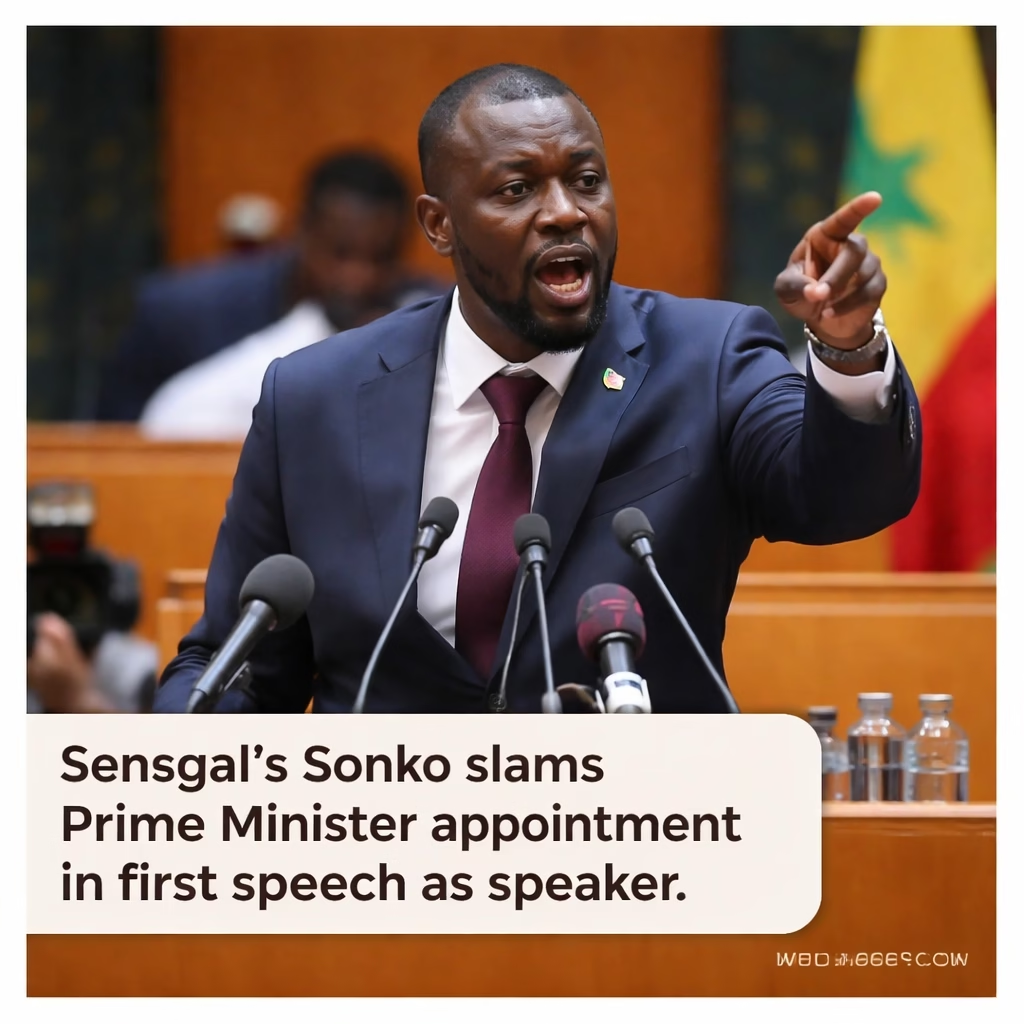
The political calm following the formation of the new government was swiftly interrupted by Speaker Ousmane Sonko's inaugural address to the National Assembly. In his first official speech as head of the legislative body, Sonko delivered a pointed critique regarding the appointment of Prime Minister Abdoulaye Diop.
Sonko reportedly expressed reservations about the process and perhaps the suitability of Diop for the role, particularly in light of the "rupture" and "systemic change" agenda championed by President Faye and the PASTEF movement. While the precise words used were not immediately detailed, reports indicate Sonko suggested the appointment did not fully align with the aspirations for a radical overhaul of the country's governance structure.
His remarks, delivered from the high office of the Speaker, carried significant weight, given his status as the spiritual leader of the ruling party and President Faye's mentor. This public questioning of a key presidential appointment, especially one so recent, immediately sparked speculation about potential internal discord within the highest echelons of the Senegalese government.
Prime Minister Abdoulaye Diop’s Profile
Abdoulaye Diop, a former Minister of Economy and Finance under previous administrations, brings a wealth of experience in public finance and economic policy. His appointment was initially perceived as a pragmatic choice, balancing the need for experienced governance with the new administration’s reformist zeal. Diop’s background suggests a focus on economic stability and continuity, which may contrast with the more revolutionary rhetoric often associated with Sonko and PASTEF.
Impact: Shaking the Foundations of the New Government
Sonko's unexpected public critique has immediate and far-reaching implications for the stability and perception of President Faye's nascent administration. It introduces an element of uncertainty into what was widely expected to be a unified front between the President and his influential former Prime Minister and current Speaker.
Internally, the remarks could be interpreted as a sign of friction or differing visions between key figures within the ruling coalition. This could potentially complicate decision-making processes, particularly on sensitive policy matters related to the promised "rupture" agenda. It also places Prime Minister Diop in a challenging position, as his authority and mandate have been publicly questioned by a powerful political figure just weeks into his tenure.
More Read

Publicly, the incident risks undermining the image of a cohesive and harmonious government, which was a key message during the presidential campaign. Supporters of the "system change" may interpret Sonko's words as a warning that the new administration is not moving fast enough or decisively enough to implement the promised reforms. Conversely, critics might seize upon the perceived discord as evidence of internal power struggles or a lack of clear direction.
Internationally, observers will be closely watching how this internal dynamic unfolds. Senegal is a key democratic partner in West Africa, and any signs of instability within its leadership could impact investor confidence and regional relations. The ability of President Faye, Speaker Sonko, and Prime Minister Diop to navigate this challenge will be crucial for maintaining confidence both domestically and abroad.
What Next: Navigating Internal Dynamics and Policy Implementation
The coming weeks are expected to shed more light on the implications of Speaker Sonko's remarks. The immediate focus will be on the responses from the Presidency and the Prime Minister's office. A unified and reassuring message from President Faye would be essential to quell speculation of internal divisions and reaffirm his confidence in Prime Minister Diop.
It remains to be seen whether Sonko's comments will lead to a more direct parliamentary debate or a public clarification from his office. Such a move could either escalate the situation or provide an opportunity for the government to present a united front and address any perceived discrepancies in its approach.
Beyond the immediate political fallout, the incident highlights the delicate balance of power within Senegal's new political architecture. The relationship between President Faye, Speaker Sonko, and Prime Minister Diop will be critical to the effective implementation of the government's ambitious reform agenda, which includes addressing economic disparities, strengthening institutions, and asserting national sovereignty. The challenge now lies in translating the popular mandate for change into coherent and unified governance, overcoming any internal differences that may emerge along the way.