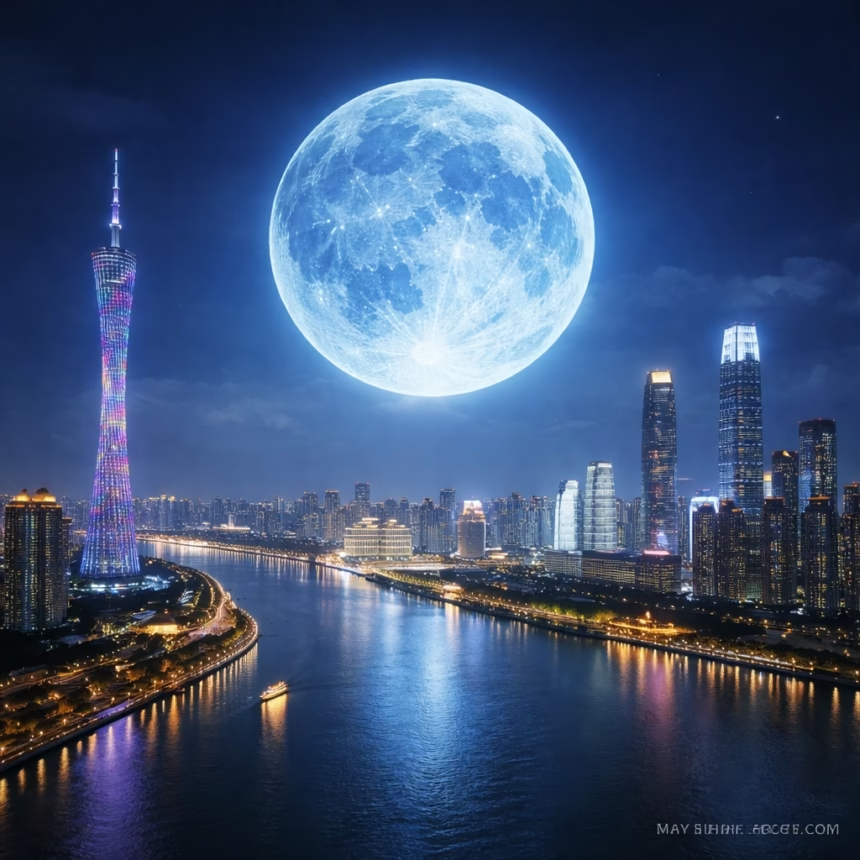
Guangzhou is poised to witness a rare astronomical event as a "Blue Moon" is scheduled to illuminate its night sky on May 31st. This celestial phenomenon, a calendrical curiosity rather than a change in lunar color, promises a captivating sight for residents and sky-gazers across the Pearl River Delta region. Astronomy enthusiasts and the general public alike are anticipating this unique lunar display.
Understanding the Blue Moon: A Calendrical Anomaly
The term "Blue Moon" does not refer to the moon's actual color but rather its infrequent appearance within specific calendrical cycles. There are two primary definitions for a Blue Moon, both of which describe its rarity. The older, more traditional definition refers to the third full moon in an astronomical season that has four full moons. Typically, each season (spring, summer, autumn, winter) has three full moons. When a fourth occurs, the third one is designated as a Blue Moon.
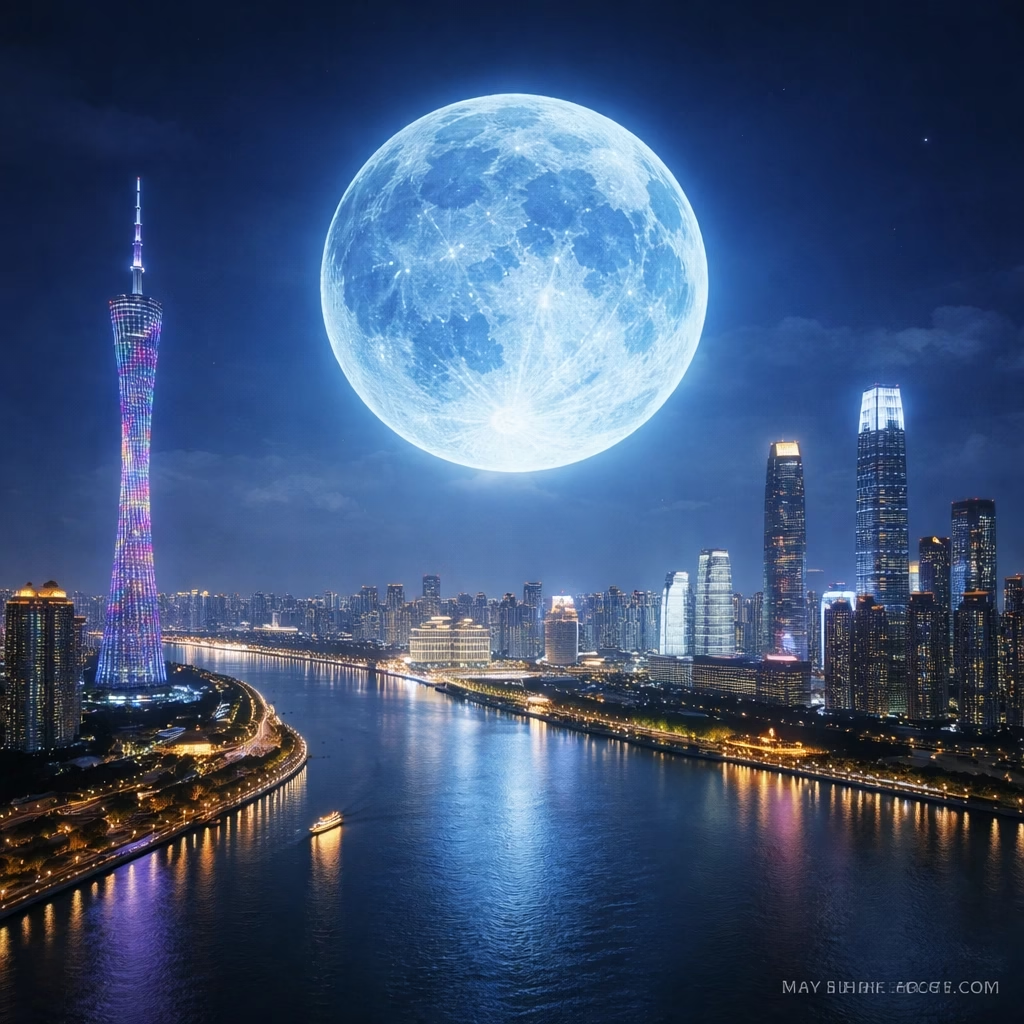
The more commonly understood and contemporary definition, which applies to the May 31st event, defines a Blue Moon as the second full moon within a single calendar month. Since a lunar cycle is approximately 29.5 days long, it is uncommon for two full moons to occur within a 30 or 31-day month. This specific alignment happens roughly once every two to three years, making it a relatively rare occurrence. The previous full moon for May would have occurred early in the month, setting the stage for this second full moon.
Historically, the phrase "once in a Blue Moon" has permeated various cultures, signifying something exceedingly rare or improbable. While the moon itself will appear in its usual pearly white or yellowish hue, depending on atmospheric conditions, the event carries significant cultural and scientific interest due to its uncommon timing. Ancient civilizations tracked lunar cycles for agriculture, navigation, and religious festivals, underscoring the moon's enduring importance to human life and culture.
More Read

Recent Advancements and Preparations for Observation
In the lead-up to this rare celestial event, local astronomical communities and public observatories in Guangzhou have been making preparations. Advancements in amateur astronomy equipment and digital photography have significantly enhanced the public's ability to observe and document such phenomena. High-resolution telescopes, smartphone adaptors, and specialized apps now allow even novice stargazers to capture impressive images of the lunar surface.
Guangzhou's local science centers and planetariums, such as the Guangzhou Children's Palace Planetarium and various university astronomy departments, are expected to host special viewing sessions or online broadcasts. These initiatives aim to educate the public about the science behind the Blue Moon and offer guidance on optimal viewing conditions. Educational outreach programs have seen a resurgence in popularity, driven by global interest in space exploration and astronomical discoveries.
Furthermore, there has been a noticeable increase in public engagement with astronomy. Social media platforms now serve as vibrant hubs for sharing astronomical photos, tips, and real-time updates during celestial events. This heightened public interest has spurred local authorities to consider designated viewing areas, particularly in parks or elevated locations away from light pollution, though significant urban light pollution remains a challenge for optimal viewing within the city center.
More Read

Impact on Guangzhou’s Community and Beyond
The arrival of the Blue Moon on May 31st is anticipated to have several impacts, ranging from scientific engagement to local tourism and cultural activities. For astronomers and researchers, it presents an opportunity to engage in public outreach, demystifying celestial mechanics and inspiring future generations of scientists. Observatories might use the occasion to study atmospheric effects on lunar visibility or gather data on lunar phase transitions.
For the general public, the event offers a unique chance to connect with the cosmos. It encourages individuals to step outside, look up, and appreciate the wonders of the universe. This can foster a sense of awe and curiosity, promoting scientific literacy and environmental awareness, particularly regarding light pollution. Schools and educational institutions often leverage such events to integrate astronomy lessons into their curriculum, providing hands-on learning experiences.
Economically, the Blue Moon could provide a modest boost to local businesses. Retailers selling telescopes, binoculars, and photography equipment may see increased sales. Restaurants and cafes with outdoor seating or rooftop access in areas with good visibility might experience higher patronage. Tourism, while not a primary driver for a single lunar event, could see a slight uptick in visitors interested in combining sightseeing with stargazing, especially if local tour operators organize specific viewing packages. Cultural institutions might also draw inspiration, incorporating lunar themes into art exhibitions, music performances, or storytelling sessions.
What’s Next: Future Celestial Events and Continued Exploration
Following the May 31st Blue Moon, the astronomical calendar for Guangzhou and the wider region will continue to offer various celestial highlights. While another Blue Moon won't occur for approximately two to three years, sky-watchers can look forward to other phenomena such as meteor showers, planetary conjunctions, and potential eclipses. Organizations like the Guangzhou Astronomical Society regularly publish calendars of upcoming events, providing guidance on how and when to observe them.
The scientific community will continue its ongoing exploration of the moon and the solar system. Missions like China's Chang'e lunar exploration program exemplify the nation's commitment to understanding Earth's nearest celestial neighbor. Data collected from these missions, combined with ground-based observations, continually refine our understanding of lunar geology, history, and its potential for future human exploration.
Public engagement with astronomy is expected to grow, fueled by accessible technology and global scientific advancements. Educational initiatives will likely continue to thrive, encouraging more individuals to take an interest in space science. The May 31st Blue Moon serves not just as a fleeting spectacle but as a reminder of the dynamic and awe-inspiring universe that surrounds us, inviting continued observation, learning, and appreciation.