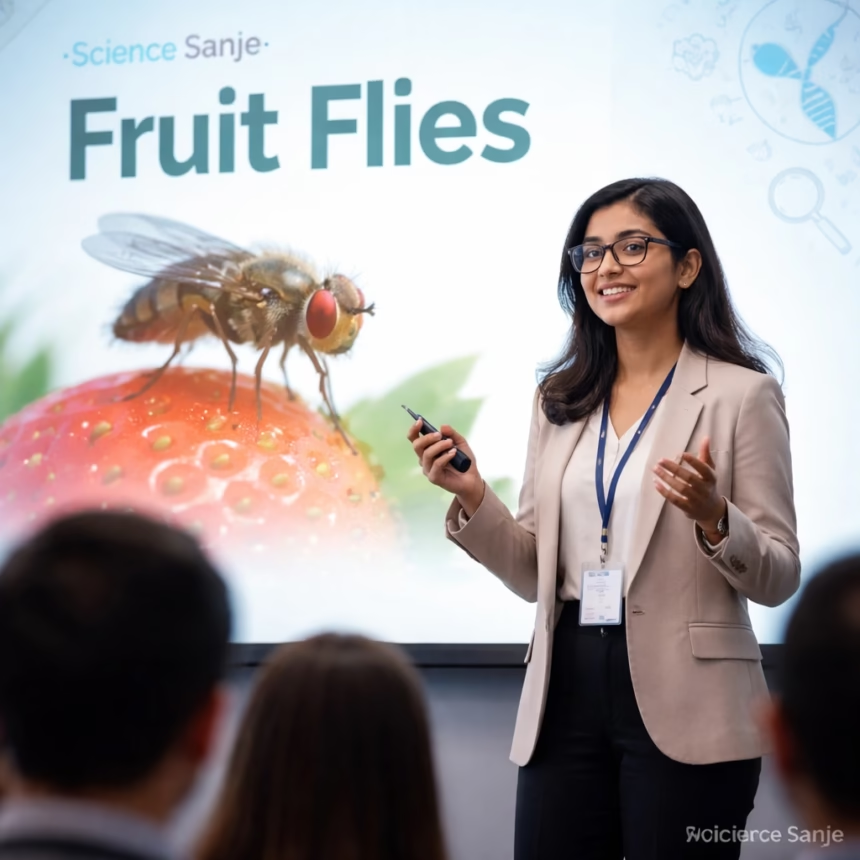
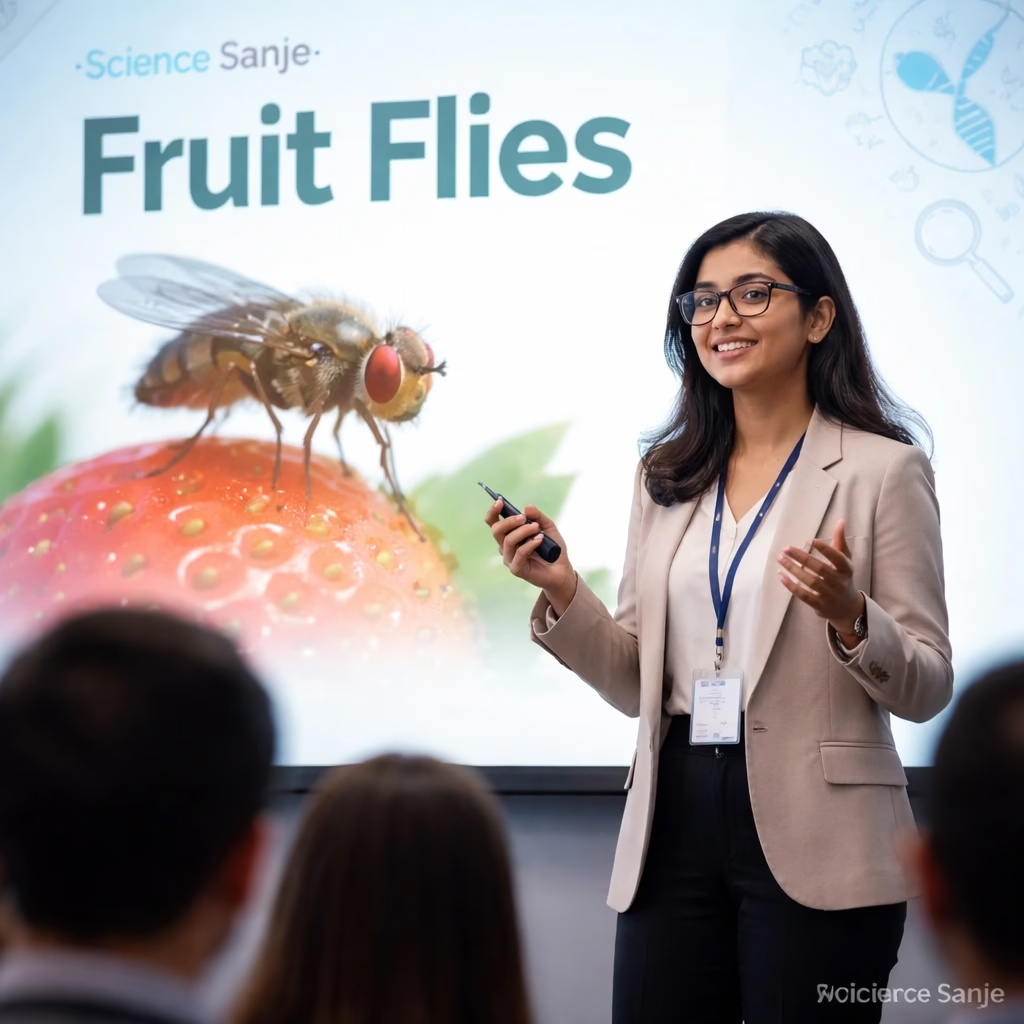
Science enthusiasts gathered at the annual Science Sanje festival on October 26, 2024, for a captivating talk on *Drosophila melanogaster*, commonly known as fruit flies. The session, held at the Grand Auditorium of the City Convention Center, delved into the surprising scientific contributions of these ubiquitous insects and their profound impact on biological research. Dr. Elara Vance, a leading geneticist from the National Institute of Genetics, presented the keynote address, illuminating decades of discovery.
A Century of Microscopic Marvels: The Fruit Fly’s Scientific Pedigree
The journey of the fruit fly from a common kitchen pest to a cornerstone of modern biology began over a century ago. In the early 1900s, pioneering geneticist Thomas Hunt Morgan and his team at Columbia University recognized *Drosophila melanogaster*'s potential. Its rapid reproductive cycle, small size, and distinct observable traits made it an ideal candidate for studying heredity. Morgan's groundbreaking work, which included the discovery of sex-linked inheritance and gene mapping, earned him the Nobel Prize in Physiology or Medicine in 1933, firmly establishing the fruit fly as a premier model organism.
Early Discoveries and Genetic Foundations
Morgan's lab meticulously cataloged mutations, such as white eyes and vestigial wings, demonstrating how genes are carried on chromosomes and can be mapped to specific locations. This foundational research laid the groundwork for modern genetics. Following Morgan's successes, institutions worldwide began adopting *Drosophila* for research, leading to the establishment of dedicated stock centers, like the Bloomington Drosophila Stock Center, which maintain thousands of mutant strains, making them readily available to the global scientific community. This infrastructure has been crucial in accelerating discoveries across various biological disciplines.
Evolution into a Multidisciplinary Tool
Over the decades, *Drosophila* research expanded far beyond basic genetics. Scientists began leveraging its genetic tractability to explore developmental biology, neuroscience, and behavior. The fly's relatively simple nervous system, with approximately 100,000 neurons compared to the human brain's billions, offered a manageable system to investigate complex processes like learning, memory, sleep, and circadian rhythms. Its transparent larval stage also provided an unparalleled view into organ development and cellular processes in real-time.
Recent Breakthroughs and Cutting-Edge Applications
The past two decades have witnessed an explosion of new technologies that have further cemented the fruit fly's role in cutting-edge research. Dr. Vance highlighted several key developments, emphasizing how advanced tools are unlocking previously unimaginable insights.
More Read

CRISPR and Precision Gene Editing
The advent of CRISPR-Cas9 gene editing technology has revolutionized *Drosophila* research. Scientists can now precisely modify the fly's genome, introducing or correcting specific mutations with unprecedented accuracy. This capability has been instrumental in creating sophisticated models for human diseases, allowing researchers to mimic genetic conditions like Alzheimer's, Parkinson's, and various cancers directly within the fly's genome. These models provide a powerful platform for understanding disease mechanisms and testing potential therapeutic compounds.
Neuroscience and Behavioral Insights
In neuroscience, *Drosophila* continues to be a powerhouse. Recent studies have utilized optogenetics and chemogenetics – techniques that allow scientists to control neuronal activity with light or chemicals – to dissect neural circuits underlying complex behaviors. Researchers have pinpointed specific neurons responsible for aggression, courtship, and even decision-making. This fine-grained control offers a unique window into how neural networks function, providing fundamental insights that often translate to vertebrate systems.
Disease Modeling and Drug Discovery
The fly's genetic similarity to humans (approximately 75% of human disease-causing genes have a *Drosophila* counterpart) makes it an excellent model for disease modeling. Beyond neurodegenerative disorders, flies are used to study metabolic diseases like diabetes and obesity, cardiovascular conditions, and various forms of cancer. High-throughput screening platforms, which can test thousands of compounds on fly models, are accelerating drug discovery efforts, identifying promising candidates that can then be further investigated in mammalian systems.

Far-Reaching Impact: From Lab Bench to Patient Care
The seemingly small discoveries made in fruit flies have a surprisingly large ripple effect, influencing diverse fields from medicine to public health and even space exploration. Dr. Vance underscored how *Drosophila* research directly contributes to improving human health and understanding fundamental biological principles.
Advancing Medical Understanding and Therapies
Insights gained from *Drosophila* studies have directly informed our understanding of human biology and disease. For example, the discovery of circadian rhythm genes in flies led to a deeper understanding of sleep disorders and their link to human health. Research on fly models of neurodegeneration has identified key pathways and potential drug targets for diseases like Alzheimer's and Parkinson's, offering hope for future treatments. The identification of oncogenes and tumor suppressors in flies has also contributed significantly to cancer research.
Public Health and Environmental Applications
While the focus of the talk was primarily on biomedical research, Dr. Vance briefly touched upon the broader impact. Understanding insect biology, even that of a harmless fruit fly, contributes to strategies for controlling agricultural pests and vector-borne diseases. Furthermore, *Drosophila* has been used in space biology experiments to study the effects of microgravity and radiation on living organisms, providing crucial data for future long-duration human space missions. The ethical considerations in using such a simple organism also make it an ideal initial testing ground for novel genetic manipulation techniques before they are considered for more complex organisms.
Economic and Educational Benefits
The widespread use of *Drosophila* has also fostered a vibrant research ecosystem, supporting countless scientific careers and generating significant economic activity through research grants, specialized equipment, and biotechnological innovations. Moreover, fruit flies serve as an accessible and cost-effective educational tool, introducing generations of students to the principles of genetics, heredity, and experimental biology in classrooms worldwide.
The Horizon: What’s Next for Fruit Fly Research
Looking ahead, the future of *Drosophila* research appears brighter than ever, with new technologies and interdisciplinary approaches poised to unlock even greater secrets. Dr. Vance outlined several exciting expected milestones.
Integration of Artificial Intelligence and Big Data
The next frontier involves integrating artificial intelligence (AI) and machine learning with vast datasets generated from *Drosophila* experiments. AI can analyze complex behavioral patterns, identify subtle phenotypes, and predict gene functions with unprecedented efficiency. This will accelerate the pace of discovery, allowing researchers to uncover intricate biological networks that are too complex for human analysis alone. High-throughput genomic and proteomic studies, combined with AI, will enable a holistic understanding of how genes, proteins, and environment interact.

Development of Advanced Genetic Tools
While CRISPR has been transformative, researchers are continuously refining and developing even more sophisticated genetic manipulation tools. These next-generation tools promise even finer control over gene expression, allowing for cell-type-specific and temporal manipulations that can mimic human conditions with greater precision. This will enable scientists to study disease progression and therapeutic interventions in highly controlled environments.
Precision Medicine and Therapeutic Development
The ultimate goal for much of *Drosophila* disease modeling is to inform precision medicine approaches. By understanding the specific genetic and molecular pathways involved in individual diseases, researchers hope to develop highly targeted therapies. Future work will focus on translating promising findings from fly models into mammalian preclinical studies and eventually into human clinical trials, particularly for rare genetic disorders where *Drosophila* models can be uniquely valuable.
Global Collaborations and Open Science
The *Drosophila* community is renowned for its collaborative spirit and commitment to open science. Future initiatives will likely see even greater international cooperation, shared resources, and open-access data platforms, fostering a global effort to tackle complex biological questions. This collaborative framework ensures that discoveries benefit the entire scientific community and, ultimately, humanity. The upcoming International Drosophila Research Conference in Geneva in April 2025 is expected to highlight many of these burgeoning collaborations and present the latest breakthroughs.
The talk by Dr. Vance at Science Sanje underscored the enduring legacy and future potential of the humble fruit fly. From its role in unraveling the mysteries of heredity to its current position at the forefront of neuroscience and disease modeling, *Drosophila melanogaster* continues to be a testament to the power of basic scientific inquiry and a beacon of hope for future medical advancements.