FCT's Wasa Set for Mega-Transformation: Tinubu's Billions-Dollar Vision Unveiled
FCT's Wasa Set for Mega-Transformation: Tinubu's Billions-Dollar Vision Unveiled
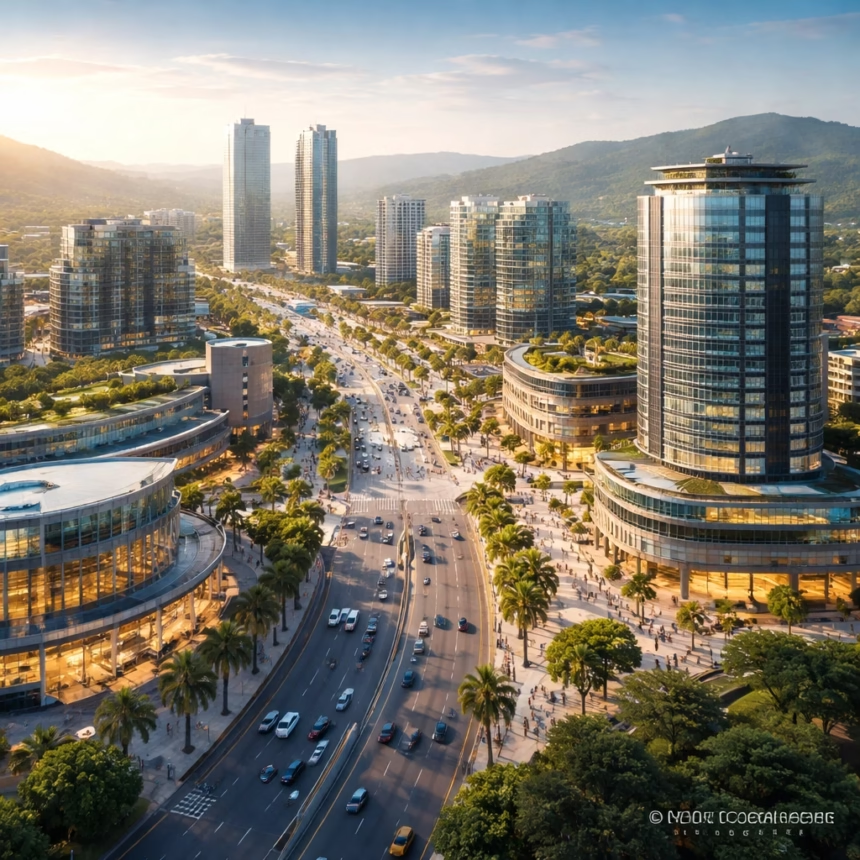
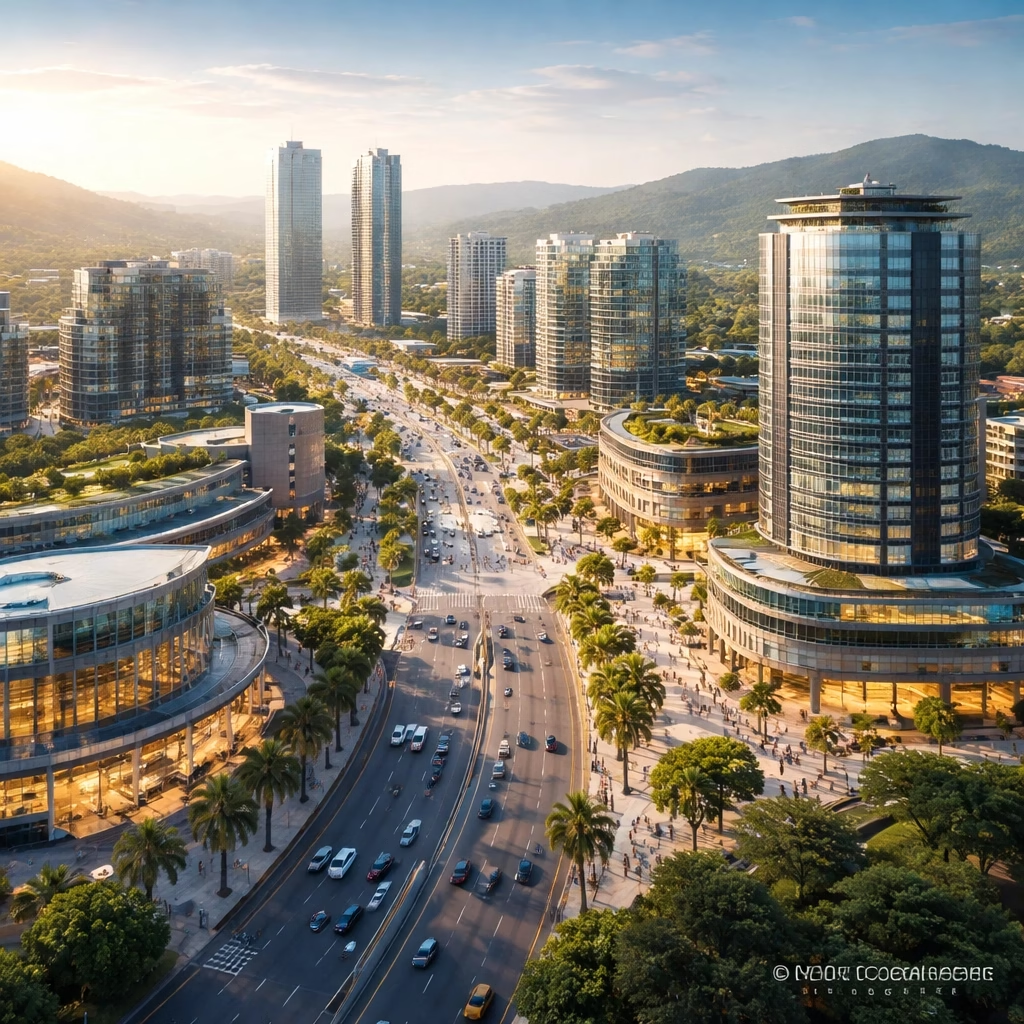
President Bola Ahmed Tinubu's administration has unveiled an ambitious plan to transform Wasa, a district within the Federal Capital Territory (FCT), into a modern, vibrant commercial hub. This multi-faceted initiative aims to unlock significant economic potential and integrate Wasa into the FCT's broader development strategy. The announcement signals a major focus on urban renewal and economic diversification for the region, promising a new chapter for the often-overlooked satellite town.
Background: A Satellite Town on the Cusp of Change
Wasa, located southeast of Abuja's city center, has long been categorized as one of the FCT's satellite towns. For decades, its development remained largely informal and organic, contrasting sharply with the meticulously planned core of Abuja. While the FCT Master Plan of 1979 envisioned several such satellite towns to absorb the spillover population and economic activities from the capital, Wasa's growth has been predominantly characterized by residential settlements with limited commercial infrastructure and inadequate public services.
The district's journey has been marked by a slow pace of infrastructural development, leaving many residents without access to essential amenities like paved roads, reliable electricity, and potable water. This historical neglect contributed to Wasa's perception as a peripheral area, despite its strategic location and potential for growth. Previous efforts were sporadic, lacking a comprehensive, integrated approach to its transformation.
More Read

However, Abuja's rapid population explosion and the escalating cost of living within the city center have exerted immense pressure on its peripheries. Satellite towns like Wasa have increasingly become residential havens for a significant portion of the FCT's workforce, highlighting the urgent need for their planned development. The current FCT Minister, Barrister Nyesom Wike, appointed in August 2023, has consistently emphasized the administration's commitment to revitalizing the FCT, prioritizing infrastructure, and expanding economic opportunities beyond the central districts.
President Tinubu's recent pronouncement aligns with this renewed focus, signaling a significant policy shift. The vision for Wasa is not merely about providing basic infrastructure but fundamentally re-imagining its economic role within the FCT. This initiative aims to address decades of underdevelopment, repositioning Wasa from a dormitory town to a self-sustaining economic powerhouse, capable of attracting substantial investment and fostering robust commercial activities.
Key Developments: Blueprint for a Commercial Epicenter
The transformation plan for Wasa is comprehensive, targeting multiple sectors to establish a truly modern commercial hub. President Tinubu, during a strategic meeting with FCT Administration (FCTA) officials in early October 2023, outlined a multi-phase approach emphasizing critical infrastructure development and the creation of enabling environments for businesses.
More Read

Infrastructure Backbone: Powering Progress
Central to the plan is a massive investment in infrastructure. This includes the construction and rehabilitation of extensive road networks within Wasa and its environs, designed to improve connectivity to major FCT arteries like the Airport Road and the Outer Northern Expressway. Reliable power supply is a cornerstone, with commitments to upgrade existing electricity infrastructure and explore alternative energy solutions to ensure uninterrupted service for businesses and residents. Furthermore, advanced water reticulation systems and comprehensive drainage solutions are slated for implementation to mitigate environmental challenges and support urban growth.
Commercial Zones and Business Parks: A Magnet for Investment
A significant portion of the initiative focuses on creating dedicated commercial zones. Plans include the development of modern markets, designed with organized stalls, proper sanitation, and efficient logistics. Dedicated business parks and industrial estates are also envisioned, offering serviced plots and facilities for small, medium, and large-scale enterprises. These zones are intended to attract manufacturing, logistics, retail, and service industries, diversifying the FCT’s economic base beyond government administration.
Housing and Urban Amenities: Live, Work, Play
Beyond commerce, the plan acknowledges the need for modern residential solutions. Mixed-use developments are proposed, integrating residential units with commercial spaces, recreational facilities, and green areas. This holistic approach aims to create a “live, work, and play” environment, reducing commuting times and enhancing the quality of life for residents. The FCTA is exploring partnerships with private developers to deliver affordable and high-quality housing options, adhering to contemporary urban planning standards.
Public-Private Partnerships: Driving Sustainable Growth
Funding for this ambitious transformation is expected to heavily rely on Public-Private Partnerships (PPPs). The FCTA is actively engaging with local and international investors, presenting Wasa as a prime investment destination. The government’s role will involve providing the initial infrastructure, regulatory framework, and land allocation, while private entities will drive commercial development, construction, and service provision. This collaborative model is crucial for mobilizing the significant capital required and ensuring the project’s long-term sustainability.
Impact: A Ripple Effect Across the FCT
The transformation of Wasa is poised to generate a profound ripple effect, impacting various segments of society and the broader FCT economy.
Economic Revitalization and Job Creation
Foremost among the anticipated impacts is significant economic revitalization. The development of commercial hubs, industrial parks, and modern infrastructure will create tens of thousands of direct and indirect jobs across various sectors, including construction, retail, logistics, manufacturing, and services. This influx of employment opportunities will provide much-needed relief to the FCT’s labor market and attract skilled professionals.

Improved Living Standards for Residents
Current residents of Wasa stand to benefit immensely from improved infrastructure and services. Access to reliable electricity, clean water, better roads, and enhanced security will significantly elevate their quality of life. The development of modern markets and commercial centers will also bring essential goods and services closer to homes, reducing travel burdens and fostering a more vibrant community life. However, careful planning is required to address potential displacement and ensure adequate compensation and resettlement where necessary, protecting vulnerable communities.
Diversification of FCT Economy and Increased IGR
Historically, the FCT’s economy relied heavily on government activities. Wasa’s transformation into a commercial and industrial hub will significantly diversify the economic base, fostering private sector growth. This diversification is expected to lead to a substantial increase in the FCT’s Internally Generated Revenue (IGR) through property taxes, business levies, and various commercial activities, providing more resources for further development across the territory.
Real Estate Boom and Investment Opportunities
The project is anticipated to trigger a significant boom in the real estate sector within Wasa and its surrounding areas. Land values are expected to appreciate considerably, attracting both local and international investors. Developers will find new opportunities in commercial, residential, and mixed-use projects. This growth necessitates robust regulatory oversight to prevent speculation and ensure equitable development that benefits all stakeholders.
Reduced Pressure on Central Abuja
By creating a self-sustaining commercial hub outside the city center, the Wasa transformation aims to alleviate the immense pressure on central Abuja. It will decentralize economic activities, reduce traffic congestion, and distribute urban amenities more evenly across the FCT. This strategic decentralization aligns with long-term urban planning goals for sustainable metropolitan growth.
What Next: Milestones on the Path to Modernity
The journey to transform Wasa into a modern commercial hub is an ambitious undertaking, requiring meticulous planning, sustained investment, and effective execution. The FCT Administration has outlined a series of critical next steps and expected milestones.
Detailed Master Planning and Feasibility Studies
The immediate focus will be on commissioning comprehensive feasibility studies and developing a detailed master plan for Wasa. This will involve urban planners, environmental experts, economic consultants, and social scientists to ensure a holistic and sustainable development approach. These studies will refine land use plans, infrastructure requirements, and economic projections, providing a robust framework for implementation.
Stakeholder Engagement and Community Consultations
A crucial phase involves extensive stakeholder engagement. The FCT Administration plans to hold town hall meetings, investor forums, and community consultations to gather input, address concerns, and build consensus. Engaging local communities, traditional leaders, and business associations is vital for the project’s success and to ensure that the benefits are equitably distributed.
Funding Mobilization and PPP Agreements
Aggressive funding mobilization efforts are underway. This includes allocating budgetary provisions, securing potential international development loans, and finalizing Public-Private Partnership agreements. The FCTA aims to attract reputable local and foreign investors interested in participating in the various components of the Wasa development, from infrastructure to commercial real estate.
Commencement of Key Projects
Following the planning and funding phases, the commencement of key infrastructure projects is anticipated within the next 12-18 months. This will likely begin with critical road networks, power substations, and water treatment facilities, laying the groundwork for subsequent commercial and residential developments. Groundbreaking ceremonies for major projects will mark tangible progress.
Regulatory Framework and Oversight
The FCTA will also strengthen its regulatory framework to ensure transparent land administration, efficient project approvals, and adherence to environmental and urban planning standards. Robust oversight mechanisms will be put in place to monitor project timelines, budget utilization, and quality of work, safeguarding against delays and cost overruns.
While the vision for Wasa is grand, potential challenges include securing consistent funding, managing rapid urbanization, addressing environmental impacts, and ensuring equitable land allocation. The success of this transformation will hinge on sustained political will, effective governance, and collaborative efforts from all stakeholders, ultimately aiming to deliver on President Tinubu's promise of a modern, vibrant commercial hub for the FCT.