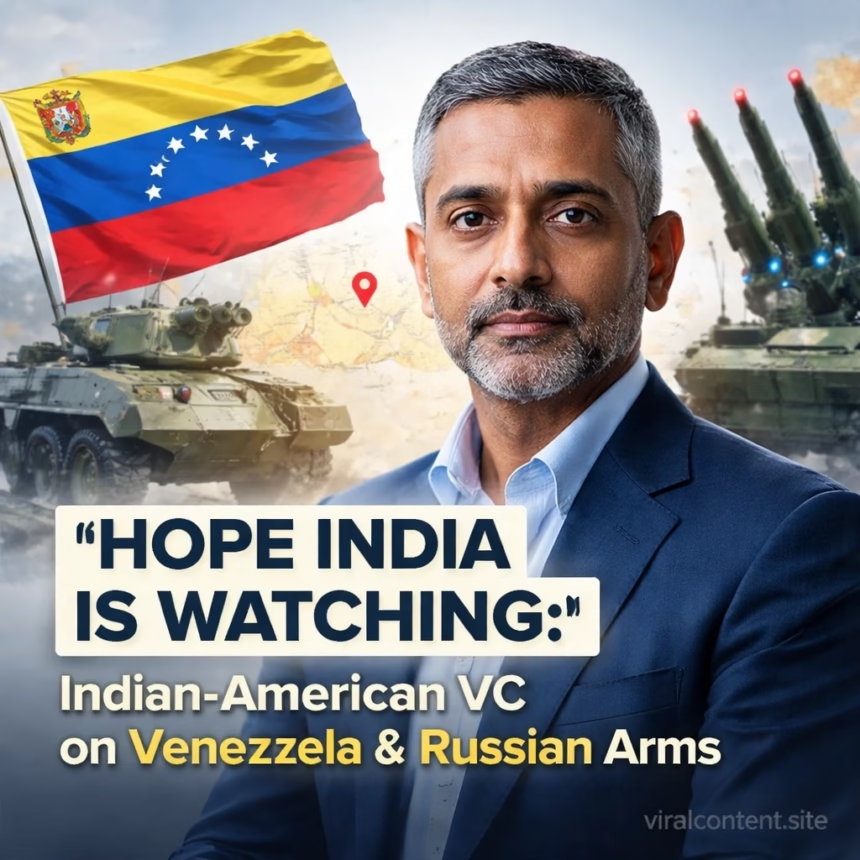
'Hope India is watching': Indian-American VC says Venezuela's Russian military equipment
An Indian-American venture capitalist and political commentator has expressed concern over Venezuela's use of Russian military equipment, urging India to take notice. In a tweet, Shireen Qudosi, an entrepreneur and writer, highlighted the growing military ties between Venezuela and Russia, stating, "Hope India is watching."

Background
Venezuela has been facing a severe economic and political crisis for years, exacerbated by U.S. sanctions and internal turmoil. The country has increasingly turned to Russia for military and political support. In 2018, Russian President Vladimir Putin visited Venezuela and signed agreements to strengthen military cooperation, including the supply of military equipment and training for Venezuelan forces.
The relationship between Venezuela and Russia dates back to the early 2000s when then-President Hugo Chávez sought to diversify Venezuela's international alliances. Since then, Russia has become a key ally, providing military and economic assistance. The most notable military equipment supplied by Russia includes S-300 air defense systems, Sukhoi Su-30 aircraft, and various armored vehicles.
More Read

Key Developments
Recent reports suggest that Venezuela has received additional military equipment from Russia, including advanced missile systems and helicopters. These shipments have raised concerns among international observers, particularly in light of Venezuela’s struggles to manage internal security and its growing debt to Russia.
Shireen Qudosi's tweet comes at a time when India, a major importer of military equipment, is evaluating its defense partnerships. India has historically relied on Russian arms, but it is now diversifying its suppliers, including the U.S. and European countries. The Indian government has been cautious about its stance on Venezuela, balancing its economic interests with its diplomatic relations.
Impact
The Russian military equipment in Venezuela could have broader geopolitical implications. For India, the situation highlights the need to assess its defense procurement strategies and the potential risks of over-reliance on any single supplier. The use of Russian equipment in Venezuela also raises questions about regional security dynamics, particularly in Latin America and the Caribbean.
More Read
For Venezuela, the continued support from Russia is crucial for maintaining its military capabilities. However, the economic strain caused by U.S. sanctions and internal mismanagement has made it difficult for Venezuela to sustain its military operations. The reliance on Russian equipment and loans has further deepened Venezuela's economic and political isolation.
What Next
India is likely to monitor the situation closely, especially as it continues to diversify its defense procurement. The Indian government may consider reducing its dependence on Russian arms, particularly if the geopolitical risks associated with such partnerships become more pronounced.
Venezuela, meanwhile, may seek to strengthen its ties with Russia further to counter the impact of U.S. sanctions. However, the economic and political instability in Venezuela may limit its ability to engage in long-term military cooperation. The international community will continue to watch the situation, with particular attention to how it affects regional security and global arms trade dynamics.