Cosmic Fireworks: New Telescope View Stuns Astronomers
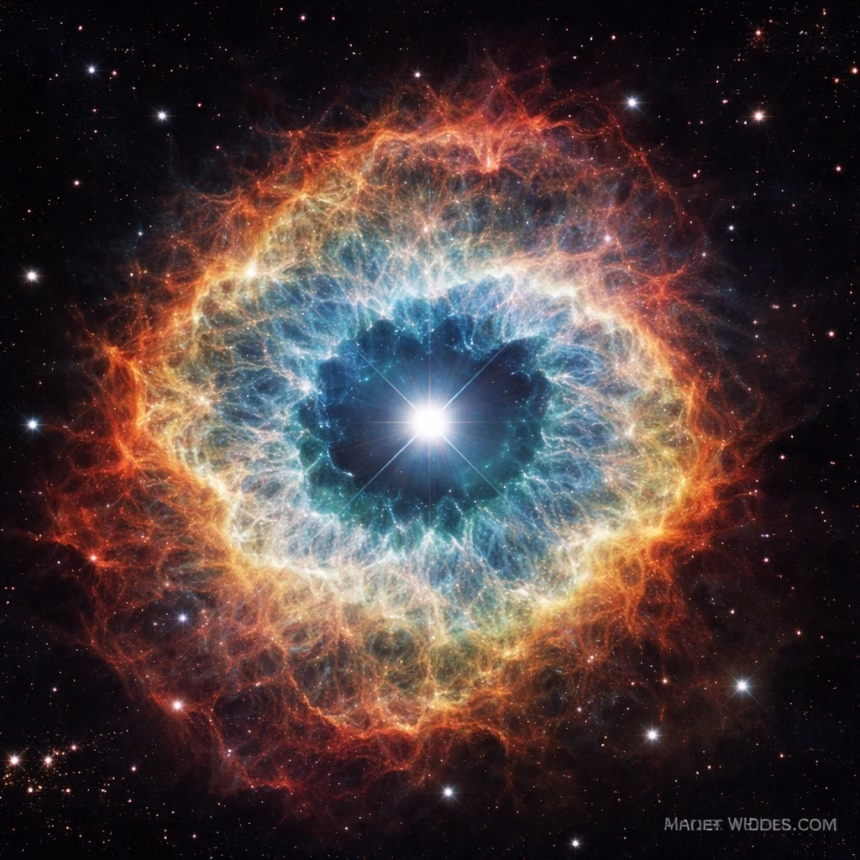
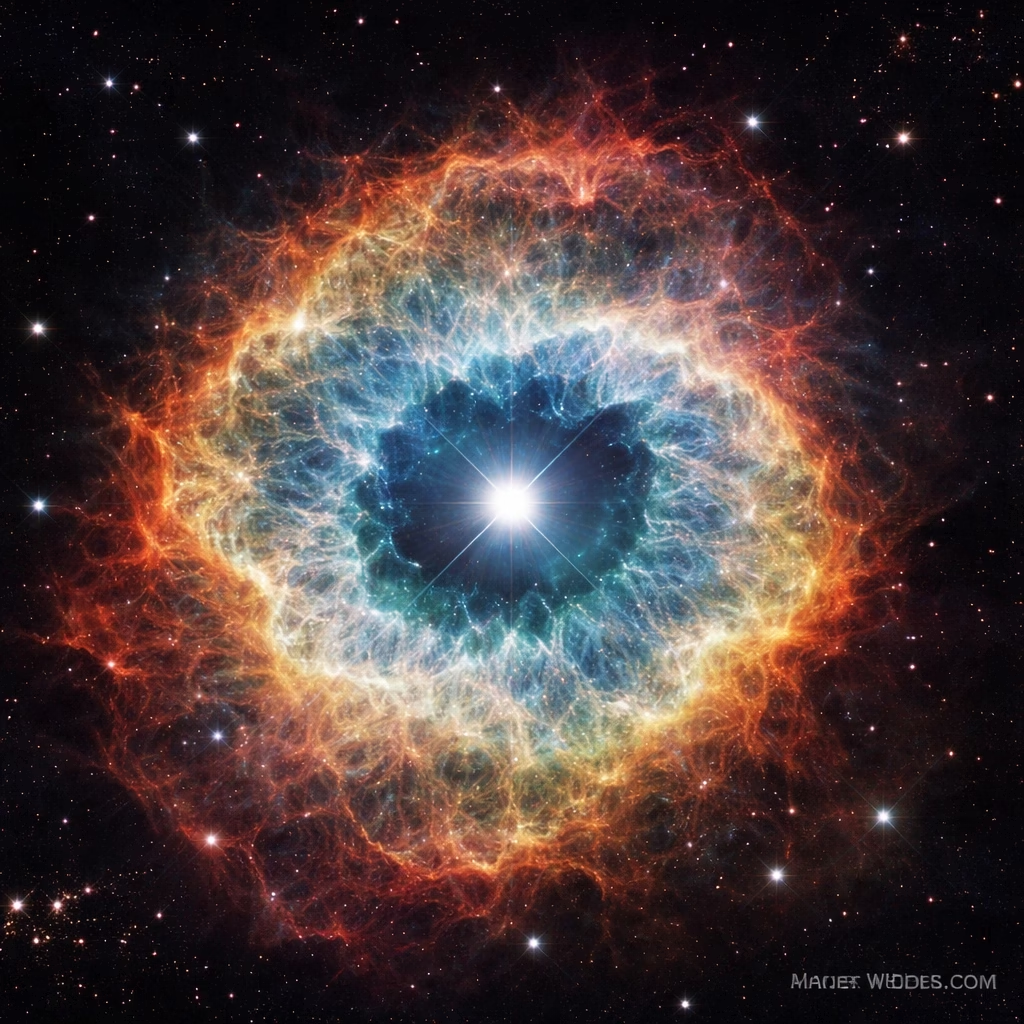
The James Webb Space Telescope (JWST) has captured an unprecedentedly detailed image of a planetary nebula, a celestial object marking the final stages of a star's life. This stunning view, released on July 25, 2023, offers astronomers a rare glimpse into the intricate processes of stellar death and the creation of new elements.
Background: Understanding Planetary Nebulae
Planetary nebulae aren't actually planets; the name originated from their resemblance to them through early telescope images. They form when a low-to-medium mass star, similar in size to our Sun, reaches the end of its life. Having exhausted its nuclear fuel, the star sheds its outer layers of gas and dust into space. This ejected material is then energized by the exposed core of the star, creating the vibrant, glowing shells we observe as planetary nebulae.
These nebulae can exist for tens of thousands of years, gradually dispersing the stellar remnants into the interstellar medium. They are crucial for enriching the universe with heavier elements, as the star's core synthesizes elements like carbon, oxygen, and nitrogen during its life.

Key Developments: Webb’s Unparalleled Vision
While planetary nebulae have been observed for centuries, previous images lacked the clarity and detail revealed by the JWST. The telescope's infrared capabilities allow it to penetrate dust clouds that obscure visible light, providing a clearer view of the nebula's structure and composition. The specific nebula recently imaged is designated NGC 3190, located approximately 10,000 light-years away in the constellation Puppis.
The JWST's Near-Infrared Camera (NIRCam) and Mid-Infrared Instrument (MIRI) were instrumental in capturing this image. These instruments detected faint infrared light emitted by ionized gas within the nebula, revealing intricate filaments, knots, and complex structures previously hidden from view. The level of detail observed is unprecedented, allowing astronomers to study the nebula's formation and evolution with greater precision.
Impact: Advancing Stellar Evolution Research
This discovery significantly impacts our understanding of stellar evolution. The high-resolution image allows scientists to analyze the chemical composition of the ejected material, providing insights into the star's life cycle and the processes that occur during its final stages. By studying the nebula's structure, researchers can refine models of stellar winds and the dynamics of gas ejection.

Furthermore, the detailed observations can help determine the mass and age of the central star, which is a white dwarf – the remnant core of the original star. Such information aids in understanding the distribution of stars and elements within galaxies.
What Next: Future Observations and Discoveries
Astronomers plan to continue observing NGC 3190 and other planetary nebulae with the JWST to gain a more complete understanding of these fascinating objects. Future observations will focus on analyzing the distribution of different elements within the nebula and mapping the magnetic fields that may be influencing its structure.
Detailed Chemical Analysis
Scientists will use JWST’s spectroscopic capabilities to identify the specific elements present in the nebula. This will provide valuable data on the nuclear processes that occurred in the star’s core before its death and the mechanisms responsible for the nebula’s formation.
Mapping Magnetic Fields
The presence of magnetic fields can significantly influence the shape and evolution of a planetary nebula. JWST’s observations may reveal the strength and orientation of these fields, providing insights into their role in shaping the nebula’s structure.
The JWST's ongoing observations promise to unlock more secrets of planetary nebulae, contributing to a deeper understanding of the life and death of stars and the evolution of galaxies.