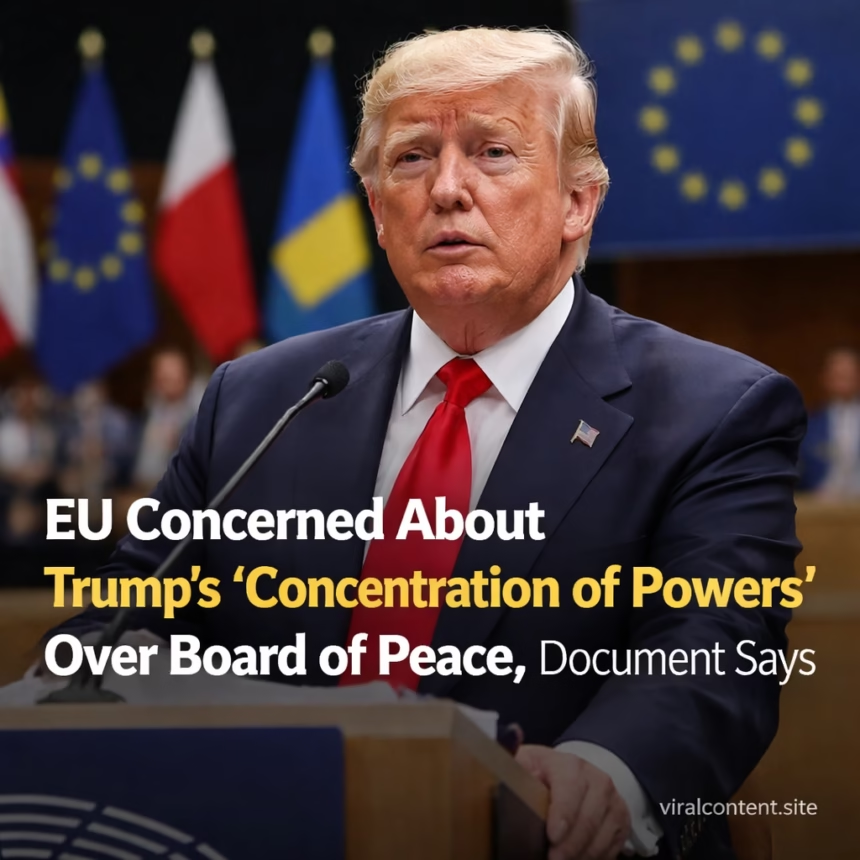
European Allies Sound Alarm Over Potential US Power Grab in Global Peace Efforts
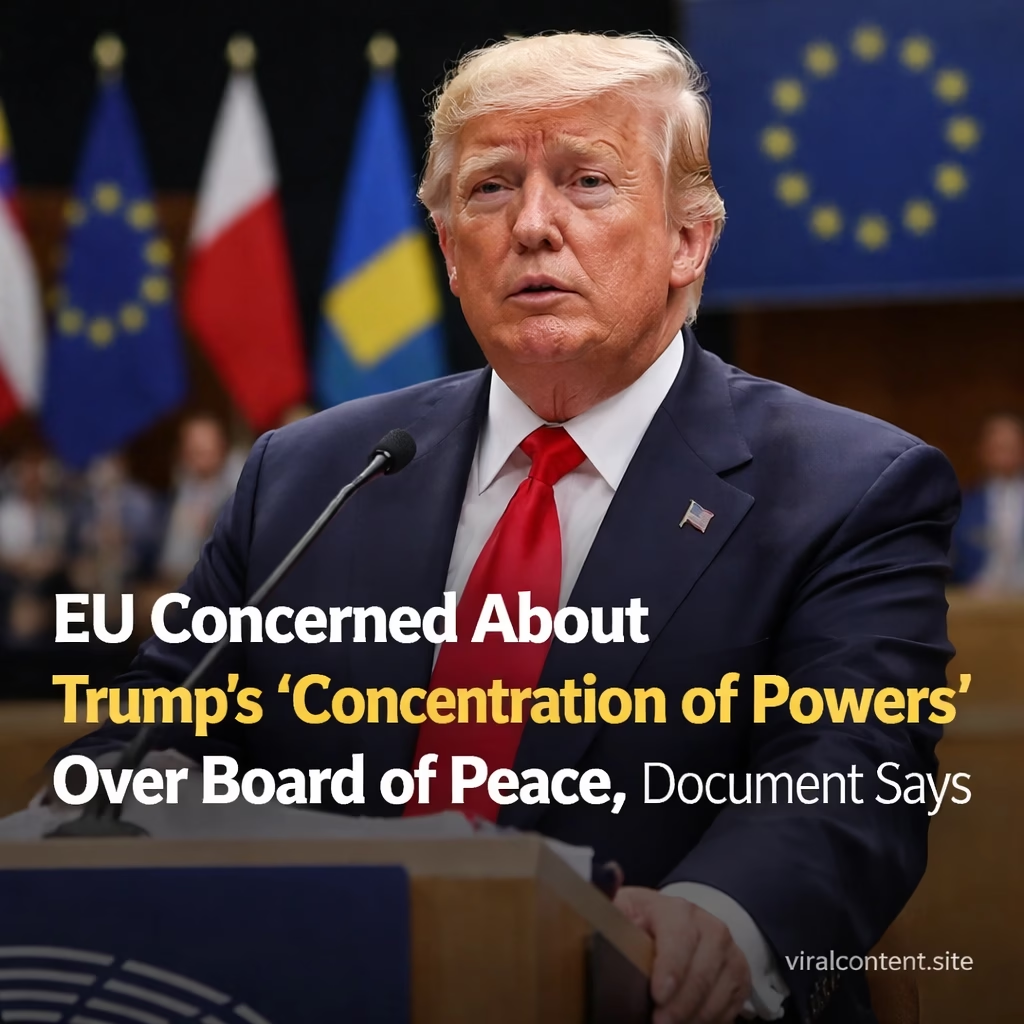
Brussels, Belgium – A recently leaked document suggests the European Union is increasingly concerned about a potential consolidation of power by U.S. President Donald Trump over the United Nations' Board of Peace, a crucial body for international conflict resolution. The document, reportedly an internal EU assessment, details anxieties regarding the direction of U.S. foreign policy and its implications for global stability.
Background: A Shifting Global Landscape
The Board of Peace, established in 1945 following World War II, is responsible for mediating international disputes and recommending measures to maintain peace and security. It operates under the auspices of the United Nations and comprises representatives from member states. Over the past several years, the U.S. has held considerable influence within the Board, leveraging its economic and military power to shape its agenda.
However, since President Trump assumed office in January 2017, a noticeable shift in approach to international organizations has been observed. The Trump administration has repeatedly criticized the UN and other international bodies, often questioning their effectiveness and advocating for a more unilateral approach to foreign policy. This rhetoric has fueled concerns among European allies about a potential weakening of multilateral institutions.
Key Developments: Concerns Over Appointments and Influence
The leaked EU document specifically highlights concerns surrounding the selection of key personnel within the Board of Peace. The document notes a perceived pattern of the U.S. pushing for individuals with close ties to the administration to be appointed to influential positions, potentially undermining the Board’s impartiality. Specifically, the EU has expressed reservations about the appointment process for the Board's Secretary-General, a role considered vital for maintaining operational independence.
More Read

Furthermore, the document points to growing worries about the U.S. potentially using its influence to prioritize certain geopolitical interests within the Board’s agenda. This includes concerns that the Board’s focus might shift away from broader conflict resolution efforts and towards issues aligned with U.S. foreign policy objectives, such as trade disputes and counter-terrorism operations.
Impact: Allies and Global Stability at Risk?
The potential concentration of power within the Board of Peace raises serious concerns for the EU and its allies. Many European nations value multilateralism and believe in the importance of collective action to address global challenges. A perceived U.S. dominance could erode the credibility of the Board and undermine the effectiveness of international diplomacy.
The implications extend beyond diplomatic arenas. A weakened Board of Peace could make it more difficult to address escalating conflicts in regions like the Middle East, Africa, and Eastern Europe. It could also jeopardize efforts to prevent and resolve humanitarian crises, requiring greater burden-sharing from European nations.
More Read

What Next: Monitoring and Potential Countermeasures
The EU is currently analyzing the leaked document and assessing the extent of the U.S. influence within the Board of Peace. Several potential countermeasures are being considered, including strengthening cooperation among European nations to ensure a more balanced representation on the Board and promoting alternative mechanisms for conflict resolution.
Strengthening European Coordination
European countries are exploring avenues for increased coordination on foreign policy and security issues. This includes enhancing diplomatic efforts and working together to develop a more unified approach to international challenges. Discussions are ongoing regarding the potential for establishing a dedicated European mechanism for conflict prevention and mediation.
Promoting Multilateralism
The EU is actively promoting multilateralism and reaffirming its commitment to the UN and other international organizations. This involves advocating for reforms to these institutions to ensure they are more representative and effective. European leaders have also emphasized the importance of upholding international law and respecting the principles of sovereign equality.
The situation remains fluid, and the long-term impact of these developments remains uncertain. However, the EU's concerns underscore the growing tensions between the U.S. and its European allies regarding the future of international cooperation and the role of multilateral institutions in a rapidly changing world.