Infosys CEO Salil Parekh's Pay Packet Soars
Tech Titan's Pay Packet Soars: Decoding Infosys CEO's Rs 82.6 Crore Compensation Jump
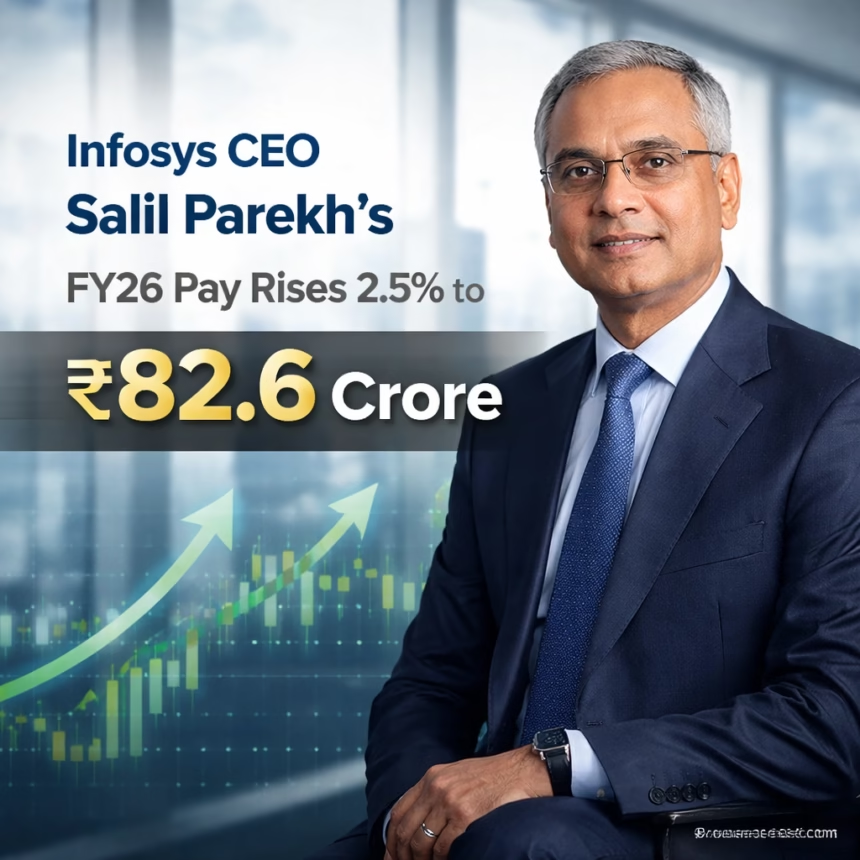
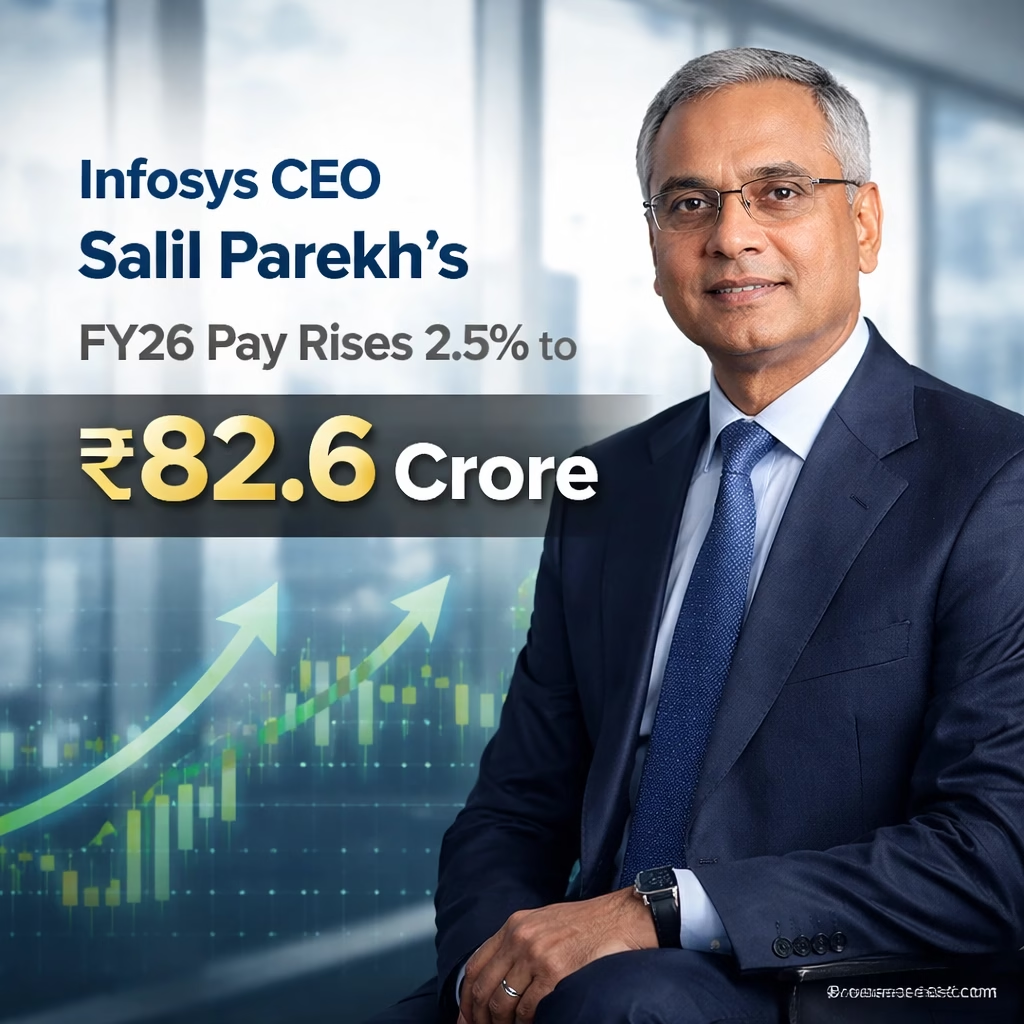
Infosys CEO Salil Parekh is set to receive a revised compensation package for the fiscal year 2026, potentially reaching an impressive Rs 82.6 crore. This significant remuneration, primarily driven by performance-linked stock incentives, marks a 2.5% increase in his fixed salary component, following recent approvals from the company's board and shareholders.
The development highlights a growing trend of linking executive compensation to company performance and shareholder value creation within India's burgeoning technology sector, placing Parekh among the highest-paid CEOs in the country.
Background: A Decade of Leadership and Strategic Growth
Salil Parekh took the helm of Infosys, India's second-largest IT services company, in January 2018, succeeding interim CEO U.B. Pravin Rao. His appointment came at a critical juncture for the Bengaluru-based firm, which was grappling with leadership transitions and strategic challenges.
Prior to joining Infosys, Parekh held a distinguished career spanning over two decades at Capgemini, where he served on the Group Executive Board and was instrumental in various acquisitions and strategic initiatives. His extensive experience in global technology services was seen as a key asset for Infosys's ambitious growth trajectory.
Initial Appointment and Compensation Structure
Upon his initial appointment, Parekh’s annual compensation was structured with a significant variable component. His initial five-year term, which concluded in March 2023, saw him earning a total compensation that steadily climbed, reflecting the company’s improving performance under his leadership.
More Read

For fiscal year 2022, Parekh’s total compensation stood at Rs 71.02 crore, a substantial increase from previous years. This package included fixed salary, variable pay, and a significant portion of stock options, underscoring the company’s philosophy of aligning executive incentives with long-term shareholder interests.
Performance Under Parekh’s Stewardship
Under Salil Parekh’s leadership, Infosys has embarked on a journey of digital transformation, focusing on cloud, artificial intelligence, and automation. The company has consistently reported robust financial results, expanded its global footprint, and secured large deals with major international clients.
Infosys’s market capitalization has seen substantial growth during his tenure, reinforcing investor confidence. The company navigated the challenges posed by the COVID-19 pandemic effectively, demonstrating resilience and adaptability in a rapidly evolving global business landscape.
More Read

The board’s decision to extend Parekh’s tenure for another five years, until March 2027, in May 2022, was a testament to his successful leadership and strategic vision. This extension also came with a revised compensation package, further solidifying his position as a pivotal figure in the company’s future.
Key Developments: The Anatomy of the Rs 82.6 Crore Payout
The recent announcement regarding Salil Parekh's FY26 compensation package stems from a comprehensive review and approval process by the Infosys Nomination and Remuneration Committee (NRC) and subsequently by the shareholders.
The total remuneration of Rs 82.6 crore for FY26 represents a projected maximum payout, heavily contingent on the company's performance against predefined targets and the appreciation of its stock.
Breakdown of the Compensation Package
The revised package includes several components, designed to balance fixed remuneration with performance-based incentives:
- Fixed Salary: Parekh’s fixed salary component is set to see a 2.5% increase, reflecting a modest adjustment to his base pay. This forms a smaller, but stable, part of his overall compensation.
- Restricted Stock Units (RSUs): A significant portion of the compensation comes in the form of RSUs, which vest over a period, typically three to four years. These units are granted at the current stock price and provide a direct incentive for the CEO to enhance shareholder value.
- Performance Stock Units (PSUs): The largest component, PSUs, are tied directly to the achievement of specific, ambitious performance metrics set by the board. These metrics often include revenue growth, profitability targets, and total shareholder return (TSR) relative to industry peers. The actual number of PSUs that vest depends entirely on how well Infosys performs against these benchmarks.
- Other Benefits: This typically includes perquisites such as company-provided housing, travel allowances, and other standard executive benefits, though these constitute a minor fraction of the total package.
The 2.5% increase specifically refers to the fixed component of his salary, while the overall projected Rs 82.6 crore payout is a maximum potential value, heavily reliant on the vesting of stock options based on company performance.
Shareholder Approval and Governance
The proposed compensation structure underwent scrutiny and received approval from Infosys shareholders during the company’s annual general meeting. Such approvals are a crucial aspect of corporate governance, ensuring transparency and accountability in executive remuneration.
The shareholder vote typically evaluates the rationale behind the compensation, its alignment with market practices, and its potential impact on the company’s long-term strategy and financial health. The overwhelming support for Parekh’s package underscores investor confidence in his continued leadership.
More Read

Impact: Ripples Across the Ecosystem
The announcement of Salil Parekh's substantial compensation package sends ripples across various stakeholders, from Infosys employees to the broader Indian IT industry and the investment community.
For Infosys Employees
Executive compensation often sparks debate, especially concerning pay disparity within large organizations. While Parekh’s package reflects his strategic leadership and the company’s market performance, it inevitably draws comparisons with the average employee’s salary and annual increments.
Infosys, like other IT majors, typically implements annual salary hikes for its vast workforce, which can range from single-digit percentages to slightly higher for top performers. The stark difference between the CEO’s potential earnings and the average employee’s salary often fuels discussions about equitable distribution of wealth generated by the company.
However, a well-compensated CEO is also seen as a sign of a company’s financial health and ambition, which can positively influence employee morale and retention, provided the overall compensation strategy for all levels is perceived as fair and competitive.
For Shareholders and Investors
For shareholders, the compensation package is largely viewed through the lens of return on investment (ROI). If Parekh’s leadership continues to drive strong financial performance, increased stock value, and healthy dividends, then the compensation is justified as an incentive for value creation.
The performance-linked nature of the bulk of his pay package aligns the CEO’s personal financial success directly with the company’s and, by extension, the shareholders’ success. This structure is generally favored by institutional investors who prioritize long-term growth and accountability.
For the Indian IT Industry
Salil Parekh’s compensation sets a benchmark within the Indian IT services industry. As one of the sector’s most prominent leaders, his remuneration package influences how other companies structure their executive pay, particularly for CEOs leading multi-billion dollar enterprises.
It reflects the increasing global competitiveness of Indian IT firms and the premium placed on experienced leadership capable of navigating complex technological shifts and geopolitical uncertainties. This trend also signifies the maturing governance standards in Indian corporations, moving towards global best practices in executive compensation disclosures.
What Next: Navigating Future Horizons
As Salil Parekh steers Infosys into the future, the focus remains on sustaining growth, innovating in emerging technologies, and navigating a dynamic global economic environment.
Strategic Imperatives
Under Parekh’s continued leadership, Infosys is expected to double down on its strategic priorities: accelerating digital transformation for clients, expanding into new geographies, and investing in next-generation technologies like generative AI, cybersecurity, and advanced analytics. These initiatives are critical for maintaining competitive edge and driving future revenue growth.
The company’s performance against these strategic imperatives will directly influence the vesting of Parekh’s performance-linked stock units, making his personal financial success intrinsically tied to the company’s operational and strategic achievements.
Future Performance Targets and Reviews
The board’s Nomination and Remuneration Committee will continue to review Infosys’s performance against the ambitious targets set for the CEO. These targets are typically reviewed annually, with adjustments made as necessary to reflect market conditions and strategic shifts.
Future compensation packages will likely continue to emphasize performance-based incentives, ensuring that the CEO’s remuneration remains aligned with the creation of long-term shareholder value. Transparency in these reviews and disclosures will be crucial for maintaining investor confidence.
Industry Trends and Executive Talent
The trend of high-value, performance-linked executive compensation is likely to continue in the Indian IT sector, driven by the intense competition for top global talent. Companies are increasingly willing to offer competitive packages to attract and retain leaders who can deliver exceptional results in a highly competitive global market.
This also reflects the growing stature of Indian IT firms on the global stage, where their CEOs are increasingly compared to their counterparts in Silicon Valley and other major tech hubs. The focus will remain on leadership that can navigate disruption, foster innovation, and deliver consistent growth in a challenging macroeconomic climate.