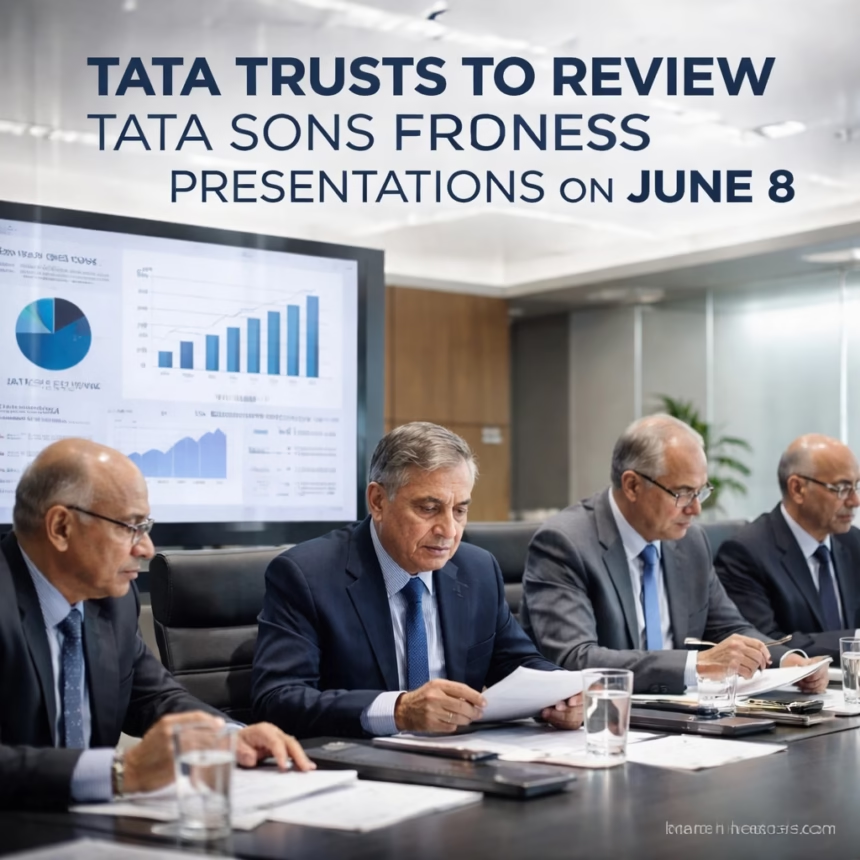
Mumbai, India – On June 8, Tata Trusts, the philanthropic entities holding the majority stake in the Tata Group, are poised to conduct a pivotal review of Tata Sons' business presentations. This significant meeting will see the Trusts scrutinizing the strategic direction and performance of the conglomerate's various ventures, marking a crucial moment for the future trajectory of one of India's largest and most influential business empires. The review underscores the Trusts' active role in guiding the Group's overarching vision and ensuring alignment with its founding principles.
Background: A Legacy of Trust and Transformation
The Tata Group, established in 1868, operates across more than 100 countries, with its companies employing over 935,000 people globally. At its core lies Tata Sons, the principal investment holding company and promoter of Tata companies. What makes the Tata structure unique is that approximately 66% of Tata Sons' equity share capital is held by philanthropic trusts, primarily the Sir Dorabji Tata Trust and the Sir Ratan Tata Trust. This structure means the wealth generated by the Group largely flows back into charitable initiatives, embodying a "profits for philanthropy" model.
The relationship between Tata Trusts and Tata Sons has seen periods of intense scrutiny and strategic realignment. A notable period was the boardroom tussle in 2016, which led to the ouster of then-chairman Cyrus Mistry and the subsequent re-appointment of Ratan Tata as interim chairman, followed by N. Chandrasekaran in 2017. This episode highlighted the Trusts' ultimate authority and their commitment to upholding the Group's ethos and long-term sustainability. The Supreme Court's verdict in 2021 further solidified the Trusts' position and the Group's governance structure, affirming the removal of Mistry.
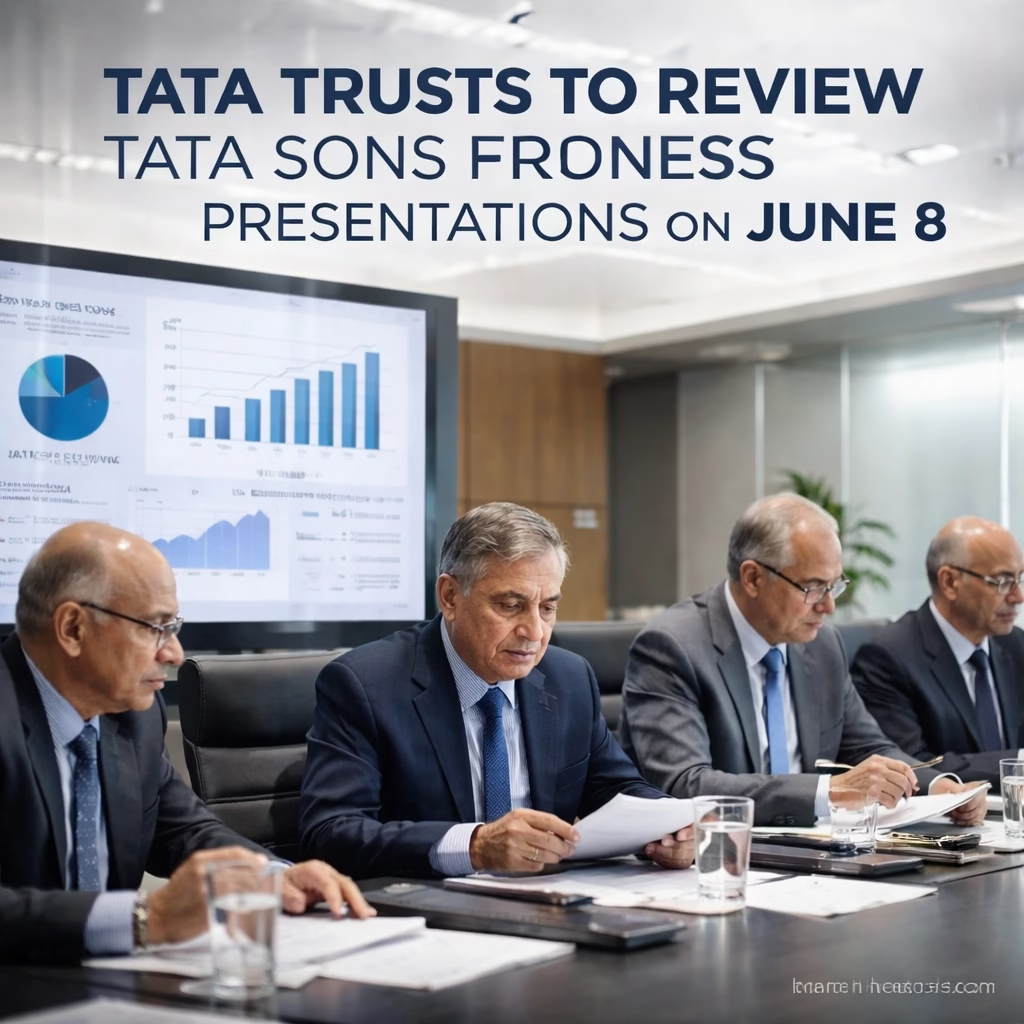
Under N. Chandrasekaran's leadership, Tata Sons has embarked on an ambitious transformation journey. This has involved a focus on simplifying the complex portfolio, deleveraging balance sheets, driving digital initiatives, and aggressively pursuing growth in future-oriented sectors. The June 8 review is a testament to the Trusts' ongoing engagement, ensuring that the Group's commercial pursuits remain intertwined with its ethical and philanthropic mandate.
More Read

Key Developments: Navigating a New Era
The past few years have been marked by a flurry of strategic moves and significant investments across the Tata Group. N. Chandrasekaran, as Chairman of Tata Sons, has championed a "One Tata" vision, aiming for greater synergy and efficiency across the diverse conglomerate.
Digital Push and SuperApp Ambitions
One of the most prominent initiatives has been the aggressive push into the digital ecosystem. The launch of Tata Neu, the Group's much-anticipated super app, aimed to consolidate various consumer-facing services – from groceries and flights to hotels and electronics – under a single digital umbrella. This move is critical for the Group to compete effectively in India's rapidly evolving digital economy, leveraging the vast customer base of its diverse brands like BigBasket, Croma, Air India, and Indian Hotels.
Portfolio Restructuring and Strategic Acquisitions
The Group has also undertaken significant portfolio restructuring. The landmark acquisition of Air India in 2022 marked a historic homecoming for the airline, originally founded by J.R.D. Tata. This acquisition signals a renewed focus on strengthening its presence in the aviation sector. Concurrently, there has been a concerted effort to streamline non-core assets and focus investments on high-growth areas.
More Read

Focus on New Age Technologies and Sustainability
Tata Sons has been actively exploring and investing in emerging technologies. This includes a strong emphasis on electric vehicles (EVs), with Tata Motors leading the charge in India's EV market. There are also reported ambitions in semiconductor manufacturing, a critical sector for national self-reliance. Furthermore, sustainability remains a core pillar, with various Tata companies setting ambitious targets for carbon neutrality and circular economy practices, aligning with global environmental, social, and governance (ESG) standards.
Financial Performance and Debt Reduction
Efforts to improve financial health have been paramount. Many Tata companies have focused on deleveraging their balance sheets and enhancing profitability. This financial discipline is crucial for funding future growth initiatives and ensuring the long-term stability of the Group. The Trusts will likely review the efficacy of these financial strategies and their contribution to overall shareholder value.
Impact: Far-Reaching Implications for Stakeholders
The outcome of the June 8 review holds significant implications for a wide array of stakeholders, given the Tata Group's pervasive influence across the Indian economy and beyond.
Tata Sons Leadership and Strategic Autonomy
For N. Chandrasekaran and his leadership team, the review is an opportunity to present a compelling vision and demonstrate tangible progress. An endorsement from the Trusts would strengthen their mandate and provide strategic clarity for future initiatives. Conversely, any significant concerns raised could lead to adjustments in strategy or even leadership, although such an outcome is generally considered unlikely given the current positive momentum.
Operating Companies and Their Future
Individual Tata operating companies, ranging from IT giant Tata Consultancy Services (TCS) to steel major Tata Steel, automotive leader Tata Motors, and consumer brand Titan, will be directly affected. The review could influence resource allocation, investment priorities, and the pace of transformation across these diverse entities. Decisions on mergers, acquisitions, divestments, or entry into new markets could be shaped by the Trusts' feedback.
Shareholders and Investors
Public shareholders of listed Tata companies will keenly watch for any signals emerging from the review. Clarity on the Group's strategic direction, financial health, and governance standards can significantly impact investor confidence and stock valuations. The Trusts, as the ultimate beneficiaries, also have a vested interest in the sustainable growth and profitability of the Group to fund their extensive philanthropic activities.
More Read

Employees Across the Globe
With nearly a million employees worldwide, the Group's strategic shifts directly affect their careers, job security, and growth opportunities. A clear and stable strategic direction fosters employee morale and provides a sense of purpose, especially during periods of significant transformation.
The Indian Economy and Global Standing
The Tata Group is a bellwether for the Indian economy, contributing significantly to GDP, employment, and exports. Its strategic decisions, particularly in infrastructure, manufacturing, and technology, have national implications. The Trusts' review thus indirectly influences India's industrial landscape and its global competitiveness. Large-scale investments or strategic alliances approved by the Trusts could spur economic growth and innovation.
What Next: Anticipated Milestones and Future Trajectories
The June 8 review is not an endpoint but rather a critical juncture in the ongoing evolution of the Tata Group. The immediate outcome will likely be a period of internal deliberation and potential feedback to Tata Sons' management.
Feedback and Strategic Refinements
Following the presentations, the Trusts are expected to provide their insights, recommendations, and potentially, directives to Tata Sons. This feedback will be crucial in refining existing strategies, addressing any perceived gaps, and ensuring the Group's activities align with its long-term vision and ethical framework. While specific details of these discussions are rarely made public, their impact is felt through subsequent corporate announcements and strategic shifts.
Future Board Meetings and Approvals
The insights gathered from the Trusts' review will likely inform upcoming board meetings of Tata Sons and potentially individual operating companies. Key strategic decisions, such as major capital expenditures, significant acquisitions, or new business ventures, often require multiple layers of approval, with the Trusts' perspective holding considerable weight.
Announcements and Market Signals
In the months following the review, the market will look for signals regarding new investments, strategic partnerships, or divestitures. Any major announcements related to the Group's digital ambitions, sustainability targets, or expansion into new geographies could be indirectly linked to the discussions held on June 8.
Strengthening Governance and Philanthropic Mandate
Ultimately, the ongoing engagement between Tata Trusts and Tata Sons aims to strengthen the Group's governance framework and ensure its enduring commitment to its philanthropic mandate. This continuous oversight is vital for a conglomerate of Tata's scale and unique ownership structure, ensuring that commercial success remains a means to a greater societal good. The June 8 review thus stands as a testament to the meticulous planning and thoughtful stewardship that defines the Tata legacy, shaping not just a business empire, but also its profound impact on society.