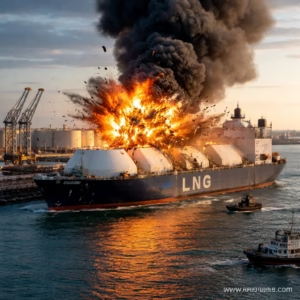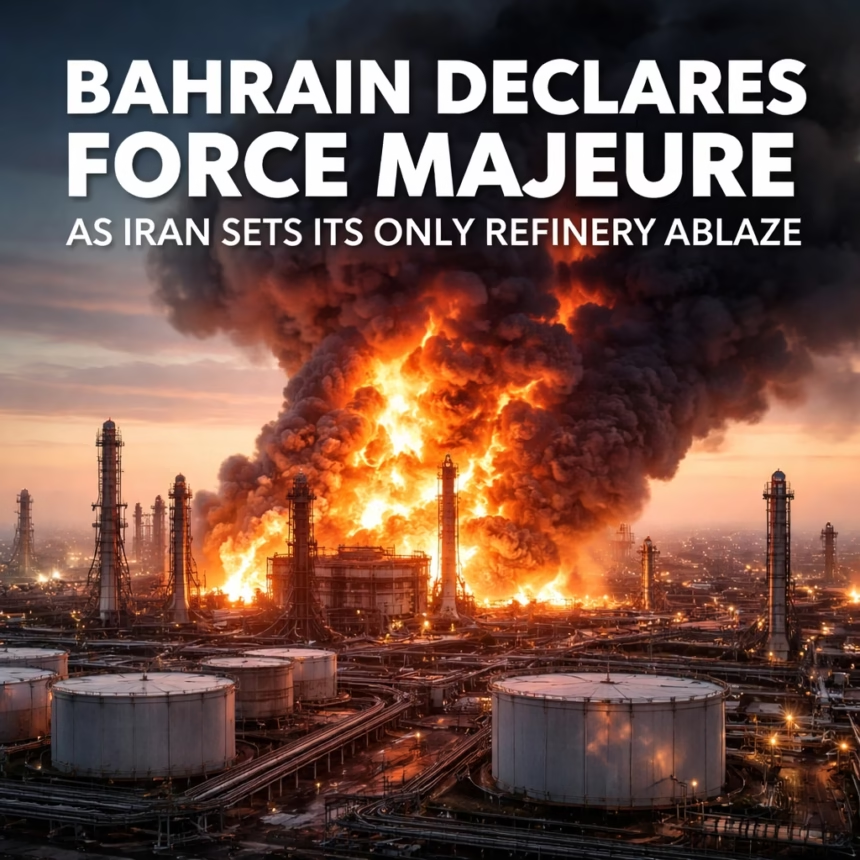
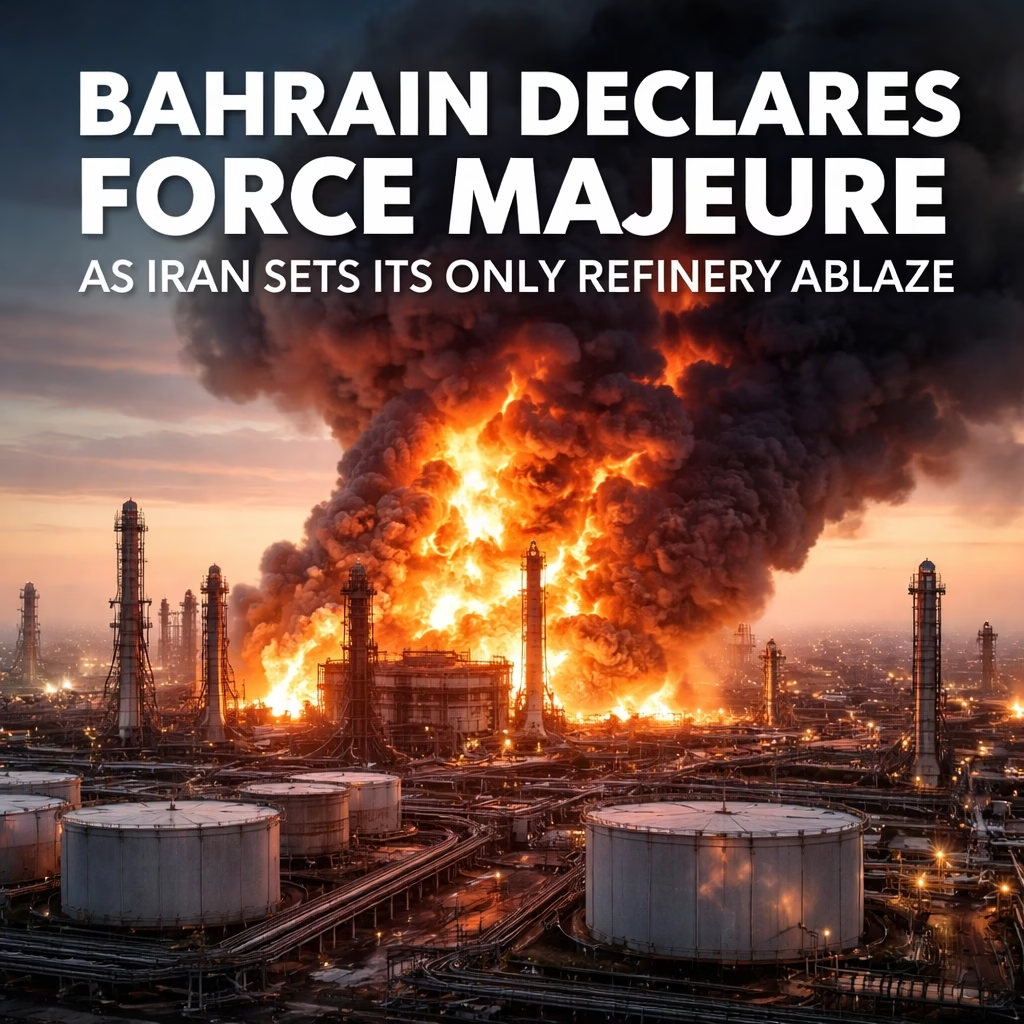
In a dramatic turn of events, the Kingdom of Bahrain officially declared force majeure on its energy contracts this past Sunday, October 27, 2024, following a catastrophic fire that engulfed Iran's Abadan Refinery, a critical facility for the region's refined product supply. The blaze, which erupted late Saturday night, October 26, has sent immediate ripples through the Middle East's already volatile energy markets and highlighted the fragility of regional energy security.
Background: A Region on Edge
The Abadan Refinery, located in southwestern Iran, is one of the world's oldest and largest oil refineries, boasting a processing capacity of over 400,000 barrels per day (bpd). For decades, it has served as a cornerstone of Iran's domestic fuel supply and a significant, albeit often sanctions-constrained, contributor to regional refined product trade. Its strategic importance extends beyond mere capacity, representing a vital artery for Iran's economy and its ability to meet internal energy demands.
The relationship between Bahrain and Iran has historically been fraught with tension, often characterized by geopolitical rivalry and accusations of interference. While direct energy trade between the two nations is limited due to political strains and international sanctions on Iran, the regional energy ecosystem is interconnected. Disruptions to major Iranian facilities can cascade through the Gulf, impacting supply chains, pricing, and the overall stability of energy markets on which Bahrain, a smaller oil producer and significant refiner itself, relies for balance. Previous incidents, such as attacks on Saudi Aramco facilities in 2019, have underscored the vulnerability of critical energy infrastructure in the region, leading to heightened alert levels across the Gulf.
Key Developments: Flames and Formal Declarations
The inferno at the Abadan Refinery began around 11: 30 PM local time on Saturday, October 26, with initial reports indicating a malfunction in a crude distillation unit. Eyewitness accounts described massive flames and plumes of black smoke visible from miles away. Emergency services from across Khuzestan province were deployed, battling the blaze for over 18 hours before it was brought under control. Tragically, the incident resulted in at least three fatalities among refinery workers and dozens injured, according to statements from the National Iranian Oil Company (NIOC). Preliminary assessments suggest extensive damage to critical processing units, potentially rendering a significant portion of the refinery inoperable for an extended period. NIOC has launched a full investigation into the cause, not ruling out either accident or external factors at this early stage.

In response to this unprecedented disruption, Bahrain's National Oil and Gas Authority (NOGA) and its flagship energy company, Bapco Energies, formally declared force majeure on all relevant refined product contracts, effective Sunday, October 27. The declaration cites the unforeseen and unavoidable circumstances arising from the Abadan Refinery incident, which has severely impacted the availability and flow of certain refined petroleum products crucial to Bahrain's domestic consumption and industrial operations. Specific contracts for naphtha, fuel oil, and certain petrochemical feedstocks are immediately affected. The declaration allows Bahraini entities to temporarily suspend or alter contractual obligations without penalty, acknowledging that the ability to fulfill these commitments has been compromised by an event beyond their control. This move underscores the severity of the supply shock and Bahrain's immediate need to secure alternative sources.
Impact: A Ripple Effect Across the Gulf
The declaration of force majeure by Bahrain and the extensive damage to Abadan Refinery are set to create significant economic and geopolitical repercussions.
Economic Impact
For Iran: The immediate economic impact on Iran is severe. The Abadan Refinery's reduced output will directly affect domestic fuel supply, potentially leading to shortages of gasoline, diesel, and other vital products. This could necessitate costly imports at a time when Iran's economy is already heavily strained by international sanctions. Reconstruction efforts will require substantial investment and time, further burdening the national budget.
* For Bahrain: Bahrain faces immediate challenges in securing alternative supplies for the refined products previously sourced directly or indirectly from the regional market, which now experiences a major shortfall. This could lead to increased import costs, potential price hikes for consumers, and disruptions to industries reliant on these products, including manufacturing and transportation. Bapco Energies will need to rapidly reconfigure its supply chain and potentially draw on strategic reserves.
* Regional Markets: The incident has already triggered volatility in regional refined product markets. Prices for naphtha and fuel oil have seen an uptick, and shipping costs in the Gulf could rise due to increased demand for alternative logistics. While the global crude oil market may see a limited direct impact due to Iran's already restricted export capacity, the refined product market, particularly in the Middle East, is experiencing a significant supply shock.
More Read

Geopolitical Impact
The timing and nature of the fire, particularly if sabotage is later confirmed, could significantly escalate regional tensions. The Middle East remains a geopolitical tinderbox, and any perceived attack on critical infrastructure could provoke retaliatory actions. This incident adds another layer of complexity to ongoing diplomatic efforts, including those related to the Iran nuclear deal, as regional stability is further jeopardized. International bodies and neighboring Gulf Cooperation Council (GCC) states are closely monitoring the situation, with calls for transparency and de-escalation already emerging from various capitals.
What Next: Navigating Uncertainty
The coming weeks and months will be critical in understanding the full ramifications of the Abadan Refinery fire and Bahrain's force majeure declaration.
Investigation and Reconstruction
Iran's investigation into the cause of the fire will be paramount. A swift and transparent inquiry is crucial to avoid speculation and potential escalation. Depending on the findings, international pressure for accountability or assistance may follow. Reconstruction efforts at the Abadan Refinery are expected to be complex and lengthy, potentially taking many months, if not years, to fully restore operations. NIOC has indicated it will prioritize repairs to critical units to resume partial operations as soon as possible, but a complete recovery timetable remains uncertain.
Bahrain’s Mitigation Strategies
Bahrain's NOGA and Bapco Energies are actively pursuing alternative supply channels for the affected refined products. This includes engaging with other regional suppliers, potentially from Saudi Arabia, Kuwait, or the UAE, and exploring options for sourcing from further afield. The Kingdom may also consider temporary rationing measures or adjustments to industrial consumption patterns to manage demand during this period of uncertainty. Re-negotiating existing contracts and establishing new supply agreements will be a top priority.
Regional Stability and Market Outlook
The incident underscores the urgent need for enhanced regional energy security cooperation. The Gulf states, often at odds politically, share a common interest in stable energy infrastructure. The market will continue to monitor the situation closely, with analysts predicting sustained volatility in refined product prices across the Middle East. The long-term implications for regional energy planning and the resilience of critical infrastructure against both accidental and deliberate disruptions will undoubtedly be a key focus for governments and industry stakeholders in the foreseeable future. The coming period will test the adaptability and resilience of the region's energy sector and its ability to navigate unexpected crises.