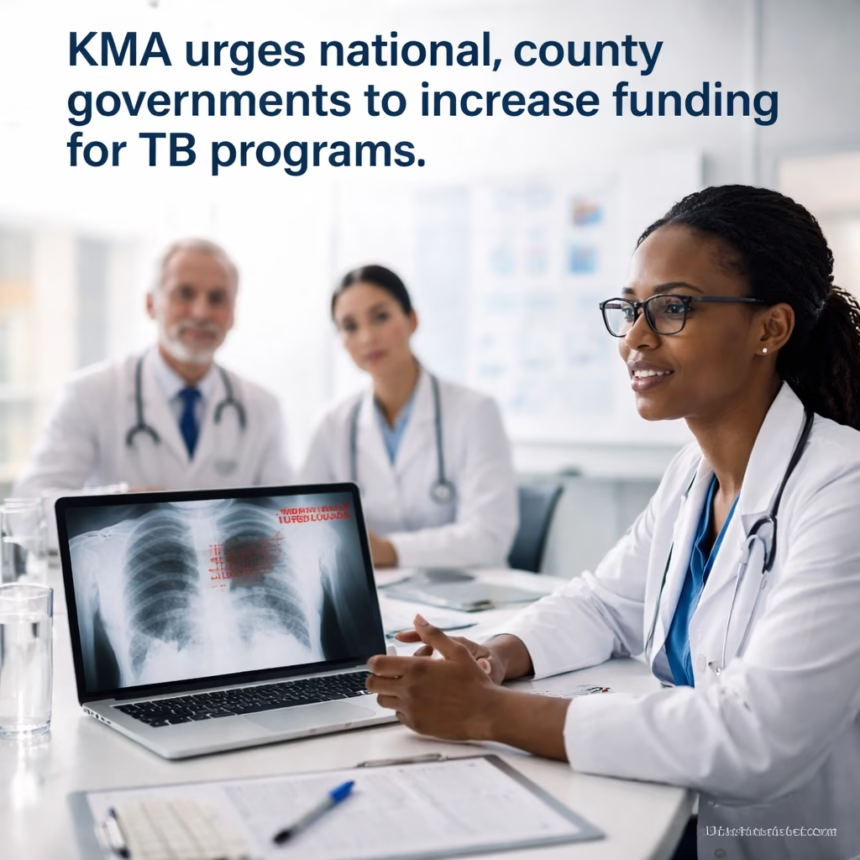
The Kenya Medical Association (KMA) has issued a stark warning to both national and county governments, urging an immediate and substantial increase in funding for tuberculosis (TB) programs across the nation. This urgent appeal comes amidst growing concerns that current financial allocations are insufficient to combat the persistent public health threat, potentially reversing years of progress in TB control efforts.
Background: A Persistent Threat and Shifting Responsibilities
Tuberculosis remains a formidable public health challenge in Kenya, consistently ranking among the leading causes of morbidity and mortality. The World Health Organization (WHO) categorizes Kenya as one of the 30 high TB burden countries globally, underscoring the severity and widespread nature of the disease within its borders.
Kenya’s Enduring TB Burden
Each year, tens of thousands of Kenyans are diagnosed with TB, with a significant number succumbing to the disease despite it being preventable and curable. Vulnerable populations, including those living in informal settlements, individuals with compromised immune systems (particularly people living with HIV), and children, bear a disproportionate share of the burden. The economic impact is also substantial, leading to lost productivity and increased healthcare expenditures.
Historical Funding Landscape and Decentralization
For decades, Kenya’s National TB Program (NTP) has relied on a mixed funding model, with significant contributions from international partners such as the Global Fund to Fight AIDS, Tuberculosis and Malaria, and USAID. These external grants have been instrumental in procuring essential drugs, diagnostics, and supporting community outreach initiatives. However, there has been a gradual shift towards greater domestic responsibility, with international partners encouraging increased government ownership and funding.
The devolution of health services to county governments in 2013 introduced a new layer of complexity. While intended to bring services closer to the people, it has also led to inconsistencies in resource allocation and program implementation across the 47 counties. Many counties struggle with adequate budgets and technical capacity to effectively manage their TB programs, leading to disparities in access to care.
More Read

Key Developments: Alarming Shortfalls and Urgent Demands
KMA's recent alarm is not merely a general plea but a response to observable and critical shortfalls in the current operational landscape of TB programs. The association highlights a palpable decline in the availability of crucial resources and a worrying stagnation in program expansion.
The Growing Funding Gap
According to KMA President, Dr. Simon Kigondu, the national and county governments are significantly underfunding TB programs, with current allocations covering less than half of the estimated annual budget required for comprehensive services. Dr. Kigondu, speaking at a recent press briefing in Nairobi on October 26, 2023, emphasized that this deficit directly impacts the procurement of vital first-line and second-line anti-TB drugs, the availability of modern diagnostic tools like GeneXpert cartridges, and the remuneration of community health volunteers who are critical in case finding and treatment adherence.
The economic strain exacerbated by global challenges and the lingering effects of the COVID-19 pandemic have reportedly led to a diversion of funds and a reprioritization that has inadvertently marginalized TB programs. This has resulted in stock-outs of essential medicines in various health facilities and a reduction in active case-finding initiatives, crucial for early diagnosis and preventing transmission.
More Read

KMA’s Specific Demands
The KMA’s recommendations are precise and actionable. They call for:
- A minimum 10% increase in the national health budget specifically earmarked for TB programs.
- County governments to allocate a ring-fenced portion of their health budgets to TB, ensuring timely disbursement and utilization.
- Investment in human resources, including training and adequate remuneration for healthcare workers involved in TB care.
- Prioritization of local manufacturing and procurement of TB drugs and diagnostics to enhance supply chain resilience.
- Strengthening of surveillance systems and research into new diagnostic tools and treatment regimens.
The association further urged for greater transparency and accountability in the utilization of both domestic and international funds allocated to TB, proposing regular audits and public reporting of expenditures.
Impact: Reversing Progress and Escalating Risks
The ramifications of underfunding TB programs extend far beyond mere budgetary figures; they directly translate into human suffering, increased mortality, and a formidable threat to public health stability. Years of dedicated effort and significant investment risk being undone, pushing Kenya back in its fight against this ancient disease.
Patient Outcomes and Drug Resistance
Insufficient funding directly affects patient access to timely diagnosis and uninterrupted treatment. When diagnostic tools are scarce or drugs are unavailable, patients face prolonged suffering, increased risk of transmitting the disease to others, and a higher likelihood of developing drug-resistant forms of TB, such as Multi-Drug Resistant TB (MDR-TB) and Extensively Drug-Resistant TB (XDR-TB). Treating these resistant strains is significantly more complex, costly, and has lower success rates, posing a grave threat to both individual patients and the broader community.
Children, who often present with non-specific symptoms and require specialized diagnostic approaches, are particularly vulnerable. Delays in diagnosis and treatment for pediatric TB can lead to severe, life-long health complications or even death.
More Read

Healthcare System Strain and Community Vulnerability
Healthcare workers, the frontline heroes in this battle, face immense pressure due to inadequate resources. They grapple with stock-outs, outdated equipment, and overwhelming patient loads, leading to burnout and demoralization. This strain on the workforce compromises the quality of care and threatens the retention of skilled personnel in critical areas.
At the community level, reduced funding means fewer outreach programs, less contact tracing, and diminished support for patients undergoing lengthy treatment regimens. This creates fertile ground for sustained transmission, especially in densely populated urban areas and rural settings where access to health facilities is already challenging. The gains made in reducing TB incidence and mortality over the past decade could swiftly erode, leading to a resurgence of the disease.
What Next: Sustaining the Fight Against TB
The KMA's urgent call serves as a critical inflection point, demanding a concerted and immediate response from all levels of government and society. The trajectory of Kenya's TB control efforts hinges on the actions taken in the coming months.
Legislative and Policy Engagement
The KMA has indicated its intention to escalate its advocacy efforts, engaging directly with parliamentary health committees, the Council of Governors, and the Ministry of Health. They plan to present detailed reports outlining the current funding gaps and the projected adverse outcomes, urging for a review of the upcoming national and county budgets to prioritize TB allocations. Civil society organizations and patient advocacy groups are expected to join forces, amplifying the message through public awareness campaigns and targeted lobbying.
There is a strong possibility that this advocacy will lead to parliamentary motions or inquiries, pressing the executive arm of government to address the crisis with tangible policy changes and increased budgetary provisions. The Ministry of Health, under Cabinet Secretary Susan Nakhumicha, will be crucial in championing this cause within the government’s fiscal planning.
Sustaining the Fight Through Collaboration
Beyond immediate funding increases, the KMA emphasizes the need for a sustainable, multi-sectoral approach. This includes strengthening public-private partnerships, enhancing research and development for new TB tools, and fostering greater community engagement. International partners, while shifting towards domestic funding, remain vital in providing technical assistance and supplementary resources, especially for innovative programs or emergency responses.
The ultimate goal is to achieve the WHO’s End TB Strategy targets by 2030, which calls for a 90% reduction in TB deaths and an 80% reduction in TB incidence compared to 2015 levels. Without a significant and sustained financial commitment, KMA warns that these ambitious yet achievable targets will remain elusive, condemning countless Kenyans to preventable illness and death. The responsibility now lies with policymakers to translate concern into concrete action, securing the health future of the nation.