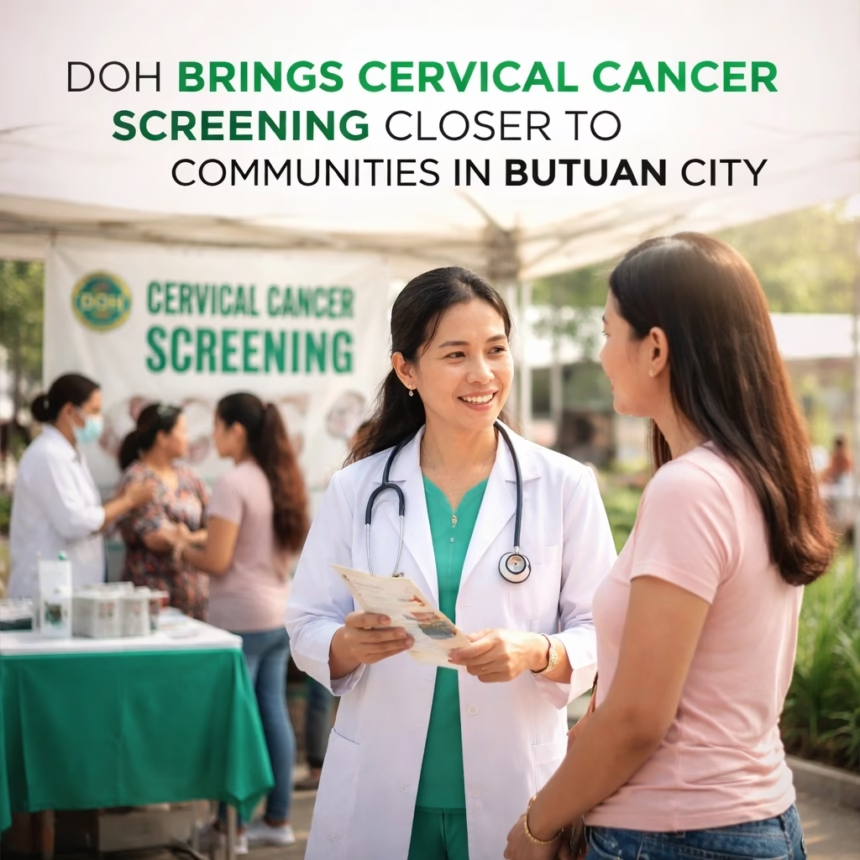
Butuan City, Agusan del Norte – The Department of Health (DOH) has launched a significant initiative this October, bringing crucial cervical cancer screening services directly to the doorsteps of women in Butuan City's most underserved communities. This proactive step aims to dramatically increase early detection rates and save lives by removing common barriers to healthcare access for thousands of women across the city.
Background: Battling a Silent Killer in the Philippines
Cervical cancer remains a formidable health challenge in the Philippines, ranking as one of the leading causes of cancer-related deaths among Filipino women. According to the Philippine Statistics Authority and DOH data, thousands of women are diagnosed annually, with a significant number presenting at advanced stages where treatment options are limited and prognosis is often poor. The disease is primarily caused by persistent infection with high-risk types of the Human Papillomavirus (HPV), a common virus transmitted through sexual contact. While preventable through vaccination and treatable when detected early, access to screening services, particularly in remote or economically challenged areas, has historically been a major hurdle.
The National Context of Cervical Cancer
For decades, the DOH has championed various national programs aimed at combating cervical cancer. These initiatives typically involve public awareness campaigns, HPV vaccination programs for adolescents, and the provision of screening services through hospitals and rural health units. However, logistical constraints, lack of information, cultural sensitivities, and financial barriers often prevent women, especially those in vulnerable populations, from accessing these vital services. Many women in rural or urban poor settings may prioritize daily survival over preventative health check-ups, leading to missed opportunities for early diagnosis.
Why Butuan City?
Butuan City, a highly urbanized city in the Caraga Region, serves as a vital economic and administrative hub. Despite its urban status, it encompasses numerous barangays where access to specialized medical services can still be challenging for a large segment of the population. Local health data from the Butuan City Health Office indicated a concerning trend of late-stage cervical cancer diagnoses, prompting the DOH to identify the city as a priority area for intensified community-based intervention. The city's existing robust local government unit (LGU) health infrastructure and proactive health officials also made it an ideal partner for this concentrated outreach effort.
Key Developments: Bringing Screening Closer to Home
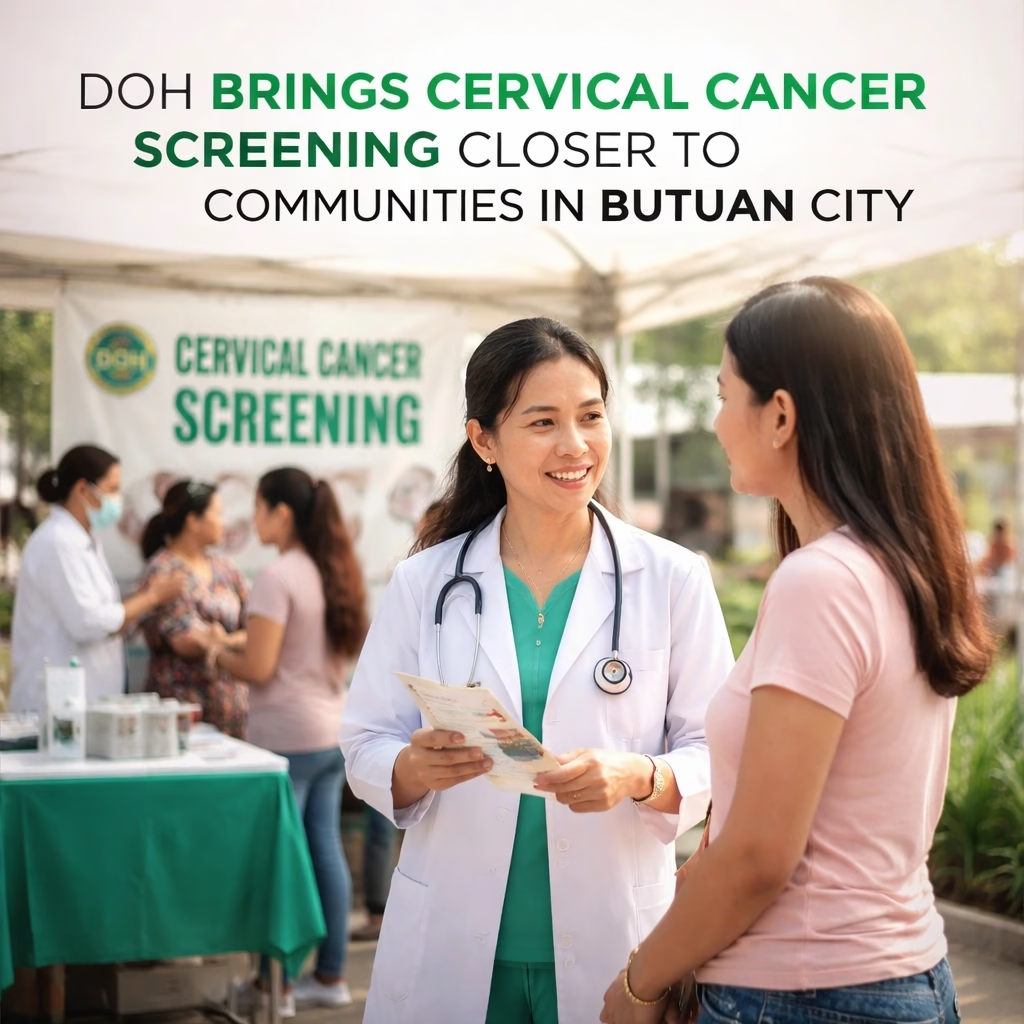
The DOH's latest initiative in Butuan City represents a strategic shift towards a more localized, community-centric approach to cervical cancer screening. Departing from the traditional clinic-based model, this program actively deploys mobile health teams and trains local personnel to conduct screenings within barangay health centers and even temporary community hubs, significantly reducing travel time and costs for beneficiaries.

The VIA Method at the Forefront
At the core of this community screening drive is the Visual Inspection with Acetic Acid (VIA) method. VIA is a simple, cost-effective, and highly practical screening technique suitable for low-resource settings. During a VIA screening, a healthcare provider applies a dilute solution of acetic acid (vinegar) to the cervix. Abnormal cells, if present, will turn white, making them visible to the naked eye. The results are immediate, allowing for immediate counseling and referral for further diagnostic tests or treatment if necessary. This "screen-and-treat" approach minimizes follow-up losses, a common challenge in traditional screening programs.
Intensive Training and Collaborative Partnerships
To ensure the success and sustainability of the program, the DOH, in collaboration with the Butuan City Health Office and local non-governmental organizations like the Women's Health Alliance of Caraga, conducted intensive training sessions. Over 150 community health workers (CHWs), nurses, and midwives from various barangays underwent a comprehensive two-week training program from September 18 to September 29, 2023. This training covered not only the technical aspects of VIA screening but also patient counseling, record-keeping, confidentiality protocols, and referral pathways. The program emphasizes building local capacity, empowering community health personnel to become frontline advocates and providers of essential women's health services.
More Read

Rollout and Initial Outreach
The program officially commenced its community-level operations on October 2, 2023, targeting high-priority barangays identified by the Butuan City Health Office based on population density, socio-economic indicators, and previous healthcare access challenges. Initial barangays included Libertad, Ampayon, and San Vicente, with plans for rapid expansion. Mobile teams, equipped with necessary supplies and led by trained medical professionals, are visiting barangay health stations on scheduled days, widely publicized through local announcements and community leaders.
Impact: Empowering Women and Saving Lives
This community-based cervical cancer screening initiative is poised to have a profound and lasting impact on the health and well-being of women in Butuan City. By removing significant barriers to access, the program is expected to reach a demographic that has historically been underserved, leading to earlier diagnoses and better health outcomes.
Reaching the Underserved
The primary beneficiaries of this program are women aged 30-49, particularly those who have never been screened or have not been screened in the last five years. These women often face challenges such as limited financial resources for transportation, inability to take time off work, or lack of awareness about the importance of regular screening. By bringing services directly into their neighborhoods, the DOH aims to screen an estimated 15,000 women in Butuan City within the first year, significantly increasing the city's overall screening coverage. This direct approach fosters trust and encourages participation, especially among women who may be hesitant to visit larger medical facilities.
Early Detection: A Game Changer
The cornerstone of cervical cancer prevention is early detection. When cervical cancer is identified in its precancerous or early invasive stages, treatment is highly effective, often resulting in a complete cure. The immediate results provided by VIA screening allow for swift action. Women identified with abnormalities can be immediately referred for colposcopy, biopsy, or cryotherapy, often available at nearby referral centers. This streamlined process minimizes the time between screening and treatment, which is critical in preventing disease progression. The DOH anticipates a significant reduction in late-stage cervical cancer diagnoses in Butuan City over the next five years, directly attributable to this intensified screening effort.
Community Empowerment and Health Literacy
Beyond the immediate medical benefits, the program also serves as a powerful tool for community empowerment and health literacy. CHWs, who are often trusted members of their communities, play a crucial role in disseminating information, dispelling myths, and encouraging women to prioritize their health. Educational sessions are integrated into the screening events, providing women with vital knowledge about cervical cancer, its causes, prevention strategies, and the importance of regular check-ups. This increased awareness not only encourages participation in the current program but also fosters a culture of proactive health-seeking behavior for future generations.
What Next: Sustaining the Momentum
The DOH's initiative in Butuan City is not a one-off event but rather the initial phase of a broader, long-term strategy to integrate comprehensive cervical cancer prevention and control into routine community health services. The success of this pilot program will inform future expansions and ensure the sustainability of these life-saving interventions.
More Read

Phased Rollout and Regional Expansion
Following the initial phase targeting Butuan City's most vulnerable barangays, the DOH plans a phased rollout to cover all 86 barangays within the city by mid-2024. The insights and best practices gained from this implementation will then be leveraged to replicate the model in other municipalities across the Caraga Region. Discussions are already underway with health officials in neighboring provinces to assess their readiness and needs for similar community-based screening programs, aiming to establish a regional network of accessible cervical cancer services.
Integration into Routine Health Services
A key long-term goal is to fully integrate VIA screening services into the regular operations of all barangay health stations and rural health units in Butuan City. This means that cervical cancer screening will no longer be an episodic campaign but a consistent, available service, ensuring sustained access for women. This integration will involve continued training for newly assigned health personnel, regular supply replenishment, and robust quality assurance mechanisms. The DOH aims to establish a self-sustaining model where local government units take full ownership and allocate necessary resources for the program's continuity.
Monitoring, Evaluation, and Follow-up
To measure the program's effectiveness and ensure accountability, a comprehensive monitoring and evaluation framework has been established. This includes tracking the number of women screened, the prevalence of abnormalities detected, referral rates, and the completion of follow-up treatments. A dedicated team from the DOH Regional Office will conduct quarterly reviews with the Butuan City Health Office to assess progress, identify challenges, and implement necessary adjustments. Crucially, a robust patient navigation system is being put in place to ensure that all women with abnormal screening results receive timely and appropriate follow-up care, preventing any loss to follow-up and maximizing the program's life-saving potential. The DOH envisions Butuan City as a model for community-based cervical cancer elimination efforts throughout the country.