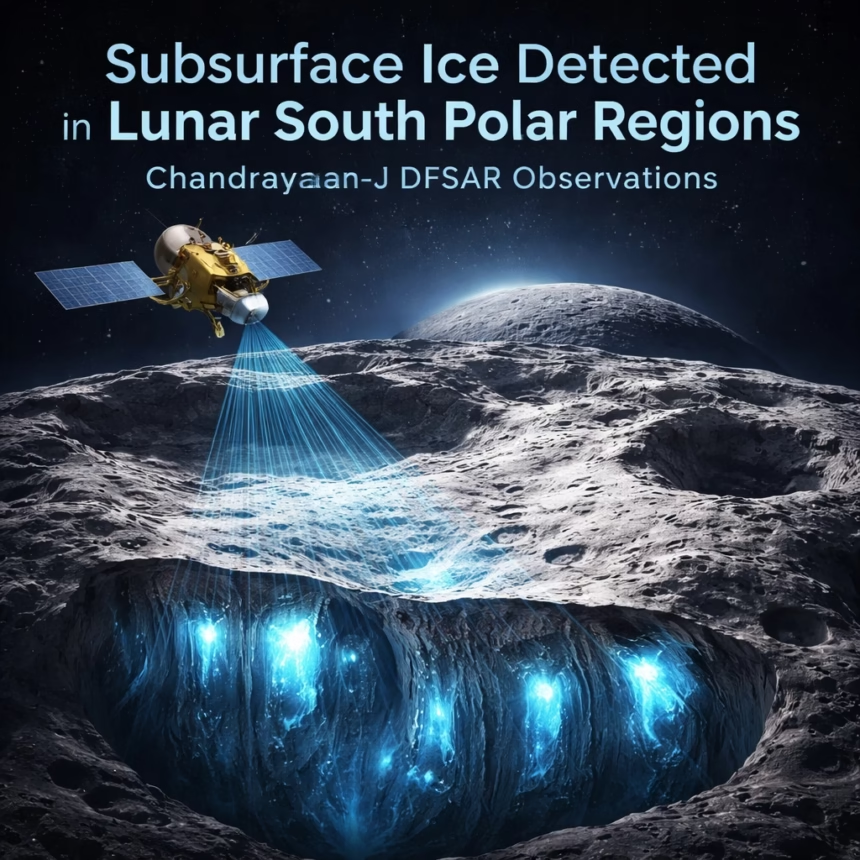
India's Chandrayaan-2 orbiter, equipped with its Dual Frequency Synthetic Aperture Radar (DFSAR), has unveiled substantial subsurface water ice deposits within the Moon's south polar regions. This groundbreaking discovery, detailed in recent analyses by the Indian Space Research Organisation (ISRO), marks a pivotal step in understanding lunar hydrology and its potential as a resource for future space exploration. The findings confirm the presence of significant quantities of ice hidden beneath the lunar surface, primarily within permanently shadowed regions (PSRs).
Background: Chandrayaan-2’s Enduring Legacy
The Chandrayaan-2 mission, launched by ISRO in July 2019, was designed to expand our understanding of the Moon through an orbiter, a lander (Vikram), and a rover (Pragyan). While the Vikram lander experienced a hard landing, the orbiter has continued to operate flawlessly, providing invaluable data from lunar orbit. The mission's primary scientific objectives included studying lunar topography, mineralogy, elemental abundance, and the exosphere, with a specific focus on water ice distribution.
The Chandrayaan-2 Orbiter and DFSAR
The Chandrayaan-2 orbiter carries eight sophisticated scientific instruments, among them the Dual Frequency Synthetic Aperture Radar (DFSAR). This instrument is crucial for mapping the lunar surface and subsurface. Unlike optical cameras, radar can penetrate through the lunar regolith (soil and dust layer), allowing scientists to peer beneath the surface. DFSAR operates at two distinct frequencies (L-band and S-band), enabling it to probe different depths and distinguish various materials based on their dielectric properties. The L-band, with its longer wavelength, can penetrate deeper into the regolith, while the S-band provides complementary data on shallower structures.
Previous Hints of Lunar Water Ice
The notion of water on the Moon is not entirely new. Missions like NASA's Clementine (1990s) and Lunar Prospector (late 1990s) provided early indications of hydrogen enrichment at the poles, suggesting the presence of water ice. India's Chandrayaan-1 mission (2008), specifically its Moon Mineralogy Mapper (M3) instrument, definitively detected water molecules and hydroxyl on the lunar surface. Furthermore, NASA's LCROSS (Lunar Crater Observation and Sensing Satellite) mission in 2009 intentionally impacted a south polar crater, confirming the presence of significant quantities of water ice and other volatiles. Chandrayaan-2's DFSAR data builds upon these foundational discoveries, offering a much clearer and deeper look into the subsurface.
Key Developments: Unveiling Hidden Ice
The recent analysis of DFSAR data from Chandrayaan-2 has provided unprecedented detail regarding the distribution and characteristics of subsurface water ice in the Moon's south polar region. The radar's ability to penetrate several meters into the lunar regolith has been instrumental in this discovery.
More Read

Radar Signatures of Subsurface Ice
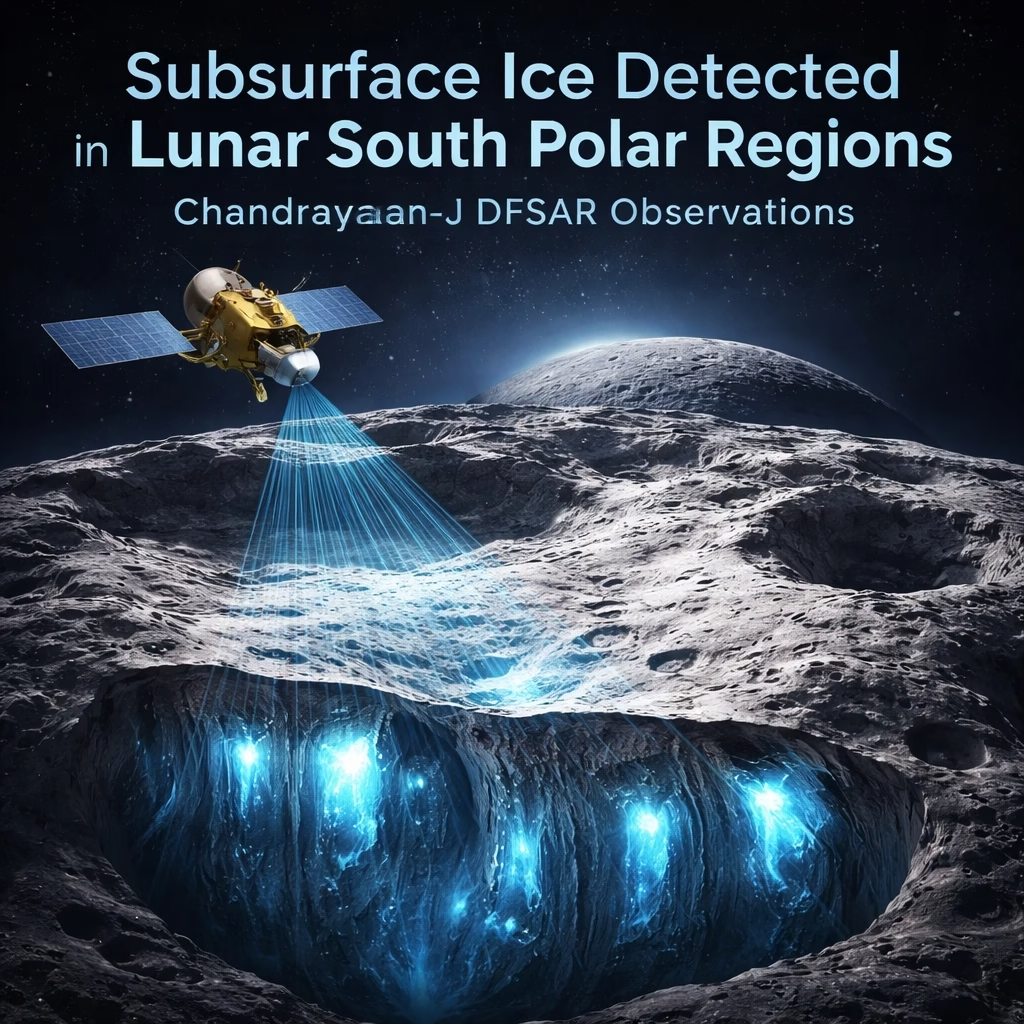
DFSAR works by transmitting radar pulses towards the Moon and analyzing the reflected signals. The way these signals are reflected and scattered provides information about the composition and structure of the material they encounter. Water ice has a distinct dielectric constant compared to dry lunar rock and regolith. When radar waves encounter a layer of water ice, they reflect differently, producing a strong, characteristic radar signature. The Chandrayaan-2 DFSAR has observed these strong reflections from various depths within PSRs, indicating the presence of substantial ice deposits.
Specific Craters and Ice Deposits
The observations have pinpointed several specific craters within the south polar region where these subsurface ice deposits are prevalent. While specific crater names like Haworth and Sverdrup have been previously associated with potential ice, the DFSAR data provides more robust evidence of buried ice layers. The radar has detected ice layers extending several meters below the surface, ranging from a few tens of centimeters to a few meters in thickness. These deposits are not uniform but appear as distinct layers or pockets within the regolith, consistent with potential accumulation over billions of years. The dual-frequency capability allowed scientists to differentiate between shallow surface frost and deeper, more substantial ice bodies.
Quantifying the Discovery
While precise volumetric estimates are still under refinement, the data suggests that these subsurface ice reserves are far more extensive than previously confirmed. The findings indicate that the total amount of water ice locked beneath the surface in the south polar region could be significantly higher than earlier estimates based solely on surface or near-surface observations. This expanded understanding of ice distribution is critical for future missions aiming to utilize lunar resources.
More Read

Impact: Fueling Future Lunar Endeavors
The confirmation of extensive subsurface water ice by Chandrayaan-2 has profound implications for scientific research, future space exploration, and the emerging lunar economy. This discovery is not merely a scientific curiosity but a cornerstone for humanity's sustained presence beyond Earth.
Fueling Future Lunar Bases
Water is an indispensable resource for any long-term human presence in space. It is essential for drinking, growing food, and producing breathable oxygen. Crucially, water can also be broken down into hydrogen and oxygen, which are powerful rocket propellants. The presence of readily accessible subsurface ice at the lunar poles transforms the Moon from a distant destination into a potential staging ground for deeper space missions, including those to Mars. By "living off the land" (In-Situ Resource Utilization or ISRU), future lunar bases could become self-sufficient, significantly reducing the cost and complexity of resupply missions from Earth.
Scientific Implications
From a scientific perspective, these findings offer critical insights into the Moon's geological history and the evolution of water in the inner solar system. The presence and distribution of subsurface ice can help scientists understand how water arrived on the Moon, how it has been preserved, and its interaction with the lunar environment over billions of years. It also provides valuable data for understanding cold trap mechanisms and the dynamics of volatiles in permanently shadowed regions.
Informing Space Agencies and Missions
This data directly impacts the planning and site selection for upcoming lunar missions by various space agencies, including NASA's Artemis program, the European Space Agency (ESA), and ISRO itself. Missions like NASA's VIPER (Volatiles Investigating Polar Exploration Rover), scheduled to land at the lunar south pole, will now have more precise targets for their detailed investigations. The DFSAR data helps narrow down the most promising areas for drilling and resource extraction, increasing the chances of mission success.
What Next: The Path to Lunar Habitation
The Chandrayaan-2 DFSAR findings set the stage for the next phase of lunar exploration, moving beyond mere discovery towards utilization and sustained presence.
More Read

Further Data Analysis and Validation
ISRO scientists will continue to analyze the vast datasets collected by Chandrayaan-2's DFSAR and other instruments. This ongoing research will aim to refine estimates of ice quantity, map its distribution with even greater precision, and understand its physical and chemical properties. Further studies may also involve correlating DFSAR data with observations from other lunar missions to build a comprehensive picture of lunar water.
Upcoming Lunar Missions
The international community is rapidly advancing towards a return to the Moon. NASA's Artemis program aims to land humans at the lunar south pole by the mid-2020s, specifically targeting areas believed to contain water ice. The VIPER rover, expected to launch in 2024, is designed to map and characterize water ice in detail, acting as a crucial precursor to human missions. Other nations, including China and Japan, also have ambitious lunar exploration plans that will benefit from Chandrayaan-2's discoveries.
Resource Extraction Technologies
The confirmation of subsurface ice accelerates the development of technologies for extracting and processing lunar water. Engineers and scientists worldwide are working on innovative concepts for lunar drills, ice melting systems, and water purification units. These technologies will be essential for transforming the discovered ice into usable resources like drinking water, oxygen, and rocket fuel, paving the way for a self-sustaining human presence on the Moon. The Chandrayaan-2 DFSAR observations provide the critical targeting information needed to deploy these technologies effectively.
The Chandrayaan-2 mission, through its persistent and sophisticated orbital operations, has significantly advanced humanity's understanding of the Moon's resource potential. The revelation of extensive subsurface water ice is a monumental step towards establishing a permanent foothold on our celestial neighbor and unlocking the potential for deeper space exploration.