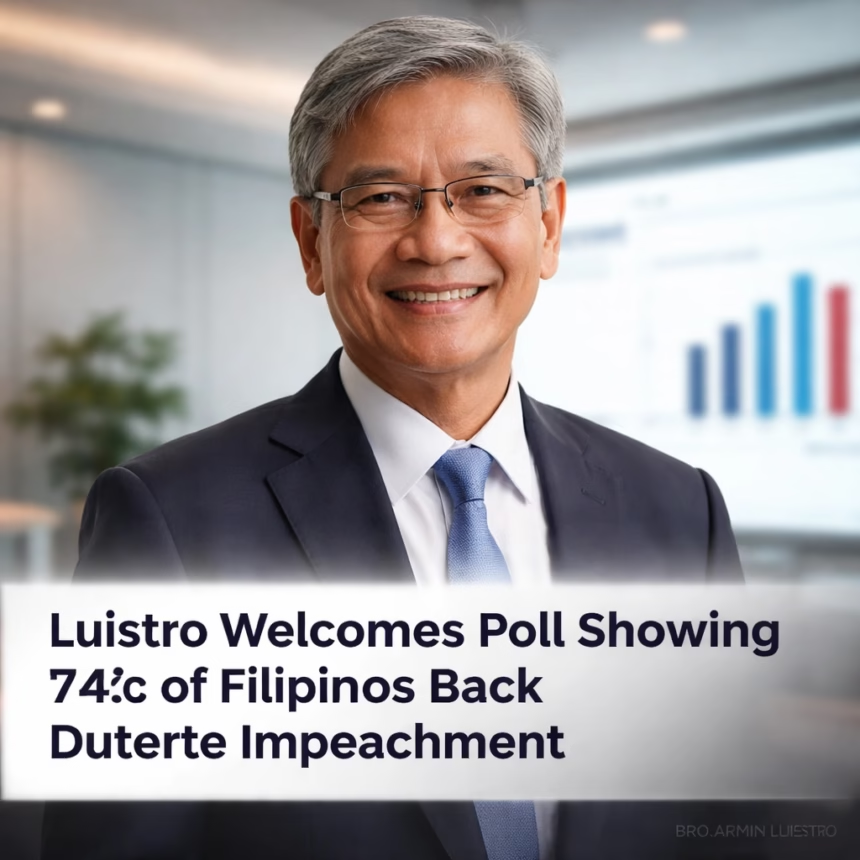
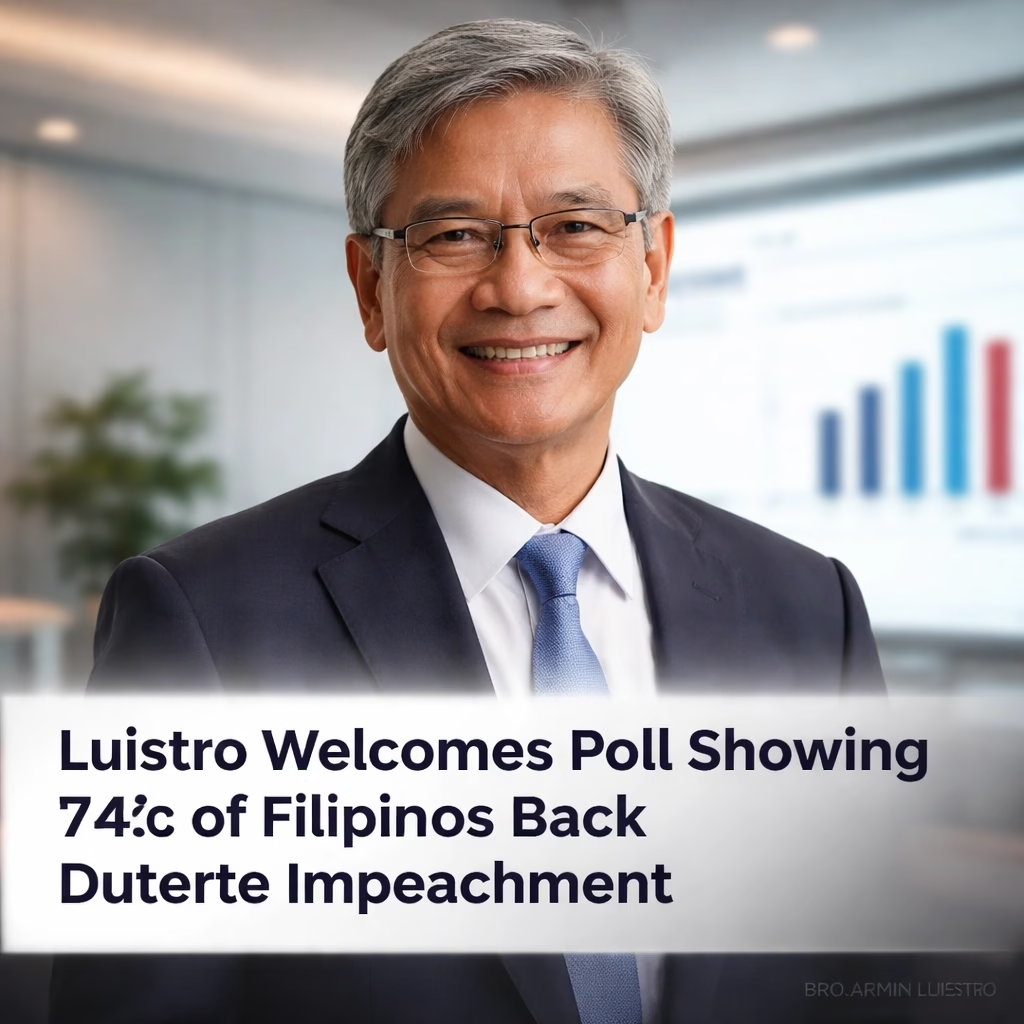
MANILA, Philippines – Former Education Secretary Bro. Armin Luistro has publicly welcomed the results of a recent nationwide survey indicating that an overwhelming 74% of Filipinos support the impeachment of President Rodrigo Duterte. Luistro's statement, made earlier this week, underscores growing calls for accountability amidst various controversies plaguing the current administration. The poll, conducted in late October by the independent National Opinion Research Center (NORC), reveals a significant shift in public sentiment, putting renewed pressure on lawmakers.
Background: A President Under Scrutiny
President Rodrigo Duterte, who assumed office in June 2016, has consistently maintained high approval ratings throughout much of his term, largely attributed to his populist appeal and strong stance on issues like illegal drugs and crime. However, his administration has also been a magnet for controversy, particularly concerning his bloody war on drugs, alleged human rights abuses, and his approach to foreign policy, especially regarding the West Philippine Sea dispute.
The Impeachment Mechanism
In the Philippines, the impeachment process is a constitutional mechanism designed to hold high-ranking officials, including the President, accountable for "culpable violation of the Constitution, treason, bribery, graft and corruption, other high crimes, or betrayal of public trust." The process typically begins in the House of Representatives, where an impeachment complaint needs to be endorsed by at least one-third of its members to be sent to the Senate for trial. Historically, successful impeachments are rare, often requiring significant political will and public pressure. Previous attempts to impeach President Duterte have failed to gain traction in the House, which is largely allied with the administration.
Past Controversies Fueling Discontent
Over the past five years, numerous issues have chipped away at Duterte's public image. These include the thousands of deaths linked to the anti-drug campaign, which has drawn condemnation from international human rights organizations and sparked an investigation by the International Criminal Court (ICC). Concerns over government handling of the COVID-19 pandemic, particularly procurement controversies involving medical supplies, have also fueled public frustration. Furthermore, the perceived softness of the administration's stance on China's incursions in the West Philippine Sea has been a recurring point of contention among nationalist groups and the broader public.
Key Developments: A Poll’s Revealing Figures
The NORC survey, conducted from October 20-27, 2023, involved 2,400 adult respondents across the archipelago, with a margin of error of +/- 2 percentage points. Its findings represent a stark contrast to earlier polls that showed robust support for the President, even amid criticisms. The 74% figure for impeachment support is unprecedented for President Duterte, suggesting a significant erosion of trust and patience.

Detailed Breakdown of Support
The survey indicated that support for impeachment was strongest in Metro Manila (81%) and among respondents from the Visayas region (78%). While still substantial, Mindanao, the President's home region, showed slightly lower but still majority support at 65%. Urban areas generally reported higher pro-impeachment sentiment compared to rural areas. The primary reasons cited by respondents for their support included "accountability for human rights abuses" (45%), "corruption allegations" (30%), and "failure to protect national sovereignty" (20%).
Luistro’s Resounding Endorsement
Bro. Armin Luistro, who served as Education Secretary under President Benigno Aquino III, expressed profound satisfaction with the poll results. "This is a clear, resounding mandate from the Filipino people," Luistro stated in a press briefing in Quezon City. "It shows that our countrymen are tired of impunity and demand accountability from the highest office. This is not about politics; this is about justice and upholding the rule of law. Lawmakers must listen to the voice of the people." Luistro emphasized that the high percentage transcends typical political divisions, indicating a broad-based desire for change and ethical governance.
Political Reactions and Counterarguments
The survey's release immediately sparked a flurry of reactions. Opposition lawmakers lauded the results, calling it a "wake-up call" for Congress to act on existing impeachment complaints. Senator Risa Hontiveros, a vocal critic of the administration, remarked, "The people have spoken. It is now up to their representatives to heed their call and perform their constitutional duty."
More Read

Conversely, allies of President Duterte quickly dismissed the poll's validity. Presidential spokesperson Harry Roque questioned the methodology and timing of the survey, suggesting it was politically motivated. "These numbers do not reflect the true sentiment of the Filipino people, who continue to trust and support our President," Roque asserted in a media statement. "This is merely an attempt by the opposition to destabilize the government as we near the end of the President's term." Other pro-administration figures pointed to the President's continued high trust ratings in other surveys, arguing that support for impeachment does not equate to a desire for his immediate removal.
Impact: Shifting Sands of Power
The staggering poll results have immediate and far-reaching implications for the political landscape in the Philippines. It complicates the remaining months of President Duterte's term and significantly influences the dynamics leading up to the upcoming 2025 midterm elections.
Pressure on Lawmakers
The most direct impact is on members of the House of Representatives. While the House has historically been a stronghold for the President, a 74% public backing for impeachment could make it politically untenable for allied lawmakers to simply ignore future impeachment complaints. Constituents, emboldened by the survey, may exert greater pressure on their representatives, potentially creating cracks within the ruling coalition. This public sentiment could also make it harder for the administration to push through its remaining legislative agenda.
Administration’s Response and Image
For the Duterte administration, the poll presents a significant challenge to its narrative of unwavering public support. While officials may publicly dismiss the findings, the internal implications are likely more serious. It could necessitate a shift in communication strategies, focusing on achievements and legacy, while simultaneously preparing for potential legislative battles. The perception of a President losing significant public trust could also affect his ability to command authority both domestically and internationally.
Reshaping Opposition Strategy
The opposition, long struggling to consolidate a united front and gain public momentum, now has a powerful new tool. The poll provides empirical evidence of widespread discontent, which they can leverage to galvanize their base, recruit more supporters, and push for greater accountability. It could inspire a more aggressive and coordinated approach to filing and pursuing impeachment complaints.
More Read

International Scrutiny
The high impeachment support could also draw increased attention from the international community, particularly human rights organizations and foreign governments concerned about the rule of law in the Philippines. This added scrutiny could further complicate the administration's foreign relations and its standing on the global stage.
What Next: The Road Ahead
While the poll reflects strong public sentiment, translating that into concrete legislative action remains a formidable challenge. The impeachment process is complex and politically charged, requiring significant parliamentary maneuvering.
Potential Legislative Action
The most immediate next step would be the filing of new impeachment complaints, or the revival of existing ones, in the House of Representatives. For a complaint to gain traction, it would need the endorsement of a significant number of House members. Given the current political alignment, securing the one-third vote needed to send it to the Senate for trial remains an uphill battle. However, the 74% public support could embolden a critical mass of lawmakers to break ranks, especially if the political cost of inaction becomes higher than the cost of opposing the President.
The Role of Civil Society and Advocacy Groups
Civil society organizations, human rights advocates, and various cause-oriented groups are expected to amplify the poll's findings. They will likely organize rallies, online campaigns, and public forums to sustain and intensify public pressure on lawmakers. Their efforts will be crucial in keeping the issue alive in public discourse and ensuring that the poll results are not simply dismissed.
Administration’s Countermeasures
The administration and its allies are expected to employ various strategies to counter the impeachment threat. This could include a strong public relations offensive highlighting the President's accomplishments, questioning the motives of the opposition, and possibly even attempting to discredit the survey firm. They will also work to solidify their legislative majority to prevent any impeachment complaint from advancing beyond the House committee level.
Monitoring Public Opinion
Further surveys will be critical in tracking whether this surge in impeachment support is a sustained trend or a temporary spike. Subsequent polls will gauge public reaction to political developments and the administration's responses, providing ongoing insights into the evolving political climate as the country approaches the next election cycle. The coming months will be a crucial test of both public will and political resolve in the Philippines.