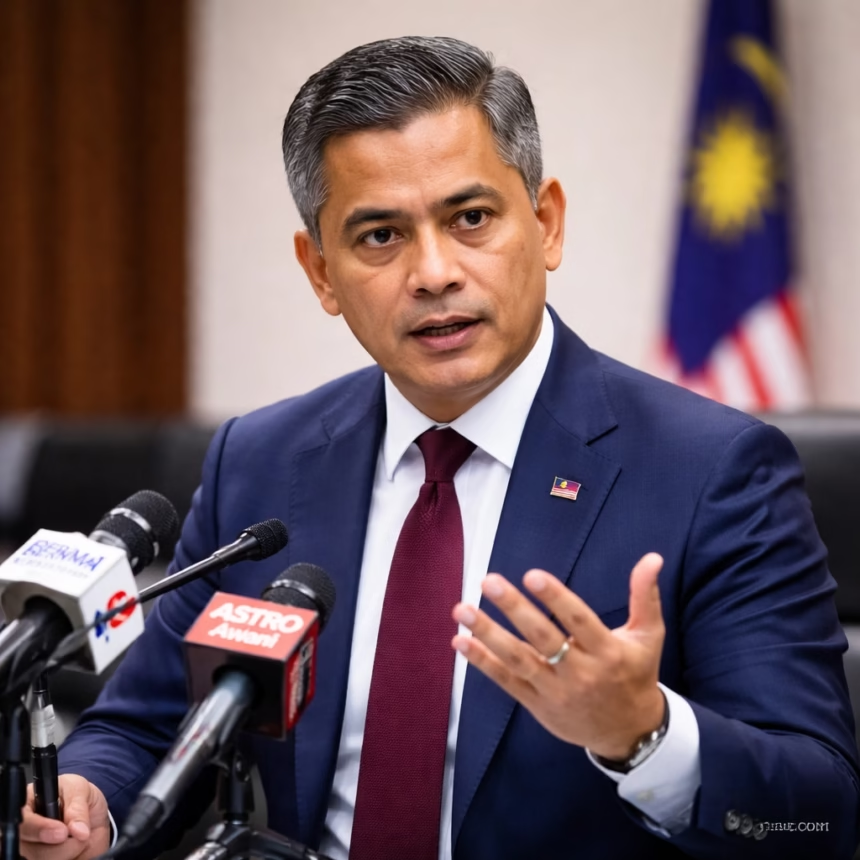
Fahmi Fadzil, Malaysia's Communications Minister, has issued a direct challenge to the parliamentary opposition, urging them to lend their full support to the government's proposed bill aimed at separating the roles of the Attorney General (AG) and the Public Prosecutor (PP). This significant call for bipartisan cooperation comes as the unity government pushes forward with its institutional reform agenda, seeking to strengthen the rule of law and public confidence in the nation's justice system. The appeal was made during a recent media engagement in Putrajaya, highlighting the critical legislative journey ahead for this long-debated reform.
Background: The Dual Role Dilemma
The proposal to split the Attorney General's advisory role from the Public Prosecutor's prosecutorial functions addresses a long-standing concern within Malaysia's legal and political landscape. Currently, Article 145 of the Federal Constitution vests both powers in a single individual: the Attorney General. This dual capacity means the nation's chief legal advisor to the government is simultaneously responsible for initiating, conducting, or discontinuing any criminal proceedings, effectively making them the chief prosecutor.
This unique arrangement has been a subject of intense debate for decades, drawing criticism from legal practitioners, civil society groups, and opposition politicians alike. Concerns primarily revolve around the potential for conflicts of interest, particularly when the AG is tasked with advising the government on matters that might later involve prosecutorial decisions against government officials or political figures. Critics argue that this concentration of power can undermine the independence of the prosecution, leading to perceptions of political interference in the administration of justice.
The Malaysian Bar, a prominent advocate for legal reform, has consistently called for the separation of these roles, emphasizing that such a move is crucial for enhancing judicial independence, transparency, and public trust in the legal system. They contend that an independent Public Prosecutor, free from governmental advisory duties, would be better positioned to make impartial prosecutorial decisions based solely on legal merits, without any perceived political influence. Various past administrations have acknowledged the need for this reform, but tangible legislative steps have remained elusive until recently.
Key Developments: Fahmi’s Direct Appeal
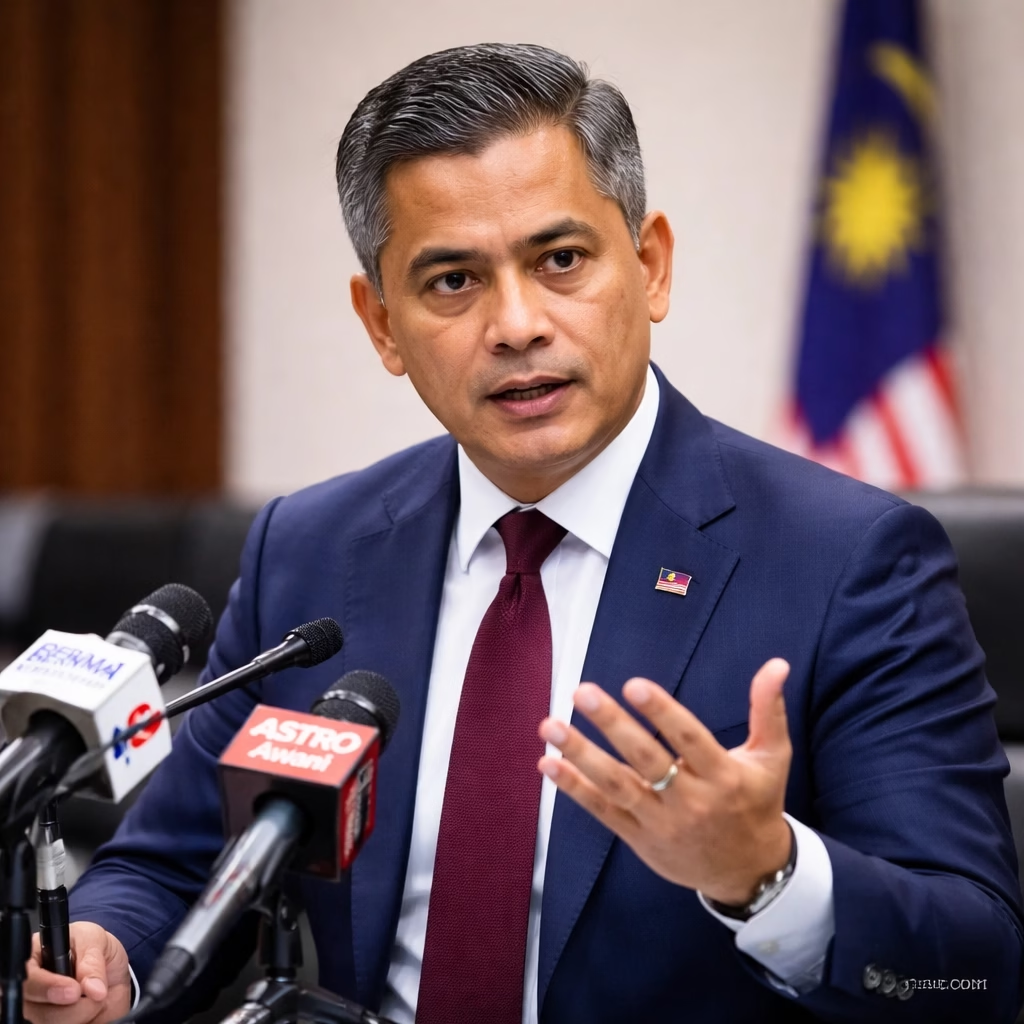
The recent statement by Communications Minister Fahmi Fadzil marks a significant step in the government's commitment to actualizing this reform. Speaking to reporters on Tuesday, October 24, 2023, Fahmi underscored the importance of bipartisan consensus for the successful passage of the bill. He explicitly stated that the government would seek the opposition's full backing, framing the reform as being in the national interest rather than a partisan issue. "This is not about politics; this is about strengthening our institutions for the benefit of all Malaysians," Fahmi asserted, reflecting the government's desire for a united front on this critical reform.
More Read

The push for this split aligns with Prime Minister Datuk Seri Anwar Ibrahim's broader agenda for good governance and institutional reform, which has been a cornerstone of the Unity Government since its inception. Law and Institutional Reform Minister Datuk Seri Azalina Othman Said has also been a vocal proponent, actively engaging with stakeholders and signaling the government's intent to expedite the legislative process. While specific details of the draft bill are yet to be publicly disclosed, preliminary discussions suggest that the proposed framework aims to establish a truly independent Public Prosecutor's office, separate from the Attorney General's Chambers, with its own mandate and resources.
The current Attorney General, Datuk Ahmad Terrirudin Mohd Salleh, who assumed office in September 2023, has also acknowledged the ongoing discussions surrounding the separation of powers. While the AG's Chambers would be instrumental in drafting the necessary constitutional amendments and subsidiary laws, the ultimate decision rests with the executive and legislative branches. Fahmi's appeal to the opposition signals that the government is preparing to table the bill in Parliament, likely during the upcoming session, and recognizes the political capital required to ensure its smooth passage.
More Read

Impact: Strengthening Rule of Law and Public Trust
The separation of the AG and PP roles is poised to have a profound impact on several facets of Malaysia's governance and legal system. Foremost among these is the anticipated enhancement of prosecutorial independence. By disentangling the Public Prosecutor from the government's legal advisor, decisions to prosecute or drop cases would theoretically be insulated from political considerations, leading to a more impartial application of justice. This would significantly bolster the integrity of the criminal justice system.
For the public, this reform holds the promise of increased trust and confidence in the rule of law. Perceptions of political interference in high-profile cases have, at times, eroded public faith. An independent Public Prosecutor would likely be viewed as a more credible and unbiased arbiter of justice, fostering greater accountability for all, regardless of their position or affiliation. It would also clarify the roles, making it easier for citizens to understand the distinct functions of the government's legal advisor versus the chief prosecutor.
Furthermore, the split would strengthen the system of checks and balances within the government. The Attorney General, as the principal legal advisor, would provide counsel to the executive without the added pressure or conflict of potentially prosecuting those they advise. Conversely, the Public Prosecutor would focus solely on upholding criminal law, ensuring that no one is above the law. This institutional clarity is vital for a mature democracy. While the transition may involve initial complexities in redefining jurisdictions and establishing new protocols, the long-term benefits for governance and justice are widely considered to outweigh these challenges.
What Next: The Legislative Journey Ahead
The path forward for the AG-PP split bill involves several critical stages, each requiring careful navigation and, as Fahmi Fadzil highlighted, significant political will. The immediate next step involves the Attorney General's Chambers finalizing the draft bill, which would entail amendments to the Federal Constitution, particularly Article 145, and potentially other relevant statutes like the Criminal Procedure Code. This complex drafting process must meticulously define the powers, functions, and jurisdictional boundaries of both the independent Public Prosecutor and the Attorney General.
Once drafted, the bill must secure Cabinet approval before it can be tabled in Parliament. This internal governmental endorsement is a crucial hurdle, confirming the administration's unified commitment to the reform. Following Cabinet approval, the bill will be formally introduced in the Dewan Rakyat (House of Representatives). This is where Fahmi's call for bipartisan support becomes paramount. Amending the Federal Constitution typically requires a two-thirds majority in Parliament, meaning the government would need the cooperation of opposition Members of Parliament to secure its passage. Without this cross-party consensus, the bill risks stalling or failing to pass.
Should the bill pass the Dewan Rakyat, it would then proceed to the Dewan Negara (Senate) for further deliberation and approval, before finally being presented to the Yang di-Pertuan Agong for Royal Assent. Upon receiving Royal Assent, the bill would become law, paving the way for the practical implementation of the split. This would involve establishing the new Public Prosecutor's office, appointing a suitable candidate, and allocating the necessary resources to ensure its operational independence. The entire legislative process, from drafting to full implementation, is expected to span several months, potentially extending into the next parliamentary session, underscoring the magnitude and complexity of this proposed institutional reform.