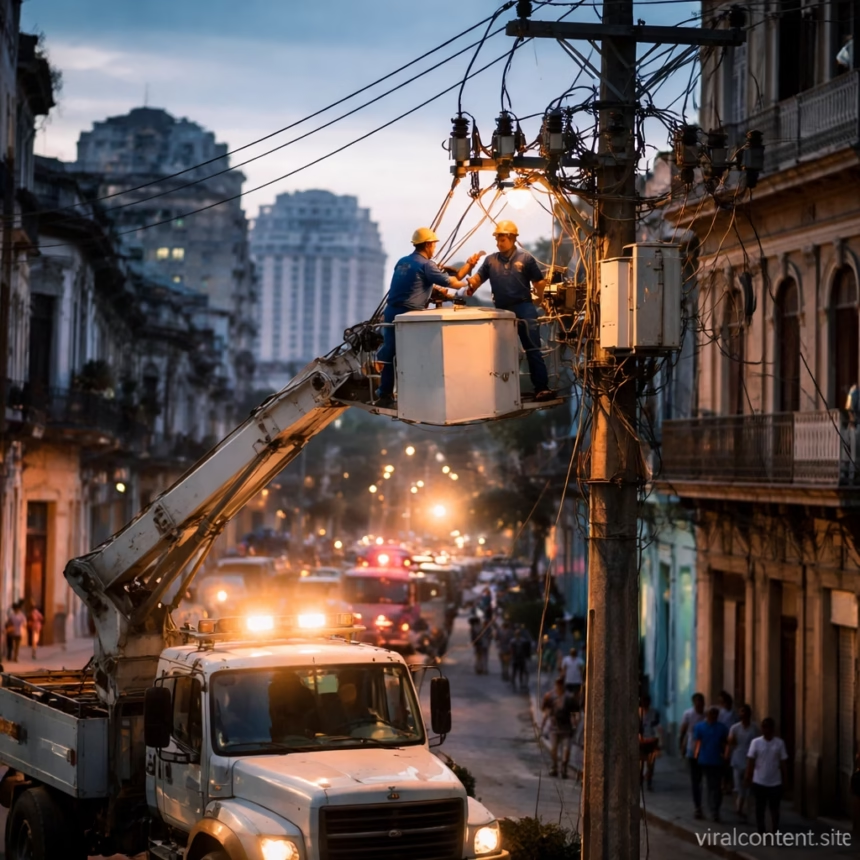
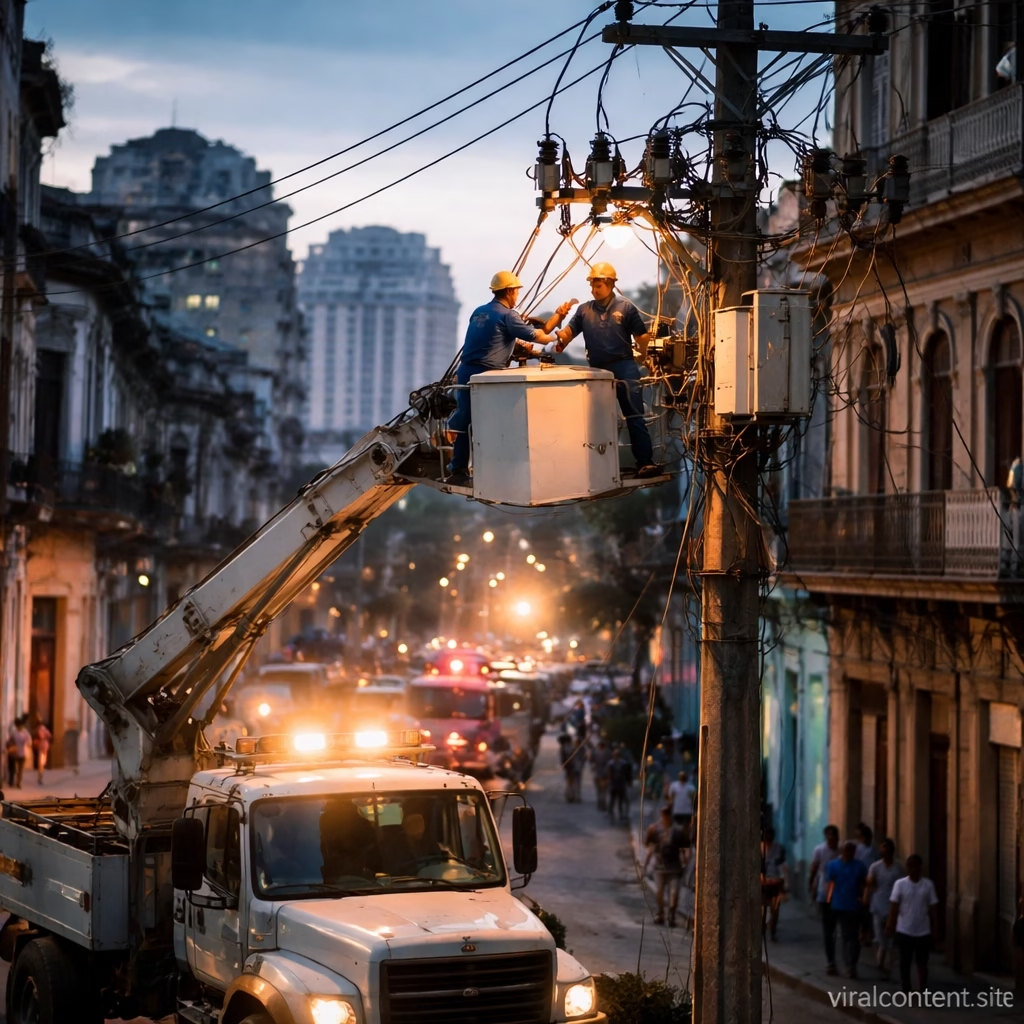
HAVANA, Cuba – An island-wide power outage has once again plunged Cuba into darkness, affecting millions across all 15 provinces and the special municipality of Isla de la Juventud. The widespread blackout, which began late Tuesday evening, has triggered an urgent, round-the-clock effort by the state-owned Unión Eléctrica (UNE) to restore electricity to the nation's 11 million residents amidst an already fragile energy landscape.
Background: A Nation Grappling with Grid Instability
Cuba's electrical grid has long been a system under immense strain, characterized by an aging infrastructure, chronic underinvestment, and a heavy reliance on imported fossil fuels. This latest incident is not an isolated event but rather the most recent symptom of deep-seated issues that frequently disrupt daily life on the island. The nation's energy challenges are exacerbated by a complex interplay of economic sanctions, a scarcity of hard currency for essential maintenance and spare parts, and the declining operational efficiency of its thermoelectric power plants.
The Aging Infrastructure
Many of Cuba's primary power generation facilities, such as the Antonio Guiteras plant in Matanzas, Felton in Holguín, and Renté in Santiago de Cuba, are decades old. These plants, designed for continuous operation, frequently experience breakdowns and require extensive, often delayed, maintenance. The lack of modern equipment and the difficulty in acquiring components due to the U.S. embargo mean that repairs are often protracted, leading to significant reductions in available generation capacity. The transmission and distribution networks, equally aged, are prone to faults, making the entire system vulnerable to cascading failures.
Fuel Scarcity and Global Pressures
Historically, Cuba has relied heavily on subsidized oil imports, primarily from Venezuela. However, geopolitical shifts and Venezuela's own internal struggles have significantly reduced these supplies, forcing Cuba to purchase fuel on the volatile international market at commercial rates. The scarcity of diesel and fuel oil directly impacts the ability of power plants to operate consistently and at full capacity. This dependence on external energy sources leaves the grid susceptible to global price fluctuations and supply chain disruptions, further compounding the domestic energy crisis.
Previous Systemic Failures
The current blackout evokes memories of the devastating island-wide collapse in September 2022, following the passage of Hurricane Ian. While that event was directly triggered by a natural disaster, it exposed the grid's inherent fragility and its inability to isolate and protect critical sections. Smaller, localized outages, known as "apagones," are a daily reality for many Cubans, but a total system collapse, as experienced this week, underscores the severe systemic vulnerabilities that persist despite ongoing government efforts.
More Read

Key Developments: The Restoration Underway
The latest nationwide blackout was reportedly triggered by an unexpected fault in a critical 220-kilovolt transmission line that connects the eastern and western parts of the national electrical system. This initial failure cascaded rapidly, causing multiple power plants to trip offline, leading to a complete collapse of the grid across all provinces within hours.
Official Response and Initial Restoration
Following the incident, the Unión Eléctrica (UNE) promptly issued public statements via national television and social media, confirming the total collapse and outlining the immediate restoration strategy. Lázaro Guerra Hernández, technical director of UNE, explained that the process involves gradually re-energizing the grid from isolated "black start" points, beginning with smaller, more stable generating units. Priority was immediately given to critical infrastructure, including hospitals, water pumping stations, and essential communication facilities, which rely on backup generators until grid power is restored.
More Read

Regional Progress and Challenges
Restoration efforts began in the eastern provinces, which often have more localized generation capacity. By Wednesday morning, parts of Santiago de Cuba, Holguín, and Granma provinces reported partial restoration. However, the capital, Havana, representing a significant portion of the national demand, remained largely without power. The complexity of synchronizing the various power plants and transmission lines across such a vast network presents a significant technical challenge. Engineers must carefully balance load and generation to prevent further destabilization, a process that can take days for a full national recovery. UNE officials have provided regular updates, indicating a gradual increase in megawatts available but cautioning that full restoration is a meticulous, step-by-step operation.
Impact: A Nation on Hold
The island-wide blackout has brought daily life to a standstill for millions, exacerbating existing hardships and creating new challenges across all sectors. The absence of electricity impacts everything from basic household functions to essential public services and the national economy.
Disruptions to Daily Life
For ordinary Cubans, the lack of electricity means no refrigeration, leading to rapid spoilage of food in a country already grappling with food scarcity. Access to potable water is severely affected as electric pumps cease to function, forcing residents to collect water manually or rely on infrequent tanker deliveries. Communication is hampered as cell phones and other devices cannot be charged, isolating communities. The tropical heat becomes unbearable without fans or air conditioning, particularly for the elderly and those with health conditions. Schools have been forced to close, and streetlights are out, increasing safety concerns.
Economic Repercussions
The economic toll of a nationwide blackout is substantial. Businesses, from small private enterprises to state-owned industries, are unable to operate, leading to lost productivity and revenue. The vital tourism sector, a key source of foreign currency, suffers immensely as hotels rely on expensive diesel generators and visitors face disruptions. The agricultural sector also faces challenges, with irrigation systems potentially failing and storage facilities unable to maintain optimal conditions for produce. The cumulative effect of these outages further stresses an already fragile economy struggling with inflation and supply chain issues.
Public Services Under Strain
Hospitals and clinics, while prioritized for power restoration and equipped with generators, still face operational challenges. The strain on backup systems is immense, and extended outages can impact the delivery of non-emergency medical care. Water treatment plants and sewage systems also depend on consistent power, raising public health concerns during prolonged blackouts. Transportation is affected, with traffic lights out, leading to congestion and potential hazards in urban areas.
What Next: Toward Stability and Modernization
As restoration efforts continue, the immediate focus remains on bringing the national grid back to full operational capacity. However, the frequent nature of these large-scale outages underscores the urgent need for long-term strategic solutions to prevent future collapses and build a more resilient energy system.
Immediate Restoration Goals
UNE officials have set a tentative goal of achieving significant restoration across the majority of provinces within 48 to 72 hours of the initial collapse, with full stability potentially taking longer. This involves sequentially bringing online major thermoelectric plants and carefully managing the load as demand returns. The priority is to stabilize the system before connecting all remaining areas. Public announcements will continue to guide citizens on expected restoration times for their specific regions, though these are often subject to change due to technical complexities.
Long-Term Energy Strategy
Beyond immediate repairs, the Cuban government has acknowledged the critical need for comprehensive reforms to its energy sector. Discussions are ongoing regarding increased investment in grid modernization, including the upgrade of transmission lines and substations. A key component of the long-term strategy involves a significant pivot towards renewable energy sources. Plans include expanding solar farms, developing wind power projects, and exploring other sustainable energy options to reduce the heavy reliance on imported fossil fuels. Decentralization of power generation, through smaller, localized grids and distributed energy resources, is also being considered to enhance resilience and minimize the impact of failures in the main national system.
Securing Fuel and Investment
Addressing the chronic fuel scarcity remains paramount. Cuba is actively seeking new international partnerships and exploring diverse supply channels to secure a more stable and affordable supply of crude oil and refined fuels. Simultaneously, efforts are underway to attract foreign investment into the energy sector, which is crucial for funding the necessary upgrades and the transition to renewables. However, navigating the complexities of international finance and existing sanctions continues to be a significant hurdle. The government is also engaging with communities to manage expectations and foster energy conservation practices as part of a broader national effort to optimize consumption.