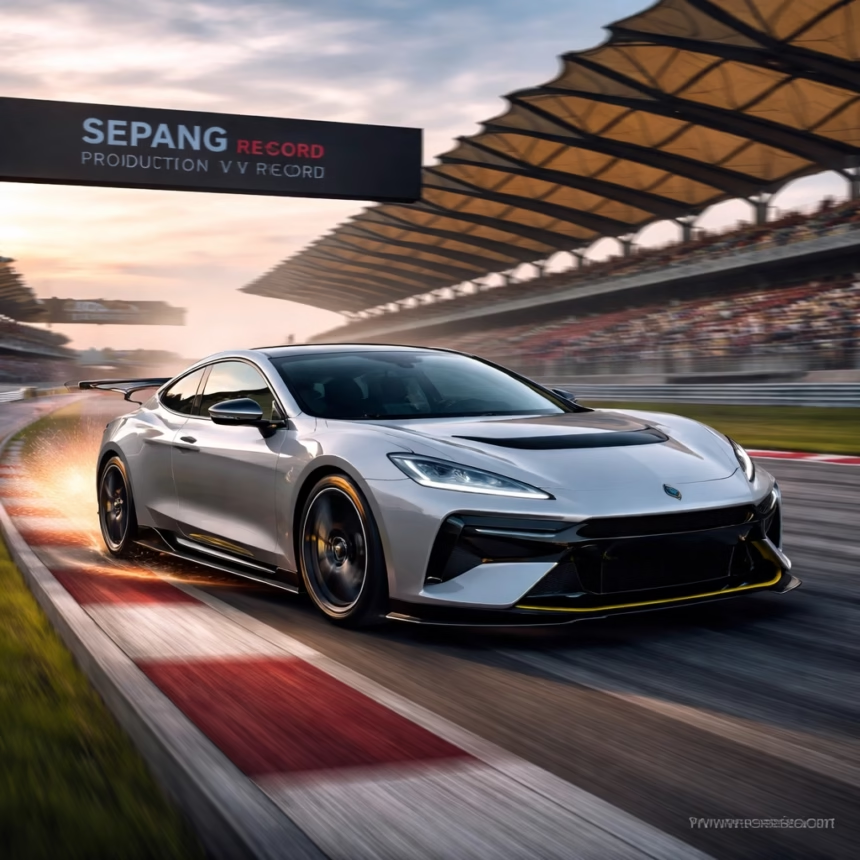
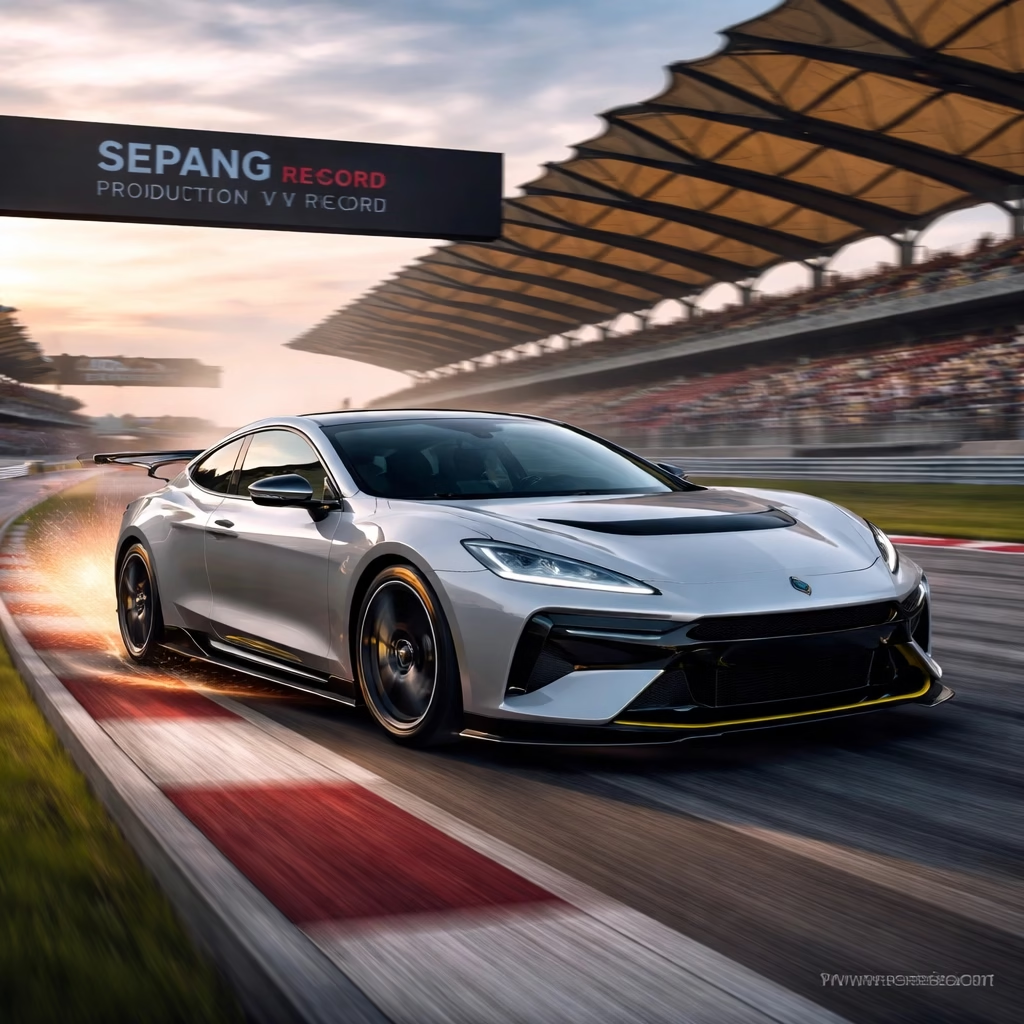
The Lotus Emeya R, the British marque's formidable all-electric hyper-GT, has officially established a new production electric vehicle lap record at the challenging Sepang International Circuit in Malaysia. This monumental achievement, recorded on February 23, 2024, showcases the Emeya R's exceptional performance capabilities, setting a new benchmark for electric vehicles on one of Asia's most demanding racetracks.
Background: Lotus’s Electric Evolution and the Sepang Challenge
Lotus has long been synonymous with lightweight, driver-focused sports cars and groundbreaking engineering. From its inception by Colin Chapman, the brand's philosophy of "simplify, then add lightness" has defined generations of iconic vehicles, including the Elan, Esprit, and Elise. However, the automotive landscape is rapidly shifting towards electrification, and Lotus, under the stewardship of Geely, has embarked on an ambitious journey to redefine itself as a leader in the high-performance electric vehicle segment.
The Electric Transformation of Lotus
This transformation began in earnest with the introduction of the Evija hypercar, Lotus's first all-electric model, signalling a clear commitment to an electrified future. This was followed by the Eletre, an all-electric hyper-SUV that broadened Lotus's market appeal while retaining its performance DNA. The Emeya R represents the third pillar of this new electric era, positioned as an ultra-luxury, high-performance four-door GT designed to deliver exhilarating performance with everyday usability. The shift is not merely about powertrain; it involves a complete reimagining of what a Lotus can be, leveraging advanced battery technology, electric motors, and sophisticated software to deliver unparalleled driving experiences.
Sepang International Circuit: A True Test of Performance
The Sepang International Circuit, located near Kuala Lumpur, Malaysia, is renowned globally for its challenging layout. Designed by Hermann Tilke, the 5.543-kilometre (3.444-mile) track features a demanding mix of high-speed straights, technical corners, and elevation changes, making it an ideal proving ground for a vehicle's balance, aerodynamics, and powertrain. Its tropical climate also adds an extra layer of complexity, with high temperatures and humidity testing cooling systems and tyre endurance to their limits. A record at Sepang is not just a testament to raw power but to comprehensive engineering prowess.

The increasing competition in the performance EV sector has turned circuits like Sepang into battlegrounds for manufacturers looking to validate their electric credentials. Previous records, particularly for internal combustion engine vehicles, have long been a source of pride, and now the focus is squarely on electric performance.
Key Developments: The Emeya R’s Record-Breaking Run
The record attempt at Sepang was meticulously planned, highlighting the Emeya R's cutting-edge design and engineering. On February 23, 2024, the Emeya R, piloted by former Malaysian Formula 1 test driver Feizal Hakimi, achieved an astounding lap time of 2 minutes, 13.040 seconds. This time not only secured the production EV lap record but also underscored the vehicle's remarkable capabilities.
Engineering the Record Breaker
The Lotus Emeya R is a technological marvel, engineered for blistering performance. It boasts a dual-motor, all-wheel-drive powertrain delivering a staggering 905 horsepower (675 kW) and 985 Nm of torque. This immense power allows the Emeya R to accelerate from 0 to 100 km/h in just 2.78 seconds, with a top speed electronically limited to 256 km/h. The vehicle is powered by a substantial 102 kWh battery, designed for both high-performance discharge and efficient recharging.
More Read

Crucial to its track performance are its sophisticated chassis dynamics. The Emeya R features active aerodynamics, including an active rear diffuser and an active rear spoiler, which can generate up to 210 kg of downforce. This, combined with an active air suspension system that constantly adjusts damping and ride height, ensures optimal grip and stability at high speeds. The vehicle also employs a robust braking system, often featuring carbon ceramic brakes, to provide consistent and powerful stopping power under extreme conditions. For the record attempt, the Emeya R was equipped with high-performance Pirelli P Zero Trofeo R tyres, specially developed to maximize grip and handling on the track.
The Record-Setting Lap
Feizal Hakimi's record lap was executed under typical Sepang conditions, requiring precision and confidence in the vehicle's dynamics. The Emeya R demonstrated exceptional cornering speed, stability through the high-speed esses, and immense acceleration out of the slower turns. The active aerodynamic elements worked in concert with the advanced suspension to keep the car planted, allowing Hakimi to exploit the full potential of its electric powertrain. The sub-2:14 lap time is a significant marker, placing the Emeya R firmly among the elite of performance vehicles, irrespective of powertrain type.
Impact: Reshaping the Performance EV Landscape
The Lotus Emeya R's record at Sepang carries significant implications across various sectors, from the automotive industry to consumer perception. It is more than just a number; it is a powerful statement about the future of high-performance electric vehicles.
A New Benchmark for Electric Performance
For Lotus, this record is an invaluable validation of its engineering prowess and its strategic pivot towards electrification. It unequivocally demonstrates that electric vehicles can not only match but potentially surpass the performance benchmarks set by traditional internal combustion engine cars on a challenging circuit. This achievement will undoubtedly bolster the Emeya R's market appeal, positioning it as a credible and desirable option within the ultra-luxury performance GT segment. It reinforces Lotus's commitment to delivering an uncompromised driving experience, even with an electric powertrain.
Implications for the Hyper-GT Market
The record puts immediate pressure on competitors in the high-performance EV market. Vehicles like the Porsche Taycan Turbo S, Tesla Model S Plaid, and Lucid Air Sapphire are constantly vying for supremacy in terms of speed, luxury, and technological innovation. The Emeya R's Sepang record serves as a new target, pushing other manufacturers to further refine their offerings and explore new frontiers in electric performance. This intense competition ultimately benefits consumers, driving innovation and leading to more advanced and capable electric vehicles.
Beyond direct competitors, the record also influences the broader perception of electric vehicles among enthusiasts and the general public. It dispels lingering doubts about EVs' ability to perform under extreme conditions and showcases their potential for exhilarating, track-focused driving. This can accelerate the acceptance and desirability of performance EVs, contributing to their wider adoption.
More Read

Effect on Motorsports and Consumer Confidence
The record also has a ripple effect on the motorsports community, demonstrating the increasing relevance and capability of electric platforms in high-performance settings. It highlights Sepang International Circuit's status as a world-class facility capable of hosting and validating such significant achievements. For potential buyers, particularly those considering a high-investment luxury performance vehicle, a production lap record provides a tangible measure of the car's engineering integrity and performance credentials, fostering greater confidence in their purchase decision.
What Next: The Road Ahead for Lotus and Performance EVs
The Sepang record is a significant milestone, but it is merely a chapter in Lotus's ongoing electric journey and the broader evolution of performance EVs. The future holds several key developments and potential milestones.
Global Rollout and Further Records
With the Emeya R's performance validated on the track, the focus will now shift to its global launch and customer deliveries. This will bring the record-breaking performance to a wider audience, allowing owners to experience its capabilities firsthand. It is highly probable that Lotus will pursue further record attempts at other iconic circuits around the world, such as the Nürburgring Nordschleife or Laguna Seca, to further cement the Emeya R's reputation and challenge existing benchmarks. Each new record will serve as a powerful marketing tool and a testament to the continuous improvement of electric vehicle technology.
Continued Innovation and Future Models
The success of the Emeya R will undoubtedly feed into Lotus's future research and development. Learnings from its advanced electric architecture, battery management systems, and sophisticated chassis dynamics will be applied to subsequent models. We can expect Lotus to continue pushing the boundaries of electric performance, potentially exploring even more powerful drivetrains, lighter materials, and more advanced aerodynamic solutions. The brand's commitment to an all-electric lineup suggests a continuous pipeline of innovative vehicles that build upon the foundation laid by the Evija, Eletre, and Emeya.
The competitive landscape in the hyper-GT segment will remain fierce, with manufacturers continually striving to outdo each other in terms of performance, range, and luxury. This healthy competition will drive rapid advancements in battery technology, charging infrastructure, and vehicle integration, ultimately benefiting the entire electric vehicle ecosystem. The Lotus Emeya R's record at Sepang is not just a moment of triumph for the brand, but a powerful indicator of the exhilarating future awaiting performance enthusiasts in the electric age.