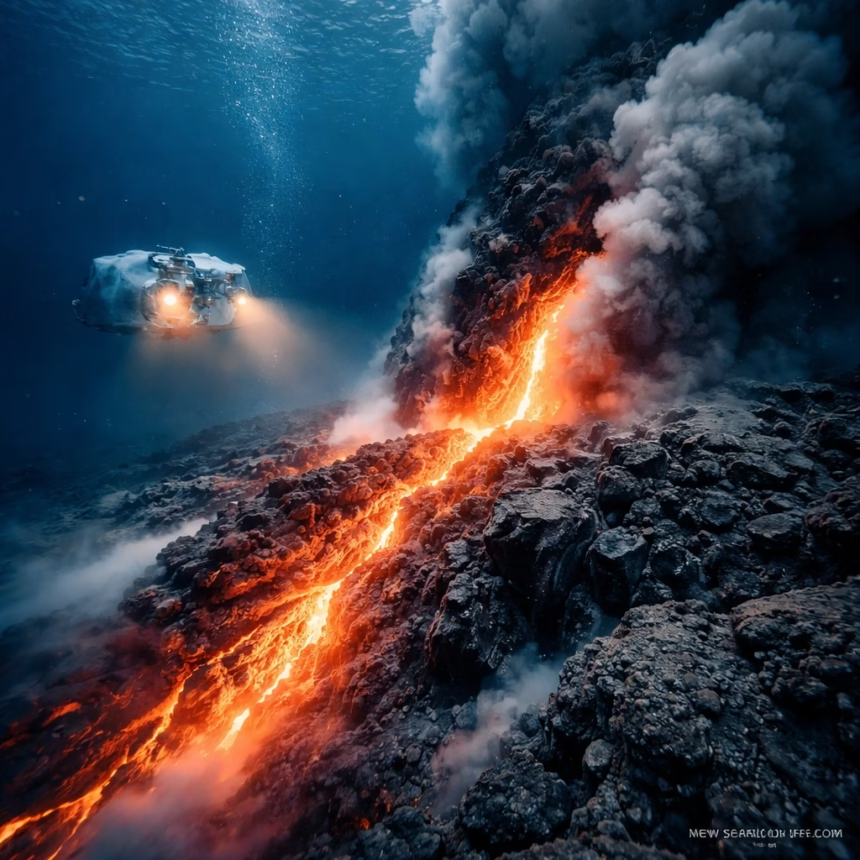
For the first time in history, scientists have directly observed the active birth of new seafloor material. This monumental geological event unfolded in the Endeavour Segment of the Juan de Fuca Ridge, located off the coast of British Columbia in the Northeast Pacific Ocean, with observations spanning from late 2023 into early 2024. The groundbreaking discovery provides an unparalleled real-time glimpse into one of Earth's most fundamental geological processes.
Background: The Unseen Engine of Our Planet
Our planet's surface is a dynamic mosaic of tectonic plates, constantly shifting, colliding, and pulling apart. Seafloor spreading is a cornerstone of plate tectonics, occurring at mid-ocean ridges where these plates diverge. Here, molten rock, or magma, rises from the Earth's mantle, erupts onto the seafloor, and solidifies to create new oceanic crust. This continuous process slowly widens ocean basins, driving continental drift and shaping Earth's geography over millions of years.
Despite its global significance, directly witnessing the birth of new seafloor has remained an elusive goal for scientists. These events typically occur thousands of meters beneath the ocean surface, often in remote and challenging environments. Our understanding has largely been built upon indirect evidence: seismic data detecting magma movement, analysis of ancient rock samples, and the study of hydrothermal vents – unique ecosystems fueled by the heat and chemicals released during these geological processes.
The Endeavour Segment, a well-studied section of the Juan de Fuca Ridge, has long been a focal point for deep-sea research. It hosts one of the most active hydrothermal vent fields known, supporting diverse communities of chemosynthetic organisms. The presence of Ocean Networks Canada's NEPTUNE observatory, a cabled network of sensors providing continuous, real-time data from the deep sea, proved instrumental. This permanent infrastructure allowed scientists to monitor seismic activity, temperature fluctuations, and chemical changes with unprecedented detail, setting the stage for this historic observation. Previous seismic swarms had been detected in the area, indicating magma movement, but none had culminated in direct visual confirmation of a fresh eruption until now.
The Endeavour Segment: A Natural Laboratory
The Endeavour Segment is a particularly active and relatively shallow (around 2,200 meters deep) part of the Juan de Fuca Ridge. Its accessibility, combined with the long-term deployment of scientific instruments, has made it a crucial site for studying mid-ocean ridge processes. Researchers have meticulously mapped its topography, characterized its vent systems, and tracked its seismic history for decades. This extensive baseline data was critical for recognizing the significance of the recent geological activity.
More Read

Key Developments: A Massive Event Unfolds
The first indications of the "massive event" emerged in late 2023 with a dramatic increase in seismic activity. The NEPTUNE observatory detected a swarm of over 200,000 micro-earthquakes between December 2023 and February 2024. This intense seismic flurry, far exceeding typical background levels, signaled a significant intrusion of magma beneath the seafloor. Scientists from institutions like the University of Washington, Ocean Networks Canada, and NOAA rapidly mobilized, recognizing the potential for an impending eruption.
Seismic Swarm Precedes Eruption
The sustained seismic activity pointed to magma rising through the crust, creating fractures and stressing the surrounding rock. This "inflation" of the seafloor was meticulously tracked by pressure sensors and seismometers on the NEPTUNE network. The sheer number and intensity of the quakes suggested a substantial volume of magma was on the move, building pressure for an eruption.
More Read

Visual Confirmation from the Deep
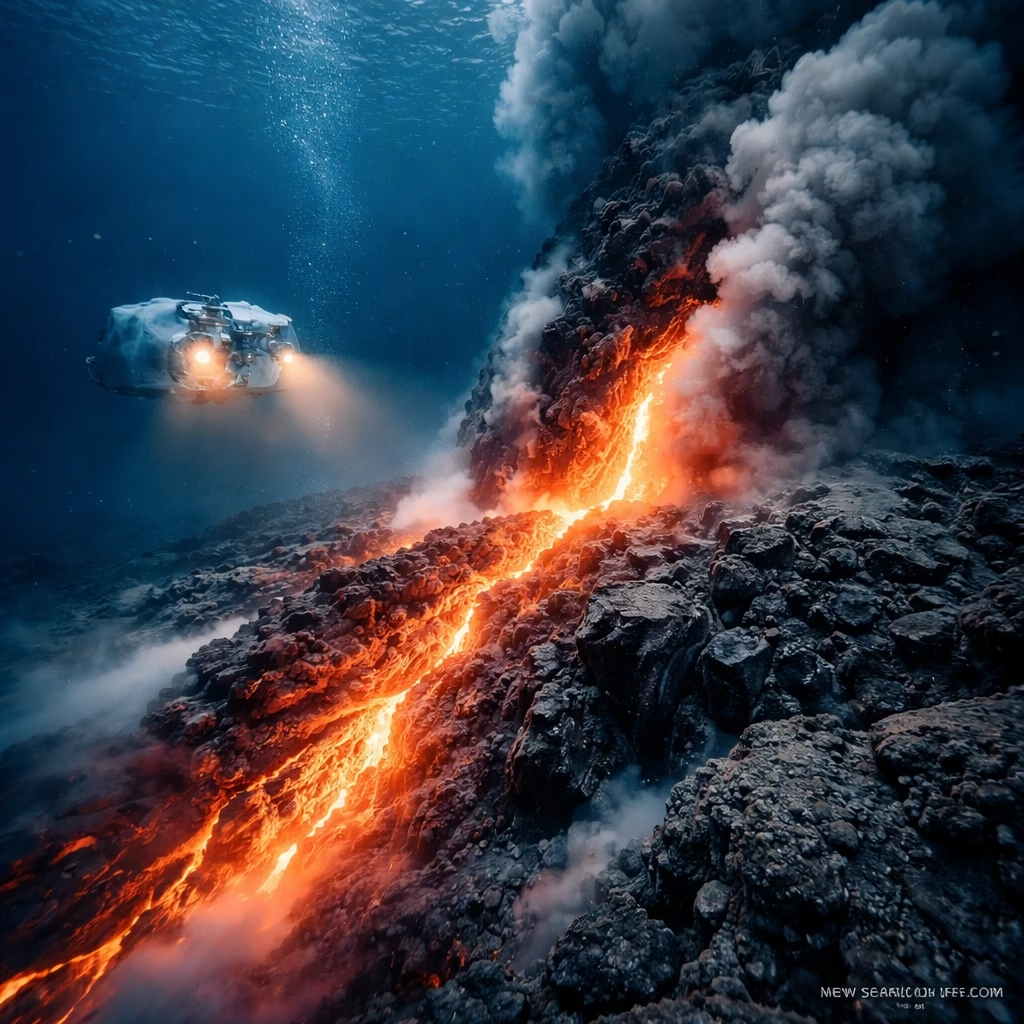
In early 2024, remotely operated vehicles (ROVs) and autonomous underwater vehicles (AUVs) were dispatched to the Endeavour Segment to investigate the source of the seismic activity. What they discovered was nothing short of astonishing. The ROVs captured images and video of freshly erupted lava flows, distinctively dark and glassy, covering vast areas of the seafloor. These new formations included pillow basalts – bulbous, pillow-shaped structures characteristic of underwater lava eruptions – and sheet flows, indicative of more fluid, widespread lava movement. The extent of the new crust was significant, suggesting a substantial volume of magma had erupted, solidifying into fresh rock.
Hydrothermal Vents Transformed
Crucially, the expedition also documented significant changes to the hydrothermal vent fields. Many existing "black smoker" vents, which typically emit superheated, mineral-rich fluids, were found to be buried under new lava. Others showed dramatic shifts in their chemistry, temperature, and flow rates. Some previously active vents were now dormant, while new, nascent vents began to appear through cracks in the fresh crust, signaling the start of new hydrothermal circulation systems. This transformation underscored the direct impact of the eruption on the deep-sea environment. The visual evidence, combined with the seismic data, provided irrefutable proof of a new seafloor being actively born.
Impact: Redefining Our Understanding
This unprecedented observation has profound implications across multiple scientific disciplines. For geophysicists, it provides real-time validation for theoretical models of seafloor spreading and magma dynamics. Direct measurements of magma intrusion rates, eruption volumes, and their associated seismic signatures will allow for significant refinement of these models, improving our understanding of how oceanic crust forms and evolves.
New Insights for Deep-Sea Life
For marine biologists and oceanographers, the event offers a unique opportunity to study the immediate and long-term ecological impacts of such a large-scale geological disturbance. Hydrothermal vent ecosystems are among the most extreme environments on Earth, supporting unique communities of chemosynthetic organisms that thrive without sunlight. The burial of existing vents and the creation of new ones will allow scientists to observe the processes of colonization and succession in real-time, providing invaluable data on the resilience and adaptability of deep-sea life. It's a natural experiment on a grand scale, revealing how life reclaims and adapts to newly formed habitats.
Broader Scientific and Societal Relevance
Beyond the immediate scientific communities, this discovery enhances our overall understanding of Earth's internal processes. A better grasp of seafloor spreading contributes to our knowledge of global heat flow, ocean chemistry, and long-term climate regulation. While this specific event doesn't pose an immediate tsunami threat, improved understanding of submarine volcanism and associated seismic activity can refine our broader comprehension of geohazards and Earth's dynamic nature. It also provides a tangible example of the planet's continuous geological evolution, a process often invisible to human eyes.
What Next: Continuous Monitoring and Future Expeditions
The work at the Endeavour Segment is far from over. Scientists are now embarking on an intensive period of data analysis, correlating the seismic records with visual observations and chemical measurements. The NEPTUNE observatory will continue its vital role, providing continuous, long-term monitoring of the newly formed seafloor and the evolving hydrothermal systems.

Long-Term Monitoring and Future Expeditions
Future expeditions are already being planned, leveraging ROVs and AUVs to return to the site. These follow-up dives will track the cooling and alteration of the new lava flows, monitor the development of new hydrothermal vents, and observe the colonization of the fresh crust by microbial and macro-faunal communities. Scientists will be particularly interested in how quickly life returns and what species are the first to establish themselves in these nascent environments.
This ongoing research promises to yield an unparalleled dataset, allowing scientists to study the entire lifecycle of a seafloor spreading event, from initial magma intrusion to eruption, cooling, and subsequent biological colonization. The insights gained from the Endeavour Segment will not only deepen our understanding of Earth but may also inform our search for life and geological activity on other ocean worlds in our solar system, such as Jupiter's moon Europa or Saturn's moon Enceladus, where similar processes might be at play beneath icy shells. The historic observation marks a new era in deep-sea exploration and geological understanding.