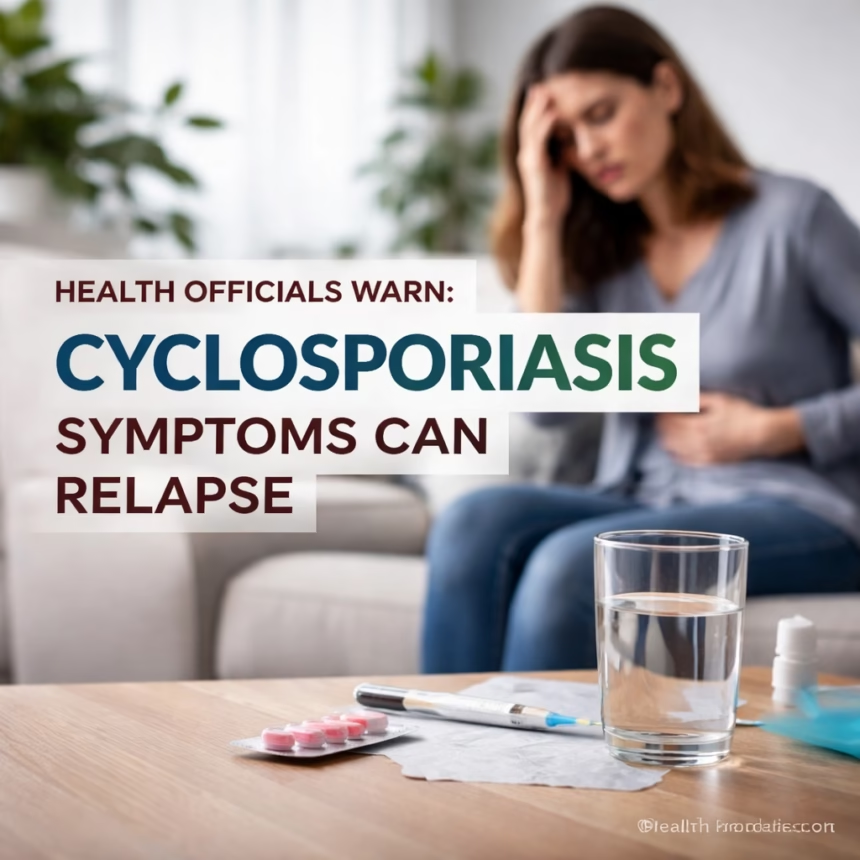
Health officials across the United States are issuing renewed warnings regarding the persistent threat of cyclosporiasis, specifically highlighting a concerning trend of symptom relapse even after initial treatment. This critical alert, emerging in early 2024 from agencies like the Centers for Disease Control and Prevention (CDC) and various state health departments, underscores a growing understanding of the parasite's tenacious nature and the potential for prolonged illness. The advisory emphasizes the need for heightened vigilance among healthcare providers and the public alike.
Background: A Persistent Protozoan Threat
Cyclosporiasis is an intestinal illness caused by the microscopic parasite *Cyclospora cayetanensis*. This single-celled organism is typically transmitted through the consumption of food or water contaminated with feces containing the parasite. Unlike some other foodborne pathogens, *Cyclospora* oocysts are not immediately infectious when shed in stool; they require several days to weeks to sporulate in the environment before becoming capable of causing infection.
Historical Outbreaks and Symptoms
The parasite has been a known public health concern in North America since the 1990s, with numerous outbreaks linked primarily to imported fresh produce such as raspberries, basil, cilantro, and various leafy greens. Symptoms typically appear about a week after exposure, though the incubation period can range from 2 to 14 days. Common manifestations include watery diarrhea, loss of appetite, significant weight loss, abdominal cramps, bloating, nausea, and profound fatigue. Vomiting and low-grade fever are less common but can occur. Without treatment, symptoms can last for weeks or even months, often exhibiting a cyclical pattern of improvement followed by relapse.
Standard Treatment and Emerging Concerns
The standard treatment for cyclosporiasis is a course of antibiotics, specifically trimethoprim/sulfamethoxazole (TMP/SMX), commonly known as Bactrim or Septra. While generally effective, recent observations and data analyses suggest that a significant number of patients experience a return of symptoms after completing their prescribed medication. This phenomenon, while not entirely new, is now receiving increased attention due to its prevalence and implications for patient care and public health.
Key Developments: Unpacking the Relapse Phenomenon
The current warning is not merely a reiteration of known facts but stems from a deeper analysis of patient outcomes and epidemiological data. Public health agencies are now more actively tracking and studying the instances of relapse, leading to a more comprehensive understanding of the challenges posed by *Cyclospora*.
More Read

New Data and Enhanced Surveillance
Recent studies and enhanced surveillance efforts by the CDC and state public health laboratories, including those in California and Florida, indicate that symptom relapse rates might be higher than previously estimated. These insights are derived from improved reporting mechanisms and more thorough patient follow-up protocols implemented over the past few years. Researchers are examining factors that contribute to relapse, including the parasite's life cycle, potential for incomplete eradication, and host immune responses.
Diagnostic Challenges and Persistence
One significant hurdle in managing cyclosporiasis and preventing relapse is the difficulty in reliably detecting the parasite. Stool tests, even when performed correctly, can yield false negatives, especially after initial treatment when parasite loads may be reduced but not entirely eliminated. The intermittent shedding of oocysts makes consistent detection challenging. This diagnostic ambiguity means that some patients might be declared parasite-free prematurely, leading to a cessation of treatment while residual parasites persist and eventually multiply, causing symptoms to return.
Treatment Adherence and Eradication
While TMP/SMX is effective, its ability to completely eradicate the parasite in all individuals is not absolute. Factors such as the initial parasite load, the patient's immune status, and adherence to the full course of medication play crucial roles. Patients often feel better within a few days of starting antibiotics and may discontinue treatment prematurely, unknowingly allowing the remaining parasites to flourish. Healthcare providers are now being advised to strongly emphasize the importance of completing the entire antibiotic regimen, even if symptoms resolve quickly.

Understanding the Mechanism of Relapse
Scientists are exploring whether the relapse is due to a re-emergence of the original infection that was never fully cleared, or if it represents a new infection. While re-infection is possible, especially in endemic areas or during ongoing outbreaks, the focus of the current warning is on the persistence of the initial infection. The parasite may enter a quiescent phase or exist in numbers too low to cause immediate symptoms, only to reactivate later. This persistence is a key area of ongoing research.
Impact: Far-Reaching Consequences
The elevated risk of cyclosporiasis relapse has significant implications, extending beyond individual patient discomfort to the broader healthcare system and public health infrastructure.
Patient Burden and Quality of Life
For affected individuals, a relapse means prolonged illness, continued gastrointestinal distress, and a significant reduction in quality of life. This can lead to extended periods away from work or school, incurring economic losses and emotional distress. The chronic nature of the illness, characterized by unpredictable symptom recurrence, can be particularly debilitating and frustrating for patients. Repeated medical consultations and diagnostic tests also add to the financial burden.
Strain on Healthcare Systems
Healthcare providers face increased challenges in diagnosing and managing recurrent cases. Repeat visits, additional diagnostic testing, and the need for extended or alternative treatment protocols place a greater strain on clinics, laboratories, and emergency departments. The ambiguity surrounding relapse mechanisms also complicates treatment decisions, requiring a more nuanced and often prolonged approach to patient care.
Public Health Response and Food Safety
Public health agencies, including the FDA and state departments of health, are under pressure to enhance surveillance and improve traceback investigations for outbreaks. The potential for relapse means that even after an initial outbreak appears to be contained, the pathogen could still be circulating or causing lingering illness, necessitating sustained vigilance. This also reinforces the need for more robust food safety measures throughout the supply chain, particularly for high-risk imported produce.
More Read

Vulnerable Populations
Immunocompromised individuals, such as those with HIV/AIDS, cancer patients undergoing chemotherapy, or organ transplant recipients, are particularly vulnerable to severe and prolonged cyclosporiasis, including higher rates of relapse. For these groups, the infection can be more difficult to treat and can lead to more serious complications, sometimes requiring hospitalization. Children and the elderly may also experience more severe or protracted illness.
What Next: Proactive Steps and Future Outlook
In response to the heightened concern over cyclosporiasis relapse, health officials are advocating for a multi-pronged approach involving enhanced public awareness, improved clinical practices, and continued research.
Enhanced Public and Provider Education
A primary focus is on educating both the public and healthcare providers about the risk of relapse. Public health campaigns will emphasize the importance of thorough produce washing, especially for items consumed raw, and the critical need for proper hand hygiene. For healthcare professionals, advisories will stress the possibility of relapse, the importance of prescribing the full course of TMP/SMX, and considering re-testing or re-treatment for patients whose symptoms return.
Improved Diagnostic Tools and Research
There is an urgent need for the development of more sensitive and rapid diagnostic tests for *Cyclospora* that can accurately detect low parasite loads, especially post-treatment. Research efforts are also being intensified to better understand the parasite's biology, its interaction with the human immune system, and the precise mechanisms underlying symptom relapse. This knowledge is crucial for developing more effective treatment strategies and potentially new therapeutic agents, particularly for individuals who cannot tolerate TMP/SMX.
Food Safety Interventions
The food industry and regulatory bodies are expected to reinforce existing food safety protocols and explore new interventions to minimize contamination risks at every stage, from farm to fork. This includes stricter import controls, enhanced monitoring of agricultural practices in endemic regions, and improved sanitation standards for produce handling and processing. Consumers are also advised to exercise caution when traveling to areas where cyclosporiasis is endemic, avoiding untreated water and unwashed produce.
Collaborative Efforts
Addressing the challenge of cyclosporiasis relapse requires sustained collaboration among federal agencies like the CDC and FDA, state and local health departments, academic researchers, healthcare providers, and international partners. Coordinated efforts in surveillance, outbreak investigation, research, and public health messaging will be essential to mitigate the impact of this persistent parasitic threat and protect public health in the long term. The goal is to move towards a future where cyclosporiasis, and particularly its relapse potential, is better understood, prevented, and managed.