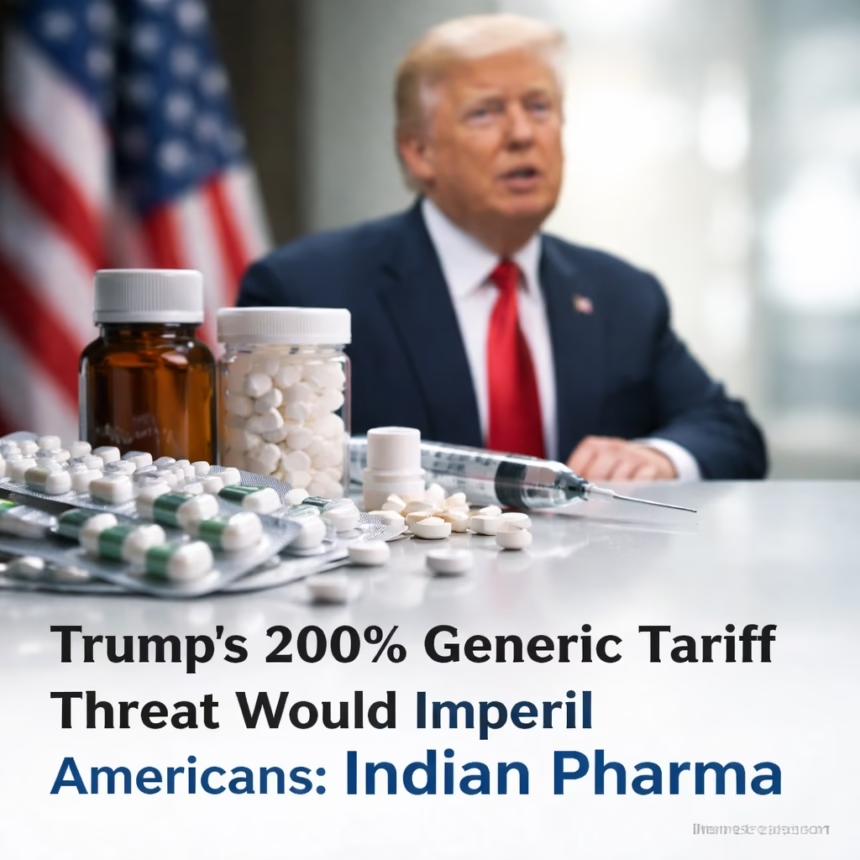
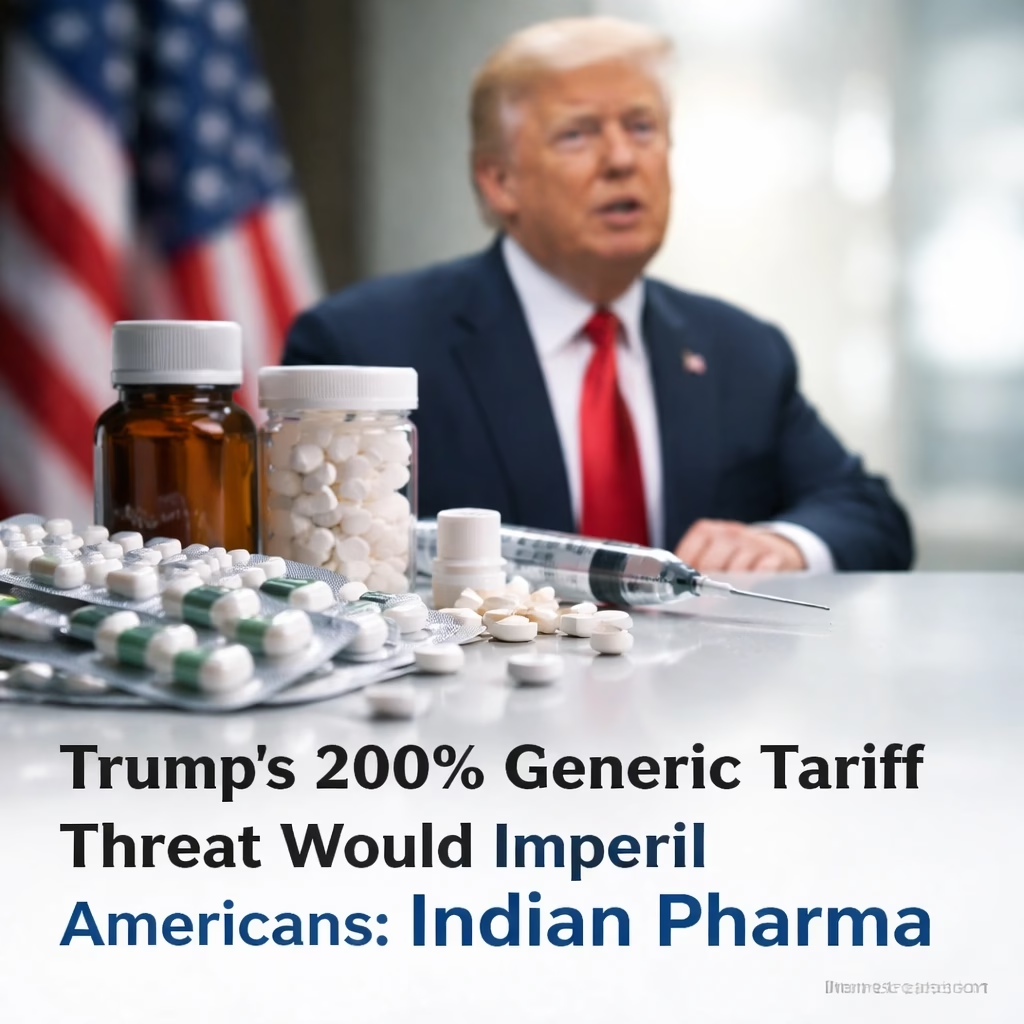
Former President Donald Trump's recent proposal to impose a 200% tariff on generic drugs imported into the United States, primarily targeting India, has ignited widespread alarm among healthcare stakeholders and industry experts. The drastic measure, floated as part of his "America First" trade agenda, threatens to unleash a cascade of price hikes and supply chain disruptions, potentially imperiling access to essential medicines for millions of Americans.
Background: The US-India Pharmaceutical Lifeline
India stands as the world's largest supplier of generic drugs by volume, earning its moniker as the "pharmacy of the world." For decades, the United States has heavily relied on affordable Indian generics to keep healthcare costs manageable, with an estimated 20% of all US generic drug imports originating from India. This symbiotic relationship has been a cornerstone of American pharmaceutical accessibility, particularly for patients managing chronic conditions, where generic alternatives offer significant savings over branded drugs.
The reliance on Indian manufacturers extends beyond finished products to Active Pharmaceutical Ingredients (APIs), the crucial raw materials for drug production. While China is a major API supplier, India also plays a significant role, both as a direct exporter and as a manufacturer of finished drugs using these APIs. Any disruption to this supply chain, therefore, has far-reaching implications for the entire pharmaceutical ecosystem.
Trump's "America First" economic philosophy, first articulated during his 2016 campaign and implemented during his presidency, prioritizes domestic production and aims to reduce trade deficits. While his previous administration imposed tariffs on various goods, a 200% tariff on generic drugs would represent an unprecedented escalation in trade policy targeting a critical healthcare sector. The rationale often cited is to encourage US-based manufacturing and reduce dependence on foreign supply chains, an argument that gained traction during the COVID-19 pandemic.
Key Developments: The Tariff Talk Intensifies
The 200% tariff threat resurfaced prominently in recent months as Donald Trump campaigned for the 2024 presidential election. In various speeches and interviews, he has reiterated his commitment to aggressive trade policies, specifically mentioning the pharmaceutical sector and the need to bring drug manufacturing back to American soil. His campaign has framed these tariffs as a means to lower drug prices by fostering domestic competition, a claim that industry analysts widely dispute for imported generics.
More Read

Indian pharmaceutical industry bodies, including the Pharmaceuticals Export Promotion Council of India (Pharmexcil) and the Indian Pharmaceutical Alliance (IPA), have swiftly voiced their concerns. They argue that such a tariff would not only devastate Indian exporters but also inflict severe damage on the American healthcare system. These organizations have initiated discussions with the Indian government and international trade bodies to prepare for potential repercussions and explore diplomatic avenues.
The US Trade Representative's office, under previous administrations, has often engaged in trade disputes with India over intellectual property rights and market access for US goods. However, a tariff of this magnitude on essential medicines would mark a significant departure from standard trade negotiations, potentially triggering a broader trade war that could extend beyond pharmaceuticals.
Impact: A Dire Outlook for American Patients
The ramifications of a 200% tariff on Indian generic drugs would be profound and immediate, disproportionately affecting American consumers and the stability of the US healthcare system.
More Read

Skyrocketing Drug Prices
The most direct consequence would be a dramatic surge in the cost of generic medications. A 200% tariff would effectively triple the import price of these drugs, a cost that would inevitably be passed on to consumers, insurance companies, and government programs like Medicare and Medicaid. For many Americans, particularly the elderly and those with chronic conditions, this would translate into unaffordable prescriptions, forcing difficult choices between medication adherence and other essential living expenses.
Reduced Access and Shortages
Indian generics comprise a substantial portion of the US drug supply, especially for high-volume, low-cost medications. Such a steep tariff could render many Indian generics economically unviable for US distributors, leading to their withdrawal from the market. This scenario could result in widespread drug shortages, particularly for essential medicines where alternatives are limited or significantly more expensive. Patients relying on specific formulations or dosages might find their medications suddenly unavailable.
Strain on Healthcare System
The increased financial burden on Medicare and Medicaid, which collectively cover millions of Americans, would be immense. These programs would face higher reimbursement costs for generic drugs, potentially necessitating budget cuts elsewhere or increased taxpayer contributions. Hospitals and clinics would also grapple with higher procurement costs, potentially affecting their operational budgets and the quality of care they can provide.
Disruption of Supply Chains
The global pharmaceutical supply chain is intricately linked. Even if US manufacturers could theoretically ramp up production, the transition would be slow, costly, and fraught with challenges, including sourcing APIs and ensuring regulatory compliance. The immediate vacuum left by Indian generics could not be easily filled, leading to prolonged periods of instability and uncertainty in drug availability.
Impact on Indian Pharma
For the Indian pharmaceutical industry, the US market is a critical export destination, accounting for a significant share of its total generic drug exports. A 200% tariff would severely cripple these companies, leading to substantial revenue losses, job cuts, and a potential slowdown in research and development. This, in turn, could have broader economic consequences for India.
More Read

What Next: Navigating an Uncertain Future
The ultimate fate of the 200% tariff threat hinges largely on the outcome of the upcoming US presidential election. If Donald Trump is re-elected, his administration could move to implement such tariffs, though the exact mechanism (e.g., executive order, legislative action) and timeline would be subject to political and legal challenges.
Indian government officials and industry representatives are expected to intensify their lobbying efforts in Washington D.C., engaging with policymakers, pharmaceutical associations, and patient advocacy groups to highlight the severe consequences for American healthcare. Diplomatic negotiations would likely ensue, with India potentially exploring options for dispute resolution through the World Trade Organization (WTO) or considering retaliatory measures, though the latter could further exacerbate trade tensions.
Within the United States, pharmaceutical industry groups, healthcare providers, and patient advocacy organizations are already mobilizing to oppose such a tariff. They are likely to emphasize the critical role of affordable generics in public health and the potential for a humanitarian crisis if access to essential medicines is compromised. Congressional debate and potential legislative action could also emerge as avenues to challenge or mitigate the impact of such a policy.
The coming months will be crucial in determining whether this tariff threat remains campaign rhetoric or translates into a policy that could fundamentally reshape the landscape of generic drug access and affordability in the United States.