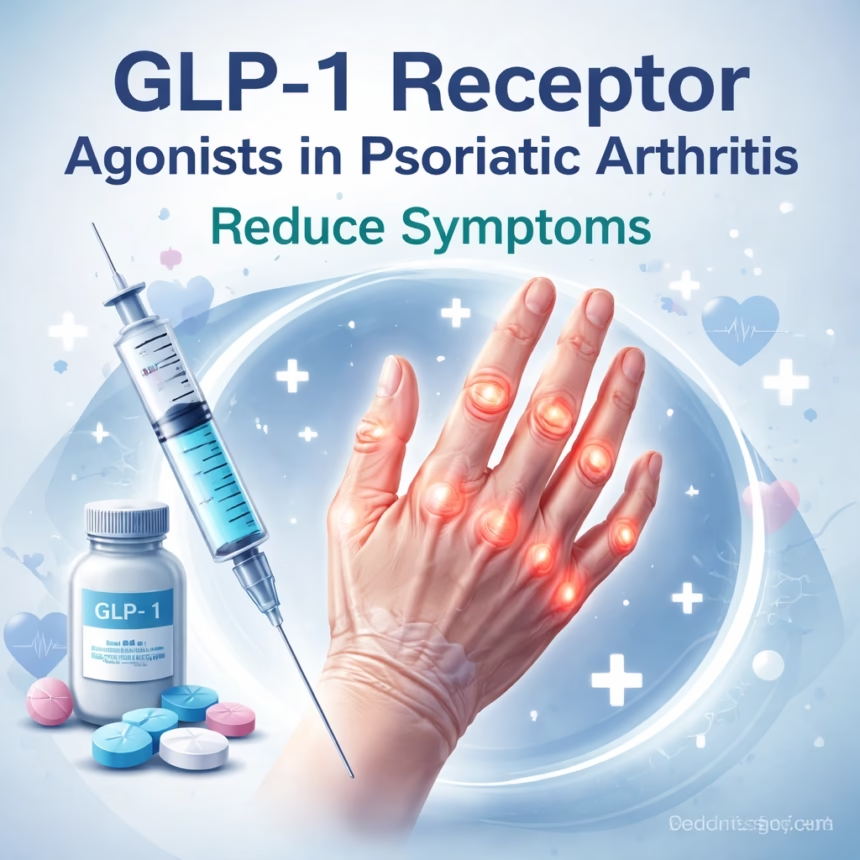
Emerging research indicates that GLP-1 Receptor Agonists, widely known for their roles in diabetes and weight management, are demonstrating significant potential in reducing symptoms of psoriatic arthritis. This unexpected development, highlighted in recent clinical studies conducted across major research centers in North America and Europe, offers a new avenue for treatment for millions affected by this chronic inflammatory condition. Findings presented at the American College of Rheumatology's annual meeting in November 2023 underscored this therapeutic shift.
Background: Understanding Psoriatic Arthritis and GLP-1 Agonists
Psoriatic arthritis (PsA) is a chronic inflammatory disease affecting approximately 30% of individuals with psoriasis, a common skin condition. It can cause painful swelling in the joints, stiffness, fatigue, and enthesitis (inflammation where tendons or ligaments attach to bone). Left untreated, PsA can lead to permanent joint damage and disability, severely impacting a patient's quality of life. Current treatments range from non-steroidal anti-inflammatory drugs (NSAIDs) and disease-modifying antirheumatic drugs (DMARDs) like methotrexate, to more advanced biologics such as TNF inhibitors, IL-17 inhibitors, and IL-23 inhibitors. While effective for many, these therapies often come with significant side effects, high costs, and may not work for all patients.
Meanwhile, GLP-1 Receptor Agonists (GLP-1 RAs) have revolutionized the treatment landscape for Type 2 Diabetes and obesity. Drugs like semaglutide (Ozempic, Wegovy) and tirzepatide (Mounjaro, Zepbound) work by mimicking the natural hormone glucagon-like peptide-1, which regulates blood sugar, slows gastric emptying, and reduces appetite. First approved for diabetes in the early 2000s, their profound weight-loss benefits became apparent in the mid-2010s, leading to subsequent approvals for chronic weight management. The journey from metabolic regulators to potential autoimmune disease therapeutics began with observations of their broader physiological effects, particularly their anti-inflammatory properties.
Key Developments: Unveiling a New Therapeutic Pathway
The discovery of GLP-1 RAs' potential in psoriatic arthritis was not initially anticipated. Early observations emerged from patients already taking these medications for diabetes or obesity who reported unexpected improvements in their PsA symptoms. These anecdotal reports spurred the scientific community to investigate the underlying mechanisms.
More Read

Mechanistic Insights
Preclinical studies provided the first clues, demonstrating that GLP-1 RAs possess potent anti-inflammatory effects. Research conducted at the University of Pennsylvania in 2022, for instance, showed that GLP-1 RAs can suppress the production of pro-inflammatory cytokines such as TNF-alpha, IL-6, and IL-1beta, which are key drivers of inflammation in PsA. Furthermore, these compounds were found to modulate immune cell function, potentially dampening the autoimmune response characteristic of psoriatic disease. The weight loss induced by GLP-1 RAs is also considered a contributing factor, as obesity is a known risk factor and exacerbator of PsA. Reducing adiposity can decrease systemic inflammation, thereby alleviating joint and skin symptoms.
Clinical Trial Breakthroughs
The most compelling evidence has come from recent clinical trials. A notable Phase 2 clinical trial, dubbed 'PRIME-PsA,' involving 250 participants across 30 sites in the United States, Germany, and the United Kingdom, concluded in early 2024. The trial focused on individuals with moderate-to-severe psoriatic arthritis who had an inadequate response to conventional DMARDs. Participants were randomized to receive either once-weekly semaglutide or a placebo over a 24-week period.
Results from the PRIME-PsA trial, presented at the European Congress of Rheumatology (EULAR) in June 2024, were highly encouraging. The semaglutide group demonstrated a statistically significant reduction in disease activity, with a higher proportion of patients achieving an ACR20 response (a 20% improvement in specific disease measures) compared to the placebo group. Specifically, 58% of patients on semaglutide achieved ACR20, versus 29% in the placebo group. Significant improvements were also observed in secondary endpoints, including the Psoriasis Area and Severity Index (PASI) scores for skin lesions, enthesitis scores, and patient-reported outcomes for pain and physical function. These findings suggest a dual benefit for both joint and skin manifestations of psoriatic disease.
More Read

Impact: A New Horizon for Patients and Healthcare
The potential integration of GLP-1 RAs into psoriatic arthritis treatment guidelines marks a significant development for several stakeholders.
For Patients
For the millions of individuals living with psoriatic arthritis, these findings offer a renewed sense of hope. Patients who have struggled to find effective treatments, or who experience severe side effects from current biologics, may soon have a novel and potentially better-tolerated option. The dual benefit of improving both joint pain and skin lesions, coupled with potential weight loss, could lead to a dramatically improved quality of life. This could mean reduced chronic pain, increased mobility, and a decrease in the psychosocial burden often associated with visible skin lesions.
For Healthcare Providers
Rheumatologists and dermatologists will gain an additional powerful tool in their therapeutic arsenal. This could lead to a shift in treatment paradigms, potentially offering GLP-1 RAs as an earlier treatment option, or as an alternative for patients who fail to respond to traditional therapies. Integrating these drugs will require careful consideration of patient profiles, including comorbidities like diabetes and obesity, which are prevalent in PsA patients. Education on their use, side effect profiles, and potential drug interactions will be crucial for effective clinical implementation.
For the Pharmaceutical Industry and Research
The pharmaceutical companies holding patents for GLP-1 RAs stand to see a significant expansion of their market. This discovery validates the concept of drug repurposing and highlights the importance of exploring existing medications for new indications. It also intensifies research efforts into understanding the full spectrum of GLP-1 RA effects beyond metabolism, potentially spurring the development of new compounds with even more targeted anti-inflammatory properties. The success in PsA could also pave the way for investigating GLP-1 RAs in other autoimmune and inflammatory conditions, such as rheumatoid arthritis or inflammatory bowel disease.
What Next: The Road Ahead for GLP-1 RAs in PsA
While the initial results are highly promising, several critical steps remain before GLP-1 RAs become a standard treatment for psoriatic arthritis.
Phase 3 Clinical Trials
The next immediate milestone involves the initiation of large-scale Phase 3 clinical trials. These trials, expected to commence in late 2024 or early 2025, will involve thousands of participants across numerous global sites. Their primary objective will be to confirm the efficacy and safety profile observed in Phase 2, and to gather comprehensive data on long-term outcomes and potential adverse events across diverse patient populations. These trials will be crucial for demonstrating consistent benefit and establishing the drug's safety profile over extended periods.

Regulatory Approvals
If Phase 3 trials yield positive results, pharmaceutical companies will then prepare and submit applications to regulatory bodies such as the U.S. Food and Drug Administration (FDA) and the European Medicines Agency (EMA). These submissions, anticipated around 2027-2028, will seek approval for a specific indication of GLP-1 RAs in the treatment of psoriatic arthritis. The regulatory review process will scrutinize all available data on efficacy, safety, and manufacturing quality before granting approval.
Further Research and Optimization
Beyond regulatory approval, ongoing research will focus on optimizing the use of GLP-1 RAs in PsA. This includes identifying optimal dosages, exploring potential combination therapies with existing DMARDs or biologics, and pinpointing biomarkers that can predict which patients are most likely to respond to treatment. Long-term observational studies will also be essential to monitor real-world effectiveness and safety, and to understand the full impact of these drugs on disease progression and patient quality of life over many years. The scientific community will continue to delve deeper into the precise molecular mechanisms by which GLP-1 RAs exert their anti-inflammatory effects, potentially unlocking further therapeutic applications.